The Convergence of Electronic Drivetrain Actuation
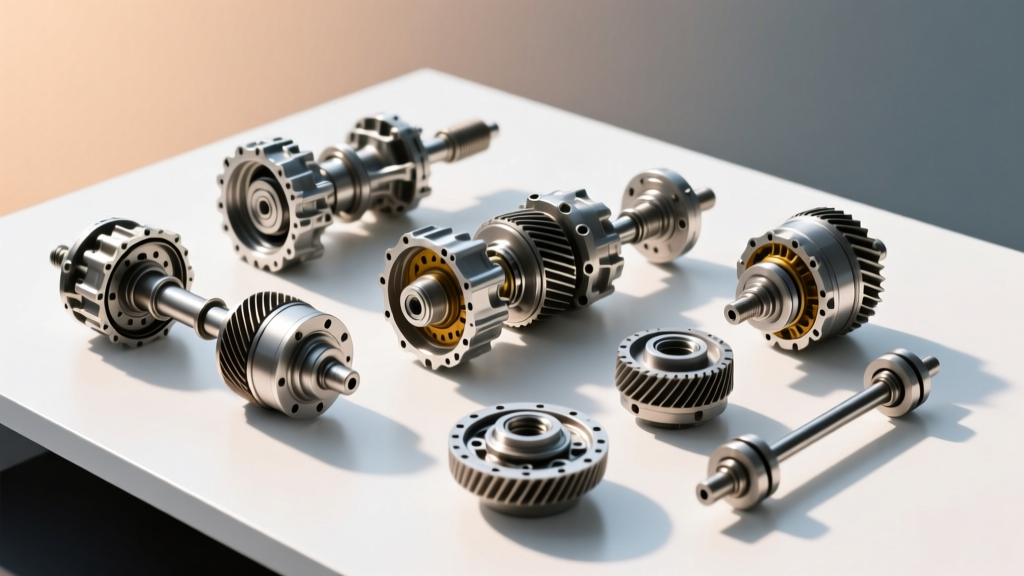
When automotive engineers and high-performance cycling mechanics discuss drivetrain efficiency in 2026, the conversation inevitably turns toward electronic actuation, telemetry, and latency. The mechanical linkages and viscous couplings of the past have been entirely superseded by Pulse Width Modulation (PWM) signals, CAN-bus networks, and wireless ecosystems. To truly understand modern all-wheel drive (AWD) system operation, it is highly instructive to compare the electro-hydraulic clutch packs of performance automobiles with the wireless electronic precision of the SRAM RED AXS drivetrain. While one manages thousands of pound-feet of wheel torque to induce yaw moments on a track, and the other manages wattage and chain tension across 12 sprockets on a climb, the underlying engineering paradigms—low-latency actuation and real-time telemetry—are remarkably identical.
Core Automotive AWD System Operation: Clutch Packs and CAN-Bus
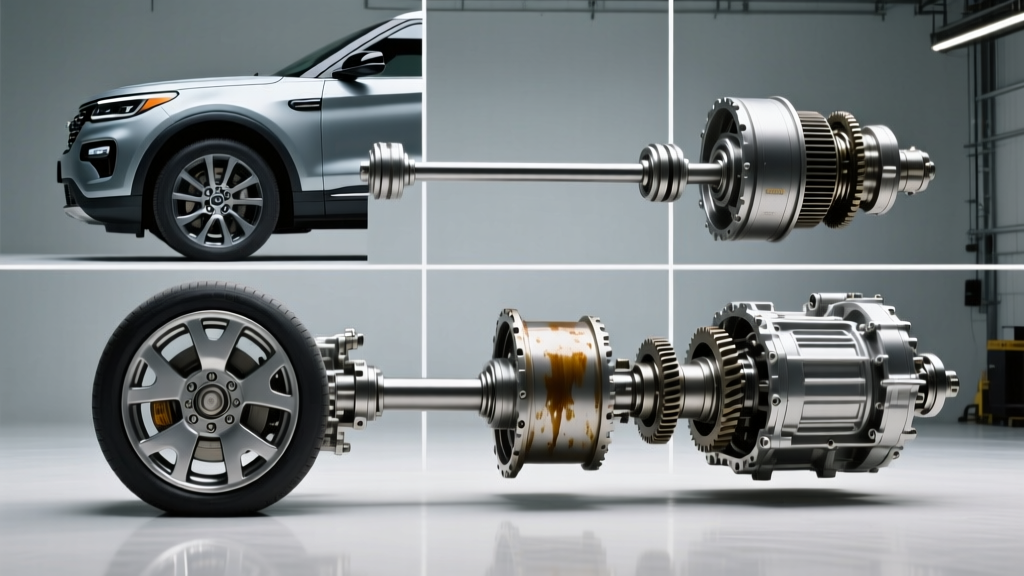
Modern automotive AWD systems are no longer passive mechanical differentials; they are active, predictive torque-management networks. The Engine Control Unit (ECU) and Transmission Control Module (TCM) constantly feed data regarding throttle position, steering angle, yaw rate, and individual wheel speeds to a dedicated AWD control module. This module then actuates clutch packs to redistribute torque in milliseconds.
Haldex Gen 5: Electro-Hydraulic Precision
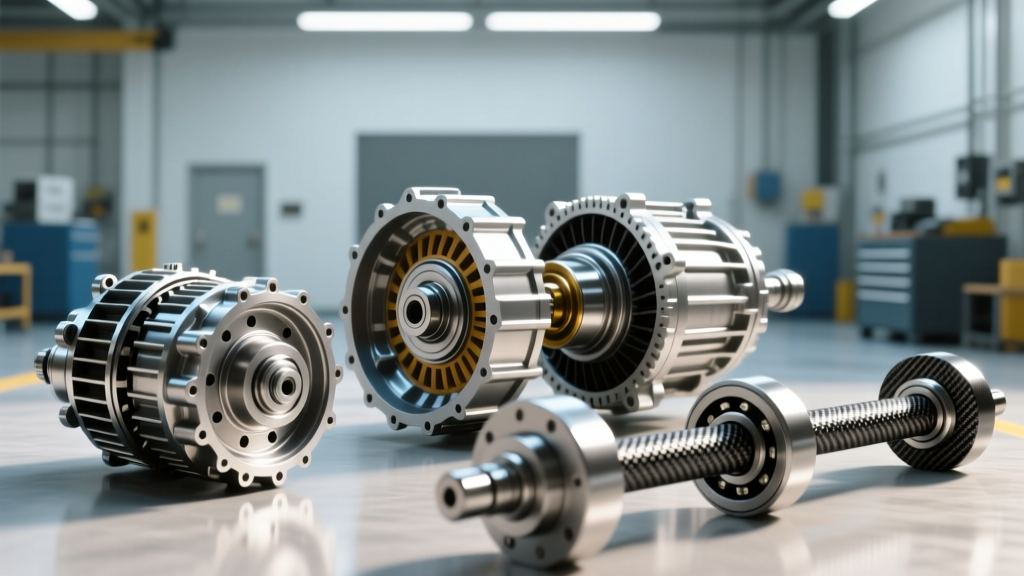
Found in vehicles ranging from the Volkswagen Golf R to various Volvo and Audi transversely-engined platforms, the BorgWarner Haldex Generation 5 coupling represents a benchmark in electro-hydraulic AWD operation. Unlike earlier generations that relied on hydraulic accumulators and centrifugal valves, the Gen 5 system utilizes an electric motor to drive a gerotor pump. This pump directly pressurizes a multi-plate wet clutch pack. By modulating the electric motor's PWM signal, the system can achieve clutch engagement pressures up to 40 bar, transferring up to 100% of available rear-axle torque in under 150 milliseconds. According to BorgWarner's AWD technical documentation, the deletion of the accumulator in Gen 5 reduced system weight and allowed for continuous, infinitely variable torque biasing based purely on software mapping rather than hydraulic lag.
Honda SH-AWD: True Torque Vectoring
While Haldex can only connect or disconnect the rear axle (or side-to-side via brake-based vectoring), Honda’s Super Handling All-Wheel Drive (SH-AWD) physically overdrives the outer rear wheel during cornering. Using a twin-wet-clutch pack housed in the rear differential, the 4th-generation SH-AWD system (found in the Acura TLX Type S) can send up to 70% of total engine torque to the rear axle, and then route 100% of that rear torque to the outside wheel. Crucially, a planetary gearset overdrives the outer axle shaft by up to 2.7%, creating a physical yaw moment that pivots the car into the apex. This requires immense hydraulic pressure and sophisticated thermal management to prevent clutch glazing during sustained track use.
The SRAM RED AXS Drivetrain: A Masterclass in Wireless Telemetry
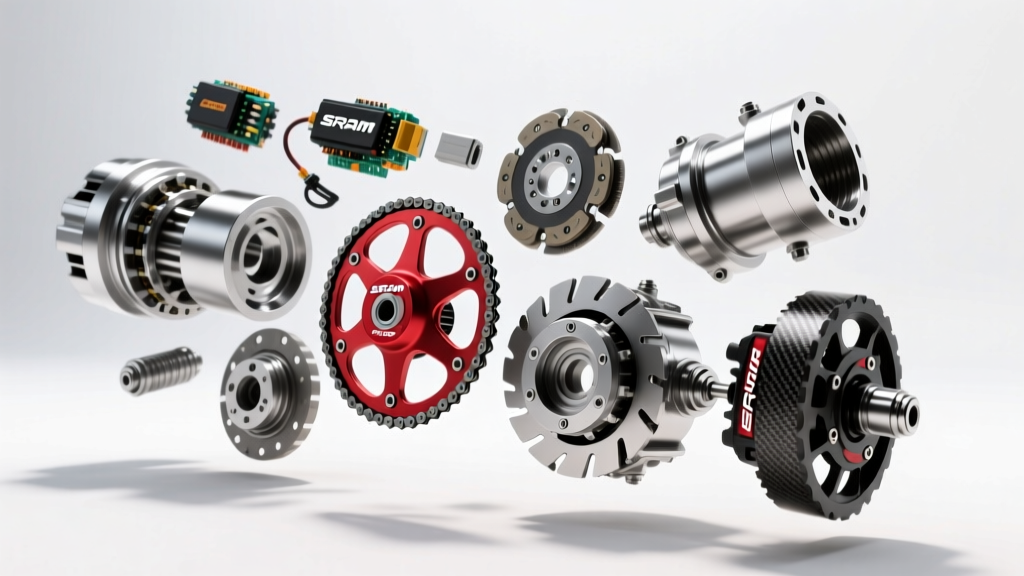
Transitioning from four wheels to two, the SRAM RED AXS drivetrain represents the absolute pinnacle of electronic shifting and power telemetry in the cycling world. Much like an automotive CAN-bus network, the AXS (pronounced 'access') ecosystem relies on a proprietary, encrypted wireless protocol to communicate between shifters, derailleurs, and power meters with near-zero latency.
The rear derailleur utilizes a high-torque servo motor to push the chain across a 12-speed, 10-33T cassette mounted on an XDR driver body. To manage the violent chain oscillations inherent in high-wattage sprinting, SRAM implemented the 'Orbit' chain management system—a fluid-damper mechanism that provides silent, maintenance-free chain retention without the stiction of traditional roller-bearing clutches. Furthermore, the integrated power meter spider utilizes strain gauges to sample torque data at 120Hz, transmitting left/right leg balance and wattage to head units via ANT+ and Bluetooth LE. As detailed by SRAM Technical Service, the system's firmware can be updated over-the-air to alter shift mapping, much like an automotive ECU flash.
Cross-Domain Engineering: Auto AWD vs. SRAM RED AXS
Comparing a 4,000-pound performance sedan to a 16-pound carbon fiber bicycle highlights the universal challenges of drivetrain engineering: managing load, minimizing latency, and ensuring thermal stability. Below is a comparative analysis of their actuation metrics.
| Metric | Automotive Active AWD (e.g., SH-AWD / Haldex 5) | SRAM RED AXS Drivetrain (12-Speed eTap) |
|---|---|---|
| Actuation Method | Electro-hydraulic PWM / Wet Clutch Packs | Wireless Servo Motor / Fluid Damper |
| Peak Torque / Load Capacity | ~4,500+ lb-ft (Wheel Torque) | ~2,500+ Watts (Chain Tension Load) |
| System Latency | 80 - 150 milliseconds (CAN-bus to Hydraulic) | < 50 milliseconds (Wireless to Servo) |
| Telemetry Sampling Rate | Wheel speed sensors @ 100Hz+ | Power Meter Strain Gauges @ 120Hz |
| Thermal Management | Fluid coolers / Differential fins | Orbit Fluid Damper / Heat-treated cogs |
Maintenance Realities: Fluids, Torque Specs, and Firmware
Whether you are servicing a ZF 8HP-equipped xDrive transfer case or a SRAM RED AXS rear derailleur, adherence to exact torque specifications and fluid tolerances is non-negotiable. The margin for error in high-load electronic drivetrains is virtually zero.
Automotive AWD Maintenance Specifications
- Haldex Gen 5 Fluid & Filter: Requires exactly 650ml - 700ml of specific fluid (e.g., VW G 060 175 A2). The sump filter must be cleaned or replaced every 40,000 miles. Neglecting this causes the gerotor pump to cavitate, resulting in a complete loss of rear-wheel drive and triggering a drivetrain malfunction CEL.
- Honda SH-AWD Rear Differential: Fluid capacity is approximately 3.2 Liters of Honda DPSF-II. Drain and fill intervals are critical every 30,000 miles under severe (track) conditions to prevent the twin-clutch packs from burning out due to shear breakdown.
- BMW xDrive (ATC35L Transfer Case):strong> Holds roughly 0.6 Liters of TF 0870 fluid. The internal chain and wet clutch pack are highly sensitive to fluid degradation, which can cause shudder during low-speed binding.
SRAM RED AXS Drivetrain Torque & Setup Specs
- Rear Derailleur Mounting Bolt: Must be torqued to exactly 12-14 Nm. Over-torquing can crack the carbon fiber hanger or derailleur body; under-torquing leads to micro-movements that ruin shift precision under load.
- Chainring Bolts (Direct Mount): Torque specification is 10-12 Nm. Use carbon-safe friction paste on the spindle interface to prevent creaking and ensure accurate power meter zero-offset readings.
- Cassette Lockring (XDR): Requires 40 Nm of torque. A loose cassette on the XDR driver body will destroy the aluminum splines under high-wattage sprinting, rendering the hub shell useless.
- Battery Management: The AXS derailleur battery provides roughly 60 hours of ride time. Unlike automotive ECUs that draw from a 12V alternator, the AXS system requires manual charging. Firmware updates via the AXS app should be performed quarterly to optimize shift logic and battery sleep states.
Conclusion: The Future is Software-Defined
The operation of modern AWD systems and the SRAM RED AXS drivetrain both prove that mechanical hardware is now merely the execution layer for software-defined intent. In the automotive world, torque vectoring algorithms dictate how a car attacks a corner, limited only by the hydraulic pressure and clutch friction materials available. In the cycling world, wireless shift mapping and fluid-damped chain management dictate how efficiently human wattage reaches the tarmac. For technicians and engineers alike, mastering these systems requires moving beyond wrenches and sockets; it demands a deep understanding of telemetry, fluid dynamics, and electronic latency. Whether bleeding a Haldex coupling or updating derailleur firmware, the drivetrain of 2026 is a masterclass in electro-mechanical synergy.