The Evolution of the AWD Differential in Modern SUVs
The landscape of truck and SUV drivetrains has shifted dramatically over the last decade. We have moved away from rudimentary, part-time four-wheel-drive systems toward highly sophisticated, full-time all-wheel-drive architectures. At the heart of these systems is the AWD differential—often integrated directly into the transfer case or housed within the transmission bell housing. For automotive technicians and DIY enthusiasts tackling 2026 model-year platforms, understanding the nuances of these center differentials is critical to preventing catastrophic drivetrain binding and clutch pack burnout.
Whether you are servicing a GM Silverado equipped with the NV246 AutoTrak transfer case, a Ford F-150 utilizing the BorgWarner 4484, or a luxury SUV running the ZF 8HP integrated AWD module, the rules of engagement for fluid dynamics, torque specifications, and component tolerances are unforgiving. This guide provides expert-level best practices for maintaining, diagnosing, and servicing AWD differentials in heavy-duty and light-duty trucks.
Center Differential vs. Transfer Case: Understanding the Hardware
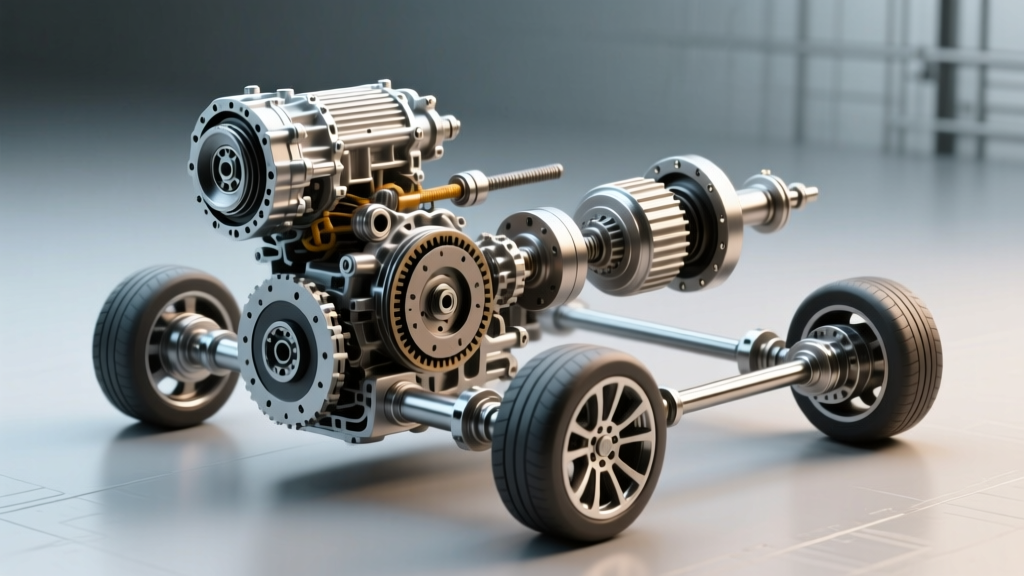
In traditional 4WD trucks, the transfer case features a mechanical locking mechanism (a dog clutch or chain-driven gearset) that physically locks the front and rear driveshafts together. However, modern AWD SUVs and trucks utilize a center differential or an active wet-clutch pack to allow for front-to-rear axle speed differentiation. This prevents drivetrain wind-up on dry pavement while providing instantaneous torque vectoring when slip is detected.
| Manufacturer / System | Model / Part Number | Clutch Type | OEM Fluid Requirement |
|---|---|---|---|
| GM (Chevy/GMC) | NV246 / NV263XHD | Wet Multi-Plate (Gerotor Pump) | GM Auto-Trak II (88900401) |
| Ford (F-150 / Expedition) | BorgWarner 4484 / 4406 | Electromagnetic Clutch Pack | Motorcraft XL-1 Transfer Case Fluid |
| Stellantis (Jeep / Ram) | NV241GEN2 / MP3023 | Wet Clutch (Active On-Demand) | ATF+4 or Mopar NV241/243 Fluid |
| ZF (BMW / Audi / Jaguar) | ZF 8HP (Integrated Center Diff) | Integrated Wet Clutch Module | ZF LifeguardFluid 8 |
Expert Fluid Selection and the Friction Modifier Factor
The most common mistake made during AWD differential servicing is treating the center differential like a standard hypoid gear axle. Standard 75W-90 or 80W-90 gear oil contains extreme pressure (EP) additives, like sulfur-phosphorus compounds, which are highly corrosive to the yellow metals (bronze bushings and synchronizers) found inside active transfer cases. Furthermore, gear oil lacks the specific friction modifiers required for wet-clutch AWD differentials.
Why Friction Modifiers Matter
In systems like the BorgWarner 4484, the AWD differential relies on a stack of friction and steel clutch plates. When the ECU detects wheel slip, an electromagnetic coil compresses the pack to transfer torque to the front axle. If the fluid lacks the correct friction modifiers, the clutch plates will not engage smoothly; instead, they will grab and release rapidly. This manifests as a violent 'chatter' or shudder during low-speed, tight-radius turns (such as pulling into a driveway). Over time, this chatter glazes the friction material, leading to a complete loss of AWD functionality.
Expert Tip: Never substitute standard ATF or generic gear oil in an active AWD center differential. According to BorgWarner's engineering documentation, using incorrect fluid voids the transfer case warranty and will destroy the electromagnetic clutch pack within 5,000 miles of aggressive driving.
Precision Torque Specifications and Reassembly Best Practices
When draining and filling the AWD differential and the associated front/rear axles, adhering to exact torque specifications is non-negotiable. Over-torquing aluminum differential housings or transfer case PTO covers will strip threads and cause chronic leaks, while under-torquing leads to backed-out plugs and sudden fluid loss.
- GM 8.6-Inch & 9.5-Inch Rear Axle Fill/Drain Plugs: 25 lb-ft (34 Nm). Always replace the crush washer or use a new OEM plug (Part # 15823354).
- Ford 9.75-Inch Rear Axle Fill Plug: 33 lb-ft (45 Nm). Note that many modern Ford axles do not have a drain plug; fluid must be extracted via the fill hole using a vacuum pump.
- Transfer Case Output Shaft Yoke Nut (NV246/BW4484): 150 to 180 lb-ft depending on the exact spline count. Always apply a medium-strength threadlocker (Loctite 243) to prevent the yoke from walking off the shaft under heavy towing loads.
- Front Differential Axle Shaft to Hub Nut: Typically 155 to 210 lb-ft. These are torque-to-yield (TTY) stretch nuts on most 2020-2026 platforms and must be replaced upon removal.
Diagnosing AWD Differential Binding: The Tire Circumference Threat
If you are diagnosing a transfer case that is overheating, whining, or exhibiting premature clutch pack wear, look at the tires before you drop the drivetrain. Modern AWD differentials are exquisitely sensitive to rotational speed variance between the front and rear axles.
When a vehicle is equipped with tires of different tread depths, the overall circumference changes. A tire with full tread (e.g., 12/32") rotates slower than a worn tire (e.g., 4/32") at the same vehicle speed. This constant speed delta forces the AWD center differential to remain in a perpetual state of partial engagement. The clutch packs slip continuously, generating immense heat that degrades the fluid and burns the friction material.
The 2/32-Inch Rule
Most OEM manufacturers, including Subaru, Audi, and GM, mandate that tire tread depth variance across all four corners must not exceed 2/32 of an inch (approximately 1.5mm). If a single tire is damaged and needs replacement on an AWD SUV, best practice dictates either replacing all four tires or having the new tire professionally 'shaved' to match the tread depth of the remaining three. According to tire and drivetrain experts at Tire Rack, ignoring this rule is the leading cause of premature center differential failure in AWD crossovers and trucks.
Lift Kits, Driveshaft Phasing, and Output Shaft Bearings
Truck enthusiasts frequently modify their vehicles with suspension lift kits, inadvertently destroying the AWD differential's output shaft bearings. When a truck is lifted, the pinion angle of the rear differential drops, altering the working angle of the rear driveshaft U-joints.
U-joints require a minimum working angle of 1 to 3 degrees to keep the needle bearings rotating and distributing grease. However, angles exceeding 5 degrees cause the U-joint to bind, sending severe harmonic vibrations directly back into the transfer case output shaft. This radial load will quickly wallow out the aluminum bore of the AWD differential housing and destroy the internal output shaft bearing.
Correction Best Practices
- 1.5 to 2.5-Inch Lifts: Install a transmission crossmember spacer or adjustable control arms to rotate the rear axle pinion upward, restoring the proper driveline angle.
- 3-Inch+ Lifts: A custom-length driveshaft with a CV (Constant Velocity) joint at the transfer case end is mandatory. CV joints can handle up to 15 degrees of articulation without binding, protecting the center differential from destructive radial forces.
- Phasing: When reinstalling a two-piece driveshaft, ensure the slip yoke is phased correctly (the U-joint caps on the slip yoke must be in line with the U-joint caps on the rear weld yoke). Out-of-phase driveshafts cause a high-frequency 'buzz' that mimics AWD differential bearing failure.
Sourcing OEM vs. Aftermarket Components
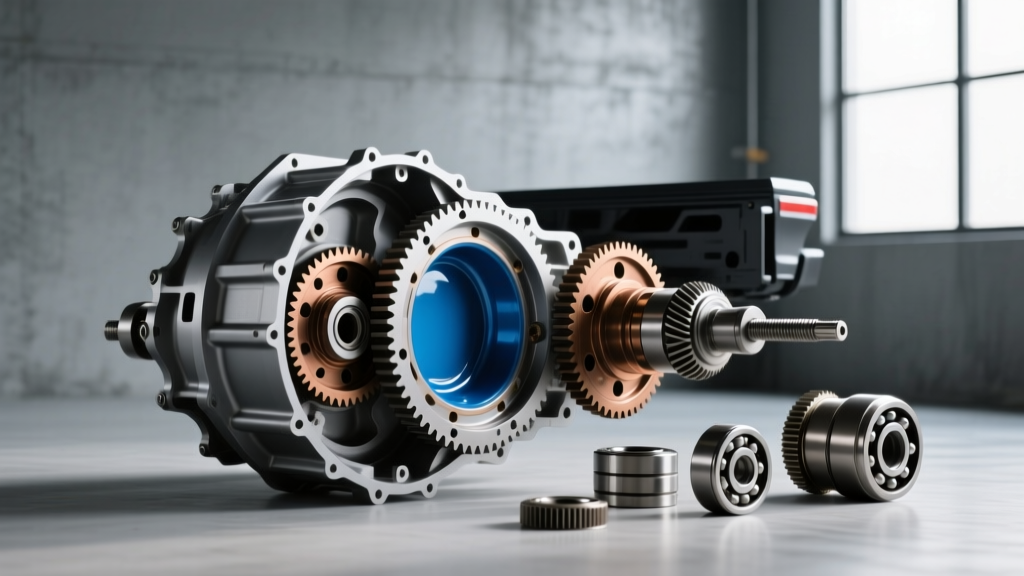
When internal AWD differential components fail, sourcing the right parts dictates the longevity of the repair. While the aftermarket offers budget-friendly clutch kits, the metallurgy of the friction material often falls short of OEM specifications.
For example, a genuine GM AutoTrak clutch kit (Part # 12600330) costs between $250 and $350, whereas aftermarket equivalents can be found for $120. However, the OEM friction material is specifically calibrated for the gerotor pump's hydraulic pressure curve. Using an aftermarket kit often results in delayed engagement or a return of the low-speed chatter within 10,000 miles. For commercial fleet vehicles or heavy-duty tow rigs, the premium for OEM or top-tier Tier-1 supplier parts (like Genuine BorgWarner or ZF) is easily justified by the avoided labor costs of a repeat teardown.
Final Expert Takeaways
Servicing the AWD differential in modern trucks and SUVs requires a departure from old-school 4WD mentalities. It demands an understanding of hydraulic clutch dynamics, strict adherence to friction-modified fluids, and an appreciation for how external factors—like tire tread variance and suspension geometry—directly impact internal drivetrain health. By utilizing exact torque specs, respecting fluid chemistry, and monitoring driveline angles, you can ensure these complex systems deliver seamless traction and longevity well past the 150,000-mile mark. For further reading on synthetic fluid stability in extreme towing conditions, consult the technical data provided by AMSOIL's engineering division.