The Critical Role of the AWD Center Differential Case
In all-wheel-drive (AWD) vehicles, the center differential is the unsung hero of drivetrain management, dictating the front-to-rear torque split. While enthusiasts often obsess over internal gearsets or clutch packs, the differential case—the machined aluminum, cast iron, or magnesium housing that encapsulates these components—is equally vital. The case must endure immense torsional stress, thermal cycling, and structural loads transferred from the transmission output shaft to the front and rear driveshafts.
When diagnosing AWD driveline vibrations, binding, or fluid leaks, technicians frequently overlook the differential case itself. Case flex, bearing bore wear, and split-line degradation can mimic internal gear failure. In 2026, with the proliferation of high-torque hybrid AWD platforms and advanced torque-vectoring systems, understanding the structural and mechanical nuances of the center differential case is mandatory for accurate symptom diagnosis and troubleshooting.
Anatomy of the Center Differential Housing
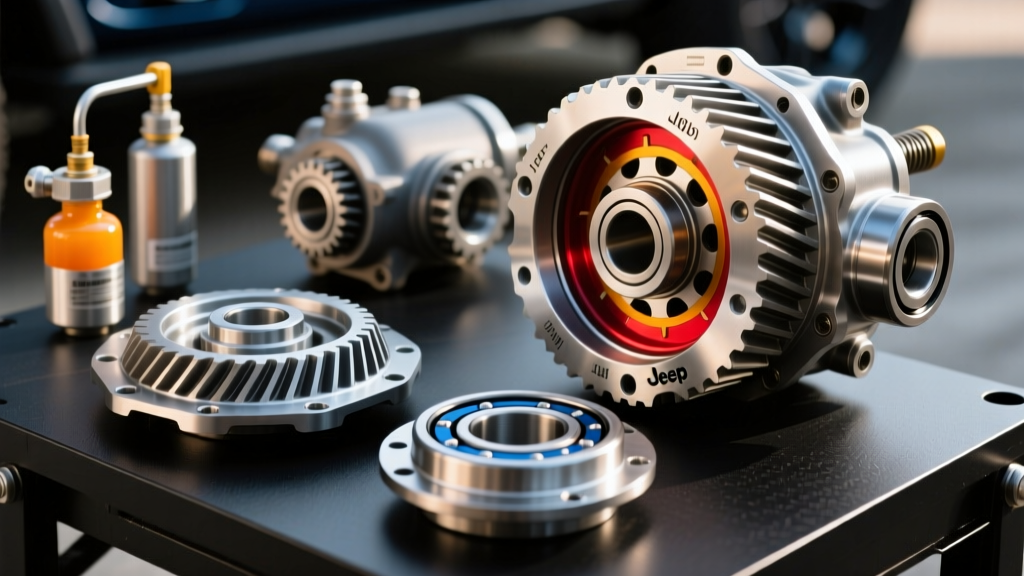
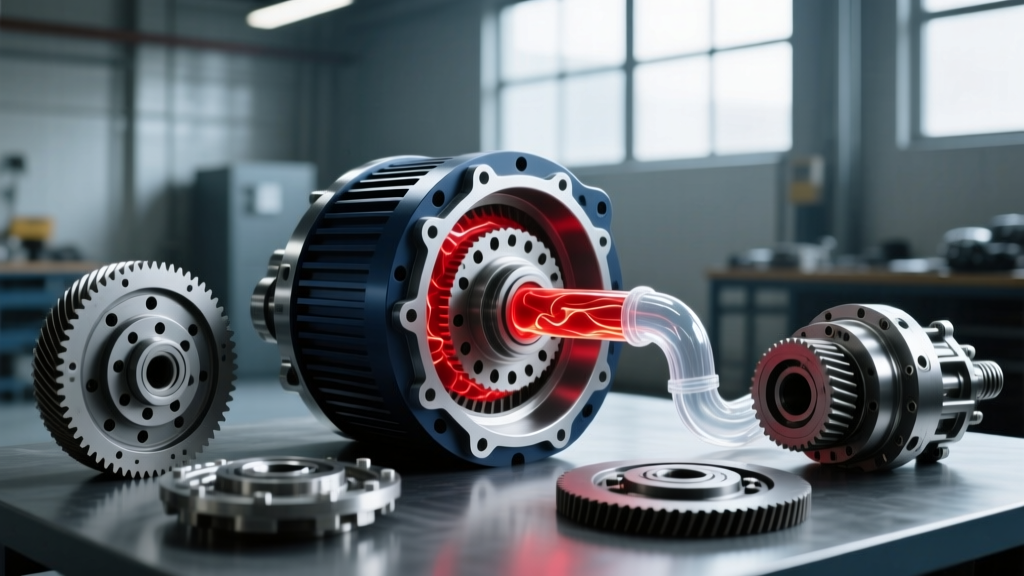
Unlike a traditional solid-axle rear differential, an AWD center differential case is typically integrated into the transmission extension housing or mounted as a standalone transfer case module. The case houses the torque-biasing mechanism, which generally falls into three categories:
- Gear-Driven (Torsen/Helical): Relies on precision-machined worm gears and side gears. The case must maintain exact tolerances to prevent gear bind.
- Planetary/Clutch-Pack (VTD/Haldex): Uses a planetary gearset and hydraulic or electronically actuated multi-plate clutches. The case houses the hydraulic fluid galleries and piston bores.
- Viscous Coupling: Contains a sealed drum of silicone fluid. The outer case acts primarily as a structural mount and heat sink.
According to engineering documentation from Torsen, the housing rigidity is paramount; even microscopic case deflection under high-torque loads can cause the helical gears to bind, resulting in catastrophic internal failure.
Primary Symptoms of Center Differential Case Failure
Diagnosing a failing center differential requires isolating the symptoms from transmission, transfer case, or wheel-bearing noise. Below are the hallmark signs of center differential case and internal degradation.
1. Low-Speed Binding and Tire Chatter
If the vehicle exhibits severe binding, hopping, or tire chirping during tight, low-speed turns (such as pulling into a parking space), the center differential is failing to allow speed differentiation between the front and rear axles. While this can be caused by degraded clutch fluid in a Viscous Coupling or worn clutch packs, it is also a primary symptom of differential case bore wear. If the case bores that support the planetary carrier or worm gear shafts become elongated due to abrasive fluid contamination, the gears will physically bind under lateral load.
2. High-Frequency Whining Under Load
A whining noise that changes pitch with vehicle speed—but remains constant regardless of engine RPM or gear selection—points directly to the center differential. If the noise is accompanied by a metallic grinding sensation, the internal bearings supporting the gearset within the differential case have likely failed. Once bearing failure occurs, the resulting radial play allows the internal gears to chew into the soft aluminum of the differential case, necessitating a complete housing replacement.
3. Split-Line Leaks and Case Porosity
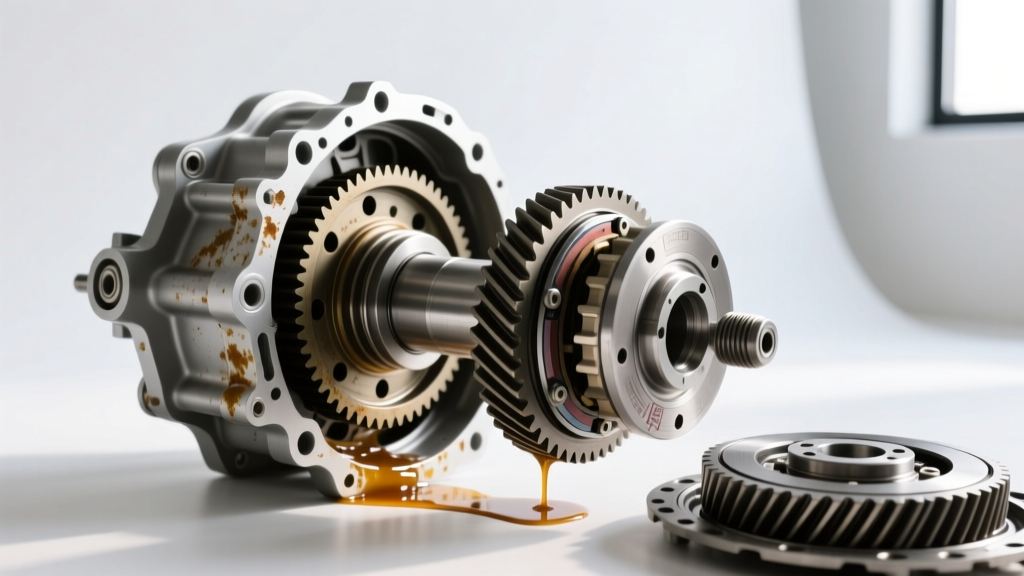
Many standalone center differentials (such as those found in older Mitsubishi or Subaru manual platforms) feature a two-piece clamshell case design sealed with RTV or a specific gasket. Thermal expansion and contraction over 100,000+ miles can cause the sealant to fail, leading to gear oil weeping at the split-line. Furthermore, some modern cast-aluminum cases are susceptible to micro-porosity, which manifests as slow fluid seepage that mimics a rear main seal or transmission output shaft leak.
Diagnostic Matrix: Center Differential Troubleshooting
Use the following diagnostic framework to isolate center differential case and internal faults from other AWD system anomalies.
| Symptom | Probable Cause | Diagnostic Test | Action Required |
|---|---|---|---|
| Binding on tight turns | Clutch pack lockup, case bore wear, or mismatched tires | Verify tire circumference (must be within 2mm). Lift vehicle and rotate wheels by hand. | Replace fluid; if binding persists, inspect case bores and rebuild. |
| Whining noise at 40-60 mph | Bearing failure causing gear misalignment inside the case | Use a chassis ear or stethoscope on the transmission extension housing. | Drop the center diff, split the case, and measure bearing journals. |
| Fluid leak at housing joint | RTV degradation, stripped case threads, or warped mating surface | Clean the area with brake cleaner, apply UV dye, and run the vehicle. | Reseal with OEM-specified RTV; install Helicoil if case threads are stripped. |
| AWD Warning Light + Limp Mode | Sensor failure, solenoid fault, or severe internal mechanical bind | Scan for TCM/AWD specific codes (e.g., Subaru P0705 series, VAG 02248). | Address electrical faults first; if mechanical bind is detected, replace assembly. |
System-Specific Deep Dives and Case Nuances
Subaru VTD and Torsen Center Differentials
Subaru's Symmetrical AWD relies heavily on the center differential. In the 6-speed manual transmissions, a Torsen-style helical gear center differential is utilized. The differential case bolts directly to the rear of the transmission extension housing. A common failure point is not the gears themselves, but the differential case mounting flange. Under extreme launch loads (common in modified WRX/STI platforms), the cast aluminum case can develop micro-fractures near the 12mm mounting bolt holes. When rebuilding, always magnaflux the case mounting ears. The factory torque spec for the center diff case-to-extension housing bolts is strictly 35 Nm (25.8 lb-ft). Overtorquing will warp the case and induce gear bind.
Audi Quattro (Torsen Type C / Crown Gear)
In modern Audi vehicles equipped with the ZF 8HP transmission, the center differential is integrated directly into the transmission case. As noted by ZF Aftermarket, the 'case' here is the mechatronic and transfer case assembly. Troubleshooting noise in these units requires isolating the transfer case chain and the crown gear center differential. Because the differential is bathed in the transmission's specific fluid (e.g., VAG G 055 145 A2), using an incorrect 75W-90 GL-5 gear oil will destroy the integrated clutch packs and ruin the internal case surfaces.
Ford PTU (Power Transfer Unit) Case Failures
While technically a bevel-gear power take-off rather than a true torque-biasing center differential, the Ford PTU case is notorious in AWD diagnostics. Found in the Explorer, Edge, and Flex (3.5L EcoBoost), the PTU case is positioned inches from the catalytic converter. The extreme heat degrades the 75W-140 gear oil, leading to bearing failure. The bearing races then spin in the soft aluminum PTU case, destroying the housing. Diagnosis requires dropping the PTU and inspecting the intermediate shaft bearing bore for scoring.
Fluid Specifications and Case Maintenance Protocols
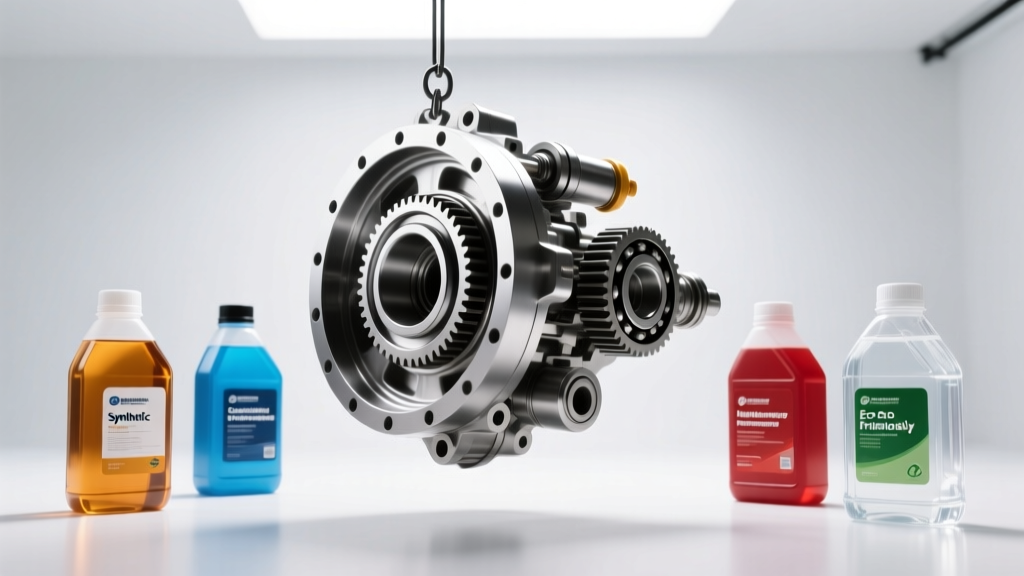
Fluid is the lifeblood of the center differential. The case acts as a sump, and inadequate lubrication will rapidly destroy the internal components and the case bores.
Expert Tip: Never assume all AWD center differentials use standard 75W-90 GL-5 gear oil. Viscous couplings and electronic clutch-pack center diffs require highly specific friction-modified fluids. Using GL-5 in a clutch-type center diff will cause the friction modifiers to clash with the clutch material, resulting in permanent lockup and case destruction.
- Gear-Driven (Torsen/Helical): Requires high-quality 75W-90 GL-5. Recommended: Motul Gear 300, Red Line 75W-90, or OEM Subaru Extra MT.
- Viscous Coupling: Often sealed for life, but if serviceable, requires specific silicone-based viscous fluids. Do not substitute with gear oil.
- Clutch-Pack (VTD/Haldex-based center modules): Requires OEM-specific fluids (e.g., Subaru ATF-HP for VTD, or specific AWD coupling fluids) to maintain correct clutch engagement thresholds.
When splitting a two-piece differential case for a rebuild, cleaning the mating surfaces is critical. Use a plastic scraper and brake cleaner. Apply a 2.5mm bead of high-temperature RTV (such as Permatex Ultra Black or Toyota FIPG 08826-00080). Allow the RTV to cure for a minimum of 12 hours before filling with fluid to prevent the sealant from washing out into the gearset.
Repair Costs and Replacement Strategies
Diagnosing a failed center differential case often leads to a difficult financial decision: rebuild or replace. Because the case is the structural foundation of the unit, internal damage usually mandates a full assembly replacement.
- Fluid Service / Reseal: $150 - $300 (Labor and OEM RTV/Fluid).
- Bearing and Seal Rebuild (Case Intact): $600 - $1,200. Requires specialized bearing pullers and press tools.
- OEM Center Differential Assembly Replacement: $1,200 - $2,800 for the part, plus 3-5 hours of labor ($450 - $750).
- Used/Salvage Unit: $400 - $800. Highly risky due to the inability to inspect internal case bore wear without disassembly.
For comprehensive diagnostic flowcharts and wiring diagrams related to electronic AWD clutch controls, technicians should consult AA1Car's Drivetrain Library or factory service portals. Proper diagnosis of the differential case and its internal components saves customers from unnecessary transmission replacements and ensures the AWD system operates seamlessly for the life of the vehicle.