Overcoming FWD Traction Limits: The Role of the Front Wheel Differential
For front-wheel-drive (FWD) performance enthusiasts, the factory open differential is the single greatest bottleneck to lap times and corner-exit grip. When you apply throttle mid-corner in a high-horsepower FWD platform like the Honda Civic Type R, VW Golf GTI, or Ford Fiesta ST, the inside front wheel unloads. An open front wheel differential immediately routes all available torque to this spinning wheel, resulting in severe wheelspin, aggressive torque steer, and a dramatic loss of forward momentum. Upgrading to a locking or limited-slip front wheel differential is the most transformative modification you can make to a FWD transaxle, fundamentally altering how the car puts power to the pavement.
However, selecting the correct differential for a front-wheel-drive application requires a deep understanding of transaxle kinematics. Unlike rear-wheel-drive setups where a 2-way locking differential is common, the front axle of a FWD car is responsible for both steering and braking. Installing the wrong locking mechanism will result in dangerous understeer and compromised turn-in dynamics. This guide breaks down the engineering realities of front wheel differential upgrades, covering helical vs. clutch-type designs, exact installation torque specs, and critical fluid selection for 2026 track and street builds.
The Golden Rule of FWD Differentials: Deceleration Locking
Before analyzing specific brands, you must understand the kinematic rule of the front axle: Never install a 2-way locking differential in a FWD car. A 2-way diff locks equally under acceleration and deceleration. When you trail-brake into a corner, weight transfers forward, and you need the front wheels to rotate at different speeds to pivot the chassis. If your front wheel differential is locked on deceleration, both front wheels are forced to turn at the same RPM, causing the car to 'push' or understeer massively on corner entry.
Therefore, FWD upgrades are strictly limited to Torque-Biasing (Helical) differentials, 1-Way clutch differentials (lock on accel, open on decel), or 1.5-Way clutch differentials (lock on accel, partial lock on decel).
Helical (Gear-Type) Front Wheel Differential Upgrades
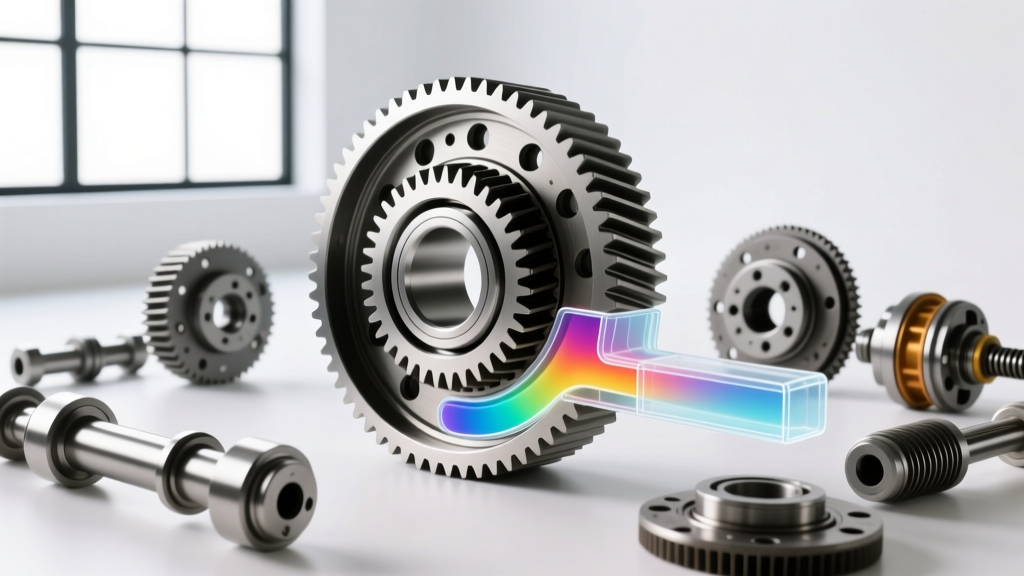
Helical limited-slip differentials, often referred to by the pioneering brand name Torsen or modern equivalents like Quaife and Wavetrac, utilize helical-cut planetary gears to create a torque bias ratio (TBR). When the inside wheel begins to slip, the gear mesh binds against the differential housing, multiplying the torque sent to the outside wheel with grip.
Pros and Cons of Helical Designs
- Smooth Operation: Torque transfer is progressive and seamless, making it highly predictable at the limit of adhesion.
- Zero Maintenance: No clutch packs to wear out, no friction modifiers required, and no rebuild intervals.
- The Zero-Axle-Load Flaw: Standard helical diffs require *some* resistance on the slipping wheel to multiply torque. If the inside FWD wheel lifts completely off the ground (zero axle load), a standard helical diff acts like an open diff, sending zero torque to the grounded wheel. Workaround: Left-foot braking to create drag, or upgrading to a Wavetrac or modern Quaife ATB which features a patented wave-hub to generate internal resistance during zero-load scenarios.
Clutch and Plate-Type Front Wheel Differential Upgrades
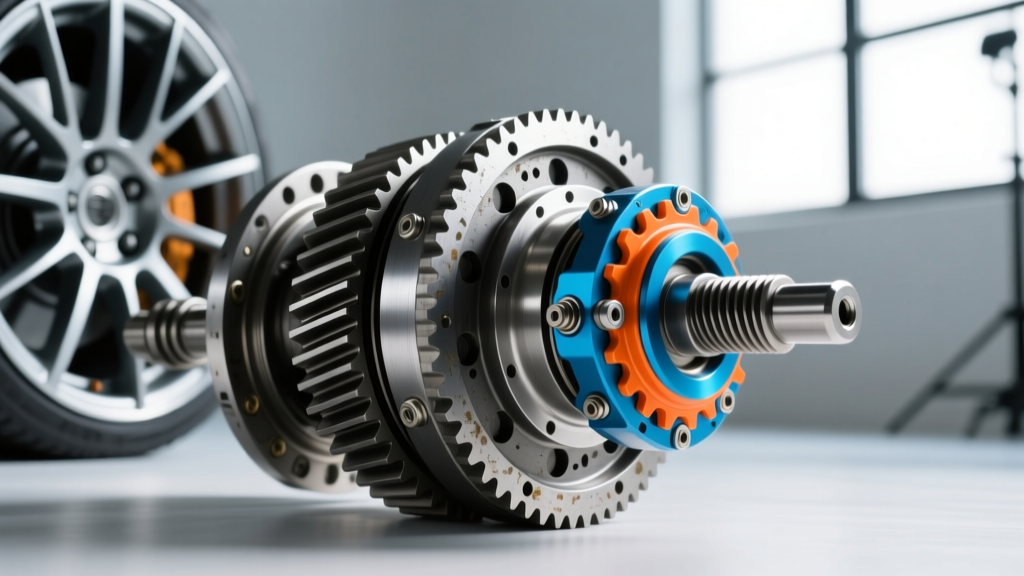
Clutch-type differentials (manufactured by brands like Cusco, Kaaz, and OS Giken) utilize alternating steel and friction plates squeezed together by a cross-shaft and ramp rings. As torque is applied, the ramps push the cross-shaft outward, clamping the clutch packs and locking the axles together.
Pros and Cons of Clutch Designs
- Pre-Load Capability: Clutch diffs can be built with initial torque (pre-load). This means the diff resists differentiation even before throttle is applied, keeping the front end incredibly stable during turn-in and eliminating inside-wheel spin the millisecond you touch the gas.
- Agressive Locking: Capable of 100% mechanical lock, pushing the car forward even if one wheel is entirely off the ground.
- Maintenance Heavy: Friction plates degrade. A dedicated FWD track car running a clutch-type front wheel differential will typically require a teardown, inspection, and clutch pack replacement every 15,000 to 20,000 track miles.
- Low-Speed Chatter: Without the correct fluid, clutch diffs will chatter and bind during tight parking lot maneuvers, causing axle hop and drivetrain stress.
2026 FWD Platform Upgrade Matrix
The following table outlines proven front wheel differential configurations for popular modern FWD performance platforms. Pricing reflects average 2026 retail costs for the differential unit only.
| Vehicle Platform | Transaxle | Recommended Diff Type | Part Number Example | Est. Unit Cost |
|---|---|---|---|---|
| Honda Civic Type R (FK8/FL5) | K20C1 6-Speed | Helical (ATB) | Quaife QDF37Z | $1,150 |
| VW Golf GTI / R (MQB) | MQ350 / DQ250 | 1.5-Way Clutch | Cusco LSD Type RS 1.5 | $980 |
| Ford Fiesta ST / Focus ST | B6 / IB6 | 1-Way Clutch | Kaaz Super Q 1-Way | $850 |
| Subaru WRX (Front Diff Only) | TY85 6-Speed | Helical (Torsen) | OEM STI Torsen / Cusco | $750 - $900 |
Installation Realities: Torque Specs and Hardware
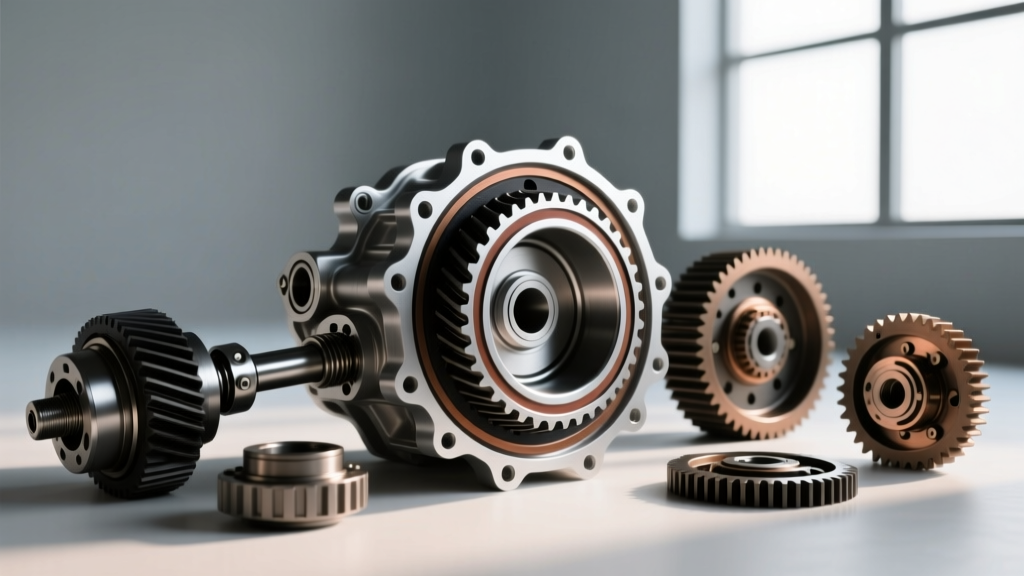
Upgrading a front wheel differential is not a simple drop-in job. It requires splitting the transaxle case, pressing bearings, and transferring the ring gear. Precision is mandatory to prevent catastrophic gear failure at high RPMs.
Ring Gear Fastening Protocol
The ring gear must be perfectly seated against the differential carrier flange. Any debris or improper torque will result in ring gear runout, leading to whining noises and shattered teeth under load.
- Preparation: Clean all ring gear bolt threads and carrier holes with acetone. Do not use brake cleaner, as it leaves a residue that compromises threadlocker.
- Threadlocker: Apply Loctite 271 (Red) or Loctite 262 to the threads. Because FWD transaxles experience massive shock loads during hard upshifts (especially the 2-3 shift in Honda K-series), high-strength threadlocker is non-negotiable.
- Torque Specifications: Always verify with the factory service manual, but standard baseline specs include:
- Honda K-Series (M10x1.25 bolts): 65 lb-ft (88 Nm) in a star pattern.
- VW MQ350/DQ250 (M10 bolts): 74 lb-ft (100 Nm) plus a 90-degree turn (torque-to-yield hardware must be replaced with new OEM bolts).
- Subaru 6-Speed (M11 bolts): 85 lb-ft (115 Nm).
Bearing Preload and Backlash
When reinstalling the differential carrier into the transaxle housing, bearing preload must be set using shims or adjustable bearing races. Too loose, and the ring gear will deflect away from the pinion under torque, stripping teeth. Too tight, and you will generate excessive heat, destroying the bearings and boiling your gear oil. Target a bearing preload drag of 15-25 in-lbs (measured with a beam-style torque wrench on the bare carrier without seals), and verify ring gear backlash using a dial indicator. Target backlash is typically between 0.004' and 0.007' (0.10mm - 0.18mm) depending on the specific gear manufacturer.
Fluid Selection and Break-In Protocol
The gear oil you select will dictate the performance and lifespan of your front wheel differential. Using the wrong fluid in a clutch-type diff will render it useless or cause severe drivetrain binding.
Fluids for Helical (Gear-Type) Differentials
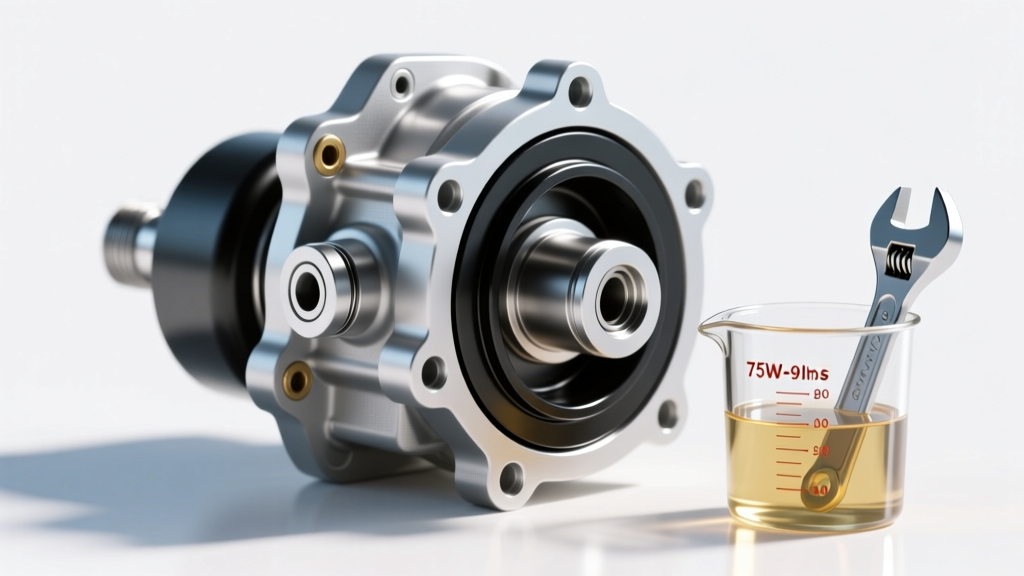
Helical diffs do not contain friction materials. They require a high-quality, GL-5 rated synthetic gear oil with high shear stability and extreme pressure (EP) additives to protect the hypoid ring and pinion gears.
Recommendation: Motul Gear 300 75W-90 or Red Line 75W-90. These fluids maintain their viscosity film strength even when the transaxle oil temperatures exceed 250°F on the track. Standard GL-5 fluids with friction modifiers (labeled 'LS' or Limited Slip) should be avoided in pure helical setups, as the modifiers can slightly reduce the friction coefficient inside the helical gear mesh, marginally reducing the torque biasing effect.
Fluids for Clutch and Plate-Type Differentials
Clutch packs require specific friction characteristics. If you use standard GL-5 oil, the clutch plates will slip, glaze, and fail to lock. If you use oil with too much 'slip modifier', the diff will act like an open unit.
Recommendation: Red Line 75W90 NS (Non-Slip). The 'NS' designation means it contains no friction modifiers, allowing the clutch plates to bite aggressively. For daily-driven FWD cars with clutch diffs where low-speed parking chatter is a concern, you can add exactly 1 to 1.5 ounces of a dedicated LSD friction modifier (like Torco or Red Line ShockProof modifier), but track cars should run the NS fluid straight.
The Critical Break-In Procedure
If you install a clutch-type front wheel differential, the break-in procedure is vital. For the first 300 to 500 miles, avoid full-throttle launches and heavy trail-braking. Drive the car in varied conditions, including large, empty parking lots where you can perform continuous figure-8 maneuvers at 15-20 MPH. This cross-loads the differential, forcing the clutch plates to slip slightly and mate perfectly to the steel plates, burnishing the friction material and establishing the correct initial torque pre-load. Failure to properly break in a clutch diff will result in permanent chatter and uneven lock-up characteristics.
Final Verdict: Which Front Wheel Differential is Right for You?
If your FWD build is a dedicated time-attack car where every hundredth of a second counts, and you have the budget for periodic transaxle teardowns, a 1.5-way clutch differential (like Cusco or OS Giken) offers the ultimate, uncompromising corner-exit grip. However, for 90% of enthusiasts building a dual-purpose street and track FWD car, a helical front wheel differential (like Quaife or Wavetrac) is the superior choice. It eliminates the majority of torque steer, provides seamless power delivery, requires zero maintenance, and will easily outlast the transmission itself.