Decoding AWD Center Differential Hydraulic Faults
Modern all-wheel-drive (AWD) systems rely on complex electro-hydraulic center differentials to distribute torque between the front and rear axles. Units like the Haldex Gen 5 (found in VW, Audi, and Volvo) and BorgWarner EcoTrac (found in Ford and GM crossovers) utilize high-pressure clutch packs to engage the rear driveline. When these systems develop shudder, binding, or fail to engage, traditional OBD2 scans often yield generic 'AWD Malfunction' codes. To truly isolate the root cause, master technicians in 2026 are increasingly turning to a specialized diagnostic approach: using a differential pressure gauge kit to measure hydraulic pressure drops (Delta P) across the unit's internal circuits.
Why Standard Line Pressure Tests Fall Short
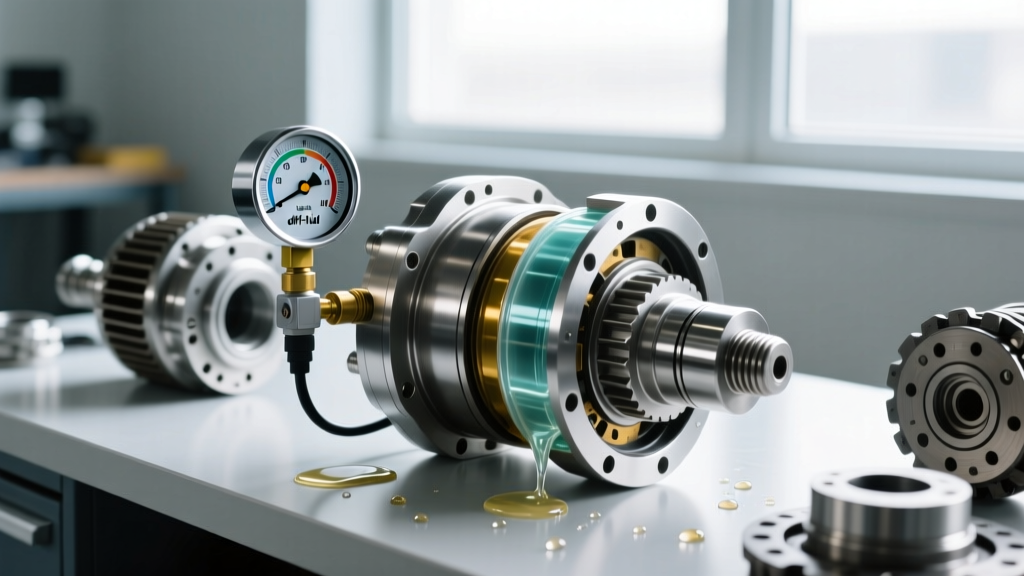
Historically, transmission diagnostics relied on a single-port line pressure gauge. However, active center differentials operate on a closed-loop hydraulic circuit where fluid is drawn from a sump, pushed through a filter, and routed to a proportional control valve (PCV) and clutch pack. A standard gauge only tells you what the pump is pushing; it doesn't reveal flow restrictions. By adapting a dual-port differential pressure gauge kit—commonly used in industrial fluid dynamics—technicians can measure the exact pressure differential before and after the AWD unit's filter and cooling orifices.
Selecting the Correct Gauge Kit for Automotive Hydraulics
Not all pressure gauges are suited for the high-frequency pulsations of an AWD electro-hydraulic pump. When sourcing a kit for center differential diagnosis, ensure it meets these specifications:
- Range: 0 to 1,000 PSI (0 to 70 Bar) to accommodate peak Haldex pump pressures.
- Dampening: Glycerin-filled dials to prevent needle flutter from the gerotor pump's pulsations.
- Accuracy: Minimum 1% full-scale accuracy (ASME B40.100 Grade 1A).
- Adapters: Metric O-ring boss (ORB) fittings, specifically M10x1.0 and M12x1.5, to mate with VAG and Ford test ports.
Professional kits from manufacturers like Mastercool or OTC typically range from $180 to $350, a necessary investment for high-line European and domestic AWD diagnostics.
Measuring Filter Delta P: The Hidden AWD Killer
The most common cause of premature clutch pack wear in the Haldex Gen 5 system is a clogged internal filter. Unlike older generations, the Gen 5 filter is a sintered bronze element pressed into the housing. As clutch material and pump wear debris accumulate, flow restriction increases.
By installing the high-pressure hose of your differential pressure gauge kit to the pump output port and the low-pressure hose to the post-filter gallery, you can measure the Delta P (pressure drop).
Expert Benchmark: A healthy Haldex Gen 5 filter will show a Delta P of less than 15 PSI at peak pump RPM. If your differential gauge reads a drop greater than 45 PSI, the bronze element is choked. This cavitation starves the clutch pack, causing the AWD control module to detect slip and trigger a limp-home FWD-only mode.
AWD Center Differential Pressure Diagnostics Matrix
Use the following matrix when diagnosing active torque-vectoring center differentials. These values represent typical parameters for transverse-engine AWD platforms (e.g., VW MQB, Ford CD4).
| Diagnostic Test Point | Target Specification | Failing Reading | Probable Failure Mode |
|---|---|---|---|
| Pump Peak Output (No Load) | 580 - 725 PSI | < 450 PSI | Worn gerotor pump, scored housing, or failing electric motor commutator. |
| Filter Delta P (Using Differential Gauge) | < 15 PSI | > 45 PSI | Clogged sintered bronze filter; requires housing teardown or aftermarket inline filter retrofit. |
| Clutch Pack Apply Pressure (Max Torque Request) | 250 - 300 PSI | Fluctuating / Low | Sticking proportional control valve (PCV) or degraded friction modifier in fluid. |
| Accumulator Bleed-Down Rate (Engine Off) | < 50 PSI drop in 60s | Rapid drop to 0 PSI | Internal check ball failure or blown clutch piston O-ring seal. |
Temperature Compensation in Hydraulic Readings
When using a differential pressure gauge kit, fluid temperature drastically alters viscosity and, consequently, pressure drop readings. AWD center differential fluids like G 060 175 A2 operate optimally between 80°C and 100°C (176°F - 212°F). If you measure Delta P with the fluid at ambient garage temperature (20°C), the fluid's higher kinematic viscosity will artificially inflate your pressure drop reading by up to 30%. Always use an infrared pyrometer or an OBD2 live-data PID to verify the sump temperature exceeds 60°C before recording your final differential pressure baseline. Failing to account for thermal viscosity shifts leads to misdiagnosing a healthy filter as restricted.
Real-World Case Study: 2023 VW Tiguan AWD Shudder
A recent diagnostic case involved a 2023 VW Tiguan (MQB platform) exhibiting severe driveline shudder during tight, low-speed turns. The OBD2 scan revealed no hard electrical faults, only a generic 'AWD Clutch Slip' pending code. The owner had recently paid for a 'fluid flush' at a quick-lube shop, which used an incorrect universal CVT fluid instead of the mandated VAG G 060 175 A2 specification.
The Diagnostic Sequence
- Fluid Verification: We drained the center differential. The fluid lacked the specific friction modifiers required for the Haldex clutch pack, and contained fine metallic particulate.
- Pressure Testing: We connected our glycerin-filled differential pressure gauge kit to the pump output and the clutch feed gallery.
- Dynamic Testing: With the vehicle on a dyno, we commanded 100% clutch lockup via VCDS (VAG-COM). The pump generated 650 PSI, but the post-filter gallery only saw 410 PSI—a massive 240 PSI Delta P.
The Resolution
The incorrect fluid had caused the friction material to shed rapidly, completely choking the non-serviceable bronze filter. Because the filter is integrated into the rear differential housing on early Gen 5 units, the official dealer repair is a complete $2,800 center differential replacement. However, utilizing an aftermarket inline filter retrofit kit (approx. $180) and performing a thorough chemical flush, we restored Delta P to 12 PSI. The unit was refilled with exactly 0.65L of genuine G 060 175 A2 fluid, and the drain/fill plugs were torqued to 35 Nm (26 lb-ft).
Fluid Specifications and Maintenance Intervals
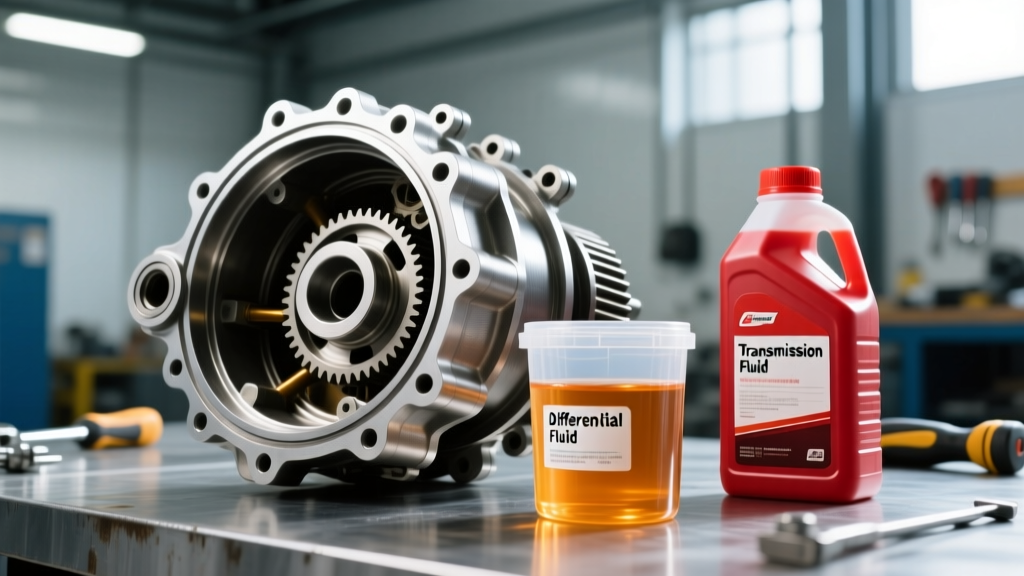
Proper fluid chemistry is critical to maintaining the hydraulic tolerances measured by your gauge kit. Universal 'multi-vehicle' AWD fluids often lack the precise shear stability and friction modifiers required by active center diffs.
- VAG Haldex Gen 5: G 060 175 A2 (Capacity: ~0.65L - 0.85L depending on housing). Change interval: Every 40,000 miles.
- Ford/GM BorgWarner PTU: Motorcraft XY-75W-140-QL or equivalent 75W-140 Synthetic. (Capacity: ~0.5L). Change interval: Every 30,000 miles under severe duty.
- Toyota Dynamic Torque Vectoring: Toyota Genuine Hypoid Gear Oil SX (Capacity varies by application). Change interval: Every 60,000 miles.
Maintaining Your Gauge Kit
AWD fluids contain aggressive friction modifiers and detergents. After every use, flush your gauge hoses with a dedicated solvent like CRC Brakleen, and inspect the O-ring seals on your metric adapters. A degraded O-ring will introduce a micro-leak, causing the glycerin-filled gauge to slowly bleed pressure during a static accumulator bleed-down test, leading to a false-positive diagnosis of internal clutch piston failure.
Final Thoughts on Hydraulic Diagnostics
As AWD systems become more tightly integrated with vehicle stability and torque-vectoring algorithms, guessing based on symptoms is no longer viable. Investing in a high-quality differential pressure gauge kit and understanding the hydraulic architecture of modern center differentials allows technicians to pinpoint flow restrictions, pump wear, and valve body faults with surgical precision. For more in-depth drivetrain diagnostics, consult BorgWarner's AWD technical documentation and stay updated with industry standards via Auto Service Professional.