The Hidden Cost of Thermal Degradation in Modern Drivetrains
Heat is the undisputed enemy of automatic transmission longevity. When automatic transmission fluid (ATF) exceeds 220°F (104°C), it begins a rapid process of oxidation, losing its shear stability and friction-modifying properties. For modern, highly complex gearboxes like the GM 6L80, the Ford 10R80, and the ZF 8HP, maintaining strict thermal thresholds is not just recommended—it is mandatory for survival. By managing thermal loads proactively with an aftermarket upgrade, you effectively eliminate the primary catalyst that leads to a costly transmission oil cooler repair, line replacement, or complete drivetrain rebuild.
In this preventive maintenance guide, we explore the exact mechanical benefits of auxiliary transmission coolers, how to size them for your specific Gross Vehicle Weight Rating (GVWR), and the precise installation torque specs required to keep your cooling loop leak-free.
Why Factory Coolers Fall Short in the 2026 Aero-Era
Automakers are under immense pressure to meet stringent EPA fuel economy standards. As a result, 2024–2026 model year trucks and SUVs are equipped with aggressive Active Grille Shutters (AGS) and aerodynamic underbody shielding. While these systems improve highway MPG, they severely restrict ambient airflow to the factory radiator-integrated transmission coolers during low-speed, high-load scenarios like towing or off-roading.
The Thermal Bypass Dilemma
Many modern transmissions, notably the GM 6L80 and 8L90 series, utilize a thermal bypass valve within the transmission case or cooler lines. This valve restricts fluid flow to the cooler until the ATF reaches a specific temperature (often around 185°F) to help the engine warm up faster for emissions testing. However, once the valve opens under heavy towing loads, the factory radiator cooler is often undersized to shed the sudden influx of heat, leading to fluid temperature spikes well over 240°F. Chronic exposure to these temperatures bakes the ATF, leading to varnish buildup in the valve body and eventual failure of the internal transmission oil cooler repair pathways.
Quantifying the Benefits: Factory vs. Auxiliary Cooling
Adding an external, frame-mounted cooler fundamentally changes the thermal dynamics of your drivetrain. Below is a comparative analysis of cooling performance based on a 7,500 lb towing scenario on a 6% grade.
| Metric | Factory Radiator-Integrated Cooler | Auxiliary Stacked-Plate Cooler (e.g., Derale Hyper-Cool) |
|---|---|---|
| Peak ATF Temperature (Towing) | 235°F - 255°F | 185°F - 205°F |
| Cooling Capacity (BTU/hr) | 12,000 - 15,000 | 25,000 - 35,000 |
| Fluid Oxidation Rate | High (Fluid life halved every 20°F over 220°F) | Minimal (Optimal chemical stability) |
| System Pressure Drop | Low (Restricted by bypass valves) | Moderate (Requires proper line sizing) |
| Risk of Cooler Line Rupture | High (Rubber hose degradation from engine bay heat) | Low (Mounted in high-airflow, low-heat zones) |
Selecting the Right Auxiliary Cooler Architecture
Not all coolers are created equal. When selecting a unit to prevent future transmission oil cooler repair nightmares, you must choose the right internal architecture for your application.
- Tube-and-Fin: The most basic and affordable design ($40–$80). Best for light-duty passenger vehicles or older models like the 4L60E that do not generate extreme thermal loads. Prone to clogging if fluid is already degraded.
- Plate-and-Fin: A step up in efficiency ($90–$150). Features internal turbulators that agitate the fluid against the cooling plates. Ideal for half-ton trucks doing occasional towing.
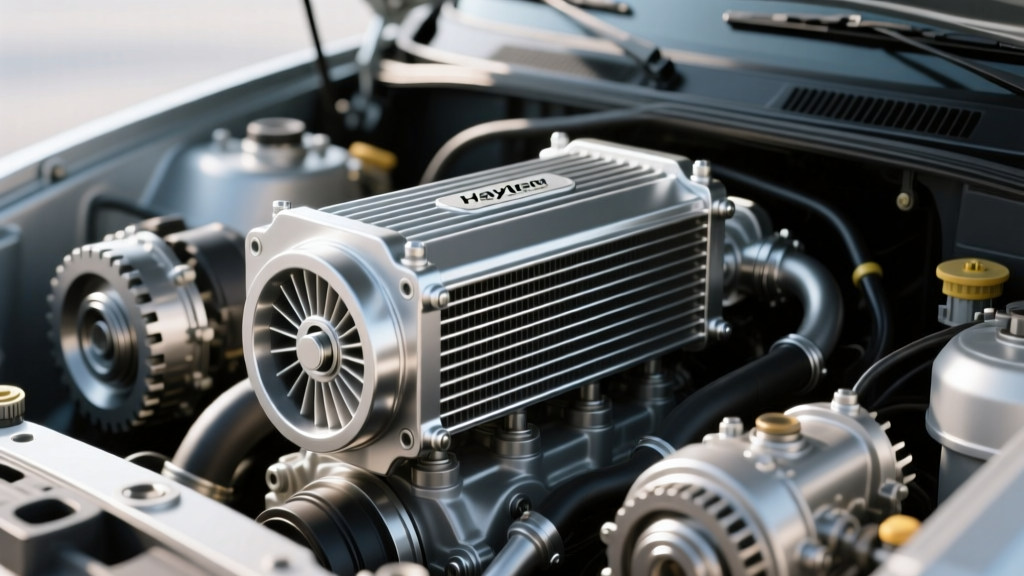
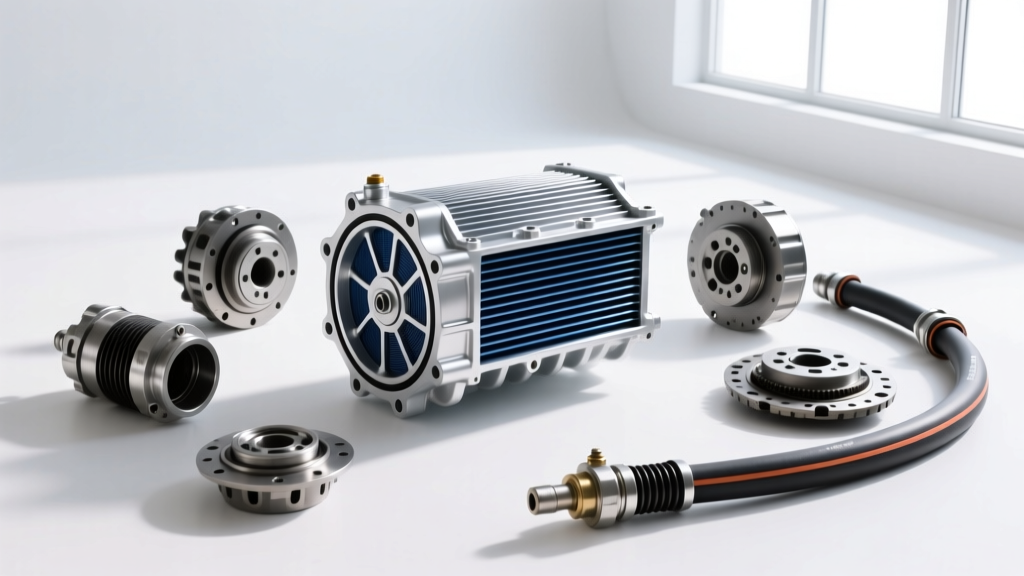
- Stacked-Plate: The gold standard for heavy-duty and commercial use ($180–$350). Models like the Hayden Rapid-Cool 678 or Derale 15960 Hyper-Cool utilize a series of stamped aluminum plates brazed together. They offer the highest BTU shedding capability, the lowest pressure drop, and superior resistance to physical damage from road debris.
Expert Tip: If you are running a ZF 8HP transmission (found in Ram 1500s, F-150s, and many European SUVs), you must use a stacked-plate cooler. The ZF 8HP requires highly specific friction characteristics from its 8-speed ATF. Overheating destroys the friction modifiers, leading to the infamous 'ZF shudder.' A stacked-plate cooler preserves these chemical properties.
Installation Best Practices and Preventive Maintenance
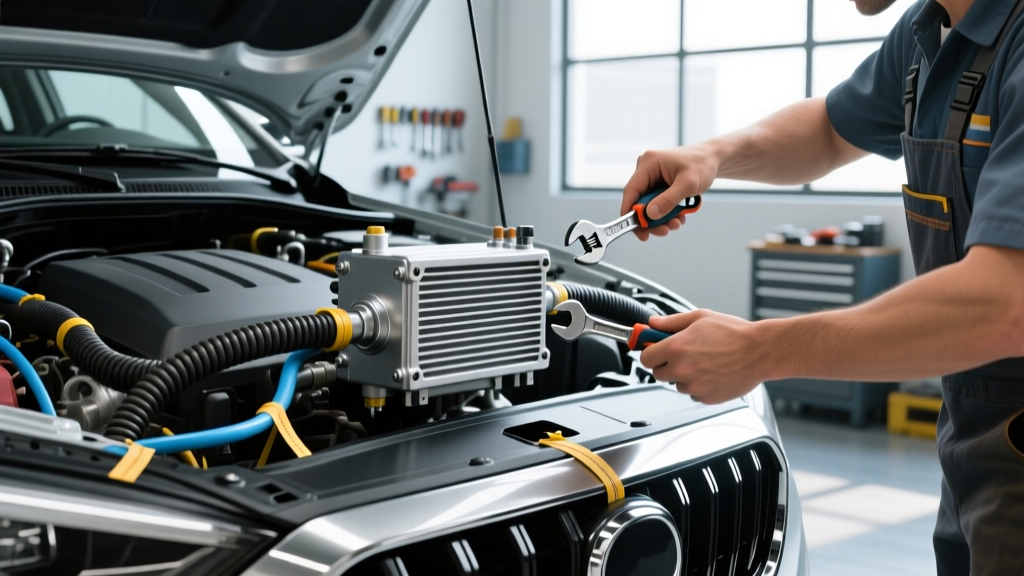
A poorly installed auxiliary cooler can introduce air pockets, restrict flow, or leak, directly causing the very transmission oil cooler repair you are trying to avoid. Follow these exact specifications for a bulletproof installation.
Routing and Line Selection
Never use standard fuel line or emission hose for transmission cooling circuits. Transmission lines must withstand continuous exposure to 250°F+ ATF and internal pressures that can spike to 150+ PSI during torque converter lockup. Always use SAE J1532 certified high-temperature transmission hose (typically 1/2" ID for most domestic V8 applications, or 3/8" ID for smaller passenger cars).
Fittings and Torque Specifications
Many premium auxiliary coolers utilize AN-style fittings for secure, leak-free connections. Over-tightening aluminum AN fittings will strip the threads or crack the cooler end-tank.
- AN-6 Aluminum Fittings: Torque to 12–15 ft-lbs using an aluminum-specific crowfoot wrench.
- AN-8 Aluminum Fittings: Torque to 20–25 ft-lbs.
- Barb Fittings with Hose Clamps: Use dual stainless-steel worm-drive clamps per connection. Torque clamps to 35–45 in-lbs. Do not exceed 50 in-lbs, or you will cut into the rubber hose, creating a slow weep that leads to fluid starvation.
The Thermal Bypass Delete
For dedicated towing vehicles, many preventive maintenance experts recommend installing a thermal bypass delete kit (available from brands like Sonnax or TransGo). This forces 100% of the ATF to flow through the auxiliary cooler at all times, ensuring immediate cooling when you start pulling a heavy grade from a dead stop. According to Sonnax technical documentation, eliminating the delayed cooling phase can drop peak towing temperatures by an additional 15°F to 20°F.
ROI Analysis: Upfront Investment vs. Repair Costs
Viewing an auxiliary cooler as an unnecessary expense is a false economy. When we compare the cost of proactive cooling against reactive repairs, the financial benefits are undeniable.
- Auxiliary Cooler Kit (Stacked-Plate + Lines + Hardware): $220 – $380
- Professional Installation Labor: $150 – $250 (1.5 to 2.5 hours)
- Reactive Transmission Oil Cooler Repair (Integrated Radiator Replacement): $800 – $1,400 (Requires draining coolant, removing front bumper, replacing radiator, and flushing both systems).
- Reactive Transmission Rebuild (Due to Thermal Failure): $3,500 – $5,500+ (Includes torque converter replacement, valve body machining, and clutch pack replacement).
Furthermore, maintaining ATF temperatures below 200°F allows you to safely extend your fluid drain intervals to the manufacturer's true 'lifetime' or 100,000-mile mark, saving you $250+ per fluid service over the life of the vehicle.
Conclusion
The integration of an auxiliary transmission cooler is the single most effective preventive maintenance modification you can perform on a towing or heavy-duty vehicle. By shedding excess BTUs, preserving ATF shear stability, and bypassing the limitations of modern aerodynamic grille shutters, you protect your drivetrain from catastrophic thermal failure. Whether you are running a high-strung ZF 8HP or a workhorse GM 6L80, investing in a quality stacked-plate cooler today ensures you will never have to pay for a premature transmission oil cooler repair tomorrow.
For further reading on cooler sizing and GVWR matching, consult the Derale Product Guides or the Hayden Automotive Tech Center to ensure your specific vehicle receives the exact thermal management it requires.