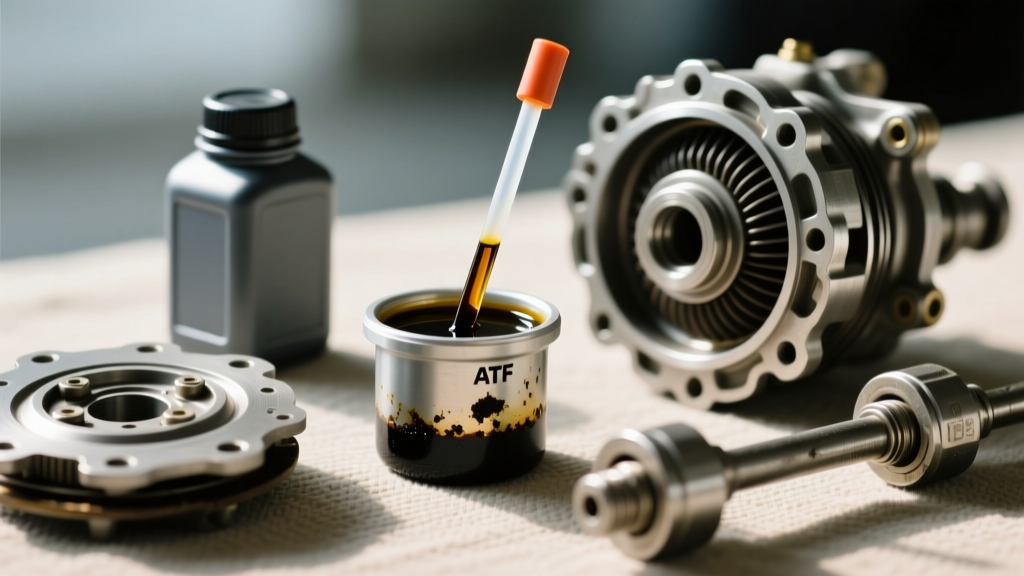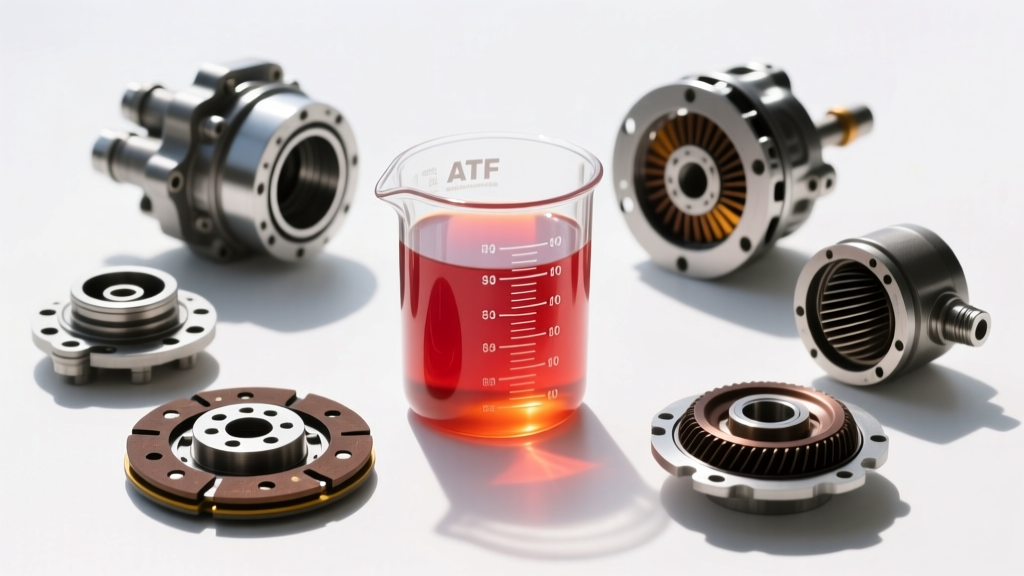
When performing drivetrain maintenance, one of the most common questions DIYers and junior technicians ask is: what color is automatic transmission fluid supposed to be? The short answer is that new, factory-fill automatic transmission fluid (ATF) is typically a vibrant, translucent red. However, as of 2026, the proliferation of ultra-low viscosity (ULV) fluids, continuously variable transmission (CVT) fluids, and OEM-specific synthetic blends means that 'red' is no longer the universal baseline. More importantly, the color of your ATF on the dipstick is a direct chemical window into the health of your transmission's clutch packs, torque converter, and valve body.
At AutoGearNexus, we treat fluid analysis as the first line of defense against catastrophic drivetrain failure. Below, we break down the exact color profiles, the chemistry behind fluid degradation, and the OEM-specific quirks you need to know to accurately diagnose your transmission's condition.
The Baseline: Factory-Fill ATF Color Profiles
Before you can diagnose degraded fluid, you must understand the starting point. Manufacturers dye ATF specific colors to aid in leak identification and to prevent cross-contamination during factory fills. Here are the standard baseline colors for modern transmissions:
- Traditional Step-Ratio ATFs (Dexron VI, Mercon LV, Toyota WS): Bright, translucent red or dark cherry red. For example, ACDelco Dexron VI (Part #10-9395) is a distinct bright red.
- OEM-Specific Synthetics (Honda DW-1, Hyundai SP-IV): Often lean toward an amber or light brownish-red hue straight out of the bottle.
- European ZF Fluids (LifeguardFluid 6 and 8): Naturally amber or yellowish. ZF does not use red dye in their factory fluids.
- CVT Fluids (Nissan NS-3, Honda HCF-2): Frequently green, amber, or clear with a slight yellow tint to differentiate them from planetary gear ATFs.
- Ultra-Low Viscosity (ULV) Fluids: Newer 10-speed transmissions (like the GM 10L80 and Ford 10R80) use ULV fluids that are often dyed yellow or amber to prevent technicians from accidentally topping them off with standard red ATF, which would cause immediate hydraulic failure.
The Ultimate ATF Color Diagnostic Chart
Use this diagnostic matrix when performing the 'white paper towel drop test' to evaluate your fluid's current state. Never judge fluid color by looking at the thin film on a metal dipstick; always drop a sample onto a white paper towel.
| Fluid Color | Odor Profile | Texture / Visuals | Diagnostic Meaning | Expert Action Plan |
|---|---|---|---|---|
| Bright Red / Translucent | Sweet, slightly chemical | Thin, clear on towel | New or excellent condition. Additives are fully active. | No action required. Re-check in 15,000 miles. |
| Dark Brick Red | Normal petroleum scent | Slightly opaque | Normal aging. Friction modifiers are stabilizing. | Monitor. Plan for a drain-and-fill at next interval. |
| Brown / Opaque | Slightly burnt / acrid | Cloudy, leaves dark stain | Severe oxidation. Varnish is forming on valve body spools. | Perform multiple drain-and-fills immediately. Do NOT flush. |
| Black / Charcoal | Burnt marshmallow / toast | Gritty, metallic particles visible | Clutch material failure. Fluid has lost all shear stability. | Drop pan, inspect magnets. Prepare for transmission rebuild. |
| Milky Pink / Frothy | Sweet (antifreeze) | Emulsified, resembles strawberry milkshake | Coolant cross-contamination via failed radiator heat exchanger. | Stop driving immediately. Glycol destroys clutch adhesives. |
The Chemistry of Color Shift: Oxidation and Thermal Breakdown
Why does ATF turn from bright red to brown or black? The shift is driven by thermal oxidation. Automatic transmission fluid is a complex cocktail of synthetic base oils and an additive package containing friction modifiers, anti-wear agents (like ZDDP), and detergents.
According to SAE International tribology studies, ATF degradation accelerates exponentially once operating temperatures exceed 220°F (104°C). For every 20°F increase beyond this threshold, the fluid's usable lifespan is cut in half. As the base oil oxidizes, it forms sludge and varnish, turning the fluid brown. When the friction modifiers burn off due to excessive torque converter slip or aggressive towing, the fluid turns black and takes on a distinct burnt odor.
'A flush machine on a transmission with black, burnt fluid is a death sentence. The suspended clutch material is often the only thing providing enough friction to hold the gears. Replacing it with new, highly-detergent fluid will strip that material and cause immediate slip.' — Senior Drivetrain Engineer, AutoGearNexus
OEM-Specific Fluid Quirks and False Alarms
One of the most expensive mistakes a DIYer can make is misdiagnosing healthy fluid as 'burnt' simply because they didn't research their specific transmission model. Here are three common scenarios we see in the shop:
The ZF 8HP 'Amber' Panic
The ZF 8-speed (found in BMW, Audi, Ram, and Jaguar vehicles) uses ZF LifeguardFluid 8 (Part #1071.298.981). Out of the bottle, this fluid is amber/yellow. Owners checking their dipstick or drain plug often panic, assuming the fluid is severely oxidized brown. It is not. If it smells fine and isn't gritty, the amber color is perfectly normal. Note: When servicing the ZF 8HP, remember that the plastic pan and filter are integrated. The pan-to-mechatronic torque spec is exactly 10 Nm, and the fluid must be filled at a specific temperature window (30°C to 50°C).
Toyota U760 and WS Fluid
Toyota World Standard (WS) ATF is notably darker than older Dexron fluids, leaning toward a deep cherry or brownish-red even when relatively new. Do not confuse WS fluid's natural deep hue with oxidation. Always verify against a fresh sample from a sealed bottle.
Honda and the Amber Shift
Honda DW-1 fluid starts as a light amber/red. Because Honda transmissions rely heavily on precise clutch-to-clutch timing rather than traditional bands, the fluid darkens faster as it shears. Honda recommends strict adherence to the Maintenance Minder, but severe-duty drivers should perform a 3-quart drain-and-fill every 30,000 miles.
Catastrophic Cross-Contamination: The Strawberry Milkshake
If your fluid looks like a pink, frothy milkshake, you are experiencing coolant intrusion. In many vehicles (notably older Nissan Xterras with the Jatco RE5R05A and certain GM models), the transmission cooler is integrated into the engine's radiator. When the internal solder joint or O-ring fails, engine coolant (ethylene glycol) mixes with the ATF.
This is a terminal event. Glycol reacts with the paper-based friction linings on the clutch packs, causing them to delaminate and peel off the steel cores. If you catch this within the first 50 miles, a complete teardown, solvent cleaning, and clutch pack replacement might save the hard parts (planetary gears, shafts). If driven further, the transmission is scrap metal. A replacement OEM radiator (e.g., Denso Part #221-3200) and a full transmission rebuild (often costing $3,500 to $5,500) will be required.
Expert Sampling Protocol: Beyond the Dipstick Wipe
To accurately answer 'what color is automatic transmission fluid' in your specific vehicle, you must extract a proper sample. Wiping a hot, thin metal dipstick on a rag is insufficient for diagnosing particulate contamination or subtle oxidation.
- Reach Operating Temperature: Drive the vehicle for 15-20 minutes. The fluid must be between 175°F and 200°F to ensure it is fully circulated and any suspended particulates are mixed.
- Use the White Towel Test: Pull the dipstick and let a thick drop fall onto a high-quality white paper towel. This provides a high-contrast background to check for metallic glitter (torque converter wear) or dark carbon spots (clutch burn).
- Perform the Smell Test: Bring the towel to your nose. Healthy ATF smells slightly sweet or like light petroleum. Burnt ATF smells like toasted marshmallows or burnt brake pads.
- Check for Dilution: If the drop spreads out with a clear halo around a dark center, your fluid may be contaminated with fuel or excessive condensation, though this is more common in engine oil than sealed ATF systems.
Final Thoughts on Fluid Maintenance
Understanding what color is automatic transmission fluid—and more importantly, what those colors signify over time—is the cheapest insurance policy you can buy for your drivetrain. Whether you are maintaining a workhorse GM 6L80 or a precision ZF 8HP70, ignore the 'lifetime fluid' marketing myths. As ZF Aftermarket and other OEMs quietly acknowledge in their severe-service schedules, fluid degrades. Perform a pan-drop, filter replacement, and drain-and-fill every 60,000 miles, and your transmission will likely outlast the vehicle's chassis. For more specific torque specs and fluid capacities, always consult your factory service manual or visit our fluid compatibility database.