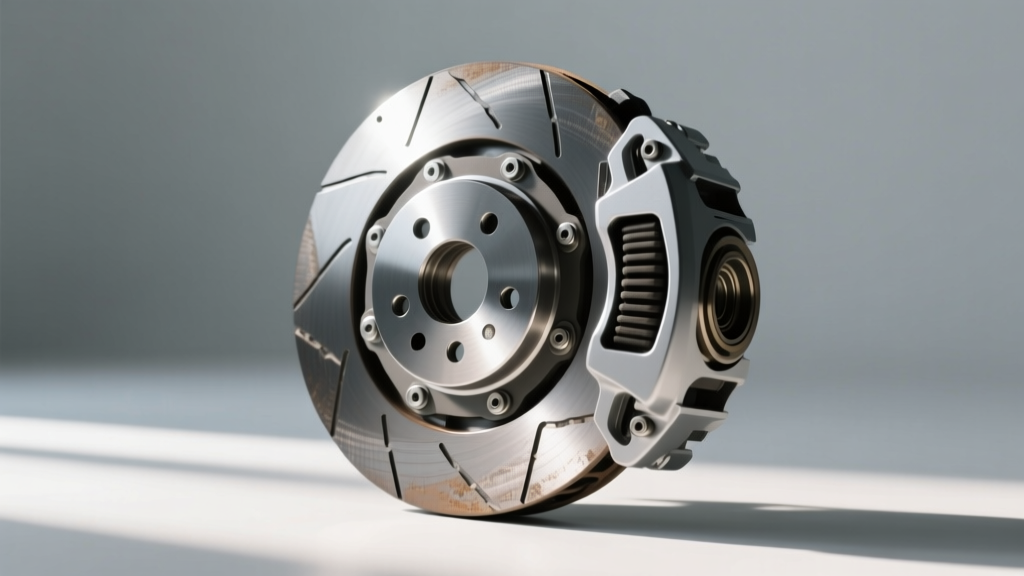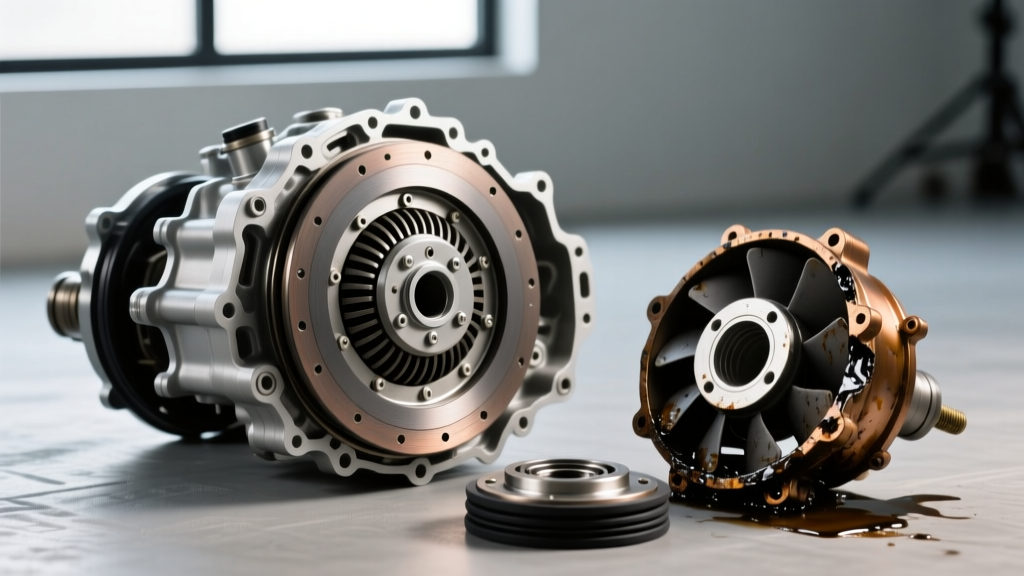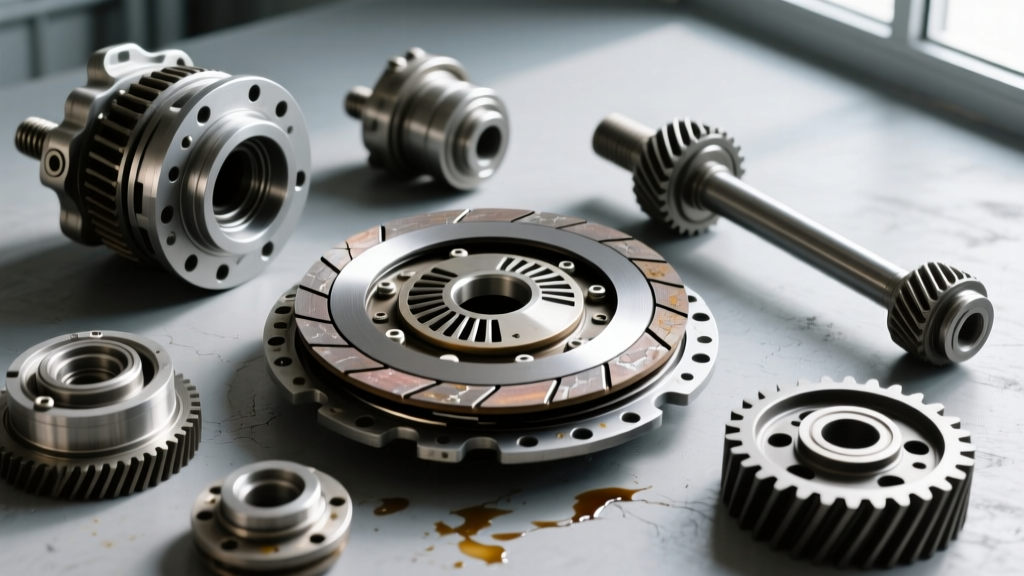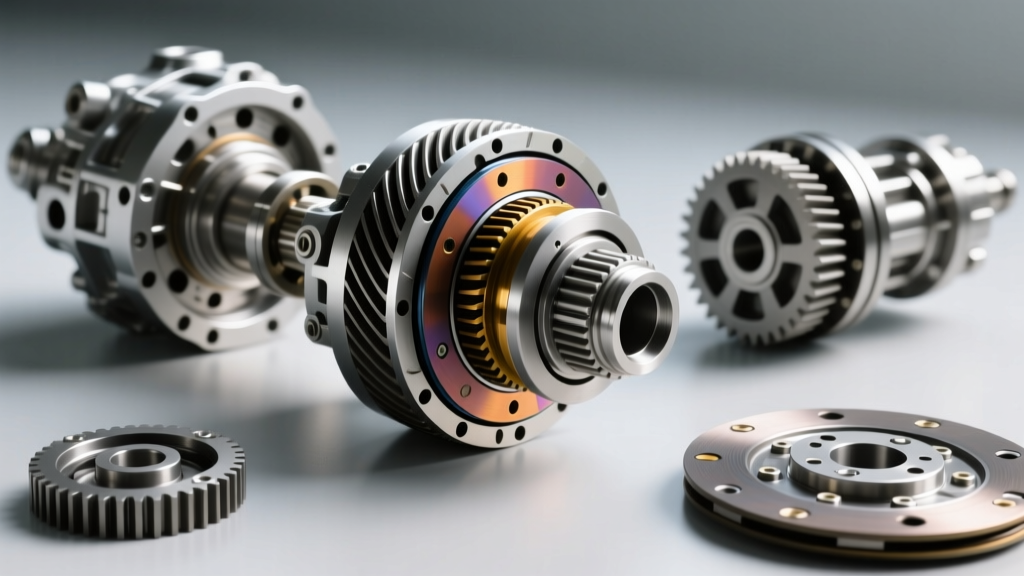
The Short Answer: Do Automatic Cars Have Clutches?
When performance enthusiasts and track-day drivers ask, "do automatic cars have clutches?", the answer is a resounding yes. While they lack the traditional pedal-operated friction disc found in manual gearboxes, modern automatic transmissions rely heavily on two distinct clutch systems: internal hydraulic friction packs (which facilitate gear changes) and the Torque Converter Clutch (TCC). The TCC is a massive, oil-bathed friction disc housed inside the torque converter that mechanically locks the engine to the transmission input shaft, eliminating parasitic fluid slip and maximizing power transfer.
As we navigate the 2026 performance landscape, platforms like the GM 8L90, Ford 10R80, and ZF 8HP70 dominate the aftermarket. However, when you push these transmissions beyond 600 wheel-horsepower, the factory single-disc TCC becomes a critical bottleneck. Upgrading to a billet multi-disc torque converter is mandatory for high-horsepower builds, but it frequently introduces a severe, drivetrain-rattling symptom: TCC clutch chatter and vibration. Diagnosing this shudder requires a deep understanding of hydraulic apply pressures, friction material dynamics, and powertrain harmonics.
Why Performance Upgrades Trigger TCC Chatter
Clutch chatter in an automatic transmission is rarely a random failure; it is almost always a harmonic mismatch between the aftermarket friction material and the transmission's hydraulic apply strategy. When you install a performance billet converter (such as a Circle D 3000 Series or Precision Industries unit), you are replacing the factory cellulose-based friction liner with aggressive carbon-fiber or Kevlar composite discs.
Friction Material Mismatches and Stick-Slip Resonance
Carbon-fiber TCC discs offer immense holding capacity—often doubling or tripling the torque capacity of stock. However, carbon composites possess a different coefficient of friction (COF) curve compared to stock paper discs. If the transmission control module (TCM) applies the clutch with a pressure profile designed for paper friction, the carbon discs will experience "stick-slip" resonance. The clutch grabs, slips, grabs, and slips at a frequency of 20 to 40 Hertz. This manifests as a violent, low-frequency vibration that feels like driving over rumble strips, typically occurring between 1,200 and 1,800 RPM during light-throttle lockup.
TCC Apply Pressure and Solenoid Dynamics
According to data published by the Automatic Transmission Rebuilders Association (ATRA), a stock GM 6L80E TCC regulator valve typically maxes out around 90 to 100 PSI of apply pressure. A performance triple-disc carbon converter requires a minimum of 130 to 150 PSI to fully seat the friction surfaces and prevent micro-slip. If the hydraulic circuit is worn or the tuning is left stock, the clutch pack chatters because it is starved of the necessary clamping force.
Diagnostic Protocol: Isolating the Shudder
Before dropping the transmission or cutting open a $1,200 billet torque converter, you must definitively isolate the TCC as the source of the vibration. Misdiagnosing TCC chatter as a driveline issue or an engine misfire is a costly mistake. Follow this diagnostic framework:
Step 1: Bi-Directional Data Logging
Connect a high-speed data logger (such as HP Tuners MPVI3 or a factory-grade Tech2/GDS2). Monitor the following PIDs simultaneously at 50+ FPS:
- TCC Slip Speed (RPM): Commanded vs. Actual.
- TCC Duty Cycle (%): The PWM signal sent to the apply solenoid.
- TCC Apply Pressure (PSI): Inferred or directly measured via line pressure tap.
- Engine RPM and MAF: To rule out torque converter-induced engine bogging.
The Telltale Sign: If the vibration occurs at the exact moment TCC Slip Speed drops to 0 RPM (or fluctuates wildly between 0 and 50 RPM while commanded to 0), you have confirmed TCC clutch chatter. If the slip remains locked at 0 RPM but the vehicle still vibrates, your issue is mechanical (driveline, flexplate, or engine harmonic).
Step 2: Mechanical Runout Verification
High-horsepower builds often utilize aftermarket billet flexplates. If the flexplate has excessive lateral runout, the torque converter will wobble, causing the TCC piston to apply unevenly against the friction disc. Using a magnetic dial indicator mounted to the engine block, measure the flexplate runout at the converter mounting pads. The maximum allowable runout for GM and Ford performance applications is 0.010 inches (0.25 mm). Anything beyond 0.015" will induce severe clutch chatter and prematurely destroy the transmission front pump bushing.
Comparative Analysis: Identifying the Vibration Source
Use the table below to differentiate TCC clutch chatter from other common drivetrain vibrations found in modified vehicles.
| Symptom Profile | TCC Clutch Chatter | Driveshaft / U-Joint Vibration | Engine Misfire / Harmonic |
|---|---|---|---|
| Onset Condition | Light throttle, 1200-1800 RPM, during TCC lockup | Speed-dependent (e.g., exactly 65-75 MPH), throttle-independent | Load-dependent, present across multiple RPM ranges, worsens under heavy boost |
| Frequency / Feel | Low-frequency shudder (20-40 Hz), feels like rumble strips | High-frequency buzz or cyclic clunking through the chassis/seat | Rhythmic hesitation, flashing CEL, raw fuel smell at exhaust |
| Data Log PID | TCC Slip RPM fluctuates wildly during commanded lockup | TCC Slip remains 0 RPM; VSS matches wheel speed perfectly | Individual cylinder misfire counters increment; AFR spikes lean/rich |
| Temporary Mitigation | Disable TCC lockup via tuning; vibration instantly vanishes | Coasting in neutral at speed; vibration persists or changes pitch | Disabling specific cylinders via tuning alters vibration frequency |
Blueprinting the Fix: Valve Body and Tuning Solutions
Once TCC chatter is confirmed, resolving it requires a two-pronged approach: hydraulic blueprinting and software calibration. As detailed in Sonnax Technical Resources, ignoring valve body wear while upgrading the torque converter is a primary cause of post-build shudder.
Upgrading the TCC Regulator Valve
In high-mileage 6L80E and 8L90 units, the aluminum TCC regulator valve bore wears oval, allowing vital apply pressure to bleed off through the exhaust port. This pressure drop starves the carbon clutch pack. The Fix: Install a drop-in TCC regulator valve kit (e.g., Sonnax Part # 15741-08K). This kit features an anodized steel sleeve and a hardened steel valve that restores precise hydraulic clearances, ensuring a solid 140+ PSI reaches the converter clutch piston. Cost for this critical upgrade is typically between $80 and $120, and it requires dropping the transmission pan and removing the valve body.
Recalibrating the TCC Apply Ramp Rate
Carbon-fiber clutches do not tolerate the aggressive, "light-switch" apply rates programmed into factory TCM tables. If the TCM commands 100% duty cycle in 0.2 seconds, the carbon discs will slam together, inducing a momentary harmonic shockwave (chatter) before settling. The Tuning Fix: Using HP Tuners VCM Editor, navigate to the Transmission > Torque Converter > Apply Rate tables. Smooth out the TCC apply ramp. Increase the lockup transition time from 0.2 seconds to a progressive 0.6 - 0.8 seconds. This allows the carbon friction material to squeeze the oil film out gradually, achieving a smooth, chatter-free mechanical lock.
Final Assembly Torque Specs & Clearances
If your diagnosis points to mechanical runout or a failing flexplate causing the TCC to bind, proper reassembly torque is non-negotiable to prevent recurring chatter. Always use a calibrated torque wrench and fresh hardware.
- GM 6L80E / 8L90 Flexplate to Crankshaft: 74 lb-ft (100 Nm). Apply a medium-strength threadlocker (Loctite 262) to the bolt threads. Do not torque in a circle; use a criss-cross star pattern to ensure even seating against the crank flange.
- Torque Converter to Flexplate Bolts: 35 to 45 lb-ft (depending on hardware grade). Ensure the converter is fully seated into the transmission front pump gear before pulling it forward to meet the flexplate. Using bolts to "winch" the converter to the flexplate will preload the pump, causing immediate cavitation, low line pressure, and severe TCC chatter upon first startup.
- Valve Body to Case Bolts (GM 8-Speed/10-Speed): 89 lb-in (10 Nm). Over-torquing these small M6 bolts will distort the valve body casting, causing the TCC solenoid to bind in its bore.
Conclusion
So, do automatic cars have clutches? Absolutely—and in performance applications, the Torque Converter Clutch is the most abused component in the drivetrain. TCC chatter and vibration are not mysterious curses; they are measurable symptoms of hydraulic starvation, friction material mismatch, or mechanical runout. By combining bi-directional data logging, precise mechanical measurements, and targeted hydraulic upgrades like the Sonnax regulator kits, you can eliminate shudder and achieve seamless, tire-shredding lockup in your high-horsepower automatic build.