Understanding the Sprag Clutch Bearing in Automatic Transmissions
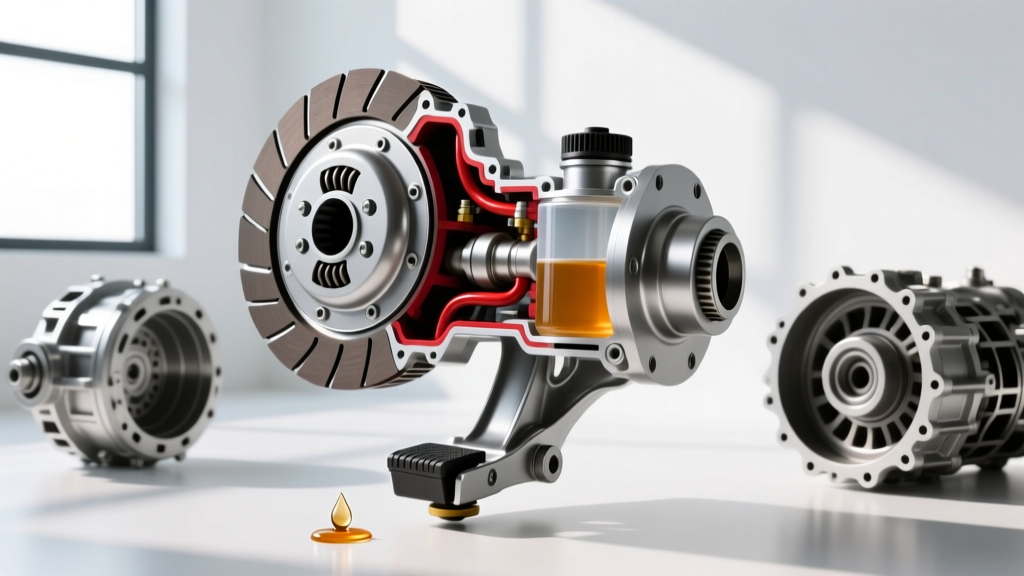
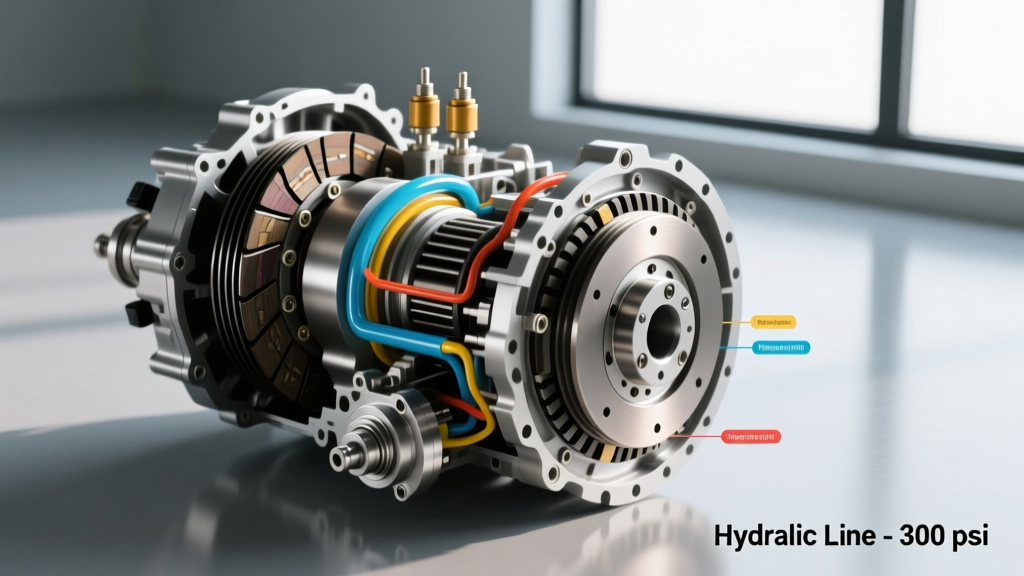
When diagnosing clutch problems in automatic transmissions, technicians often focus on friction clutch packs and bands. However, the unsung hero of gear holding and engine braking is the sprag clutch bearing. Unlike hydraulic friction clutches that require continuous fluid pressure to engage, a sprag clutch is a mechanical, one-way locking device. It allows freewheeling rotation in one direction while instantly locking up to transmit torque in the opposite direction.
In 2026, as rebuilt units and high-torque restomods continue to dominate the aftermarket, understanding sprag clutch bearing failure modes, diagnostic symptoms, and upgrade paths is critical for transmission specialists and informed vehicle owners alike. Whether you are rebuilding a classic GM 4L60E or diagnosing a slipping Ford 6R80, this guide provides the technical depth required to identify, source, and install the correct sprag components.
The Mechanics of One-Way Locking
A typical automatic transmission sprag consists of three main components:
- Inner Race: Splined or keyed to a shaft or sun gear.
- Outer Race: Press-fitted or staked into the transmission case or a drum.
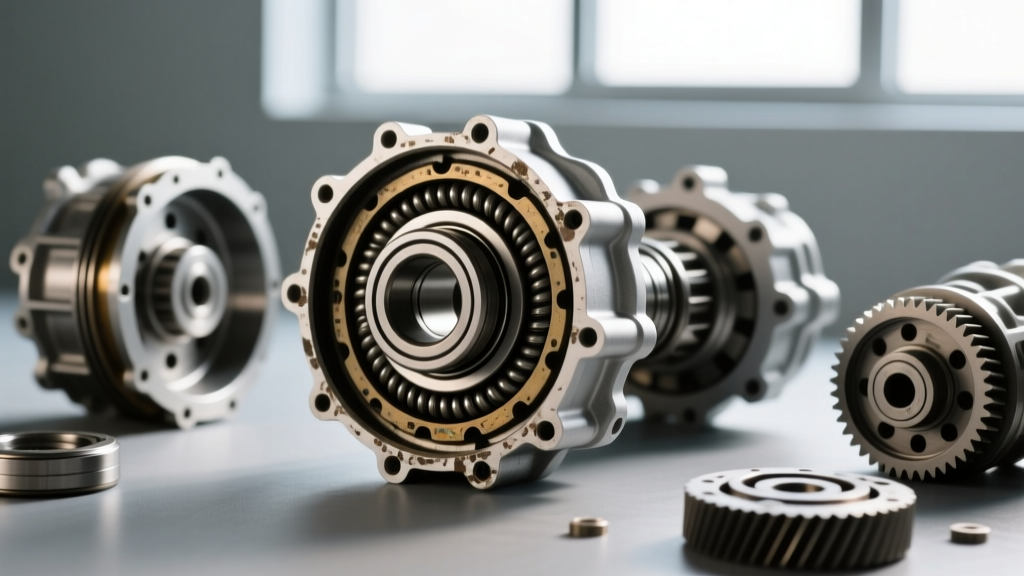
- Sprag Elements: Figure-eight or asymmetrical shaped metal wedges held in a retainer cage between the races.
When the inner race rotates in the 'freewheel' direction, the sprags tilt to their narrowest profile, allowing clearance. When torque reverses, the sprags tilt to their longest diagonal dimension, wedging tightly between the inner and outer races and locking the assembly instantly. According to the Automatic Transmission Rebuilders Association (ATRA), sprag failure rarely occurs due to gradual wear; it is almost always a catastrophic, sudden event caused by shock loading, improper assembly, or lubrication starvation.
Top 4 Symptoms of a Failing Sprag Clutch Bearing
Because sprags operate without hydraulic apply pressure, their failure symptoms are distinct from burnt friction clutches. Look for these primary indicators:
1. Slipping or Freewheeling in Specific Gears
If a vehicle accelerates normally but suddenly flares or freewheels during a specific gear change (commonly the 1-2 shift or when manually selecting '1' for engine braking), the sprag responsible for holding the reaction member has likely rolled over or shattered. For example, a failed forward sprag in a 4L60E will result in a neutral condition when starting from a stop in Drive, forcing the driver to start in 2nd gear.
2. Harsh 'Bang' or Clunk on Engagement
A sprag that is marginally failing or has damaged retainer cages may delay locking. When it finally catches after a fraction of a second of driveline slack, it produces a violent mechanical clunk, often mistaken for a broken engine mount or U-joint.
3. Metallic Debris in the Transmission Pan
Unlike friction material which presents as dark, burnt-smelling sludge, a shattered sprag bearing leaves behind shiny, hardened steel fragments. You will often find intact sprag elements, pieces of the retainer cage, and scoring on the inner race.
4. No Engine Braking in Manual Low
If the vehicle shifts through all forward gears perfectly but coasts freely when the shifter is pulled down into 'L' or '1', the low/reverse sprag or low one-way clutch has failed to lock the reaction carrier.
OEM vs. Heavy-Duty Aftermarket: 2026 Buyer's Comparison
When sourcing a replacement sprag clutch bearing, buyers must choose between standard OEM replacements and aftermarket heavy-duty upgrades. The table below outlines the primary options available in the 2026 market for popular domestic applications.
| Brand / Type | Example Part Number | Design Features | Best Application | Est. Price (2026) |
|---|---|---|---|---|
| OEM (e.g., GM Genuine) | 24226934 (4L60E Fwd) | Standard element count, OEM cage geometry | Stock daily drivers, mild towing | $35 - $55 |
| Sonnax Heavy Duty | 77498-01K | Increased sprag count, reinforced retainer rings | High-torque builds, supercharged V8s | $95 - $130 |
| Superior Performance | K77498 | Upgraded alloy steel, anti-flare geometry | Drag racing, heavy commercial use | $110 - $145 |
| TransGo Shift Kit | SK-4L60E (Includes Springs) | Hydraulic timing fixes to reduce sprag shock | Preventative maintenance, shift quality | $65 - $85 |
For builds exceeding 450 lb-ft of rear-wheel torque, upgrading to a Sonnax or Superior heavy-duty sprag is mandatory. These units utilize a higher count of sprag elements to distribute the shock load across a wider surface area, significantly reducing the risk of race brinelling.
Transmission-Specific Failure Profiles
GM 4L60E / 4L65E: The Forward Sprag Vulnerability
The 4L60E is notorious for forward sprag failure, particularly in modified vehicles. The failure usually occurs during the 1-2 shift. If the low/reverse clutch pack fails to release quickly enough during this shift, the transmission experiences a 'tie-up' condition. The engine torque forces the forward sprag to instantly lock while the opposite end of the geartrain is still held by the low/reverse clutches, resulting in catastrophic sprag explosion. Upgrading the sprag without addressing the hydraulic timing via a TransGo or Sonnax boost valve is a band-aid fix.
GM 6L80 / 6L90: Low/Reverse Sprag Wear
In the 6L80 family, the low/reverse one-way clutch (sprag) operates under immense load during aggressive launch control scenarios. A common failure mode here is not outright shattering, but 'rolling over' due to inner race brinelling. The hardened steel sprags literally dent the softer inner race over time. When diagnosing a 6L80 with a slipping manual 1st gear, inspect the inner race for dimples using a magnifying glass.
Ford 6R80: The One-Way Mechanical Diode
Ford's 6R80 (based on the ZF 6HP26 architecture) utilizes mechanical diodes and sprags for specific holding duties. These units are highly sensitive to fluid degradation. Because the sprag relies on a thin film of ATF for cooling during the freewheeling phase, oxidized fluid or clogged cooler lines will cause the sprag to overheat, losing its Rockwell hardness and slipping under load.
Installation Nuances: Clearances, Staking, and Lubrication
Replacing a sprag clutch bearing is not a simple drop-in procedure. Precision assembly techniques are required to ensure longevity.
Expert Warning: Never use a hammer to seat a sprag outer race into an aluminum drum or case. The shock can micro-fracture the hardened outer race, leading to failure within the first 100 miles. Always use a specialized arbor press and the correct diameter installer sleeve.
Interference Fit and Staking
The outer race must have a precise interference fit with the transmission case or drum—typically between 0.0005' and 0.0015'. If the fit is loose, the outer race will spin under load, instantly destroying the aluminum case. To prevent this, technicians must 'stake' the outer race using a center punch at three equidistant points around the case perimeter, displacing aluminum into the locating grooves of the race.
The Spin Test
Before assembling the valve body or bolting the transmission to the engine, perform the spin test. Rotate the input shaft or relevant member in the freewheel direction; it should spin smoothly with a distinct 'clicking' sound from the sprags. Reverse the direction, and it must lock up instantly with zero backlash. Any delay or gritty feeling indicates debris or a damaged cage.
Pre-Lubrication
Sprags are highly susceptible to dry-start scuffing. Before final assembly, coat the sprag elements and races generously with a high-quality transmission assembly gel (such as Lubegard Assembly Gel or petroleum jelly). Do not rely on the transmission pump to splash-lube the sprag during the initial priming phase.
2026 Cost Breakdown and Rebuild Economics
Understanding the financial impact of a sprag failure helps in quoting accurate repairs. If a sprag fails catastrophically, it rarely damages only itself.
- Parts (Sprag Only): $40 (OEM) to $140 (Heavy Duty).
- Collateral Damage Parts: If the sprag exploded, expect to replace the inner race ($30-$60), the drum or case if scored ($150-$400), and the adjacent friction clutch packs contaminated by steel debris ($120-$200).
- Full Master Rebuild Kit: $250 - $450 (Includes all clutches, steels, seals, and standard sprags).
- Labor (R&R and Rebuild): $900 - $1,600 depending on regional shop rates and 4WD/AWD complexity.
For fleet vehicles or high-performance builds, investing an extra $100 in a heavy-duty aftermarket sprag clutch bearing and a hydraulic shift kit during the initial teardown is vastly more economical than facing a secondary failure and a second engine-pull labor charge down the road. Always verify the Rockwell hardness of mating races and prioritize precise interference fits to ensure the repair survives the demands of modern driving.