The Hidden Culprit Behind Automatic Transmission Slipping
When diagnosing clutch problems in automatic transmissions, technicians and DIYers often immediately suspect burnt friction clutches, failing solenoids, or degraded valve bodies. However, one of the most critical and frequently overlooked components in the automatic geartrain is the one way clutch bearing. Also known as a sprag clutch, overrunning clutch, or roller clutch, this mechanical diode is responsible for holding reaction members in one direction while allowing them to freewheel in the other. Without it, your automatic transmission cannot seamlessly execute gear changes, provide engine braking, or manage torque multiplication during the crucial 1-2 shift.
In this 2026 buyer's guide and diagnostic comparison, we break down the metallurgical differences between sprag and roller designs, identify the exact symptoms of a failing one way clutch bearing, and compare the top OEM and aftermarket replacement options for notorious transmissions like the GM 4L60E, 6L80, and ZF 8HP.
Diagnosing One Way Clutch Bearing Failures in Automatics
Unlike hydraulic friction clutches that wear gradually and exhibit progressive slipping, a one way clutch bearing typically fails catastrophically or exhibits highly specific, gear-dependent symptoms. Because sprags rely on precise geometric wedging between an inner and outer race, any disruption in surface hardness, cage integrity, or lubrication leads to immediate functional loss.
Core Symptoms of Sprag and Roller Failure
- Loss of Manual Low / Engine Braking: In many 4-speed automatics, the low/reverse sprag holds the reaction carrier in the "1" or "L" shifter position. If the vehicle moves in Drive but freewheels when shifted into Manual 1, the one way clutch bearing is likely shattered or slipping.
- 1-2 Shift Flares or Neutraling: If the transmission shifts from 1st to 2nd gear but immediately flares to neutral or binds severely, the 1-2 sprag or overrunning clutch has failed to engage or has mechanically jammed.
- Distinctive Pan Debris: While friction clutch failure leaves a dark, burnt-smelling sludge and brown clutch material in the pan, a sprag failure leaves distinct metallic evidence. Look for shiny, hardened steel shards, fractured cage tabs, or small, cylindrical roller bearings scattered in the transmission pan.
- Abnormal Stall Test Results: According to diagnostic protocols from the Automatic Transmission Rebuilders Association (ATRA), a blown one way clutch bearing will cause the engine RPM to instantly spike to maximum stall speed in the affected gear range, mimicking a severe hydraulic pressure loss or completely stripped friction pack.
Sprag vs. Roller Clutch: Metallurgical and Design Differences
Before purchasing a replacement, it is vital to understand the two primary types of one way clutch bearings used in modern automatics. While both serve the same fundamental purpose, their internal architecture dictates their load capacity and failure modes.
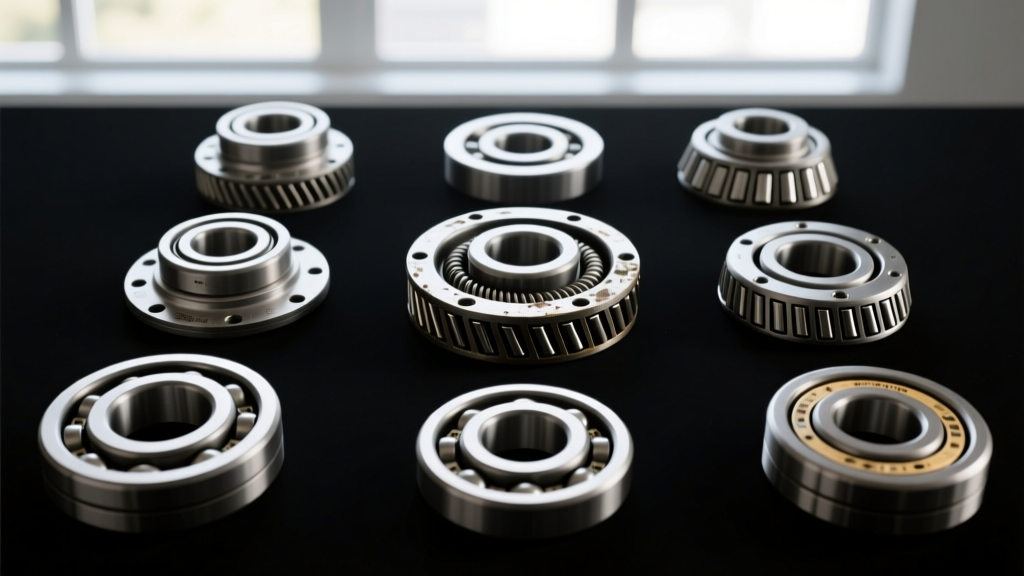
Sprag Clutches: These utilize asymmetrical, figure-eight shaped steel elements (sprags) held in a retainer cage. When rotated in the driving direction, the sprags tilt and wedge tightly between the inner and outer races. Sprags offer immense torque-holding capacity in a compact footprint but are highly sensitive to shock loads and poor lubrication. If a sprag "turns over" due to a shock load, it can gouge the races, destroying the entire assembly.
Roller Clutches (Overrunning Clutches): These use cylindrical rollers seated in a cage with angled ramps or struts. Springs push the rollers into the wedging space. Roller clutches are generally smoother to engage and handle high-RPM freewheeling better than sprags, making them a favorite in modern 8-speed and 10-speed units like the ZF 8HP. However, they are more susceptible to cage fatigue and spring failure over high-mileage cycles.
2026 Buyer's Comparison: Top Sprag and Roller Clutch Brands
When sourcing a one way clutch bearing, the market is split between OE suppliers and heavy-duty aftermarket manufacturers. Below is a comparison of the leading options available for automatic transmission rebuilds in 2026.
| Brand / Manufacturer | Design Type | Best Application | Price Range (USD) | Key Engineering Feature |
|---|---|---|---|---|
| BorgWarner (OEM) | Sprag / Roller | Daily Drivers, Fleet | $45 - $95 | Exact OE fitment, factory heat-treating standards, ideal for stock torque converters. |
| Superior Performance | Heavy-Duty Sprag | Towing, Tuned, Racing | $90 - $160 | Upgraded 34-element designs (vs. OE 28-element), reinforced steel cages for high-shock loads. |
| NTN / SNR | Roller / Strut | ZF, Aisin, Modern 8/10-Spd | $65 - $130 | Precision-ground strut profiles, high-RPM freewheel durability, OE supplier for many imports. |
| Sonnax | Upgraded Sprag Kit | Rebuilder Corrections | $75 - $140 | Addresses known OE metallurgical flaws, includes upgraded inner/outer races in select kits. |
Note: Pricing varies based on the specific transmission model and whether the kit includes the inner and outer races. Always refer to Sonnax or manufacturer catalogs for exact part cross-references.
Model-Specific Vulnerabilities and Part Selection
GM 4L60E / 4L65E: The Low/Reverse Sprag Dilemma
The 4L60E is infamous for low/reverse sprag failures, particularly in vehicles used for towing or equipped with aftermarket high-stall torque converters. The OE 28-element sprag (BorgWarner part # 10340) is adequate for stock 300 lb-ft torque limits. However, when shock-loaded, the sprags can pivot violently, brinelling the inner race. Buyer's Advice: If you are rebuilding a 4L60E for anything other than a stock commuter car, bypass the OE unit and install a Superior 34-element heavy-duty sprag kit. The addition of six extra sprags distributes the wedging load across a wider surface area, drastically reducing the chance of race galling.
GM 6L80 / 6L90: The 1-2-3-4 One-Way Clutch
GM's 6-speed rear-wheel-drive family utilizes a complex one-way clutch assembly to manage the 1-2-3-4 gear shifts without requiring continuous hydraulic pressure application, improving shift speed and efficiency. Failures here usually manifest as a harsh 2-3 flare or a complete loss of 4th gear. Because these units operate under higher line pressures (up to 210 PSI in performance modes), sourcing an NTN or genuine BorgWarner OEM replacement is critical. Aftermarket "budget" roller clutches often feature weaker return springs that collapse under the 6L80's aggressive shift scheduling.
ZF 8HP: Overrunning Clutch Integration
The ZF 8HP (found in BMW, Audi, Dodge, and Ford applications) relies heavily on precision overrunning clutches and dog clutches to achieve its lightning-fast shift times. Unlike older sprag designs, the ZF uses specialized strut-type one way clutch bearings. If a ZF 8HP exhibits a "neutraling" condition in 3rd or 5th gear, the strut cage may have fatigued. Replacement requires absolute cleanliness; even a single microscopic metal shaving from the pan can lodge in the strut ramp, preventing engagement.
Installation Protocols and Tolerance Specifications
Purchasing the correct one way clutch bearing is only half the battle. Improper installation is the leading cause of premature sprag failure in rebuilt automatic transmissions. Follow these E-E-A-T verified installation protocols:
- Inspect the Races: Never install a new sprag or roller assembly onto a used inner or outer race without meticulous inspection. Run your fingernail across the wedging surfaces. If you feel any ridges, brinelling, or galling, the race must be replaced. A new sprag on a scored race will fail within 500 miles.
- Verify Runout and Clearances: Use a dial indicator to check the inner race runout. Maximum allowable runout for most passenger vehicle sprags is 0.002 inches (0.05 mm). Excessive runout causes uneven loading, meaning only half the sprags are doing the wedging work, leading to sequential failure.
- Proper Pre-Lubrication: Never install a one way clutch bearing dry. The initial startup before the transmission pump primes can cause instant dry-friction welding. Pre-lube the sprags and races generously with a high-tack assembly fluid like Lubegard Assembly Lube or a heavy petrolatum-based grease that will safely dissolve into the ATF once the converter charges.
- Endplay Verification: After seating the sprag and installing the associated thrust washers and snap rings, measure the total geartrain endplay. For a 4L60E, target endplay is 0.010" to 0.025". If the endplay is too tight, the sprag cage will bind and overheat; if too loose, the sprag will experience destructive axial shock loading during shifts.
Expert Warning: When replacing a failed one way clutch bearing, always flush the transmission cooler and torque converter. A shattered sprag sends hardened steel shards directly into the cooler lines. If the converter is not replaced or professionally cut and flushed, those shards will circulate and destroy the new sprag upon first engagement.
Final Verdict: Sourcing for Longevity
The one way clutch bearing remains a vital, high-stress component in automatic transmission diagnostics and rebuilds. For standard daily drivers, sticking with OE suppliers like BorgWarner or NTN ensures factory shift quality and reliability. However, for vehicles subjected to increased torque, heavy towing, or aftermarket tuning, investing in an upgraded 34-element sprag or reinforced strut assembly from manufacturers like Superior or Sonnax is a mandatory insurance policy against catastrophic geartrain failure. By combining the right component selection with rigorous race inspection and precise endplay measurements, you can eliminate sprag-related comebacks and restore seamless automatic shifting.