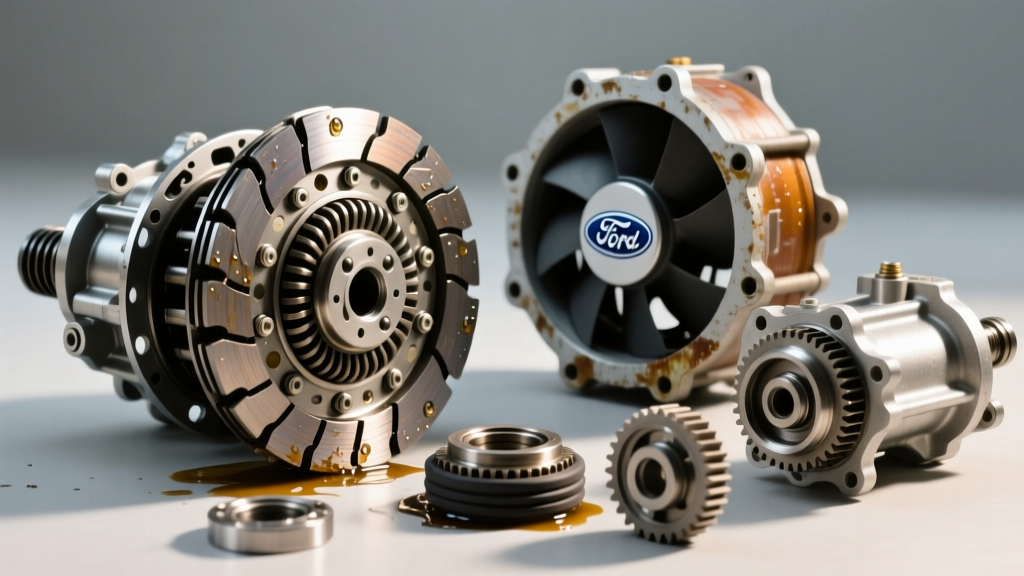
Many beginners entering the powersports world confuse the various types of "clutches" found in vehicles. If you have ever searched for a fan clutch Expedition 2007 hoping to fix a slipping drivetrain on your dirt bike or ATV, you are mixing up two completely different mechanical systems. A 2007 Ford Expedition 5.4L Triton V8 uses a thermostatic viscous fan clutch (like Motorcraft part YC3Z8A616A) simply to engage a radiator cooling fan based on engine heat. It has absolutely nothing to do with transferring power to the wheels.
Motorcycles and ATVs, however, rely on complex multi-plate wet clutches or CVT centrifugal clutches to transfer hundreds of foot-pounds of torque to the ground. In this beginner-friendly explainer, we will break down exactly how powersports clutches work, the most common symptoms of failure, and how to diagnose them using real-world specifications and expert troubleshooting frameworks.
The Big Misconception: Thermal Couplings vs. Drivetrain Clutches
Before turning a wrench, it is vital to understand the mechanical divide:
- The Fan Clutch (e.g., 2007 Ford Expedition): A fluid-coupling device mounted to the water pump. It uses a bi-metallic strip and viscous silicone fluid to lock the cooling fan to the engine pulley when the radiator gets hot. It handles zero drivetrain torque.
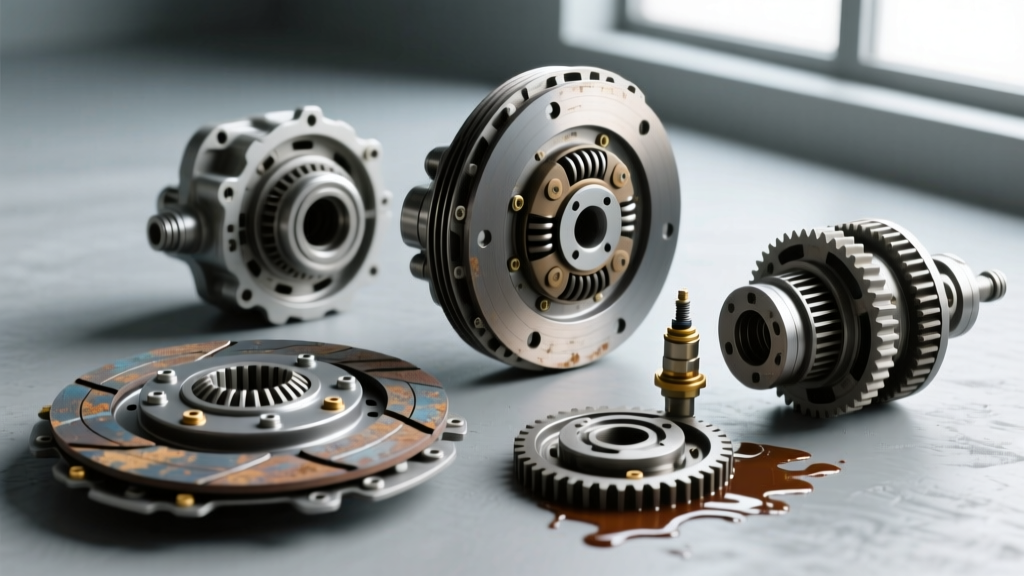
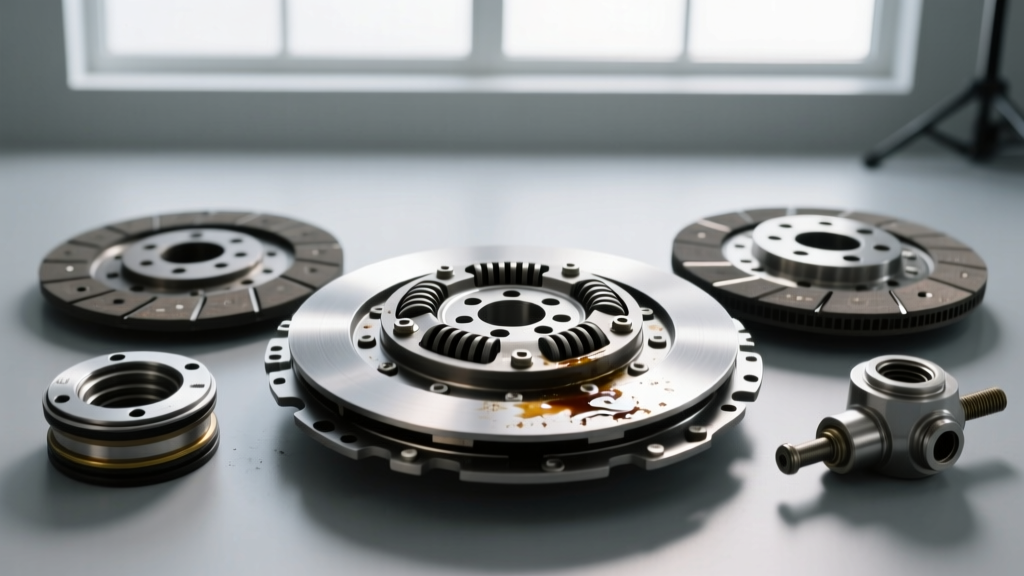
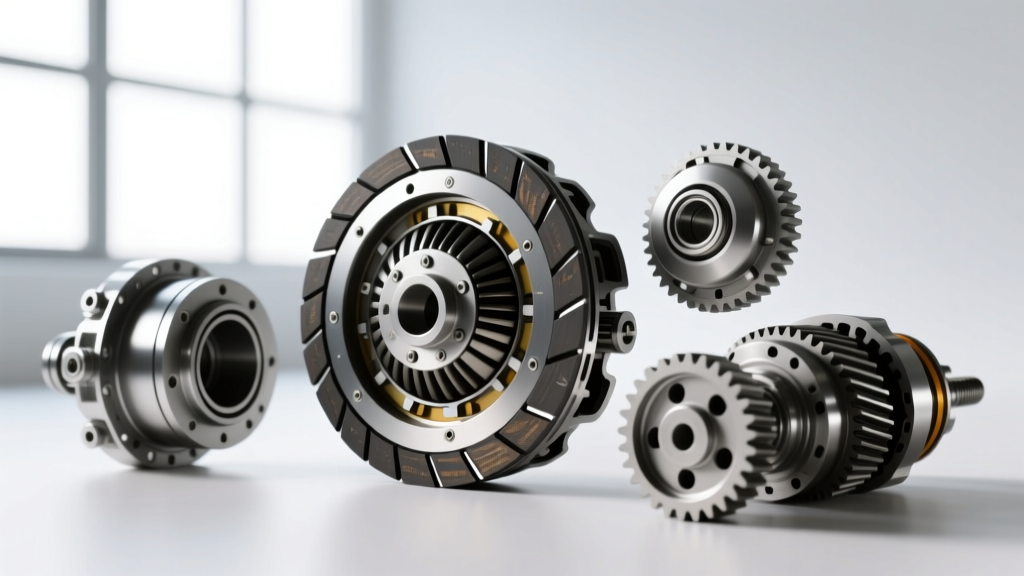
- The Motorcycle/ATV Wet Clutch: A stack of alternating friction and steel plates submerged in engine oil. It physically connects and disconnects the engine crankshaft from the transmission input shaft.
- The CVT Clutch (Polaris, Can-Am, Honda Rancher): A system of variable-diameter pulleys (sheaves) and a rubber belt that uses centrifugal weights to continuously change gear ratios.
Expert Tip: Never use standard automotive motor oil in a motorcycle or ATV with a shared-sump wet clutch. Automotive oils contain friction modifiers that will cause a powersports clutch to slip immediately. Always look for the JASO MA or MA2 certification on your oil bottle.
Top 4 Motorcycle & ATV Clutch Symptoms (And How to Diagnose Them)
1. Slipping Under Heavy Load
The Symptom: You twist the throttle or hit a steep ATV trail incline. The engine RPMs scream and climb rapidly, but your actual speed does not increase proportionally.
The Cause: This is the classic sign of worn friction plates or degraded clutch springs. On a Honda CRF450R, the friction material, the clamping force drops by up to 15%, allowing the plates to slip under high torque.
2. Low-RPM Chatter and Grabbing
The Symptom: When releasing the clutch lever from a dead stop, the bike lurches forward violently rather than engaging smoothly. It feels like the bike is stuttering.
The Cause: Clutch basket notching or glazed plates. The clutch basket is the aluminum gear that holds the friction plates. Over time, the steel plates hammer into the soft aluminum tangs, creating grooves (notches). When you release the lever, the plates get stuck in these grooves and then suddenly break free, causing chatter.
3. Clutch Dragging and "False Neutrals"
The Symptom: The bike creeps forward even when the clutch lever is fully pulled in. Finding neutral while the engine is running is nearly impossible, and shifting into first gear results in a loud, violent "clunk" that stalls the engine.
The Cause: Warped steel drive plates, incorrect cable free-play, or using oil that is too thick. If the steel plates warp from overheating, they remain partially engaged even when the spring pressure is removed.
4. CVT Belt Slippage (UTV/ATV Specific)
The Symptom: Common on machines like the Polaris RZR or Sportsman. You experience a bogging sensation off the line, a burning rubber smell, or a distinct "squealing" noise from the clutch housing.
The Cause: Worn primary clutch sheaves, a glazed drive belt, or a fatigued primary compression spring. Unlike a wet clutch, CVT issues are usually related to belt deflection and sheave bushing wear.
Diagnostic Data: Friction Plate Measurements & Specs
To diagnose a slipping wet clutch, you must measure the friction plates and the clutch springs against the manufacturer's service limits. Below is a diagnostic comparison chart for two popular platforms:
| Specification | Honda CRF450R (Wet Multi-Plate) | Polaris Sportsman 570 (CVT / Wet Brake) |
|---|---|---|
| Friction Plate Thickness (New) | 3.00 mm (0.118 in) | N/A (Uses CVT Belt & PVL Wet Brake) |
| Service Limit (Replace If Below) | 2.60 mm (0.102 in) | Belt Width: Replace if below 33.0 mm |
| Clutch Spring Free Length (New) | 51.4 mm (2.02 in) | Primary Spring: Almond/Red (140/330 lbs) |
| Spring Service Limit | 48.8 mm (1.92 in) | Replace if sagging > 3mm or cracked |
| Clutch Basket Tang Play | Max 0.3 mm (Replace if notched) | Inspect Sheave Bushing for >1mm play |
Step-by-Step Beginner Troubleshooting Guide
Before tearing the engine cases apart, follow this non-invasive diagnostic sequence to isolate your clutch problem.
Step 1: Audit the Cable Free-Play
A clutch cable that is too tight will keep the clutch partially disengaged, causing massive slippage and burning up your friction plates in a matter of miles.
- The Fix: Measure the free-play at the tip of the clutch lever. You should have exactly 10mm to 15mm (3/8 to 5/8 inch) of slack before you feel resistance from the clutch actuator arm.
- Adjust the barrel adjuster at the lever perch first, then use the lower cable nut near the engine case for major adjustments.
Step 2: Check the Oil Chemistry
If you recently changed your oil and the clutch immediately started slipping, you likely used automotive oil containing Molybdenum or friction modifiers.
- The Fix: Drain the sump immediately. Refill with a dedicated powersports oil like Motul 7100 10W-40 or Amsoil Metric, ensuring it meets JASO MA2 standards for wet clutch friction coefficients.
Step 3: The Lever "Feel" Test
Pull the clutch lever in slowly. It should feel smooth and progressive. If you feel a "crunchy" or gritty sensation through the lever, your clutch basket is severely notched, or the clutch hub nut has backed off.
Repair Costs and Part Recommendations
When it is time to replace the components, choosing the right aftermarket or OEM parts is critical for longevity. According to the EBC Brakes Motorcycle Clutch Guide, matching the friction material to your riding style is essential.
- OEM Paper/Cork Kits: Best for trail riding and casual street use. Smooth engagement. (Cost: $60 - $90)
- Kevlar/Aramid Kits (e.g., EBC SRC Series): Best for motocross, aggressive ATV mudding, and high-horsepower builds. Extremely durable but can grab aggressively when cold. (Cost: $110 - $160)
- Heavy Duty Springs (e.g., ProX 23.4304): Increases clamping force by 10-15%. Highly recommended if you have added big-bore kits or turbochargers. (Cost: $25 - $40)
Critical Installation Torque Specs:
When reinstalling the clutch pressure plate, the small spring bolts are notorious for backing out due to engine vibration. You must apply a medium-strength threadlocker (like Loctite 243) to the threads. The standard torque spec for most Japanese and American 250cc-.5 ft-lbs). Do not over-torque these, as they thread directly into soft aluminum and will strip easily.
Summary: Keep Your Drivetrain and Cooling Systems Separate
While a failing fan clutch on a 2007 Expedition will leave you stranded with an overheated engine, a failing clutch on your ATV or motorcycle will leave you stranded without the ability to move. By understanding the unique friction-based mechanics of powersports wet clutches and CVTs, maintaining proper JASO MA2 oil chemistry, and measuring your plates against factory service limits, you can diagnose and fix clutch chatter, slippage, and dragging with absolute confidence. For more deep-dive diagnostics on transmission failures and clutch actuator issues, consult your factory service manual or reference expert teardowns on platforms like CycleWorld's technical archives.