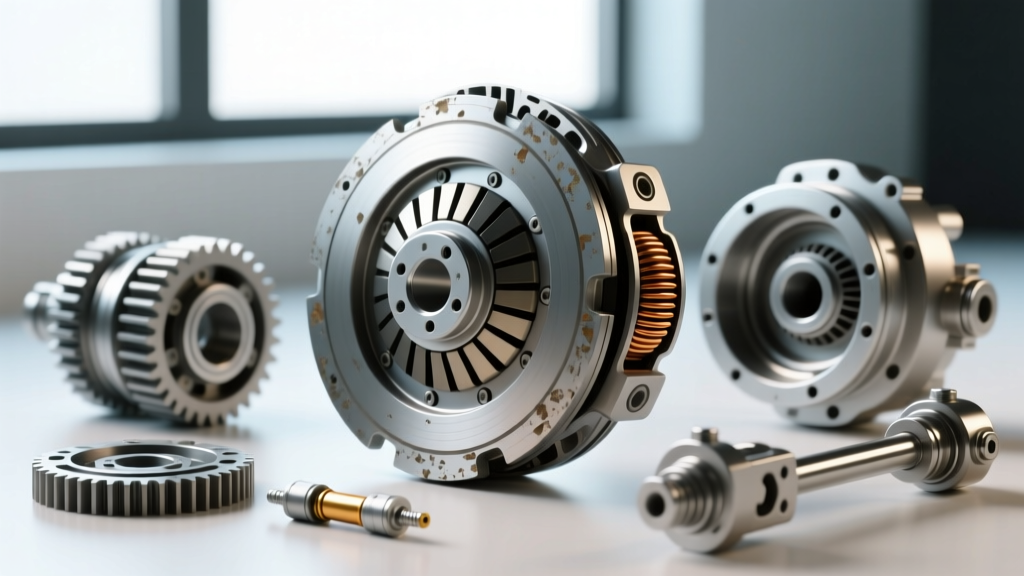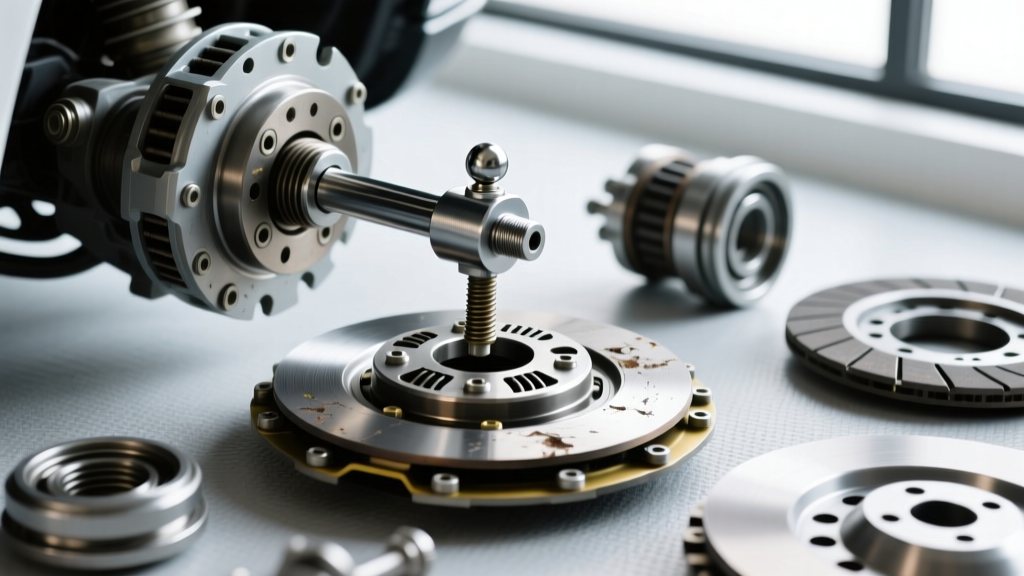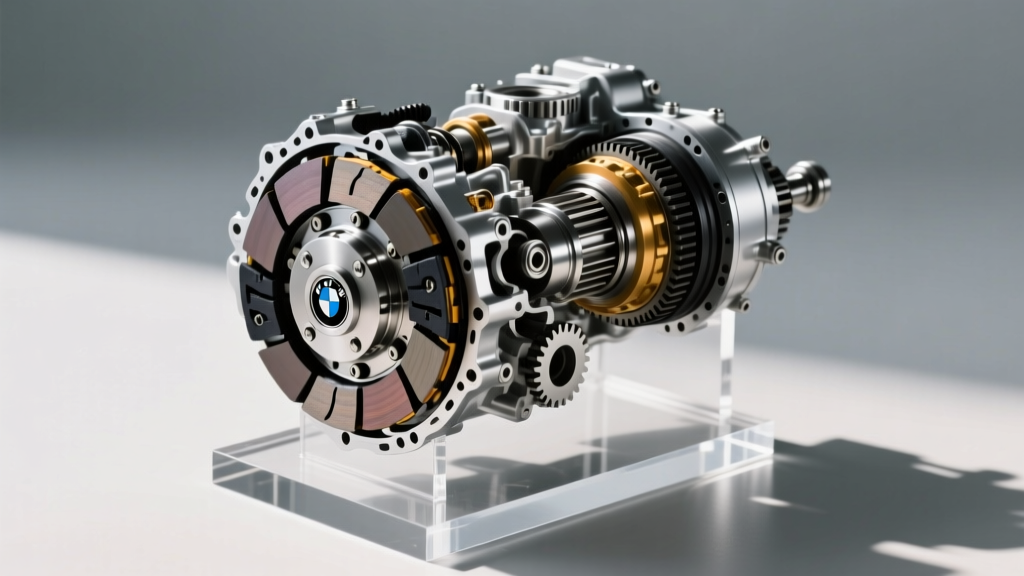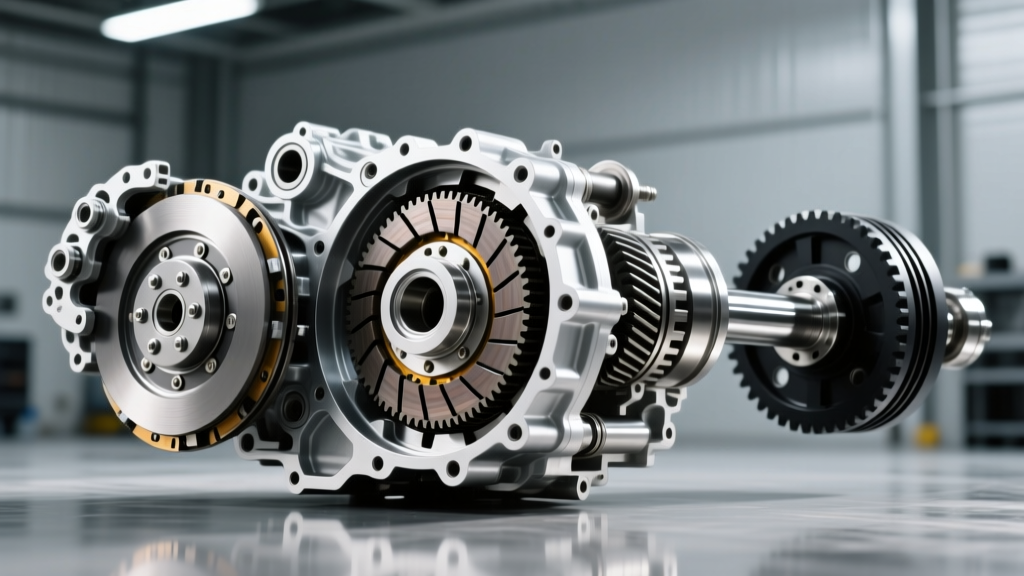
When beginners first learn about drivetrains, a very common search query pops up: does a automatic car have a clutch? The short answer for traditional passenger vehicles is no. Standard automatics use a fluid-coupling device called a torque converter to multiply engine torque and transfer it to the transmission gears without a mechanical friction clutch. However, modern exceptions like Dual-Clutch Transmissions (DCTs) found in performance cars do utilize wet multi-plate clutch packs.
But what happens when you leave the pavement and enter the world of powersports? Automatic motorcycles, ATVs, and UTVs rely on entirely different clutch architectures. As we move through 2026, powersports manufacturers are pushing the boundaries of automatic transmissions, making clutch system diagnostics a critical skill for any off-road or touring enthusiast. In this guide, we will briefly address the car question before diving deep into the specific clutch problems, symptoms, and repairs for automatic motorcycles and ATVs.
The Short Answer: Do Automatic Cars Have Clutches?
Traditional automatic transmissions (like the legendary GM 4L60E or the modern ZF 8HP) do not have a driver-operated clutch pedal, nor do they use a dry friction clutch to engage gears. Instead, they rely on a torque converter and internal hydraulic clutch packs to shift. However, if you are riding a modern automatic motorcycle or driving a side-by-side, the technology is vastly different. Powersports automatics primarily use three distinct systems: Dual-Clutch Transmissions (DCT), Continuously Variable Transmissions (CVT), and Centrifugal Clutches.
Honda DCT Motorcycles: Wet Multi-Plate Diagnostics
Honda’s Dual-Clutch Transmission (DCT) is a marvel of engineering, found in popular models like the Africa Twin, Gold Wing, and Rebel 1100. Unlike a car's torque converter, the Honda DCT uses two separate wet multi-plate clutch packs—one for odd gears (1, 3, 5) and one for even gears (2, 4, 6). This allows for lightning-fast, seamless shifts without interrupting power delivery.
Common DCT Symptoms and Failure Modes
- Low-Speed Shuddering: If the bike shudders when creeping forward in 'D' mode, the clutch friction plates may be glazed, or the clutch actuator motor is failing to modulate hydraulic pressure smoothly.
- Flashing 'D' Indicator (Limp Mode): This is the DCT equivalent of a Check Engine Light. It usually points to a failed shift actuator, a dirty DCT filter, or low fluid pressure.
- Harsh 1st-to-2nd Shifts: Often caused by degraded fluid. Honda DCTs require specific Manual Transmission Fluid (MTF), not standard automotive ATF. Using ATF can cause the wet clutches to slip and overheat.
Expert Spec: The Honda DCT clutch actuator assembly (Part # 22810-MJM-D31 for earlier NC700/NC750 models, with updated part numbers for 2026 Africa Twins) is a known wear item. Replacement costs typically range from $850 to $1,200 for the part alone. According to Cycle World's DCT Maintenance Guide, flushing the MTF every 8,000 miles and cleaning the internal DCT strainer is critical to preventing actuator burnout.
ATV & UTV CVTs: Primary and Secondary Clutch Sheaves
If you drive a Polaris RZR or a Can-Am Maverick, your 'automatic' is actually a belt-driven Continuously Variable Transmission (CVT). A CVT uses a primary drive clutch (attached to the engine) and a secondary driven clutch (attached to the transmission) connected by a heavy-duty drive belt. As engine RPMs rise, centrifugal force pushes the primary clutch weights outward, squeezing the sheaves together and forcing the belt higher, which changes the gear ratio.
Diagnosing CVT Clutch Problems
CVT clutches are subjected to extreme dust, heat, and mechanical stress. Here are the most frequent diagnostic scenarios:
- RPM Flares Without Acceleration (Belt Slip): The primary clutch sheave is not closing fully. This is often caused by worn clutch weights (rollers), a gummed-up sheave bushing, or a worn drive belt that has lost its width.
- Sluggish Takeoff (Low-End Bog): The secondary clutch spring may be too stiff, or the helix angle is incorrect for your current tire size and elevation, preventing the secondary from opening fast enough to let the primary engage.
- Grinding at Idle: The primary clutch is not opening fully at idle, causing the belt to rub against the spinning sheave. This requires a teardown to clean the movable sheave and inspect the spider button.
Mechanic's Warning: Never use an impact wrench to remove a CVT primary clutch bolt without using a dedicated clutch holding tool. The torque required to break the bolt loose (often exceeding 100 ft-lbs of breakaway torque) will transfer directly to the engine crankshaft, potentially snapping the crank or destroying the main bearings.
Expert Spec: When reinstalling a Polaris RZR primary clutch, the center bolt must be torqued to exactly 55 ft-lbs. You must use a proper clutch puller (such as OEM Tools 27105 or the Motion Pro equivalent) to extract the clutch from the tapered crankshaft. A rebuilt OEM primary clutch assembly will cost between $450 and $650 in 2026, while aftermarket performance clutches (like those from Dalton Industries or EPI) can push past $800.
Diagnostic Matrix: Powersports Automatic Clutch Failures
Use this quick-reference table to narrow down your clutch system diagnostics based on the symptoms you are experiencing in the field.
| Symptom | Vehicle Type | Probable Culprit | Est. Repair Cost (2026) |
|---|---|---|---|
| Shuddering at low speeds | Honda DCT Motorcycle | Glazed wet friction plates or failing actuator motor | $400 - $1,200 |
| Burning rubber smell / RPM flare | Polaris / Can-Am UTV | Worn CVT belt or stuck primary sheave bushing | $150 - $350 |
| Stalling when coming to a stop | Semi-Auto Dirt Bike | Centrifugal clutch adjusted too tight (no free play) | $0 (Adjustment) |
| Loud metallic clicking in neutral | ATV / UTV CVT | Failed one-way bearing (sprag) inside primary clutch | $250 - $500 |
Can-Am Maverick X3: Secondary Clutch Helix and Spring Tuning
While the primary clutch gets all the attention, the secondary clutch on machines like the Can-Am Maverick X3 is just as vital. The secondary clutch uses a helical ramp and a torsion spring to maintain belt tension. If you upgrade to larger 32-inch mud tires, the stock secondary spring may not provide enough clamping force, leading to massive belt slip and melted belts.
Diagnostic Fix: Upgrading to a stiffer secondary spring (e.g., moving from a stock 40/70 spring to a 50/90 spring) and changing the helix angle will force the secondary to clamp harder on the belt. The Can-Am secondary clutch bolt requires 44 ft-lbs of torque. Always refer to the official manufacturer service portals or equivalent Can-Am tech docs for exact torque sequences, as over-torquing can strip the aluminum transmission input shaft.
Semi-Automatic Dirt Bikes: Centrifugal Clutch Adjustments
Entry-level and trail bikes like the Honda CRF110F or the Trail 125 use a semi-automatic centrifugal clutch. There is no hand lever; instead, clutch shoes expand outward against a drum when the engine RPMs rise above idle.
Symptoms of a Misadjusted Centrifugal Clutch
- Bike creeps forward at idle: The clutch is adjusted too tightly, keeping the shoes slightly engaged even at low RPMs.
- Slipping on steep inclines: The clutch springs have fatigued and lost their tension, or the friction material on the shoes is worn down to the rivets.
Expert Spec: Adjusting the Honda Trail 125 centrifugal clutch requires removing the right-side crankcase cover. You will find a locknut and an adjuster screw. The correct procedure is to turn the adjuster screw clockwise until you feel slight resistance, then back it off exactly 1/4 to 1/2 turn before tightening the locknut to 7 ft-lbs. If the bike still slips after adjustment, a new set of clutch springs and shoes (typically under $60 for OEM Honda parts) is required.
Final Thoughts on Powersports Clutch Maintenance
While the answer to 'does a automatic car have a clutch' is generally no, the powersports world proves that automatic does not mean clutch-less. Whether you are diagnosing a flashing DCT indicator on your Gold Wing, pulling apart a dusty Polaris primary clutch, or adjusting the centrifugal shoes on a trail bike, understanding the specific mechanical forces at play is the key to a reliable ride. Always use a torque wrench, stick to OEM-specified fluids, and inspect your CVT belts and DCT filters at the manufacturer's recommended intervals to keep your machine shifting flawlessly.