Do Auto Transmissions Have Clutches? The Engineering Reality
When a driver experiences a harsh shift, a sudden spike in RPMs, or an acrid odor drifting through the cabin, one of the most common questions we hear in the diagnostic bay is: do auto transmissions have clutches? The short answer is an emphatic yes. Unlike a manual transmission that relies on a single, large dry-friction clutch disc to connect the engine to the input shaft, modern automatic transmissions utilize multiple multi-plate wet clutch packs nested inside the planetary gearsets.
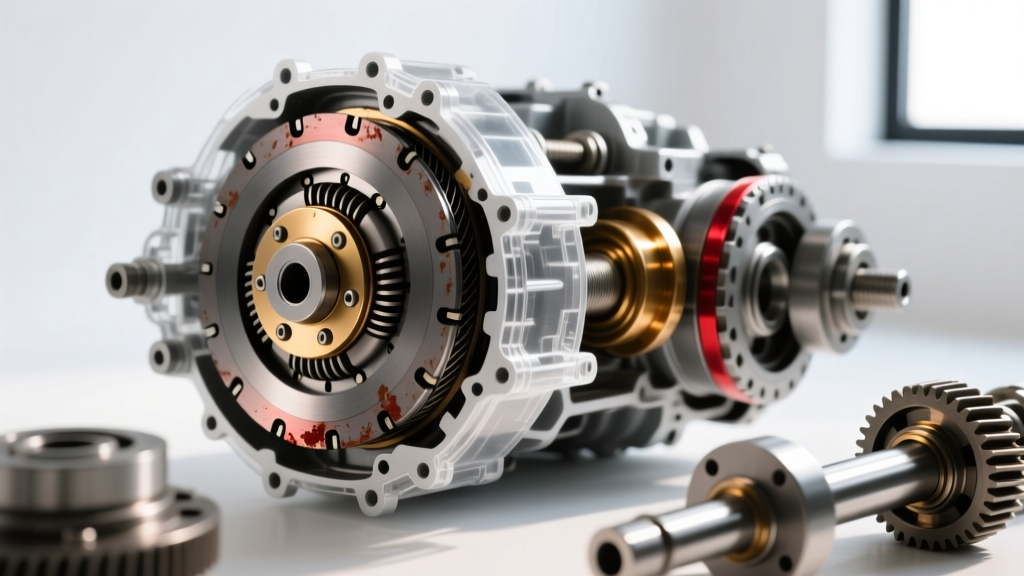
These clutch packs consist of alternating friction discs (coated in specialized cellulose or synthetic friction material) and smooth steel reaction plates. They are engaged and disengaged by hydraulic pressure applied to piston seals. Because they operate bathed in Automatic Transmission Fluid (ATF), they are classified as "wet" clutches. When drivers ask, "do auto transmissions have clutches," they are usually reacting to the distinct, burnt-toast smell of degraded ATF and vaporized friction material. Diagnosing this burning smell requires a systematic approach to determine if the issue is a localized clutch pack failure, a hydraulic pressure deficit, or a torque converter fault.
The Anatomy of a Burning Clutch Smell in Automatics
A burning smell originating from an automatic transmission is almost always the result of excessive heat generated by friction material slipping against steel plates without fully locking up. This slippage boils the ATF, breaking down its chemical additives and suspending microscopic carbon and friction particulate in the fluid. According to diagnostic standards outlined by the Automatic Transmission Rebuilders Association (ATRA), burnt ATF loses its vital lubricity and hydraulic pressure-holding capabilities, creating a cascading failure loop.
Differentiating the Odor
- Burnt Toast / Acrid Chemical Smell: Indicates overheated ATF and slipping wet clutch packs. This is the most common automatic transmission burning smell.
- Sulfur / Rotten Eggs: Typically points to a slipping torque converter clutch (TCC) or severe stator failure inside the torque converter, generating extreme localized heat.
- Hot Metal / Ozone: Suggests mechanical binding, such as a seized planetary gearset or a failed one-way roller clutch, rather than friction pack slippage.
Diagnostic Matrix: Burning Smell by Transmission Model
Different transmission architectures have notorious failure points that lead to clutch slippage and burnt fluid. Below is a diagnostic matrix for three of the most common automatic transmissions on the road today.
| Transmission Model | Common Failure Point | Symptom Profile | Root Cause of Clutch Burn |
|---|---|---|---|
| GM 4L60E | 3-4 Clutch Pack | No 3rd or 4th gear; RPM flare on 2-3 shift. | Piston seal hardening or leaking; low line pressure causing slow apply time. |
| GM 6L80 / 6L90 | 4-5-6 Clutch Hub | Flare on 4-5 shift; harsh downshifts; burnt fluid. | Splines on the 4-5-6 clutch hub strip out, preventing full clutch pack engagement. |
| ZF 8HP (8HP70/90) | Clutch Packs A & E | Limp mode; harsh engagements; P0731/P0732 codes. | Mechatronic adapter sleeve leaks cause low hydraulic apply pressure to specific packs. |
Step-by-Step Troubleshooting Protocol
If your vehicle exhibits a burning smell, do not ignore it. Continued driving will turn a minor hydraulic repair into a complete transmission replacement. Follow this 2026-standard diagnostic protocol.
1. The ATF Dipstick and Smell Test
Pull the transmission dipstick (if equipped) or crack the fill plug on sealed units like the ZF 8HP.
Color Check: Healthy Dexron VI or ZF Lifeguard 8 fluid should be translucent red or light amber. If it is dark brown or black, the friction material has burned off the clutch discs.
Particulate Check: Wipe the fluid on a white paper towel. If you see glitter-like metallic flakes or heavy black soot, the clutch packs and steel reaction plates have suffered severe mechanical damage. A simple fluid flush will not fix this; the transmission must be removed and torn down.
2. Line Pressure and Scan Tool Diagnostics
Slipping clutches are often the victim, not the culprit. The root cause is frequently low hydraulic line pressure. Using a mechanical transmission line pressure gauge tapped into the case port, verify the pump's output.
For example, a GM 4L60E should show approximately 130-150 PSI in Reverse at idle, and spike to 200+ PSI at stall speed. If line pressure is low, the clutch packs cannot clamp together with enough force, resulting in micro-slippage, extreme heat, and the dreaded burning smell. Always scan for solenoid performance codes (e.g., P0756 for shift solenoid B) and pressure control solenoid (PCS) codes before condemning the clutch packs.
3. Torque Converter Clutch (TCC) Evaluation
The torque converter contains its own internal lock-up clutch. If the TCC fails to lock up, or slips continuously at highway speeds, it will generate massive amounts of heat, boiling the ATF and creating a severe burning smell. Monitor the TCC slip RPM on a bi-directional scan tool. At steady highway cruising, TCC slip should be between 0 and 20 RPM. If you see 100+ RPM of slip while the TCC is commanded ON, the torque converter clutch is burnt out and the converter must be replaced or rebuilt.
Repair Costs, Fluid Specs, and Torque Data (2026 Pricing)
Diagnosing a burning clutch smell usually leads to one of three repair paths. Below are the realistic shop costs, fluid requirements, and critical torque specifications for 2026.
GM 6L80 Master Rebuild
- Diagnosis: Burnt 4-5-6 clutch pack due to stripped hub.
- Parts Cost: $450 - $600 (Includes Raybestos GPZ friction modules, new steel plates, and an upgraded billet 4-5-6 clutch hub).
- Labor & Total Cost: $2,400 - $3,200 out-the-door.
- Fluid Capacity: 11.2 Quarts (Dry Fill) of Dexron ULV or Dexron VI.
- Critical Torque Spec: Transmission pan bolts must be torqued to 8 Nm (71 lb-in) in a crisscross pattern to prevent warping the valve body separator plate.
ZF 8HP Mechatronic & Clutch Service
- Diagnosis: Low pressure to Clutch Pack A due to leaking Mechatronic sleeve.
- Parts Cost: $1,200 - $1,600 for a remanufactured Mechatronic unit and ZF adapter sleeve kit.
- Labor & Total Cost: $1,800 - $2,500 (Often done without removing the transmission from the vehicle).
- Fluid Capacity: 8.5 - 9.5 Liters of ZF Lifeguard 8 (Do not substitute with generic ATF).
- Critical Torque Spec: Mechatronic-to-case retaining bolts: 10 Nm. Bellhousing-to-engine bolts: 35 Nm.
Preventative Maintenance: Saving the Clutch Packs
Because automatic transmission clutch packs are entirely dependent on hydraulic fluid for both clamping force and cooling, fluid degradation is the number one enemy. As noted by Sonnax engineering bulletins, modern transmissions operate with incredibly tight clearances—often as little as 0.040 to 0.060 inches per clutch pack. When ATF degrades and forms varnish, it clogs the microscopic orifices in the valve body and clutch apply pistons. This delays clutch engagement by mere milliseconds, but in the high-RPM environment of a modern engine, those milliseconds translate into severe friction material wear and burning.
To prevent clutch burnout, adhere strictly to the manufacturer's "severe duty" fluid change intervals. For most modern 8 and 10-speed automatics, this means dropping the pan, replacing the integrated filter, and performing a fluid exchange every 40,000 to 60,000 miles, regardless of what the owner's manual claims about "lifetime" fluid.
Final Diagnostic Verdict
So, do auto transmissions have clutches? Yes, and they are highly complex, multi-layered hydraulic assemblies that require precise fluid pressure to survive. A burning clutch smell in an automatic vehicle is a critical red flag indicating that friction material is actively being destroyed. By utilizing line pressure testing, TCC slip monitoring, and model-specific diagnostic matrices, technicians can isolate whether the fault lies in a worn clutch pack, a failing torque converter, or a hydraulic leak in the valve body. Addressing the root cause quickly is the only way to save the planetary gearsets from catastrophic mechanical failure.
For further reading on hydraulic valve body wear and clutch apply pressures, refer to the technical archives at the ZF Aftermarket portal and Sonnax transmission repair guides.