The Short Answer: Does an Automatic Transmission Have a Clutch?
When beginners ask, "does an automatic transmission have a clutch?", the answer is a resounding yes—but not in the way you might think. Unlike a manual transmission that relies on a single, large friction disc pressed against a flywheel by a pressure plate, an automatic transmission utilizes multiple internal clutch packs and bands. As of 2026, modern 8-speed and 10-speed automatics (like the ZF 8HP or Ford 10R80) contain anywhere from four to seven distinct clutch packs. These packs are responsible for holding or driving specific planetary gearset members to achieve different gear ratios.
Understanding how these internal clutches engage and disengage is the foundation of automatic transmission diagnostics. When a clutch pack fails to apply properly, or fails to release when commanded, the vehicle exhibits distinct drivability symptoms ranging from delayed engagement to catastrophic slipping.
How Automatic Clutch Packs Engage and Disengage
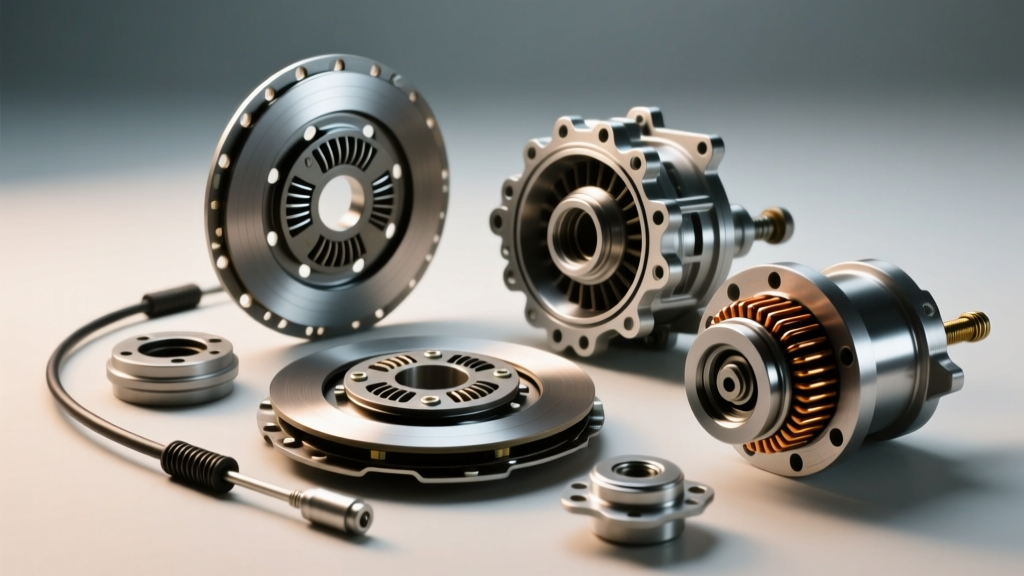
To diagnose engagement issues, you must first understand the hydraulic and mechanical sequence of a clutch apply. A standard clutch pack consists of alternating friction discs (splined to the hub) and steel separator plates (splined to the drum).
- Disengaged State: In its resting state, return springs push the apply piston back. The friction discs and steels spin independently of one another, allowing the transmission to freewheel or idle in that specific gear ratio.
- Engagement Sequence: The Transmission Control Module (TCM) commands a Pulse Width Modulation (PWM) solenoid to open. Pressurized transmission fluid (ranging from 130 to over 250 psi in modern units) is routed through the valve body and into the drum's apply cavity.
- Clamping Force: The hydraulic pressure forces the apply piston to compress the clutch pack against the backing plate. The friction material locks to the steels, binding the hub to the drum and transferring torque.
- Disengagement Sequence: The TCM cuts power to the solenoid, exhaust valves open, and fluid pressure drops. The return springs push the piston back, releasing the clamping force so the discs can spin freely again.
If any part of this sequence is compromised—whether by degraded fluid, worn piston seals, or scored drum bores—you will experience severe engagement and disengagement issues.
Top Symptoms of Clutch Engagement and Disengagement Failures
Internal clutch failures rarely happen without warning. By paying attention to how the vehicle shifts, you can often isolate which clutch pack is failing. Below is a diagnostic matrix comparing the most common engagement symptoms, their mechanical causes, and the required interventions.
| Symptom | Driver Experience | Common Internal Cause | Typical Diagnostic Fix |
|---|---|---|---|
| Delayed Engagement | 2+ second pause before the vehicle moves when shifting into Drive or Reverse. | Worn apply piston O-rings, low pump line pressure, or leaking valve body sleeves. | Line pressure test; reseal apply pistons or install a valve body repair kit. |
| Clutch Flare (RPM Bump) | Engine RPMs spike momentarily during a gear change (e.g., the 2-3 shift) before catching. | The releasing clutch disengages before the applying clutch engages (overlap failure). | Recalibrate TCM shift adaptives; inspect PWM solenoids and accumulator bores. |
| Harsh Engagement (Bang/Clunk) | A violent, jarring shift that feels like being rear-ended. | Stuck shift valves, seized apply pistons, or broken return springs preventing disengagement. | Drop the valve body; inspect for metallic debris and test solenoid duty cycles. |
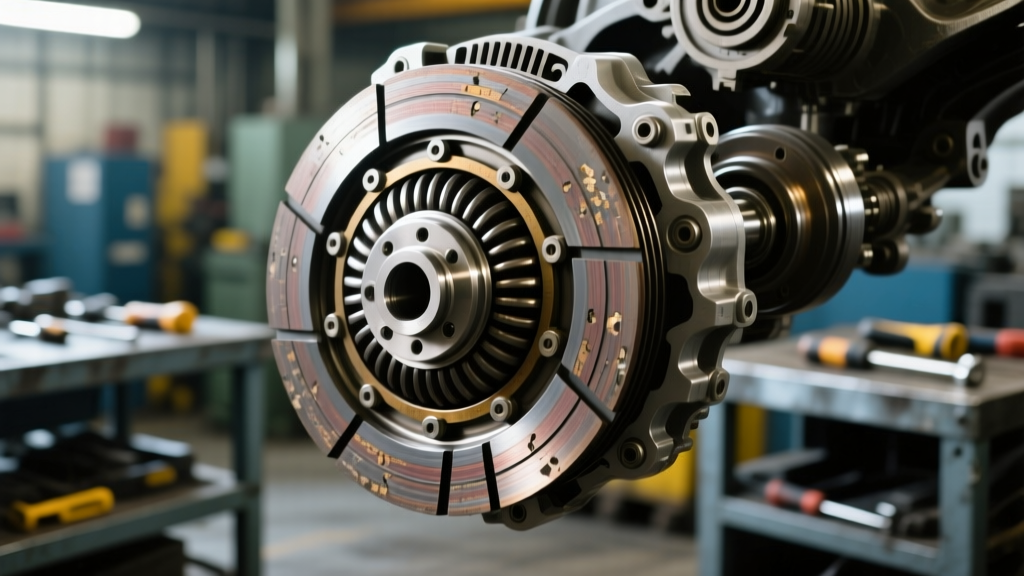
| Continuous Slipping | RPMs rise without a corresponding increase in vehicle speed; transmission goes into limp mode. | Burnt friction material, snapped wave plates, or severe fluid shear. | Teardown required; replace clutch packs, steels, and damaged hard parts. |
Real-World Example: The GM 6L80 3-5-R Clutch Failure
A textbook example of an engagement failure is found in the widely used GM 6L80 transmission. This unit is notorious for the failure of the 3-5-R clutch wave plate (OEM Part #24236926). Over time, the wave plate fatigues and snaps. When this happens, the clutch pack loses its required clearance (spec is typically 0.040" to 0.060"). The debris from the shattered wave plate scores the aluminum clutch housing (Part #24239203), causing hydraulic pressure to bleed off. The result? The driver experiences a delayed engagement into 3rd gear, followed by a harsh flare, and eventually a total loss of 3rd and 5th gears.
Diagnosing Internal Clutch Pack Issues: A Step-by-Step Approach
Before tearing into the transmission, professional technicians use a process of elimination to confirm whether an engagement issue is electronic, hydraulic, or mechanical. According to guidelines from the Automatic Transmission Service Group (ATSG), follow this diagnostic hierarchy:
1. Verify Fluid Condition and Level
Automatic transmission fluid (ATF) is the lifeblood of clutch engagement. Modern low-viscosity fluids (like ZF LifeguardFluid 8 or Dexron ULV) are highly sensitive to thermal breakdown. If the fluid smells burnt or contains heavy metallic clutch material (visible as a dark, glittery sludge on the dipstick or pan magnet), internal clutch pack failure has already occurred. No amount of valve body repair will fix burnt friction discs.
2. Perform a Line Pressure Test
Connect a 300 PSI mechanical gauge to the transmission's line pressure tap. Compare your readings against manufacturer specifications. For example, a healthy GM 6L80 should show roughly 55-65 PSI at idle in Drive, and spike to 130-190 PSI in Reverse. If pressure is low across all ranges, the issue is likely a worn oil pump or a stuck main pressure regulator valve, not a specific clutch pack.
3. Electronic Solenoid and Adaptive Testing
Using a bi-directional scan tool, monitor the PWM solenoid duty cycles during a shift. As of 2026, advanced diagnostic software allows technicians to view "shift adaptives" or "clutch fill times." If the TCM is constantly increasing the fill time or pressure to compensate for a leaking clutch piston, the adaptive values will max out, triggering a Check Engine Light (e.g., P0730 series codes for incorrect gear ratios).
4. The Air Test (Teardown Verification)
Once the transmission or valve body is removed, you can perform an air test. By applying 60-80 PSI of compressed air to the specific clutch apply feed holes in the transmission case, you can physically hear and feel the clutch pack engage. A sharp "thud" indicates a healthy pack. A slow, hissing engagement indicates blown piston seals or a cracked drum that requires a full rebuild.
Expert Tip: Never ignore a minor shift flare. Modern TCMs will artificially increase line pressure to compensate for worn clutch seals. This masks the mechanical wear until the friction material is entirely gone, turning a $400 valve body reseal into a $3,500 complete rebuild.
Real-World Repair Costs and Component Upgrades
When diagnosing engagement and disengagement issues, understanding the financial reality of the repair helps in advising the customer. Here is a breakdown of typical costs and upgrade paths for common clutch-related failures:
- Valve Body / Solenoid Repair: If the clutch packs are healthy but the hydraulic control is failing (common in ZF 8HP units due to leaking mechatronic adapter sleeves), expect to pay between $800 and $1,500 for a remanufactured valve body or a Sonnax Zip Kit upgrade, plus labor and fluid.
- Clutch Pack Rebuild (In-Chassis): If the transmission must be removed and torn down to replace burnt friction discs, steels, and seals, parts alone range from $300 to $600. However, labor and machine shop work (for torque converter replacement) push the total bill to $2,500 - $4,500.
- Hard Part Replacement: If a clutch hub is scored or a drum is cracked (common in high-horsepower applications), hard parts can add $400 to $900 per component to the build sheet.
When to Rebuild vs. Replace
If your diagnostics confirm severe mechanical disengagement failure (e.g., burnt clutches and scored drums), you face a critical decision: rebuild or replace? For late-model vehicles with complex 8, 9, or 10-speed transmissions, sourcing OEM clutch packs and precision-measuring clearances requires specialized tools and immense expertise. In many 2026 repair scenarios, installing a dyno-tested remanufactured transmission with an upgraded torque converter offers a more reliable, warranty-backed solution than attempting an in-house rebuild on heavily damaged internal hard parts.
Ultimately, answering the question "does an automatic transmission have a clutch" opens the door to a complex world of hydraulic engineering. By mastering the symptoms of clutch engagement and disengagement failures, you can accurately diagnose whether a vehicle needs a simple fluid service, a valve body upgrade, or a complete mechanical overhaul.