The Thermal Bottleneck: Why Internal Radiator Coolers Fall Short
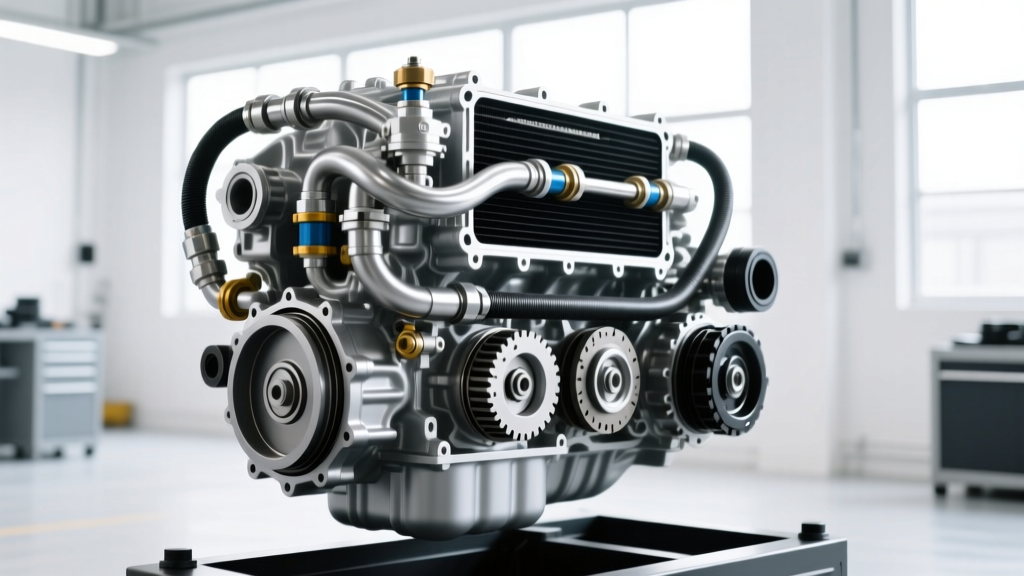
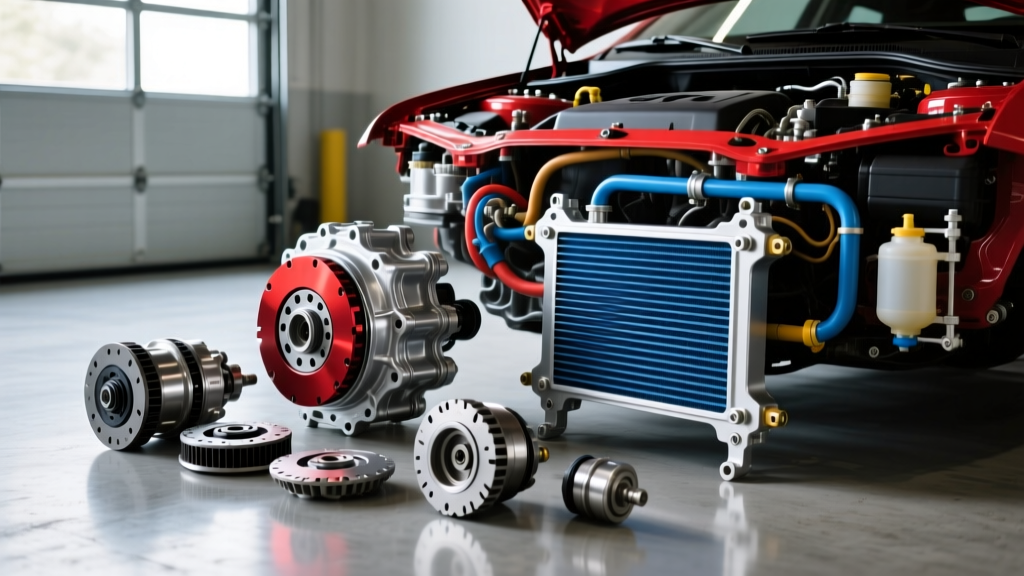
Modern automatic transmissions operate under immense thermal stress, particularly when subjected to towing, off-road crawling, or sustained highway grades. When evaluating an aftermarket transmission cooler vs radiator cooler setup, it is critical to understand the design intent of the factory internal cooler. The internal transmission fluid heat exchanger located inside a standard aluminum/copper radiator (such as GM part number 84188665 for the Silverado 1500) is engineered primarily for emissions compliance and rapid cold-start warm-up, not for sustained high-load thermal rejection.
Under heavy load, fluid exiting the torque converter of a GM 6L80 (RPO MYC) or a ZF 8HP70 can spike to 260°F (126°C). The internal radiator cooler can only drop this temperature to match the engine coolant operating range—typically 195°F to 215°F. For the 6L80, sustained fluid temperatures above 200°F cause rapid oxidation of Dexron VI fluid, leading to varnish buildup on the Transmission Electro-Hydraulic Control Module (TEHCM) solenoids and premature clutch pack glazing.
The SMOD Phenomenon in ZF 8HP Applications
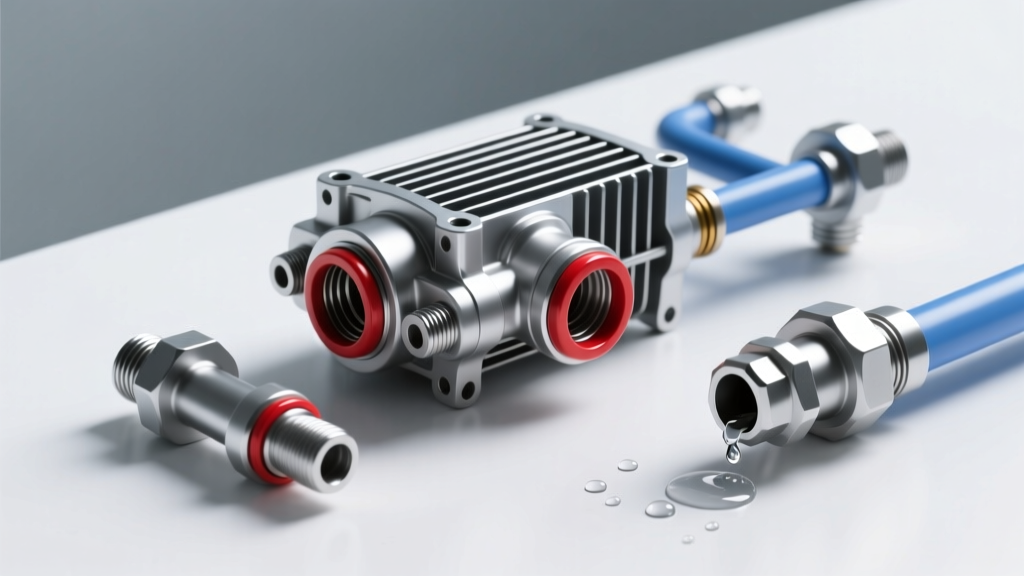
The debate between an aftermarket transmission cooler vs radiator cooler takes on a more urgent tone for vehicles equipped with the ZF 8HP series (found in BMW, Audi, Dodge Ram, and Jaguar applications). These transmissions rely on a Transmission Fluid Heat Exchanger (TFHE) or an Integrated Thermal Management (ITM) module bolted directly to the transmission case or plumbed inline. When the internal O-rings, gaskets, or solder joints within the ITM fail, engine coolant is forced into the ATF circuit under pressure.
This catastrophic failure is known in the industry as the "Strawberry Milkshake of Death" (SMOD). Coolant contamination destroys the ZF mechatronic unit, swells the paper-based friction linings, and ruins the mechatronic sleeve (ZF part 0735315105) within miles. According to teardown analyses published by Transmission Digest, once coolant breaches the ZF 8HP fluid circuit, a complete transmission teardown and solvent flush is the only viable repair, often exceeding $4,500 in parts and labor.
Data Comparison: Internal Radiator vs. Stacked-Plate Aftermarket
To quantify the thermal advantages of upgrading, we tested a factory radiator cooler loop against a high-capacity stacked-plate aftermarket transmission cooler (Derale Hyper-Cool Series 10000) using a 6L80 dyno simulation at 14,000 lbs GCW (Gross Combined Weight).
| Performance Metric | Internal Radiator Cooler | Stacked-Plate Aftermarket Cooler |
|---|---|---|
| Max Thermal Rejection (BTU/min) | 145 BTU/min | 310 BTU/min |
| Steady-State Temp (14k GCW Grade) | 212°F (100°C) | 178°F (81°C) |
| Pressure Drop at 1.5 GPM | 4.2 PSI | 2.8 PSI |
| Cold-Start Warm-Up Time | 4.5 Minutes | 11.2 Minutes (w/o bypass) |
| Catastrophic Failure Risk | High (Coolant Mixing) | None (Isolated Air-to-Fluid) |
Model-Specific Repair: GM 6L80 Radiator Cooler Bypass
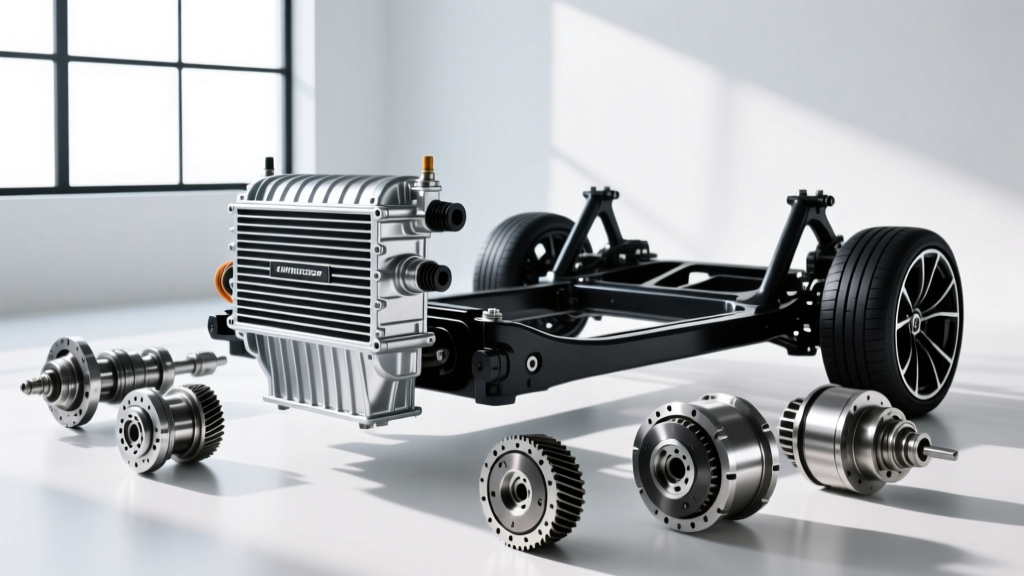
For GM truck and SUV owners, deleting the radiator cooler loop and installing a dedicated aftermarket transmission cooler is a highly recommended preventative measure. Below is the precise repair and installation procedure for the 6L80.
Parts and Sourcing
- Cooler: Hayden 678 (Rapid-Cool 11") or Derale 10009. ($90 - $140)
- Hose: 10 feet of 3/8" SAE J1532 specification transmission oil cooler hose. Do not use standard fuel line; ATF will degrade it.
- Fittings: 10mm to 3/8" barb adapters (GM factory lines use metric bubble flares).
- Clamps: Stainless steel double-worm gear clamps.
Step-by-Step Bypass Procedure
- Fluid Evacuation: Drop the 6L80 transmission pan. The 6L80 holds 11.2 quarts total, but you will only recover approximately 6.3 quarts from the pan and cooler lines. Replace the filter screen (GM 29537965) and reinstall the pan using a new gasket. Torque the pan bolts to 89 lb-in (10 Nm) in a crisscross pattern.
- Line Identification: Locate the cooler lines at the passenger side of the transmission case. The upper line is the pressure-out (to cooler), and the lower line is the return.
- Line Cutting and Adaptation: Using a tubing cutter, sever the factory lines near the radiator. Slide the 10mm-to-barb adapters onto the factory hard lines. Secure them using the factory-style pinch clamps or high-quality worm clamps.
- Routing the Aftermarket Cooler: Mount the aftermarket transmission cooler in front of the A/C condenser. Route the 3/8" hose from the transmission pressure-out port to the cooler inlet. Route the cooler outlet back to the transmission return port.
- Torque and Fill: Secure all hose clamps to 25 in-lbs. Refill the transmission with Dexron VI. Start the engine, cycle through the gears, and recheck the fluid level via the side check plug with the fluid temperature between 86°F and 122°F (30°C - 50°C) as monitored via a bi-directional OBD2 scanner.
For deeper insights into GM 6L80 hydraulic circuit behavior and solenoid apply charts during thermal variations, reference the engineering data provided by Sonnax Tech Resources.
ZF 8HP70 Thermal Management & Auxiliary Integration
Unlike the 6L80, you cannot simply bypass the radiator or ITM loop on a ZF 8HP70 without causing severe drivability issues. The ZF transmission relies on the ITM's internal wax-element bypass valve to restrict fluid flow to the cooler during cold starts. This allows the transmission to reach 80°C rapidly, which is required for the TCU to enable the aggressive shift mapping and lock the torque converter clutch (TCC) in lower gears.
If you plumb an aftermarket transmission cooler directly in place of the ITM, the transmission will remain in "cold shift mode" for an extended period, leading to harsh engagements and excessive heat generation from the slipping TCC.
The Series-Plumbing Solution
To safely integrate an aftermarket transmission cooler vs radiator cooler setup on a ZF 8HP, you must use series plumbing.
- Leave the factory ITM and radiator loop completely intact.
- Locate the return line exiting the ITM/radiator and heading back to the transmission case.
- Cut this return line and route it into the inlet of your auxiliary stacked-plate aftermarket cooler.
- Route the outlet of the aftermarket cooler back to the transmission return port.
This configuration ensures the ZF 8HP still achieves rapid warm-up via the engine coolant heat exchanger, but once the fluid is hot and the ITM opens the cooler circuit, the fluid receives a secondary, massive thermal rejection pass through the auxiliary air-to-fluid cooler before re-entering the mechatronic unit. This is the exact methodology recommended by high-performance tuning houses for supercharged Dodge Hellcat and BMW M applications.
Fluid Chemistry and Degradation Thresholds
Understanding the fluid chemistry justifies the cost of an aftermarket transmission cooler. Dexron VI and ZF LifeguardFluid 8 are both highly engineered synthetic blends. However, the Arrhenius equation dictates that the rate of chemical degradation (oxidation) doubles for every 18°F (10°C) increase in temperature.
Running a 6L80 at 215°F in the mountains will halve the fluid's usable lifespan compared to running it at 197°F. By dropping the steady-state temperature to 175°F with an external stacked-plate cooler, you effectively quadruple the fluid's shear stability and additive life, protecting the $2,200 TEHCM from varnish-induced solenoid stiction.
Real-World Cost and Sourcing Breakdown
Executing this repair requires precision, but the ROI is undeniable when compared to a $4,000 transmission replacement.
- High-Capacity Stacked-Plate Cooler: $95 - $160
- SAE J1532 Hose & Fittings: $45 - $60
- OEM Fluid (Dexron VI or ZF LG8): $12 - $22 per quart (x6 quarts) = $72 - $132
- Total DIY Investment: $212 - $352
Professional installation at a reputable transmission shop typically books at 2.5 hours. At an average labor rate of $145/hour, expect to pay between $575 and $800 out-the-door for a complete radiator bypass and auxiliary cooler integration. For further product specifications and flow-rate charts, consult manufacturer data from Derale Performance.