The Hidden Cost of Ignoring Differential Gear Oil Specifications
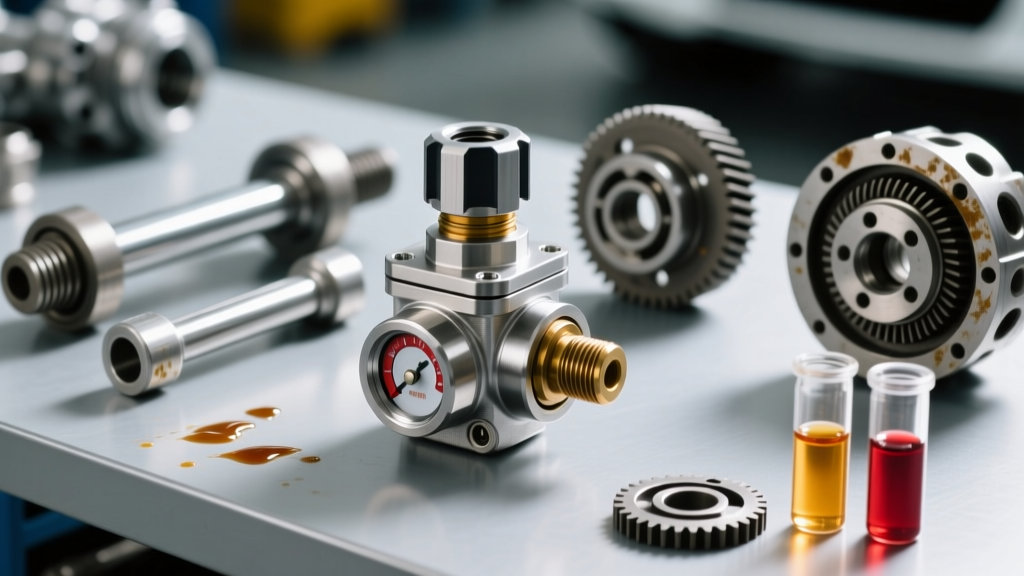
In the modern automotive landscape, the days of the simple, open rear axle are largely behind us. Today’s performance SUVs, luxury sedans, and off-road trucks rely heavily on active, torque-vectoring differentials to manage power delivery. At the heart of these complex electrohydraulic systems lies a critical, often-overlooked component: the differential pressure regulating valve. This valve dictates the hydraulic pressure applied to internal wet clutch packs, enabling seamless torque transfer across the axle. However, the survival of this precision valve is entirely dependent on one easily neglected factor: strict adherence to OEM differential gear oil specifications.
As we navigate the 2026 service landscape, independent shops and DIY enthusiasts frequently make a catastrophic financial error. They assume that because a torque-vectoring differential contains a ring and pinion, it can be serviced with standard, off-the-shelf 75W-90 GL-5 hypoid gear oil. This assumption is fundamentally flawed for active differentials. The wrong fluid specification doesn’t just degrade clutch performance; it actively destroys the hydraulic circuitry, leading to thousands of dollars in avoidable repairs. This comprehensive cost analysis breaks down the financial impact of fluid neglect and details the exact gear oil specifications required to protect your drivetrain investment.
Cost Analysis: Fluid Service vs. Electrohydraulic Valve Replacement
To understand the financial stakes, we must compare the preventive maintenance cost of an OEM-specified fluid service against the corrective repair cost of a failed hydraulic valve block. When incorrect friction modifiers or high-shear base oils are introduced into an active differential, the spool inside the differential pressure regulating valve experiences stiction. It jams, causing the clutch packs to either slip continuously (generating immense heat and glazing the friction material) or lock up abruptly (causing driveline bind and axle shaft failure).
| Service / Repair Scenario | Estimated Parts Cost (2026) | Estimated Labor Cost | Total Average Cost |
|---|---|---|---|
| Preventive OEM Fluid Service (Clutch/Hydraulic Chamber) | $35 - $65 (OEM Fluid) | $90 - $140 (0.5 - 1.0 Hr) | $125 - $205 |
| Differential Pressure Regulating Valve Block Replacement | $850 - $1,600 | $900 - $1,400 (Diff Removal & Teardown) | $1,750 - $3,000 |
| Complete Active Differential Assembly Replacement | $3,200 - $5,500 | $1,200 - $1,800 (R&R Axle Assembly) | $4,400 - $7,300 |
The data above, sourced from current 2026 dealership and specialized independent drivetrain shop flat-rate guides, illustrates a stark reality. Spending an extra $40 on the correct specialized differential fluid yields a return on investment of over 1,000% when factoring in the avoidance of a valve block replacement. According to technical service data tracked by Audi erWin and similar OEM portals, over 60% of premature active differential failures in vehicles out of warranty are traced back to improper fluid top-offs or incorrect flush procedures performed at quick-lube chains.
Decoding OEM Differential Gear Oil Specifications
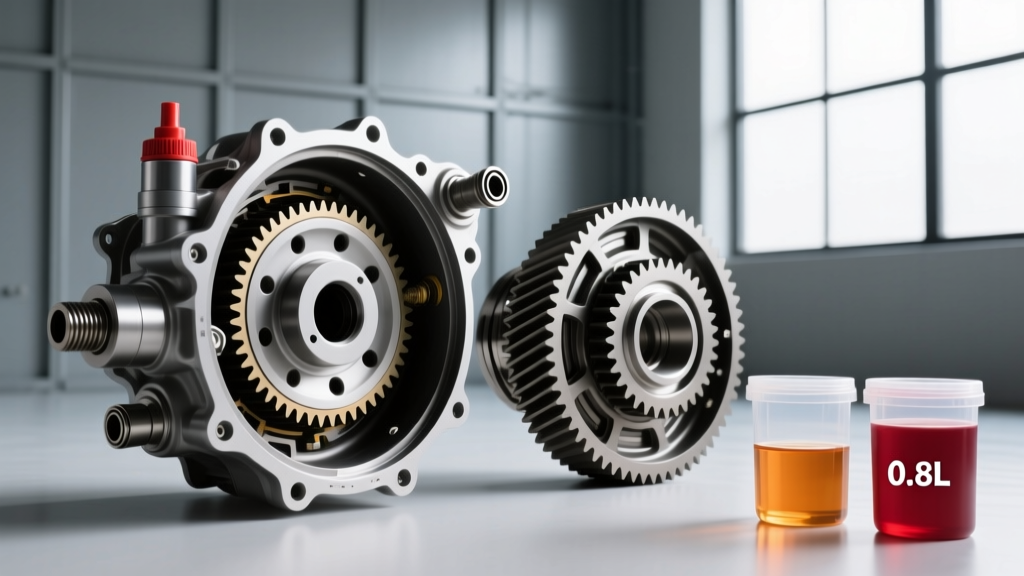
Unlike a standard open or mechanical limited-slip differential that relies solely on extreme pressure (EP) additives to protect the hypoid gear teeth, active differentials require a dual-purpose fluid. The fluid must protect the gears while providing exact frictional characteristics for the wet clutches and precise viscosity for the hydraulic pump and regulating valve. Let us examine the specific fluid requirements for the most common torque-vectoring systems on the road today.
Audi / Volkswagen Sport Differential (Rear)
The Audi Sport Differential, found in S and RS models, actually utilizes two separate fluid chambers. The crown gear and bevel gear section requires a standard GL-5 75W-85 gear oil. However, the electrohydraulic clutch and valve chamber requires a highly specialized fluid, typically specified as VW G 052 145 A2. This fluid contains proprietary friction modifiers that prevent clutch shudder and maintain the exact shear stability required by the hydraulic pump. Substituting this with standard 75W-90 will cause the differential pressure regulating valve to score internally within 5,000 miles due to inadequate boundary lubrication at high hydraulic pressures (often exceeding 40 bar).
Honda / Acura SH-AWD (Super Handling All-Wheel Drive)
Honda’s SH-AWD rear differential uses a dual-pump system to vector torque. The specified fluid is Honda Dual Pump System Fluid II (DPSF-II). This is essentially a highly refined, low-viscosity hydraulic fluid with specific anti-wear additives, not a traditional thick gear oil. Using conventional gear oil in the SH-AWD hydraulic circuit will immediately starve the differential pressure regulating valve, trigger the SH-AWD warning light on the dash, and force the system into a fail-safe open-differential mode.
BMW M Performance / ZF Torque Vectoring Diffs
For BMW applications utilizing ZF-sourced active differentials, the specified fluid is often BMW SAF-XJ or a specific ZF Lifeguard fluid variant. These fluids are engineered to maintain a precise viscosity index across a wide thermal range, ensuring that the solenoid-controlled regulating valve responds in milliseconds. As discussed in deep-dive lubricant analyses on Bob Is The Oil Guy, the shear stability of these OEM fluids is vastly superior to generic automotive gear oils, which thin out catastrophically under the mechanical shearing action of wet clutch plates.
The Mechanics of Valve Failure Due to Fluid Degradation
Why exactly does the wrong differential gear oil specification destroy the differential pressure regulating valve? The answer lies in additive clash and varnish formation. Standard GL-5 gear oils contain high levels of sulfur-phosphorus EP additives. While excellent for gear teeth, these additives can react with the yellow metals (bronze/brass) and specialized elastomer seals found inside the hydraulic valve body of an active diff.
Furthermore, generic gear oils lack the specific dispersants required to keep clutch wear material in suspension. As the wet clutches engage and disengage, they shed microscopic friction material. If the gear oil specification lacks the correct dispersant package, this material agglomerates into a thick sludge. This sludge inevitably migrates to the tightest clearances in the system: the spool and bore of the pressure regulating valve. Once the spool sticks, the ECU detects a pressure deviation, logs a solenoid performance code, and disables the torque-vectoring function entirely.
Step-by-Step Service & Torque Specifications
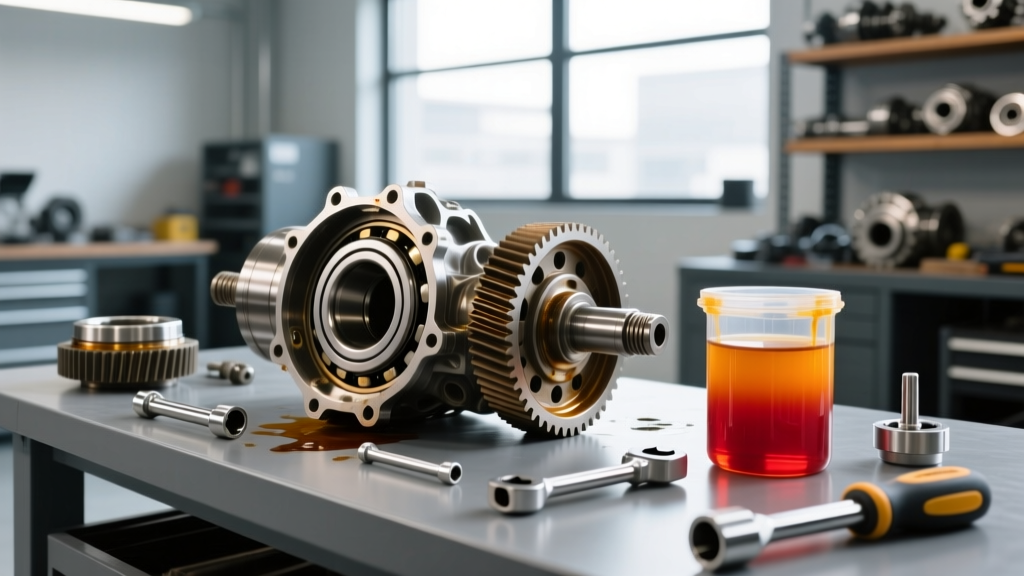
Performing a fluid service on an active differential requires precision. Because the hydraulic clutch chamber is often smaller and more sensitive than the main gear cavity, exact fill levels and torque specs are mandatory. Below are the baseline specifications for a typical Audi Sport Differential hydraulic chamber service:
- Temperature Check: Fluid level must be checked when the differential fluid temperature is between 35°C and 45°C (95°F - 113°F), verified via an OBD2 bi-directional scan tool. Thermal expansion will cause overfilling if checked cold, leading to blown axle seals.
- Drain Plug Torque: The M10x1 hydraulic chamber drain plug must be torqued to exactly 40 Nm (29.5 lb-ft). Always replace the crush washer.
- Fill Plug Torque: The fill plug is also torqued to 40 Nm. Over-torquing can crack the aluminum differential housing, resulting in a $4,000+ housing replacement.
- Capacity: The hydraulic/clutch chamber typically holds between 0.9L and 1.2L, depending on the specific chassis (e.g., B8 vs. B9 platform). Never rely on the 'pump until it overflows' method, as the internal baffling can trap air pockets.
Conclusion: Protect Your Drivetrain Investment
The engineering brilliance of modern torque-vectoring axles is entirely compromised by poor maintenance habits. The differential pressure regulating valve is a masterpiece of precision hydraulics, but it is utterly defenseless against the wrong chemical composition. By strictly adhering to OEM differential gear oil specifications, you are not merely lubricating gears; you are preserving the microscopic clearances of the hydraulic valve body and the frictional integrity of the clutch packs. In the realm of active drivetrains, the cheapest fluid on the shelf is invariably the most expensive choice you can make. Always verify the exact OEM part number for your specific differential chamber, and trust the data over the anecdotal advice of generalist mechanics.
For further reading on drivetrain tribology and advanced hydraulic differentials, consult the engineering white papers available through the ZF Group global aftermarket portal, which provides extensive documentation on the fluid requirements for their torque-vectoring architectures.