The Evolution of Axle Hydraulics in 2026
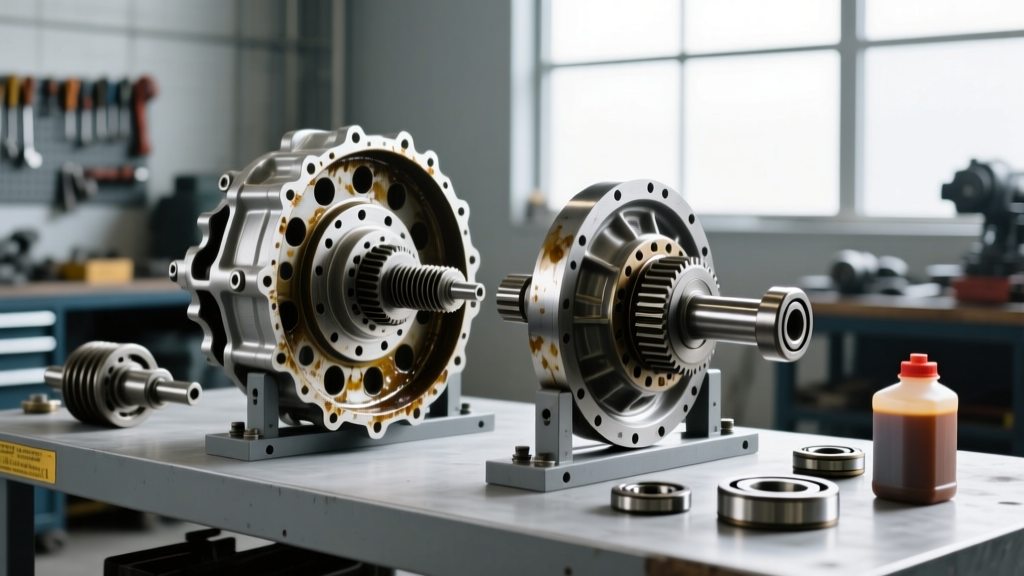
For decades, differential maintenance was a straightforward affair: drain the splash-lubricated hypoid gear sump, refill with a standard 75W-90 GL-5 gear oil, and torque the fill plug. However, as of 2026, the proliferation of Active Torque Vectoring (TV) differentials, electronic locking axles, and heavy-duty commercial drivetrains has fundamentally changed axle architecture. Modern advanced axles are no longer just gearboxes; they are pressurized electro-hydraulic systems.
In these advanced drivetrains, the ring and pinion gears may still require traditional hypoid gear oil, but the clutch-pack actuation circuits demand specialized, low-viscosity hydraulic fluids. A critical, often misunderstood component in these pressurized circuits is the differential pressure indicator switch. This guide compares differential fluid types, outlines exact specifications, and explains how fluid viscosity directly impacts hydraulic filtration and switch diagnostics.
Decoding the Differential Pressure Indicator Switch
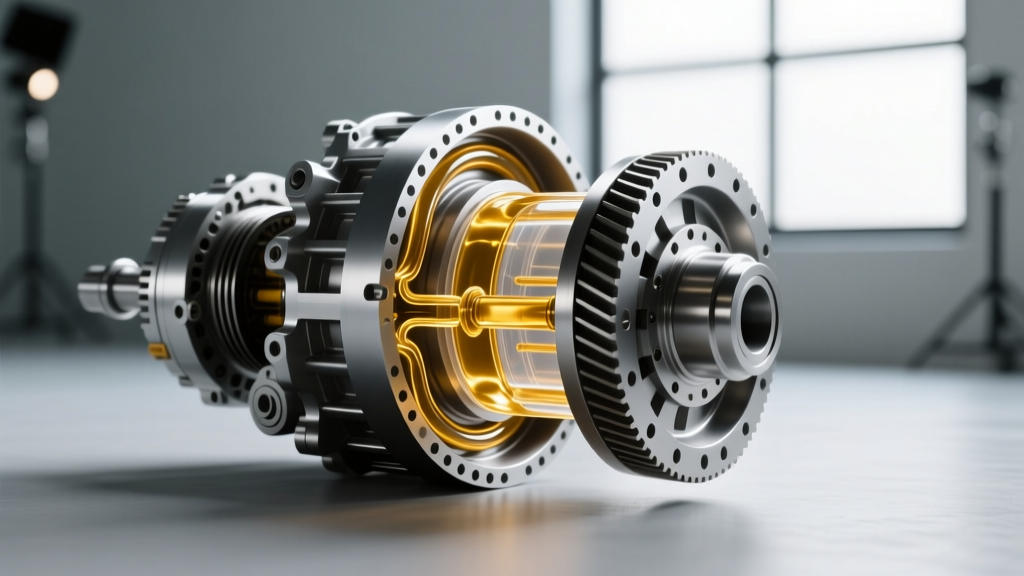
Unlike standard open differentials, active systems (such as ZF Torque Vectoring, GKN eAxles, and BorgWarner active couplings) utilize an internal or inline hydraulic pump to generate clamping force on wet clutch packs. Operating pressures typically range from 15 to 35 bar (217 to 507 psi). To protect the precision electro-hydraulic valves and clutch surfaces, these systems incorporate a high-pressure inline filter, typically rated between 10 and 25 microns.
The differential pressure indicator switch is plumbed across this filter to monitor the pressure drop (Delta-P). Under normal conditions with the correct fluid, the Delta-P remains low. However, if the fluid degrades, shears out of grade, or if a technician incorrectly tops off the system with high-viscosity 75W-90 gear oil, the hydraulic pump struggles to push the thick fluid through the filter. This causes the Delta-P to spike, triggering the differential pressure indicator switch and throwing a drivetrain fault code (e.g., U0415 or C1A90) on the OBD-II scanner.
Why Viscosity Matters for Switch Calibration
According to the SAE J306 standard for axle lubricants, viscosity is measured in centistokes (cSt) at 100°C. Standard GL-5 gear oils hover around 14.5 to 16.5 cSt. In contrast, dedicated active differential hydraulic fluids are often formulated closer to SAE 75W or specialized ATF/HCVT profiles, measuring between 5.5 and 7.0 cSt at 100°C. Using a fluid that is 200% thicker than specified will instantly cause filter bypass or trigger the pressure switch during cold-weather startup.
Differential Fluid Specifications: Comparison Chart
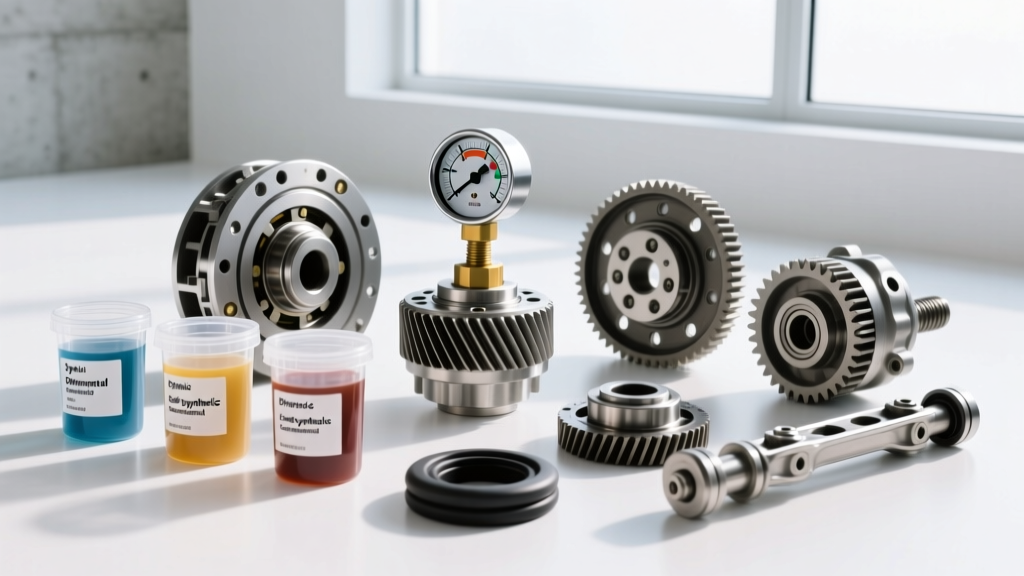
When selecting a fluid, it is vital to distinguish between the hypoid gear sump and the hydraulic clutch actuation circuit. The table below compares the primary fluid categories used in modern axle systems.
| Fluid Category | SAE Grade | Kinematic Viscosity (cSt @ 100°C) | Primary Application | Filter Delta-P Impact |
|---|---|---|---|---|
| Traditional Hypoid GL-5 | 75W-90 | 14.0 - 16.5 | Open/LSD Axles (Dana 44, Ford 8.8, GM 10-bolt) | N/A (Splash lubed, no pressurized filter) |
| Active TV Hydraulic | 75W / Special | 5.5 - 7.0 | ZF TV, GKN, Honda SH-AWD, Porsche PTVD | High (Incorrect fluid triggers switch & codes) |
| Heavy-Duty Synthetic | 75W-90 / 80W-140 | 15.0 - 32.0 | Meritor/Dana Commercial Axles with OES | Moderate (Monitored on fleet filtration systems) |
| Limited-Slip Additive | Varies | Varies | Clutch-type LSDs (Trac-Lok, Eaton Posi) | N/A (Modifies friction, not hydraulic pressure) |
Buyer's Guide: Matching Fluid to Drivetrain Architecture
Choosing the correct fluid requires identifying your exact axle architecture. Below is a breakdown of the three main categories and the specific fluids required to maintain optimal hydraulic pressure and prevent switch faults.
1. Traditional Open & Mechanical LSD Axles
Vehicles: Jeep Wrangler (Dana 44), Ford F-150 (8.8 / 9.75), Toyota Tacoma (8.0-inch).
Fluid Requirement: API GL-5 75W-90 or 80W-90.
Expert Insight: These axles rely entirely on splash lubrication. There is no hydraulic pump, no inline filter, and no differential pressure indicator switch. For severe off-road use, upgrade to a synthetic like Amsoil Severe Gear 75W-90 or Mobil 1 Synthetic Gear Lube. If equipped with a mechanical clutch-type LSD, ensure the inclusion of a friction modifier (e.g., Motorcraft XL-3) to prevent low-speed chatter during tight turns. The API GL-5 specification ensures adequate extreme-pressure (EP) protection for the hypoid ring and pinion gears.
2. Active Torque Vectoring & E-Locker Axles
Vehicles: BMW M3/M4 (Active M Differential), Porsche 911 Turbo (PTVD), Honda/Acura (SH-AWD), ZF-equipped performance SUVs.
Fluid Requirement: OEM-Specific Hydraulic Fluid (e.g., ZF LifeguardFluid DV, Pentosin TwinTronic, Honda DPSF-II).
Expert Insight: This is where catastrophic mistakes occur. Many active differentials feature a dual-chamber design. The ring and pinion gears are bathed in a specific hypoid oil (e.g., 75W-140), while the wet clutch packs are actuated by a separate, low-viscosity hydraulic fluid. The hydraulic circuit contains a 15-micron filter monitored by the differential pressure indicator switch. Topping off the hydraulic chamber with standard GL-5 gear oil will cause immediate pump cavitation, clutch slip, and a tripped pressure switch. Always verify the exact part number (e.g., ZF Part # 1071.298.975) and use a dedicated fluid that meets the OEM's TE-ML or proprietary friction specifications.
3. Heavy-Duty Commercial Drivetrains
Vehicles: Class 8 Trucks, Heavy-Duty Fleet Axles (Meritor, Dana Spicer).
Fluid Requirement: Synthetic Heavy-Duty Gear Oil (e.g., Mobil Delvac 1 75W-90).
Expert Insight: Modern commercial axles often feature pressurized lubrication circuits to ensure oil reaches the wheel ends during extreme grade climbing. These systems utilize external filtration housings equipped with a differential pressure indicator switch to alert fleet managers via telematics when the filter requires service. Using an oil with poor shear stability will cause the viscosity to drop over time, leading to inadequate wheel-end lubrication, while using an oil that is too thick will trigger the filter bypass and the pressure switch prematurely.
Installation, Torque Specs, and Switch Calibration
When servicing the hydraulic circuit of an active differential or replacing the inline filter, precise torque specifications and sealing procedures are mandatory to maintain system pressure and prevent switch faults.
- Filter Housing Bolts: Typically M6x1.0 or M8x1.25. Torque to 10-12 Nm (M6) or 22-25 Nm (M8). Always replace the Viton or Buna-N O-rings; reusing swollen O-rings will cause internal pressure leaks that mimic a clogged filter.
- Differential Pressure Indicator Switch Threads: Usually M10x1.0 metric or 1/8" NPT. Torque to 15-20 Nm. Apply a liquid PTFE thread sealant (e.g., Loctite 565) to prevent high-pressure hydraulic weeping. Do not use Teflon tape, as shredded tape can enter the hydraulic circuit and jam the electro-valves.
- Hydraulic Pump Bleed Procedure: After a fluid change, the hydraulic pump must be bled. Use a bi-directional OBD-II scan tool to cycle the clutch pack solenoids at 20% duty cycle for 45 seconds. This purges trapped air, ensuring the differential pressure indicator switch reads an accurate baseline Delta-P.
- Fluid Capacities: Active TV hydraulic chambers are surprisingly small, typically holding between 0.4 and 1.2 Liters. Overfilling can cause aeration and foaming, which the pressure sensor will read as erratic, low-pressure spikes.
Final Diagnosis: When the Switch Trips
If your scan tool indicates a fault related to the differential pressure indicator switch, do not immediately condemn the switch or the clutch packs. In 70% of cases, the root cause is fluid-related. Verify the exact fluid specification, check the inline filter for metallic debris (which indicates internal mechanical failure), and ensure the correct low-viscosity hydraulic fluid was used in the actuation circuit. For deeper OEM-level diagnostic trees and TE-ML fluid approvals, consult the ZF Group lubricant portal or your specific axle manufacturer's service documentation. Proper fluid selection is the single most effective way to ensure the longevity of modern, pressurized axle systems.