The Action Clutch Misconception in Automatic Diagnostics
When horsepower-addicted enthusiasts begin searching for Action Clutch reviews, they are typically looking for heavy-duty manual transmission upgrades, such as Stage 3 Kevlar or Stage 4 Iron ceramic kits designed to handle 800+ wheel horsepower. However, a massive point of confusion arises when drivers of modern automatic vehicles experience drivetrain slip and mistakenly search for these manual brands. Action Clutch does not manufacture internal wet friction packs for automatic transmissions. If you are driving a GM 6L80, a Ford 10R80, or a ZF 8HP, your 'clutch problems' are related to internal hydraulic clutch packs, torque converter lockup mechanisms, and mechatronic solenoid failures.
This buyer’s guide and diagnostic manual bridges that gap. We will translate the search intent behind high-performance clutch upgrades into actionable, heavy-duty friction material recommendations for automatic transmissions, detailing exact part numbers, diagnostic trouble codes (DTCs), and 2026 rebuild specifications to cure automatic clutch slip, shudder, and RPM flares.
Diagnosing Internal Clutch Failures in Modern Automatics
Unlike a manual transmission where a worn clutch disc results in a high pedal engagement point and obvious slip under wide-open throttle, automatic transmission clutch problems are heavily managed by the Transmission Control Module (TCM). The TCM monitors input and output shaft speed sensors to calculate 'slip time.' When internal friction materials degrade, or when clutch apply pistons suffer from seal leaks, the TCM attempts to compensate by increasing line pressure via the variable force solenoids (VFS).
Key Diagnostic Trouble Codes (DTCs) for Automatic Clutch Slip
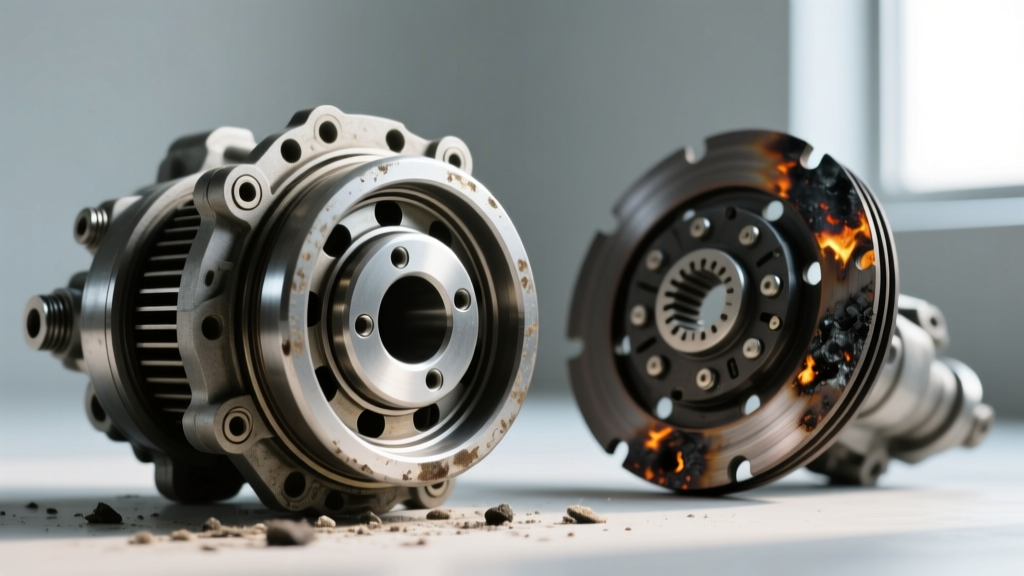
- P0730 (Incorrect Gear Ratio): The ultimate indicator of internal clutch slip. The TCM detects that the output shaft speed does not match the expected ratio for the commanded gear. Common in the GM 6L80 when the 3-5-R clutch pack burns up due to inadequate wave plate cushioning.
- P2714 (Pressure Control Solenoid 'D' Performance / 3-5-R Clutch): Specifically points to a failure in the 3-5-R clutch circuit. Often caused by a cracked 3-5-R clutch housing or worn Teflon sealing rings on the stator support shaft, bleeding off apply pressure before it reaches the friction discs.
- P0741 (Torque Converter Clutch Circuit Performance / Stuck Off): Indicates the TCC lockup clutch inside the torque converter is slipping excessively or failing to apply, leading to massive heat generation and fluid degradation.
Buyer’s Guide: Heavy-Duty Friction Pack Upgrades
If you are towing heavy loads, tuning for higher torque, or simply rebuilding a failed unit, you need automatic friction materials that rival the bite of a performance manual clutch. Below is a comparison of the top-tier aftermarket friction kits available for modern 6, 8, and 10-speed automatics.
| Brand / Product Line | Best Application | Friction Material Tech | Recommended Steels | Est. Kit Price (2026) |
|---|---|---|---|---|
| Raybestos GPZ | Heavy Towing, Drag Racing, High-Torque Diesel | Proprietary GPZ high-energy weave; handles 30% more torque than OEM | Raybestos GPZ Kolene or OEM | $220 - $380 |
| Alto Red Eagle | Street Performance, Off-Road, Fleet Vehicles | Red Eagle carbon-kevlar composite; excellent heat dissipation | Alto Kolene (Red) Steels | $180 - $310 |
| BorgWarner OEM | Daily Driving, Restorations, Factory Spec Rebuilds | Standard paper/cellulose or OEM sintered bronze | OEM Smooth or Waved | $140 - $250 |
Expert Note: When upgrading to Raybestos GPZ or Alto Red Eagle, you must pair them with Kolene (nitrided) steel plates. Standard OEM steels will warp under the aggressive bite of high-energy friction materials, causing permanent chatter and premature failure.
The Torque Converter Clutch (TCC): Your Automatic's Hidden Clutch
The most literal 'clutch' in an automatic transmission is the Torque Converter Clutch (TCC). This internal friction disc locks the engine directly to the transmission input shaft at cruising speeds to eliminate parasitic fluid coupling losses. TCC shudder—felt as a rhythmic vibration at 40–55 mph under light throttle—is one of the most common clutch problems in automatic transmissions.
Fixing TCC Shudder: Beyond the 'Magic in a Bottle'
While chemical friction modifiers (like Lubegard or Dr. Tranny Shudder Fixx) can temporarily mask TCC shudder by altering the fluid's coefficient of friction, they do not fix mechanical wear. True diagnosis requires monitoring TCC slip RPM via a bi-directional OBD2 scanner.
- Acceptable TCC Slip: 0 to 20 RPM when fully locked.
- Failing TCC Slip: 50+ RPM fluctuating, indicating glazed friction material or a failing TCC apply valve in the valve body.
- The Fix: Replace the torque converter with a remanufactured unit featuring a billet steel TCC piston and high-energy friction lining. For the GM 6L80, a Precision Industries or Circle D billet torque converter will cost between $850 and $1,200 in 2026, but it permanently eliminates TCC deflection and shudder.
ZF 8HP and Ford 10R80: Edge Cases in Clutch Diagnostics
Modern 8-speed and 10-speed transmissions introduce complex clutch apply strategies that require specialized diagnostic knowledge. According to rebuild data from ATSG, mechanical wear is not always the primary culprit for slip in these units.
ZF 8HP45 / 8HP70 'A' and 'C' Clutch Failures
The ZF 8HP (found in Ram 1500s, BMWs, and Jaguars) utilizes a mechatronic unit that bolts directly to the valve body. A notorious failure point is the ZF mechatronic sealing sleeve. When the plastic sealing sleeves crack, hydraulic pressure bleeds off before reaching the 'A' and 'C' clutch drums. The symptom mimics burnt clutches (harsh engagements followed by neutraling out), but the friction packs are often perfectly intact. Replacing the $45 mechatronic sealing sleeve and the ZF 8HP adapter seal kit resolves the issue without requiring a full clutch pack teardown.
Ford 10R80 'C' Clutch Hub Wear
In the Ford 10R80 (F-150, Mustang), the 'C' clutch hub is subjected to immense stress during the 3-4 and 4-5 shifts. The aluminum splines on the clutch hub can strip or round off. If you are rebuilding a 10R80 for slip issues, measuring clutch pack clearance is not enough; you must physically inspect the clutch hub splines with a magnifying glass. If the splines are fatigued, no amount of high-performance Raybestos friction material will save the transmission.
Precision Rebuild Specs: Clearances and Pressures
Installing performance friction packs requires strict adherence to clearance specifications. Automatic clutches rely on fluid volume to fill the gap between the friction discs and steels. If the clearance is too tight, the clutch will drag and burn; if it is too wide, you will experience a 'flare' (delayed engagement) as the piston travels too far before clamping the pack.
2026 Golden Rule for Clutch Pack Clearances: Always measure with the wave plate or Belleville spring fully seated and compressed. For the GM 6L80 3-5-R clutch pack, the factory spec is 0.040' - 0.060'. When using thicker aftermarket Raybestos GPZ frictions, you may need to swap the selective snap-ring (available in thicknesses from 0.085' to 0.135') to achieve the correct working clearance.
Furthermore, clutch apply pressure must be verified. A healthy GM 6L80 should show TCC apply pressure ramping smoothly to 110-130 PSI at highway cruising. If line pressure drops below 80 PSI during TCC apply, the issue lies in the valve body's TCC regulator valve, not the clutch discs themselves. Sonnax offers a zip-kit (Part No. 95892-05K) that replaces the worn aluminum valve body bore with a hardened steel sleeve and anodized valve, restoring hydraulic integrity for under $75.
Conclusion: Sourcing the Right Automatic Clutch Solutions
While Action Clutch remains a top-tier choice for manual drivetrain upgrades, automatic transmission clutch problems require an entirely different ecosystem of diagnostics and parts. Whether you are battling TCC shudder in a daily driver or upgrading a 6L80 to handle 1,000 lb-ft of torque, success relies on pairing the correct high-energy friction materials (like GPZ or Red Eagle) with meticulous attention to hydraulic sealing, valve body health, and precise clutch pack clearances. Stop searching for manual clutch reviews, pull your transmission pan, read the clutch apply charts, and invest in the wet friction technology your automatic transmission actually requires.