The Bifurcated Clutch Environment: HVAC vs. Drivetrain
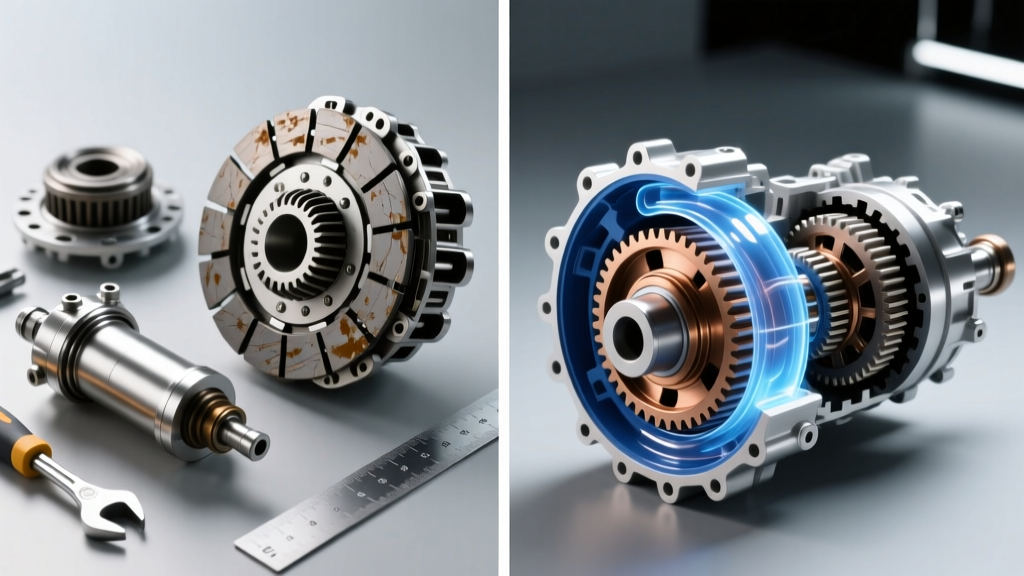
When automotive technicians and DIY enthusiasts diagnose under-hood noise, the term 'clutch' often triggers immediate thoughts of manual transmission friction plates and flywheels. However, modern vehicles feature multiple clutch systems operating on entirely different mechanical principles. The most common auditory complaint that bridges these systems is belt-driven accessory noise, specifically ac clutch squealing. To accurately assess clutch wear signs and lifespan indicators in 2026, we must separate the electromagnetic clutch of the air conditioning compressor from the mechanical friction clutch of the drivetrain. Both systems exhibit distinct wear patterns, failure modes, and measurement thresholds that dictate their remaining service life.
Decoding AC Clutch Squealing: Electromagnetic Wear Indicators
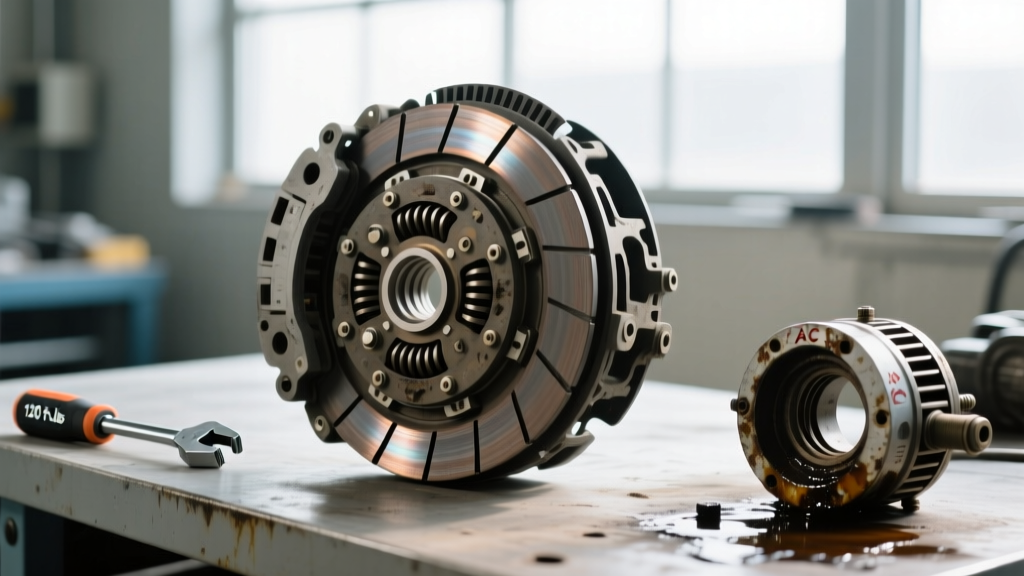
The AC compressor clutch is an electromagnetic device consisting of a stationary coil, a rotor/pulley assembly, and a friction plate (armature) attached to the compressor shaft. When you encounter ac clutch squealing, it is rarely a serpentine belt issue if the noise strictly correlates with the HVAC compressor engaging. The squeal originates from the friction plate micro-slipping against the spinning pulley rotor.
The Air-Gap Specification and Friction Plate Wear
As the friction plate wears over thousands of engagement cycles, the physical distance between the plate and the rotor increases. This distance is known as the 'air gap.' According to ACDelco's climate control engineering specifications, the standard air gap for most modern passenger vehicle compressors must remain between 0.40mm and 0.60mm (0.015' to 0.023').
- 0.40mm - 0.60mm: Optimal magnetic clamping force; silent engagement.
- 0.61mm - 0.79mm: Increased engagement time; minor heat generation.
- 0.80mm and above: The magnetic field weakens exponentially over this distance. The coil cannot fully lock the friction plate, resulting in high-frequency ac clutch squealing, extreme localized heat, and eventual coil burnout.
Diagnostic Action: Use a non-magnetic feeler gauge to measure the gap at three equidistant points around the rotor. If the gap exceeds 0.80mm, the clutch is at the end of its lifespan. While older compressors allowed for shimming the friction plate by removing the center hub and dropping spacer washers, many 2020-2026 variable-displacement compressors require a complete pulley and coil assembly replacement (e.g., ACDelco part 15-22115 or equivalent), costing between $110 and $240 for parts.
Coil Resistance and Thermal Degradation
If the air gap is within spec but ac clutch squealing persists, the electromagnetic coil itself may be degrading. Heat from the engine bay and internal resistance breakdown cause the copper windings to lose efficiency. A healthy AC clutch coil should measure between 3.0 and 4.5 ohms at 20°C (68°F). A reading above 5.0 ohms indicates internal winding degradation, reducing amperage and clamping force, leading to slip and squeal.
Drivetrain Clutch Wear Signs: Beyond the Squeal
Transitioning from the accessory drive to the transmission, the mechanical friction clutch operates in a high-torque, high-heat environment. Unlike the binary engagement of an AC clutch, a drivetrain clutch requires controlled slippage during gear changes. Identifying drivetrain clutch wear signs requires evaluating tactile feedback, auditory cues, and physical measurements.
Friction Disc and Marcel Spring Fatigue
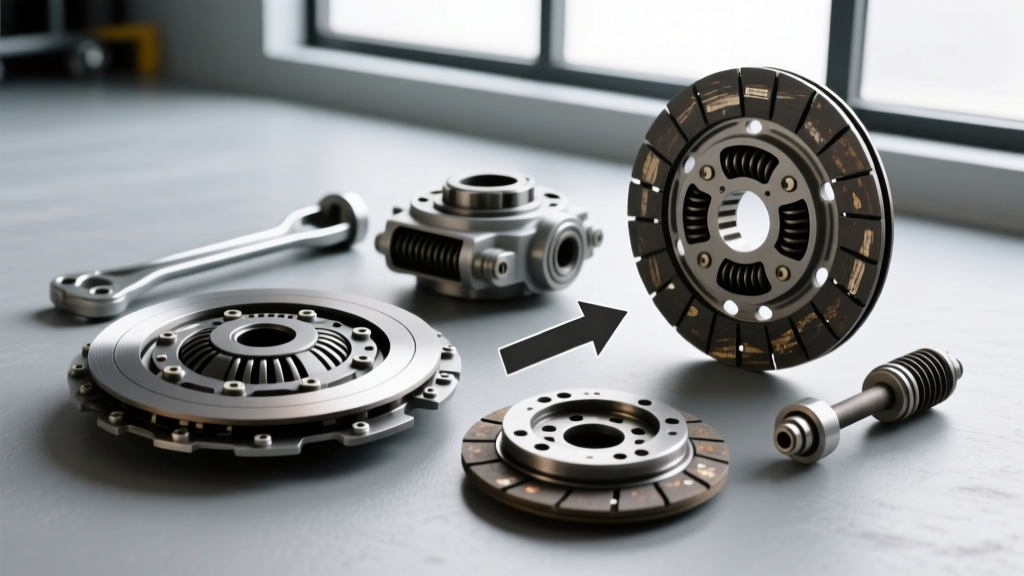
The friction disc features circumferential wave springs known as 'marcel springs,' which provide progressive clamping and smooth engagement. Over time, these springs fatigue and flatten. The primary lifespan indicator of a friction disc is the remaining lining thickness relative to the rivet heads. OEM service manuals universally mandate that the friction material must protrude at least 0.5mm above the rivet heads. Once the rivets begin scoring the flywheel or pressure plate, catastrophic drivetrain damage is imminent.
Dual-Mass Flywheel (DMF) Backlash Limits
For vehicles equipped with a Dual-Mass Flywheel (common in modern diesel and high-torque manual applications), clutch chatter and gear rattle at idle are primary wear signs. The DMF contains internal torsional dampers and arc springs that absorb engine harmonics. According to the Schaeffler REPXPERT Technical Portal, a DMF reaches the end of its lifespan when the angular free-play (backlash) between the primary and secondary masses exceeds 15 degrees, or when radial play on the secondary mass exceeds 1.5mm. Ignoring these indicators and replacing only the friction kit will result in immediate clutch chatter and premature release bearing failure.
Comprehensive Lifespan Indicators and Measurement Data
Understanding the expected service intervals and hard measurement limits is critical for accurate diagnostics. The table below outlines the definitive lifespan indicators for both accessory and drivetrain clutch systems.
| Component | Typical Lifespan | Definitive Wear Limit Indicator | Avg. Replacement Cost (2026) |
|---|---|---|---|
| AC Compressor Clutch Friction Plate | 100k - 150k miles | Air gap > 0.80mm; Coil resistance > 5.0 ohms | $110 - $280 (Parts) |
| Manual Clutch Friction Disc | 80k - 120k miles | Lining < 0.5mm above rivet; Marcel spring collapse | $250 - $650 (Kit) |
| Dual-Mass Flywheel (DMF) | 120k - 150k miles | >15° angular backlash; >1.5mm radial play | $600 - $1,400 |
| Hydraulic Release Bearing (CSC) | 100k+ miles | Fluid weeping; >2.0mm axial play; groaning on depression | $90 - $220 |
Precision Torque Specifications for Reassembly
Whether you are addressing an AC compressor clutch hub or a manual transmission flywheel, precision torque is non-negotiable. Over-torquing or under-torquing these components directly alters clutch geometry and engagement characteristics.
AC Clutch Hub Nut Torque
The center nut securing the AC clutch friction plate to the compressor shaft is highly sensitive. The standard torque specification is typically 15 Nm (11 lb-ft). Over-torquing this nut will crush the internal spacer sleeve, artificially reducing the air gap to near-zero. This causes the friction plate to drag continuously against the pulley, generating massive parasitic drag, melting the plastic bobbin of the coil, and ultimately seizing the compressor.
Drivetrain Flywheel and Pressure Plate Torque
When replacing a worn manual clutch assembly, the mating surfaces must be torqued to exact OEM specifications to prevent warping and ensure even clamping force. For a standard GM LS-series or Ford Coyote V8 application:
- Flywheel to Crankshaft Bolts: 74 lb-ft (100 Nm) for standard OEM bolts. If using aftermarket ARP flywheel bolts (e.g., ARP 200-2804), torque to 95 lb-ft using ARP Ultra-Torque lube.
- Pressure Plate to Flywheel: 22 lb-ft to 26 lb-ft (30-35 Nm), applied in a strict crisscross star pattern to ensure the diaphragm spring is seated evenly without inducing lateral runout.
Expert Diagnostic Tip: Never rely solely on mileage to dictate clutch replacement. A vehicle driven predominantly in stop-and-go urban traffic with a heavy foot will degrade a manual clutch friction disc and an AC compressor clutch coil in under 60,000 miles due to excessive heat cycling. Conversely, highway-driven vehicles can easily surpass 150,000 miles on the original drivetrain clutch. Always measure the physical wear limits.
Summary: Proactive Clutch System Maintenance
Diagnosing clutch wear requires a methodical approach that respects the distinct engineering of both electromagnetic and mechanical systems. By using a feeler gauge to verify AC air-gap tolerances, testing coil resistance, and measuring DMF backlash and friction disc rivet depth, technicians can accurately predict component failure before it leaves the driver stranded. As automotive HVAC systems and manual transmissions continue to evolve, adhering to precise measurement data and torque specifications remains the cornerstone of reliable clutch system diagnostics.