While AutoGearNexus primarily focuses on manual and automatic transmission drivetrains, the accessory drive system—specifically the AC compressor clutch—represents a critical parasitic load on the engine's crankshaft. When an auto air conditioning clutch repair is performed incorrectly, the resulting post-replacement failures can mimic severe engine drivability issues, cause serpentine belt destruction, and lead to catastrophic accessory drive contamination. In 2026, with the widespread adoption of R-1234yf refrigerant and complex PCM-controlled variable displacement compressors, the cost of misdiagnosing a post-repair AC clutch failure has never been higher.
The Drivetrain & Parasitic Load Connection
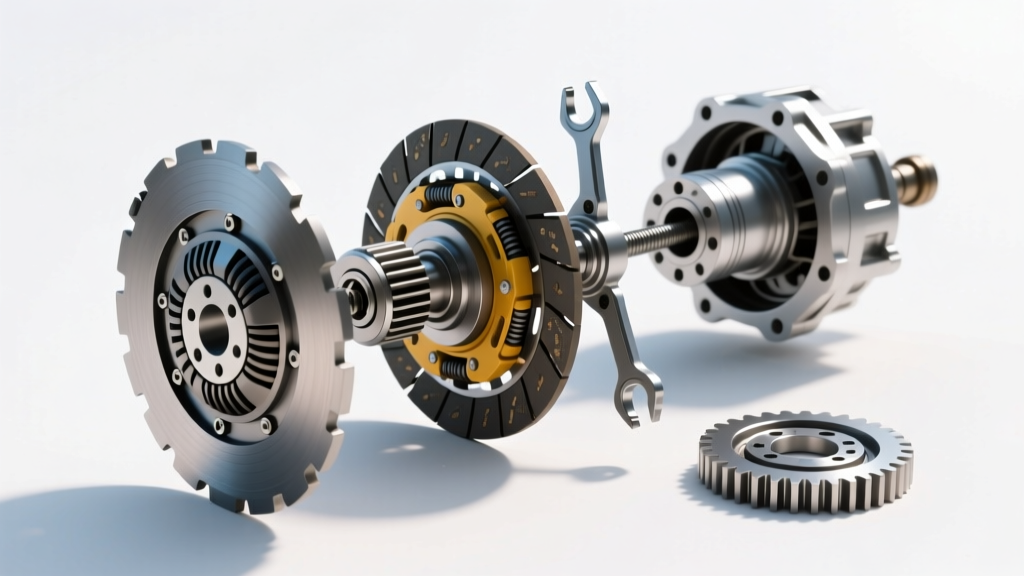
Before diving into the financial breakdown, it is vital to understand how the AC clutch interacts with the drivetrain. The electromagnetic clutch on a traditional fixed-displacement compressor (like the ubiquitous Denso SD7 or Harrison HT6) engages the compressor's internal swashplate to the engine's serpentine belt system. If a newly replaced clutch drags, slips, or seizes, it introduces severe harmonic vibrations into the belt tensioner and crankshaft damper. Technicians often misdiagnose a failing AC clutch bearing or a slipping friction plate as a transmission torque converter shudder or a failing engine mount. Understanding the exact failure modes of a newly installed AC clutch is essential for accurate cost analysis and warranty claim validation.
Why Post-Replacement AC Clutches Fail (And Cost You Double)
The most frustrating scenario for a vehicle owner is paying for an auto air conditioning clutch repair, only to have the system fail again within 500 miles. Post-replacement failures rarely stem from defective new parts; they are almost always the result of improper installation procedures or ignored secondary faults.
1. Incorrect Air Gap Tolerances
The electromagnetic coil relies on a precise magnetic flux to pull the friction plate against the rotor pulley. The factory specification for the air gap between the friction plate and the rotor is typically between 0.020" and 0.035" (0.5mm - 0.9mm).
If a technician installs a new clutch hub without using a feeler gauge to verify the gap—and fails to add or remove the internal shimming washers—the gap may exceed 0.040". When the coil heats up under the hood, its electrical resistance increases, weakening the magnetic field. The clutch will engage when cold but slip or disengage entirely when hot, resulting in a burnt friction plate. Replacing a burnt clutch plate and coil a second time will cost an additional $250 to $400 in 2026 labor and parts.
2. Electrical & PCM Grounding Faults
Modern vehicles utilize Pulse Width Modulation (PWM) or solid-state relays controlled by the Powertrain Control Module (PCM) to cycle the AC clutch. If the original clutch failed due to a voltage drop caused by a corroded ground splice (e.g., GM's notorious G102 ground pack), simply replacing the clutch assembly will not solve the issue. The new coil will receive less than 10.5 volts, leading to weak engagement, excessive arcing at the relay, and premature thermal failure of the new coil windings.
3. Refrigerant Pressure Switch Lockouts
If the AC system was not properly evacuated and recharged to exact OEM weight specifications (e.g., 1.32 lbs of R-1234yf) during a compressor swap, the trinary pressure switch will detect abnormal high-side or low-side pressures. The PCM will intentionally lock out the clutch relay to prevent compressor explosion or oil starvation. The clutch isn't broken; the system is protecting itself. However, an inexperienced diagnostician might condemn the new clutch, leading to unnecessary teardown costs.
2026 Price Breakdown: OEM vs. Aftermarket AC Clutch Assemblies
When facing a post-repair failure, the decision between OEM and aftermarket components heavily influences the total repair bill. Below is a comprehensive cost analysis for a standard front-wheel-drive crossover (e.g., 2021-2025 Toyota RAV4 or Honda CR-V) requiring a secondary clutch repair.
| Component / Service | OEM Part Cost (2026) | Premium Aftermarket (Denso/UAC) | Budget Aftermarket | Avg. Labor Time |
|---|---|---|---|---|
| Clutch Coil Assembly | $140 - $190 | $65 - $95 | $35 - $50 | 0.8 - 1.2 hrs |
| Friction Plate & Hub | $90 - $130 | $45 - $70 | $25 - $40 | 0.5 hrs |
| Rotor Pulley & Bearing | $110 - $160 | $60 - $90 | $40 - $60 | 0.6 hrs |
| Complete Compressor w/ Clutch | $450 - $750 | $220 - $350 | $140 - $190 | 1.5 - 2.5 hrs |
| R-1234yf Evac & Recharge | $180 - $280 (Shop Supply & Refrigerant Cost) | 0.5 hrs | ||
Note: Labor rates in 2026 average $165-$225 per hour at dealerships and $120-$160 at independent drivetrain and HVAC specialists.
Expert Insight: Never replace just the friction plate if the coil has overheated. The thermal degradation of the copper windings inside the coil will cause the new plate to slip. Always replace the coil and friction plate as a matched set, and verify the center hub bolt is torqued to spec (typically 10-15 Nm / 89-133 lb-in for most Denso units).
Diagnostic Framework: Troubleshooting a Newly Replaced AC Clutch
If a vehicle returns to the shop with a newly replaced AC clutch that is not engaging, slipping, or making noise, follow this strict diagnostic sequence to avoid throwing more parts at the vehicle.
Step 1: The Mechanical Air Gap Verification
- Tool: Tapered feeler gauge set.
- Procedure: Insert the gauge between the friction plate and rotor pulley at three equidistant points.
- Specification: 0.020" to 0.035". If the gap is uneven, the friction plate is warped or the snap ring is not fully seated in the compressor groove.
Step 2: Coil Resistance & Thermal Testing
- Tool: Fluke 88V Automotive Multimeter.
- Procedure: Disconnect the clutch pigtail. Measure resistance across the coil terminals.
- Specification: A healthy 12V coil should read between 3.2 and 4.5 ohms at 68°F (20°C). If the reading is infinite (open) or below 2.0 ohms (shorted internally), the new coil is defective or was fried by a PCM driver fault.
Step 3: Active Voltage Drop Test
- Procedure: Backprobe the clutch connector with the engine running and AC commanded ON. Measure voltage directly at the coil terminals.
- Specification: Must read within 0.5V of battery voltage (e.g., 13.8V - 14.2V). If you measure 10.2V at the clutch but 14.1V at the battery, you have a high-resistance fault in the wiring harness or the AC compressor relay contacts are pitted.
Step 4: Refrigerant Pressure Validation
According to the Mobile Air Climate Systems Association (MACS), over 40% of 'electrical' AC clutch complaints are actually mechanical pressure lockouts. Connect a manifold gauge set. If the low-side pressure is below 25 PSI, the PCM will disable the clutch to prevent the compressor from ingesting liquid refrigerant or running without oil return. A post-repair leak at the O-rings or a clogged expansion valve (TXV) will mimic a dead clutch.
The Hidden Cost of Accessory Drive Contamination
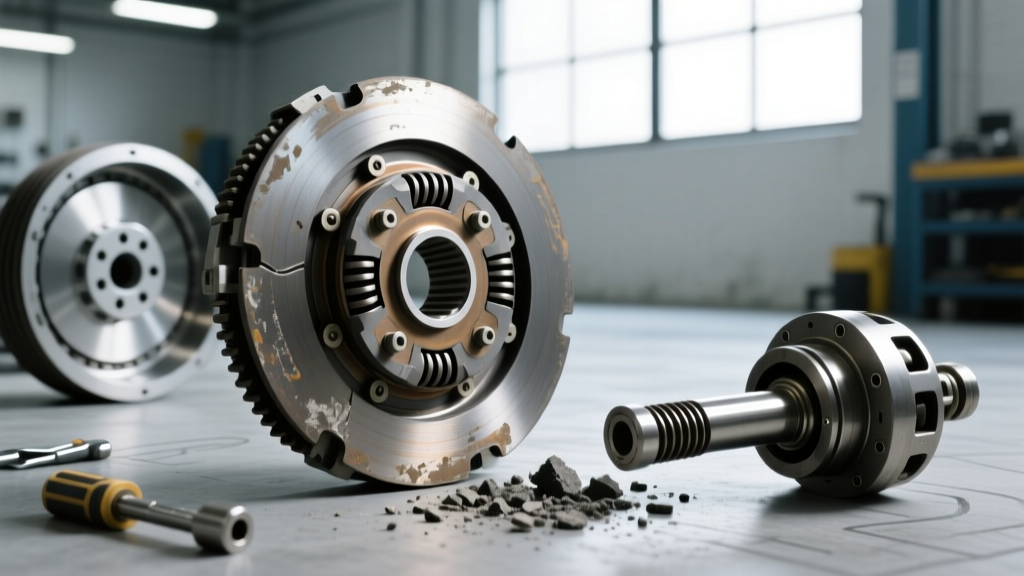
When a post-replacement clutch failure involves a seized rotor bearing or a disintegrating friction plate, the collateral damage to the drivetrain accessory drive is severe. Metal shavings and shredded Kevlar friction material are thrown directly onto the serpentine belt. This debris becomes embedded in the belt ribs and is subsequently pressed into the grooves of the alternator pulley, power steering pump, and crankshaft harmonic balancer.
If a technician replaces a destroyed AC clutch but fails to replace the serpentine belt and clean the accessory pulleys with a brass wire brush and brake cleaner, the new belt will chirp, squeal, and eventually jump the tensioner. This can lead to a loss of power steering and water pump circulation, turning a $300 AC clutch repair into a $1,200 accessory drive overhaul. Always factor in a new OEM-grade serpentine belt (e.g., Gates or Dayco, costing $35-$65) and a belt tensioner inspection whenever a catastrophic clutch failure occurs.
Summary: Doing It Right the First Time
The cost of an auto air conditioning clutch repair in 2026 is heavily influenced by the technician's adherence to precise mechanical tolerances and electrical diagnostics. By verifying the air gap, performing active voltage drop tests, and ensuring proper R-1234yf refrigerant charges, shops can eliminate the 'comeback' failures that drain profitability and frustrate consumers. For deeper technical standards on refrigerant handling and system pressures, always refer to the latest EPA Section 609 guidelines and OEM service documentation.