Hydrodynamic Coupling vs. Dry Friction Mechanics
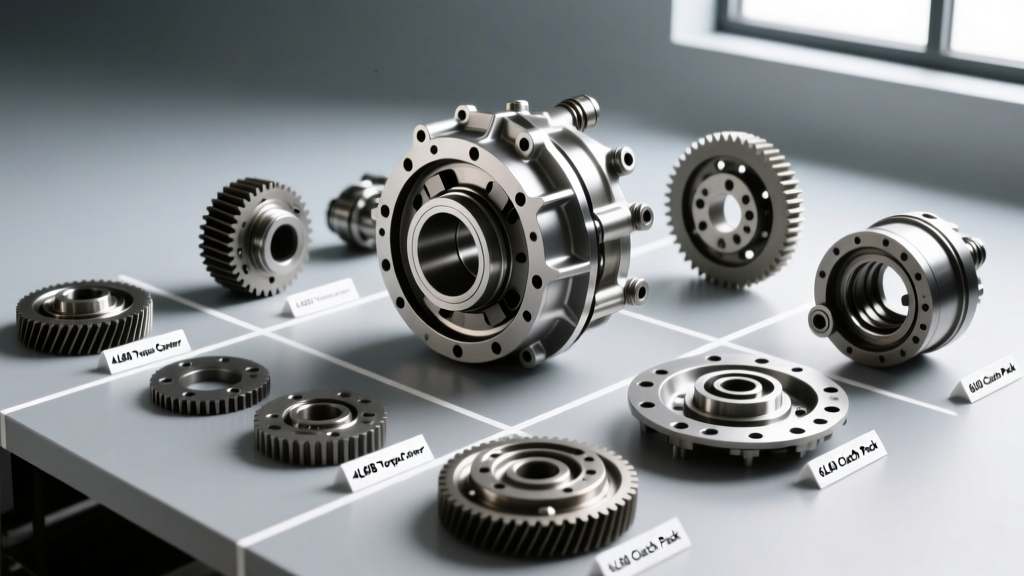
When evaluating powertrain configurations for high-torque, heavy-duty, or continuous-cycle applications, engineers and builders frequently debate the merits of fluid coupling versus direct mechanical friction. At the center of this debate is the 780 series torque converter—a heavy-capacity hydrodynamic unit prevalent in commercial, marine, and high-horsepower diesel towing applications—compared against traditional heavy-duty manual dry clutches. Understanding the fundamental physics governing these two distinct torque transfer methodologies is critical for diagnosing drivetrain behavior, predicting failure modes, and optimizing power delivery.
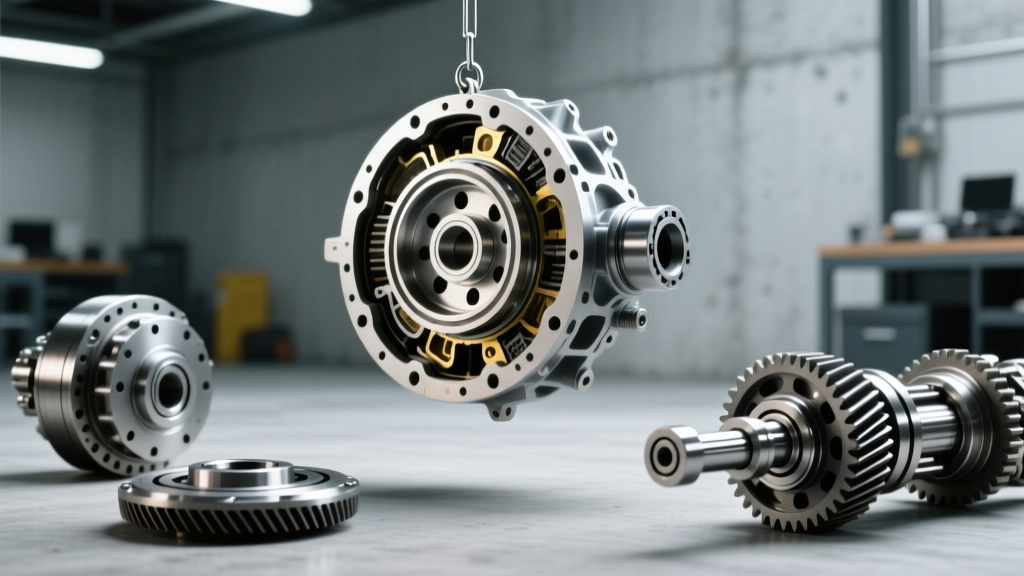
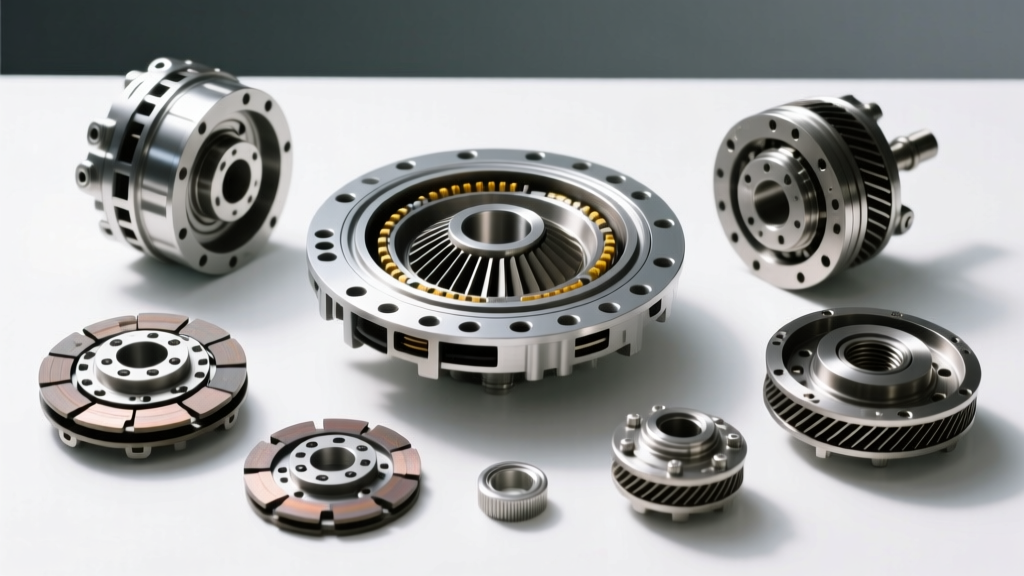
The 780 series torque converter operates on the principles of hydrokinetic energy transfer. Inside the welded housing, three primary elements interact: the impeller (driven by the engine), the turbine (splined to the transmission input shaft), and the stator (mounted on a one-way sprag clutch). Transmission fluid, typically a high-viscosity synthetic like TES 295 or Dexron VI, is sheared between the impeller and turbine, transferring kinetic energy without direct mechanical contact. Conversely, a heavy-duty manual clutch—such as a 15.5-inch twin-plate ceramic button setup—relies entirely on mechanical friction. A diaphragm spring applies thousands of pounds of clamping force to sandwich friction discs between the flywheel and pressure plate, creating a rigid 1:1 mechanical link.
Torque Multiplication and Stall Characteristics
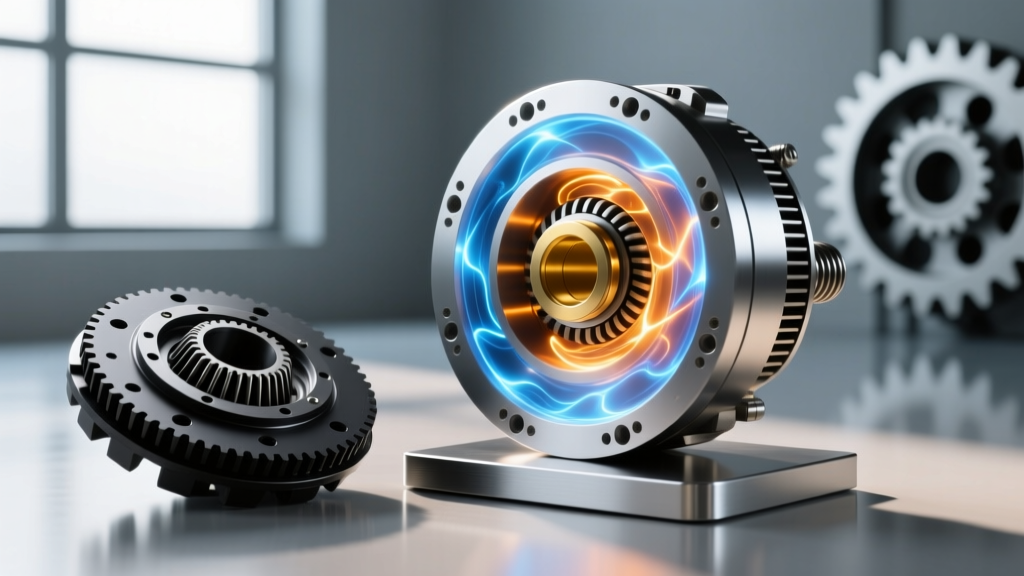
The most profound operational difference lies in torque multiplication. A manual clutch is a binary device; it is either disengaged (slipping) or fully engaged (1:1 ratio). It cannot multiply engine torque. The 780 series torque converter, however, utilizes its stator assembly to redirect fluid flow back into the impeller during high-slip conditions (stall). This hydrodynamic feedback loop effectively multiplies the engine's output torque before it ever reaches the transmission gears.
| Parameter | 780 Series Torque Converter | 15.5' Twin-Plate Manual Clutch |
|---|---|---|
| Coupling Method | Hydrodynamic Fluid Shear | Mechanical Dry Friction |
| Torque Multiplication | Up to 2.4:1 (at peak stall) | 1:1 (Fixed mechanical link) |
| Stall / Engagement RPM | 1,800 - 2,400 RPM (Variable) | Driver-modulated (Typically 1,200 RPM) |
| Clamping / Apply Pressure | 160 - 210 PSI (TCC Hydraulic) | 2,800 - 3,200 lbs (Mechanical Spring) |
| Thermal Dissipation | External Fluid-to-Air Cooler (60k+ BTU/hr) | Flywheel Mass & Ambient Air Convection |
During a heavy launch, an engine producing 800 lb-ft of torque mated to a 780 series torque converter with a 2.4:1 multiplication ratio will deliver an initial 1,920 lb-ft of torque to the transmission input shaft. This is a massive advantage for heavy machinery and towing, effectively acting as an infinitely variable, clutchless gear reduction. According to engineering principles outlined by SAE International, this hydrodynamic multiplication significantly reduces shock loading on downstream drivetrain components, such as U-joints and ring-and-pinion gears, which are often destroyed by the abrupt engagement of high-clamp-load manual clutches.
Lockup Clutch (TCC) vs. Direct Mechanical Linkage
Historically, the Achilles' heel of the torque converter was parasitic slip at cruising speeds, leading to poor fuel economy and excessive heat. Modern 780 series units solve this via the Torque Converter Clutch (TCC). As of 2026, advanced Pulse Width Modulation (PWM) solenoids allow the TCC to apply with micro-slip precision—a feature known as Electronic Controlled Capacity Clutch (ECCC). The 780 series typically employs a multi-plate TCC or a heavy-duty single plate lined with sintered bronze or high-energy Kevlar paper. When hydraulic pressure reaches 180 PSI, the TCC locks the turbine directly to the impeller housing, creating a 1:1 mechanical link that mimics a manual clutch.
However, the manual clutch maintains an edge in absolute mechanical efficiency and sheer holding capacity under extreme, unmodulated shock loads. A well-adjusted manual clutch with a solid flywheel exhibits zero slip once the pedal is fully released, transferring 100% of engine torque directly to the input shaft with no hydraulic latency. The trade-off is drivetrain harshness; the lack of a fluid cushion means every torsional vibration and combustion pulse is transmitted directly into the transmission and chassis, necessitating heavy damping springs within the clutch disc hub.
Thermal Management and Slip Tolerances
Heat is the primary enemy of both systems, but they manage it very differently. When a manual clutch is slipped to modulate a heavy load, the kinetic energy is converted into thermal energy directly on the friction surfaces. Because a dry clutch relies on ambient air and the thermal mass of the cast-iron flywheel for cooling, sustained slipping will quickly lead to friction material glazing, diaphragm spring annealing (loss of clamping force), and eventual catastrophic failure.
The 780 series torque converter, by contrast, generates immense heat during stall conditions but manages it via continuous fluid circulation. The heated Automatic Transmission Fluid (ATF) is routed out of the converter, through an external heat exchanger (often rated for 45,000 to 60,000 BTU/hr in heavy-duty setups), and returned to the sump. This allows the 780 series to absorb and shed massive amounts of thermal energy continuously, making it vastly superior for applications like winching, logging, or low-speed heavy towing where sustained slip is required.
Diagnostic Signatures and Failure Modes
Diagnosing failures requires an understanding of the distinct mechanical signatures each system produces when compromised. Transmission specialists must look for specific symptoms to differentiate between internal converter failures and mechanical clutch degradation.
- Stator Sprag Failure (780 Series TC): If the one-way roller clutch inside the stator breaks or seizes, the stator will either freewheel in both directions or lock up entirely. A freewheeling stator results in a complete loss of torque multiplication; the vehicle will feel incredibly sluggish off-idle but may cruise normally once the TCC locks. A seized stator will cause severe power loss and overheating at highway speeds due to hydrodynamic drag.
- TCC Shudder and Friction Degradation (780 Series TC): Often misdiagnosed as an engine misfire, TCC shudder occurs when the friction material on the lockup clutch degrades or when the ATF loses its friction-modifying additives. The PWM solenoid attempts to modulate slip, but the degraded surface causes a rapid stick-slip harmonic vibration, typically felt between 40-55 MPH under light throttle. Flushing with OE-specified fluid (e.g., Mobil 1 Synthetic ATF) often resolves early-stage shudder.
- Diaphragm Spring Fatigue (Manual Clutch): Manifests as a high-pedal engagement point and slipping under heavy load. Unlike a TC, which will trigger a check-engine light for TCC slip ratios (e.g., OBD-II code P0741), a slipping manual clutch provides no electronic warning until the friction material is entirely consumed.
- Impeller/Turbine Fin Fatigue (780 Series TC): In applications exceeding the converter's rated horsepower (often around 450-500 hp for standard cast 780 series housings), internal hydraulic pressure can cause the converter to physically balloon. This stretches the housing, pulls the impeller fins away from the turbine, and drastically reduces efficiency. Upgrading to a billet steel front cover is mandatory for high-horsepower builds.
Application Matrices: Specifying the Right Coupling
Choosing between a 780 series torque converter and a manual clutch ultimately depends on the operational duty cycle. For applications requiring continuous low-speed torque multiplication, frequent direction changes, and high thermal capacity—such as heavy equipment, marine propulsion, and commercial towing—the hydrodynamic nature of the 780 series is irreplaceable. The fluid coupling acts as a protective buffer, absorbing torsional spikes that would otherwise shatter manual drivetrain components.
Conversely, for dedicated drag racing, high-RPM road course applications, or environments where absolute mechanical efficiency and instant throttle response are paramount, the manual dry clutch remains the undisputed standard. By eliminating the parasitic mass of the converter housing and the hydraulic latency of the TCC, manual setups provide a direct, unfiltered connection between the engine and the wheels.
For further reading on hydrodynamic power transmission engineering and friction material advancements, resources from Machine Design provide excellent baseline data on the material sciences governing modern sintered bronze and ceramic friction interfaces. Understanding these core differences ensures that builders, diagnosticians, and engineers can correctly specify, maintain, and repair these critical drivetrain components in the field.