The Real Answer: How Long Does a Torque Converter Last in the GM 6L80?
When fleet managers, performance tuners, and daily drivers ask how long does a torque converter last, the answer is rarely a simple mileage figure. For General Motors' ubiquitous 6L80 and 6L90 six-speed automatic transmissions, a factory torque converter typically survives between 100,000 and 150,000 miles. However, as of 2026, we are seeing a massive divergence in lifespan based on application. Light-duty commuter vehicles may see the original unit outlast the transmission itself, while heavy-duty towing rigs and tuned platforms frequently experience torque converter clutch (TCC) degradation before the 80,000-mile mark.
The 6L80 utilizes an aggressive, computer-controlled TCC slip strategy to improve fuel economy and reduce emissions. By keeping the TCC slightly unlocked during light-throttle cruising, GM maximized efficiency but introduced continuous friction material wear. Understanding this operational reality is the first step in diagnosing failure and executing a flawless replacement procedure.
Why the 6L80 Torque Converter Fails Prematurely
Before tearing into the drivetrain, it is critical to understand the specific failure modes of the 6L80 torque converter. According to engineering analyses by Sonnax, the majority of 6L80 converter failures are not catastrophic mechanical explosions, but rather gradual hydraulic and frictional breakdowns.
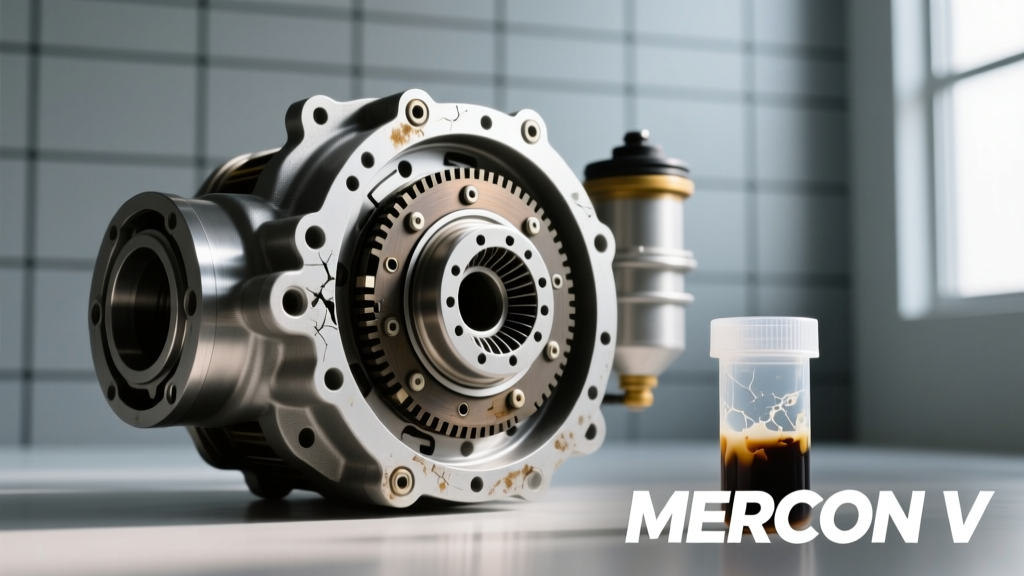
- TCC Friction Degradation (Shudder): The woven carbon friction lining on the TCC piston wears down or becomes contaminated with degraded fluid. This results in a 20-40 Hz vibration (shudder) felt through the floorboards at 40-60 mph under light throttle.
- Stator One-Way Clutch Failure: If the stator clutch fails to lock, the converter loses torque multiplication, resulting in sluggish off-the-line acceleration and severe overheating.
- Internal Seal Leaks: The O-rings on the converter hub degrade over time due to heat cycles, causing cross-leakage between the TCC apply and release circuits, leading to erratic lockup and diagnostic trouble codes (DTCs) like P0741 or P2763.
Pre-Replacement Diagnostics: Confirming the Failure
Do not replace a torque converter based on a hunch. Modern transmission diagnostics require empirical data. Connect a bi-directional OBD2 scan tool (such as an Autel MaxiSys or GM GDS2) and monitor the TCC Slip Speed PID.
Expert Rule of Thumb: Under steady-state cruising with the TCC commanded 'ON', the slip speed should be between 0 and 20 RPM. If you observe slip speeds consistently exceeding 50 RPM, or if the slip speed oscillates wildly (hunting), the TCC friction material is compromised or the hydraulic control circuit is failing.
Additionally, perform a physical stall test if the transmission exhibits low power. A healthy 6L80 paired with a 5.3L V8 should stall between 2,200 and 2,600 RPM. A significantly lower stall speed indicates a failed stator one-way clutch, confirming the converter must be replaced.
Essential Tools and OEM Part Numbers
Sourcing the correct replacement unit is vital. The aftermarket is flooded with poorly balanced remanufactured units. Stick to OEM or premium-tier remanufacturers.
| Component / Tool | Part Number / Spec | Notes |
|---|---|---|
| OEM Replacement TC (6L80) | ACDelco 24298323 | Factory spec, includes new hub O-rings. |
| Heavy-Duty Upgrade TC | Sonnax 512-540-03 (Billet) | Required for towing or >450 lb-ft applications. |
| Transmission Fluid | ACDelco Dexron VI (10-9395) | Do NOT use generic 'multi-vehicle' ATF. |
| Flexplate Holding Tool | OTC 4530 / Kent Moore J-43244 | Required to torque converter-to-flexplate bolts. |
| Seating Depth Gauge | Machinist Scale / Calipers | Must measure 12mm - 18mm recess. |
Step-by-Step 6L80 Torque Converter Replacement Procedure
Replacing the torque converter requires dropping the transmission. This procedure assumes the vehicle is safely supported on a professional-grade lift and the battery has been disconnected.
1. Drivetrain Disassembly and Fluid Drainage
Remove the front and rear driveshafts (if 4WD/AWD). Place a high-capacity drain pan beneath the transmission. Remove the transmission oil pan and filter to drain the bulk of the Dexron VI fluid. This reduces the total weight of the transmission assembly by approximately 15 pounds, making maneuvering the jack significantly safer. Disconnect the shift linkage, wiring harnesses, and the transmission cooler lines. Cap the cooler lines immediately to prevent debris ingress.
2. Bellhousing Separation and Converter Removal
Support the transmission with a telescoping jack. Remove the crossmember and lower the transmission slightly to access the top bellhousing bolts. Remove the inspection cover and rotate the flexplate to access the three (or six) torque converter-to-flexplate nuts. Mark one nut and the adjacent flexplate tooth with paint to ensure the assembly is balanced upon reinstallation. Slide the transmission straight back, ensuring the torque converter stays with the transmission, not the engine block.
3. The Critical Seating Depth Measurement
As highlighted in Transmission Digest technical bulletins, improper torque converter seating is the number one cause of 'dead-on-arrival' transmission pumps. The 6L80 torque converter must engage three distinct internal components:
- The transmission oil pump drive gear.
- The stator support shaft.
- The turbine hub splines.
The Measurement: Place a straight edge across the machined face of the transmission bellhousing. Measure the distance from the straight edge to the mounting pad of the torque converter. On a properly seated 6L80 converter, this measurement must be between 12mm and 18mm recessed. If the pad is flush with or protruding past the bellhousing, the converter is NOT fully seated. Forcing the bellhousing to the engine block in this state will instantly crack the aluminum pump housing.
4. Installation and Torque Specifications
Apply a thin film of Dexron VI to the torque converter hub O-rings and the transmission pump bushing. Slide the transmission forward, mating it to the engine block. Hand-start all bellhousing bolts before applying any torque to prevent cross-threading the aluminum block.
| Fastener Location | Torque Specification (Metric) | Torque Specification (Imperial) |
|---|---|---|
| Converter to Flexplate Nuts | 46 Nm | 34 lb-ft |
| Bellhousing to Engine Block (M12) | 50 Nm | 37 lb-ft |
| Transmission Crossmember to Frame | 58 Nm | 43 lb-ft |
| Cooler Line Fittings | 27 Nm | 20 lb-ft |
Fluid Fill Protocols and Thermal Calibration
The 6L80 does not have a traditional dipstick. It utilizes a fluid level check plug located on the side of the transmission case or in the pan, depending on the specific model year and pan configuration. Fill the transmission with approximately 6 to 8 quarts of Dexron VI through the filler tube.
Start the engine, cycle the gear selector through all positions, and allow the transmission to reach operating temperature. GM specifies that the fluid level must be checked when the Transmission Fluid Temperature (TFT) PID reads between 30°C and 50°C (86°F - 122°F). With the engine idling and the vehicle level, remove the check plug. Fluid should trickle out. If it flows in a steady stream, it is overfilled; if no fluid emerges, add more until a trickle is achieved.
Post-Installation TCC Relearn and Break-In
Replacing the hardware is only half the job. The 6L80 Transmission Control Module (TCM) adapts its hydraulic pressure tables based on the wear of the old TCC friction material. If you do not reset these adaptives, the transmission will apply the new, thick friction material with the same aggressive pressure used for the worn-out unit, resulting in harsh, banging lockups.
Use a bi-directional scanner to execute the 'TCC Adapt & Relearn' procedure. This resets the apply pressure counters. Following the reset, perform a 20-mile drive cycle that includes varied throttle inputs and multiple TCC apply/release events at highway speeds. This allows the TCM to map the friction coefficient of the new ACDelco or Sonnax torque converter, ensuring smooth, shudder-free operation for the next 150,000 miles.
Final Thoughts on Longevity
So, how long does a torque converter last? With proper fluid maintenance—specifically dropping the pan and replacing the filter every 45,000 miles—and avoiding excessive 'tuning' that exceeds the TCC's slip capacity, a replacement 6L80 torque converter will easily match the 150,000-mile lifespan of the transmission itself. For those pushing higher torque limits, investing in a billet-cover upgrade during the R&R process is the ultimate insurance policy against future hydraulic failure.