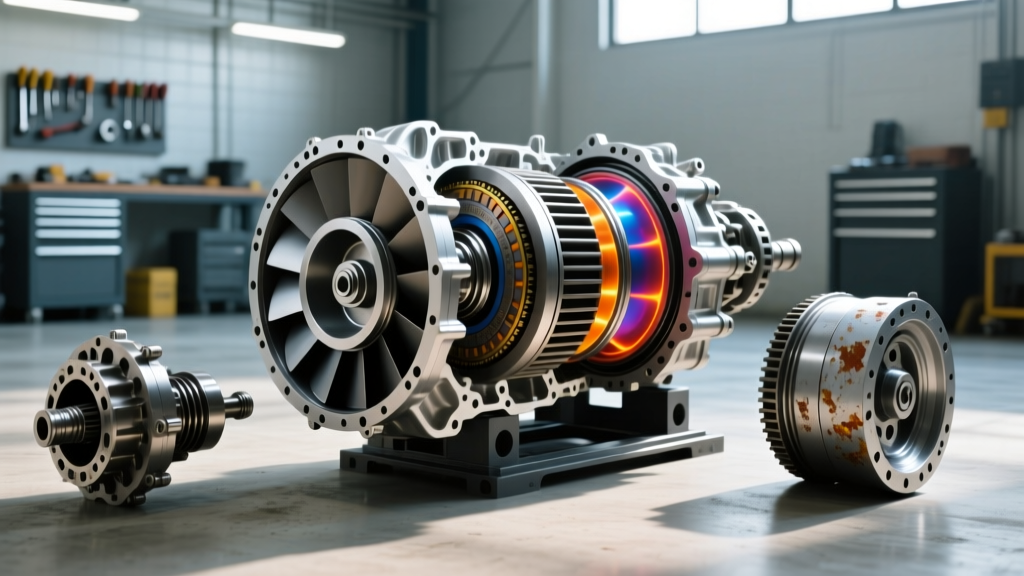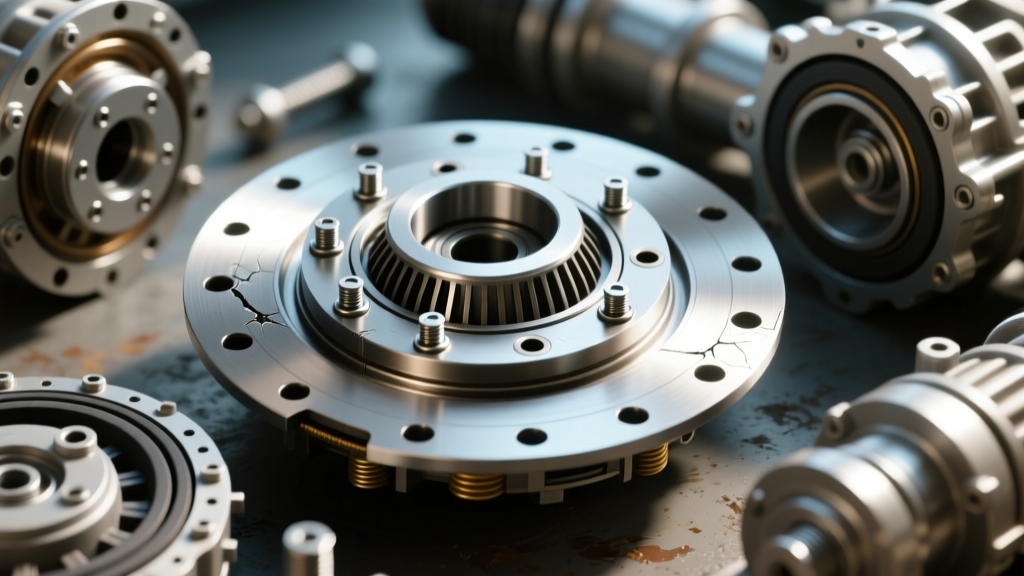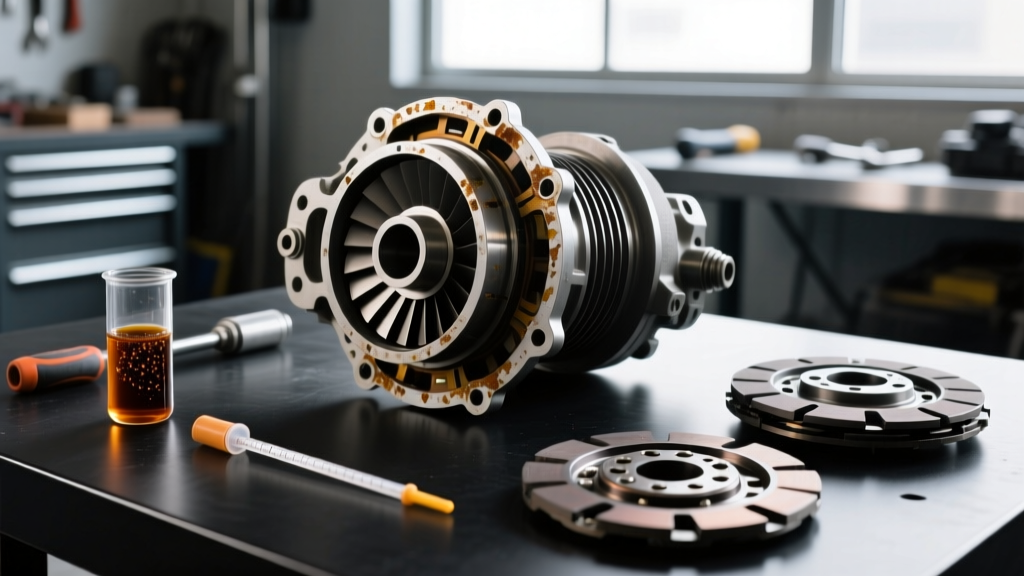
As we navigate the automotive aftermarket landscape in 2026, the GM 6L80 (RPO MYC/MYD) transmission remains a staple in repair bays worldwide. Originally introduced in 2006 for heavy-duty half-ton trucks, Corvettes, and Camaros, these units are now routinely crossing the 150,000-mile threshold. While the 6L80 is a robust six-speed automatic, its Achilles' heel often lies in the torque converter clutch (TCC) system. More specifically, fluid degradation and contamination are the primary catalysts for premature failure. Understanding the intricate relationship between hydraulic fluid chemistry and woven carbon friction materials is the difference between a simple fluid exchange and a full 6L80 torque converter replacement.
The Anatomy of 6L80 Fluid Degradation
The 6L80 relies exclusively on ACDelco DEXRON-VI ATF. Unlike older DEXRON-III formulations, DEXRON-VI is a lower-viscosity, highly shear-stable synthetic blend designed to optimize fuel economy and manage the tight clearances of modern clutch packs. However, the 6L80's torque converter features a unique 3-piece design with a specialized woven carbon TCC lining. When subjected to extreme thermal cycling, the fluid's friction modifiers break down.
When friction modifiers deplete, the TCC cannot achieve a smooth, micro-slip apply. Instead, it grabs and releases rapidly. This phenomenon, known as 'shudder,' generates microscopic carbon and metallic debris. If ignored, this debris circulates through the stator support and impregnates the transmission's internal solenoids and valve body, turning a minor fluid issue into a catastrophic mechanical failure.
Diagnostic Matrix: Fluid Symptoms vs. Mechanical Failure
Before condemning the hardware, transmission specialists must isolate whether the symptom is rooted in fluid chemistry or hard-part wear. Use the following diagnostic matrix to guide your teardown decision.
| Symptom | Fluid-Related Root Cause | Mechanical Root Cause | Definitive Diagnostic Test |
|---|---|---|---|
| Light Throttle Shudder (40-55 MPH) | Depleted friction modifiers; fluid shear. | Warped TCC apply piston or damaged damper springs. | Perform a DEXRON-VI fluid exchange. If shudder persists, mechanical failure is confirmed. |
| P0741 (TCC Stuck Off) | Debris clogging the TCC PWM solenoid screen. | Worn TCC regulator valve in the oil pump; torn TCC seal rings. | Check solenoid screen for metallic 'glitter'. Inspect pump stator support rings. |
| Delayed Forward Engagement | Aerated fluid due to low level or cavitation. | Leaking forward clutch piston or cracked 1-2-3-4 clutch housing. | Verify fluid level at operating temp. Perform an air-check on the forward clutch circuit. |
| Overheating (Fluid > 260°F) | Clogged cooler lines or stuck thermal bypass valve. | Slipping TCC generating excessive parasitic heat. | Monitor TCC Slip RPM PID. Measure cooler flow rate (minimum 1.5 GPM at 2000 RPM). |
Decoding TCC Slip-RPM PID Data
The most critical tool in your diagnostic arsenal is a bi-directional scan tool capable of reading GM's GMLAN data stream. According to Sonnax technical resources, monitoring the 'TCC Slip RPM' PID is mandatory. During steady-state cruising in 5th or 6th gear, the 6L80 operates in 'Controlled Slip' mode. Normal slip should read between 10 and 30 RPM. If you observe the slip RPM oscillating wildly between -50 and +80 RPM while maintaining a steady throttle, the fluid's friction modifiers have failed, or the TCC lining is delaminating.
Best Practices for Fluid Extraction and Thermal Bypass Management
A common mistake in general repair shops is performing a simple drain-and-fill on a shuddering 6L80. The 6L80 torque converter holds roughly 4 to 5 quarts of fluid, while the pan only holds about 6 quarts. A drain-and-fill leaves over 40% of the degraded, debris-laden fluid inside the converter, guaranteeing a rapid return of symptoms.
Expert Tip: Always perform a pressurized machine flush or a double-gravity exchange using the transmission's own pump. Furthermore, you must address the 6L80's thermal bypass valve. Located in the cooler line adapter, this valve blocks fluid flow to the radiator cooler until the fluid reaches approximately 160°F (71°C) to satisfy cold-start emission protocols. In 2026, many of these valves are sticking closed due to varnish buildup, causing localized boiling inside the torque converter. Deleting or replacing this bypass valve is a mandatory best practice during any fluid service.
When Fluid Issues Mandate a Full 6L80 Torque Converter Replacement
While a fluid exchange can cure early-stage shudder, there is a point of no return. If the woven carbon lining has physically separated from the steel backing plate, no chemical additive or flush will save the unit. You must proceed with a 6L80 torque converter replacement if you encounter any of the following:
- Visual Contamination: Dropping the transmission pan reveals a thick, metallic-grey sludge or large flakes of friction material (resembling black sand) rather than fine metallic paste.
- Olfactory Evidence: The fluid smells distinctly burnt or acrid, indicating the TCC has been slipping continuously and overheating the hydraulic oil past its flash point.
- Persistent Codes: DTC P0742 (TCC Stuck On) or P2763 (TCC Pressure Control Solenoid High) persist immediately after a verified valve body and solenoid replacement.
- Stall Test Failure: A stall speed test yields an RPM significantly higher than the factory specification (typically 1800-2100 RPM depending on the exact engine pairing), indicating internal stator clutch failure or severe TCC slip.
2026 Pricing and Part Number Reference
When replacement is inevitable, sourcing the correct hardware is critical. The aftermarket is flooded with cheap, remanufactured converters with inferior linings that will fail within 20,000 miles. For the 6L80, we strongly recommend sticking to OEM or premium-tier aftermarket units.
- OEM ACDelco Converter (Part # 24258323 / 24275904): $380 - $480
- Dexron-VI Fluid (11 Quarts): $90 - $130
- Labor (R&R Transmission & Converter): $850 - $1,300
- Total Estimated Investment: $1,320 - $1,910
Post-Replacement Fill and GDS2 Adaptive Reset
The installation of a new torque converter is only half the battle. The 6L80 requires a highly specific fill procedure. The transmission must be level, and the fluid must be checked via the level-check plug on the side of the pan only when the transmission fluid temperature (TFT) PID reads between 104°F and 122°F (40°C - 50°C). Overfilling will cause aeration and subsequent TCC shudder; underfilling will cause pump cavitation.
Furthermore, according to guidelines referenced by the Automatic Transmission Rebuilders Association (ATRA), you must use a GDS2 (Global Diagnostic System 2) or equivalent high-level scanner to reset the 'TCC Adaptive Pressure' values. The Transmission Control Module (TCM) learns and adapts clutch apply pressures over the life of the old, failing converter. If you install a new torque converter without resetting these adaptive tables, the TCM will apply the new clutch with the aggressive pressure curves learned from the old one, leading to harsh engagements and immediate damage to the new friction lining.
Final Torque Specs and Assembly Notes
When mating the new torque converter to the flexplate, precision is non-negotiable. Ensure the converter is fully seated against the oil pump gear (you will feel three distinct 'clunks' or drops as it passes the input shaft, stator support, and pump gear). The M10x1.5 flexplate-to-converter bolts must be torqued to exactly 35 lb-ft (47 Nm) using a medium-strength thread locker (Blue Loctite). Never reuse stretched torque converter bolts. By respecting the fluid chemistry, thermal dynamics, and precise assembly protocols of the 6L80, you ensure the replacement stands the test of time.