The Thermal Bottleneck: Transmission Cooler vs Radiator Cooler on the GM 6L80
As of 2026, the GMT900 and K2XX truck platforms equipped with the GM 6L80 and 6L90 transmissions (RPO codes MYC and MYD) are aging gracefully in terms of mechanical hard parts, but their thermal management systems remain a critical vulnerability. When towing heavy payloads or navigating stop-and-go traffic, transmission fluid temperatures frequently exceed 220°F, accelerating the degradation of Dexron VI ATF and leading to the infamous torque converter shudder known as the 'Chevy Shake.'
This brings up a massive debate in the heavy-duty towing community: transmission cooler vs radiator cooler. Should you rely on the OEM integrated radiator loop, or bypass it entirely in favor of a standalone external stacked-plate cooler? To answer this, and to execute a bypass correctly, you must first understand the exact transmission temperature sensor location and how the Transmission Control Module (TCM) interprets thermal data.
Why the OEM Radiator Cooler is a Liability
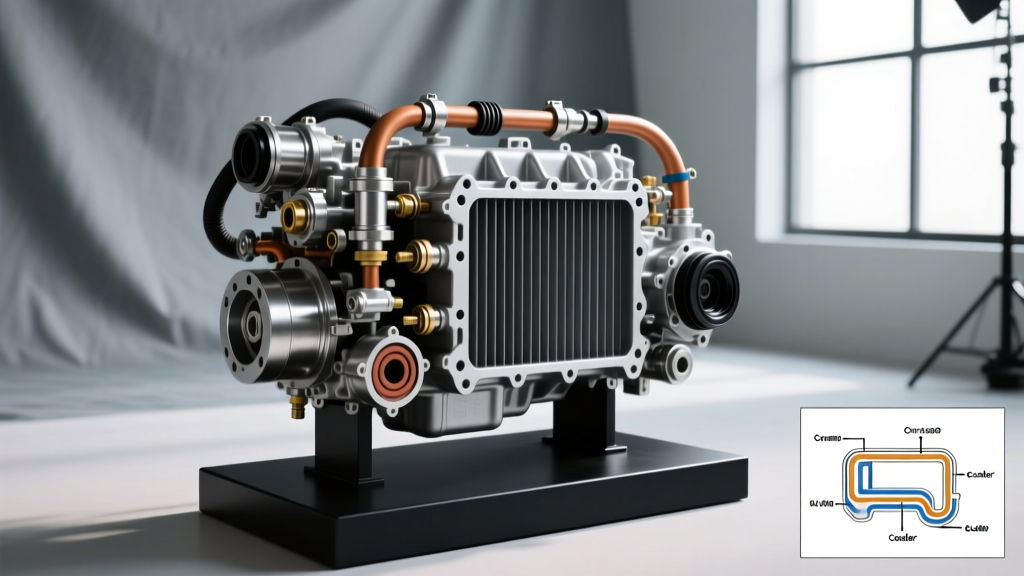
The factory cooling architecture routes hot transmission fluid from the 6L80’s output port to the bottom tank of the engine radiator, then to a small front-mount auxiliary cooler, and finally back to the transmission. The radiator is designed to act as a thermal regulator—warming the fluid in sub-zero climates and shedding heat in the summer.
However, the OEM radiators (such as the ACDelco 21475 and its successors) are notorious for internal solder and crimp failures. When the internal barrier separating the coolant and transmission fluid channels ruptures, coolant pressure (15-18 PSI) overpowers transmission line pressure at idle, forcing coolant into the transmission. This 'strawberry milkshake' emulsion destroys the clutch friction materials and the TEHCM within miles. Bypassing the radiator cooler eliminates this catastrophic failure point entirely.
Pinpointing the Transmission Temperature Sensor Location
The most common mistake DIYers make when planning a radiator bypass is searching the engine bay or cooler lines for an external temperature sender. On older 4L60E or 700R4 transmissions, the sensor was often threaded into the case or the cooler line itself. The 6L80 and 6L90 do not use an external cooler line sensor.
Internal TEHCM Integration
On the 6L80 platform, the exact transmission temperature sensor location is entirely internal. The Transmission Fluid Temperature (TFT) sensor is a surface-mounted thermistor integrated directly into the TEHCM (Transmission Electro-Hydraulic Control Module). The TEHCM is the black plastic assembly bolted directly to the valve body, submerged inside the transmission fluid pan.
- Sensor Type: Negative Temperature Coefficient (NTC) Thermistor
- Resistance at 68°F (20°C): ~9,100 - 10,500 Ohms
- Resistance at 212°F (100°C): ~700 - 850 Ohms
- Serviceability: Non-serviceable independently. If the TFT sensor fails, the entire TEHCM assembly must be replaced and reprogrammed using GM GDS2 or a high-end bi-directional scan tool to perform a 'Service Fast Learn' adaptation.
Because the sensor reads the sump temperature rather than the cooler line temperature, bypassing the radiator cooler fundamentally changes the thermal dynamics the TCM experiences, which leads us to the cold-fluid shock problem.
The Cold-Fluid Shock and Thermal Adaptation Problem
The 6L80 TCM relies on the internal TFT sensor to adjust line pressure and shift timing based on fluid viscosity. Dexron VI is engineered to operate optimally between 160°F and 200°F. If you install a massive external cooler and delete the radiator warmer, winter ambient temperatures can keep the sump fluid below 130°F. Cold, highly viscous fluid causes harsh shifts, delayed lockup, and severe torque converter shudder because the TCM's thermal adaptation tables cannot compensate for the extreme pressure variances.
Engineering the Bypass: Standalone Cooler Integration
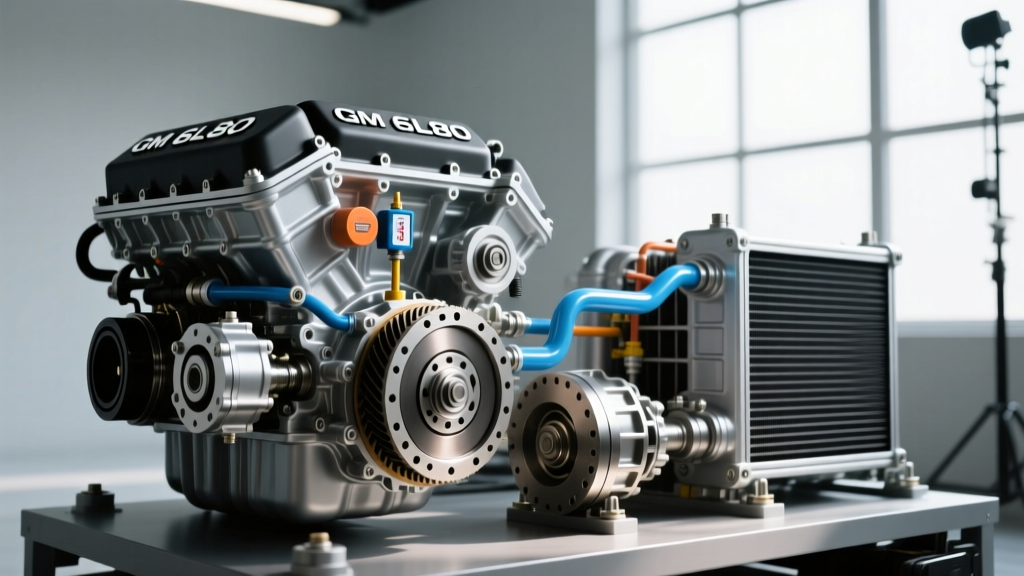
To safely run a transmission cooler vs radiator cooler setup without triggering cold-fluid limp modes, you must implement a thermal bypass valve or a thermostatically controlled external cooler. Furthermore, because the internal TEHCM sensor cannot trigger a 12V relay for an auxiliary cooling fan, you must install an inline temperature switch.
Adding an Inline Temp Sensor for Fan Control
Since the factory transmission temperature sensor location is sealed inside the TEHCM, you must tap the cooler line to control an external fan. Using a kit like the Derale 16740 Adjustable Fan Controller, you will need to weld or braze a 1/8" NPT stainless steel bung into the aluminum return cooler line. This provides a localized sensor reading to trigger the fan relay only when line temperatures exceed 185°F, allowing the fluid to retain enough ambient heat during winter warmup cycles.
Thermal Dynamics: Radiator Loop vs. External Stacked-Plate
When comparing the OEM radiator loop to a high-capacity external stacked-plate cooler (such as the Hayden 678 Rapid-Cool), the differences in pressure drop and thermal shedding are stark. Below is a real-world data comparison based on a 5.3L Silverado towing 8,500 lbs on a 6% grade.
| Metric | OEM Radiator + Aux Cooler | Radiator Bypass + Hayden 678 Stacked-Plate |
|---|---|---|
| Peak Sump Temp (TFT) | 234°F (Severe Degradation Zone) | 198°F (Optimal Viscosity Zone) |
| Pressure Drop (PSI) | 12-15 PSI (High restriction) | 4-6 PSI (Low restriction) |
| Warmup Time to 140°F | 8 Minutes (Radiator heat transfer) | 14 Minutes (Requires thermal bypass valve) |
| Cross-Contamination Risk | High (Radiator tank failure) | Zero (Fluids physically separated) |
Precision Repair Data: Torque Specs and Part Numbers
Executing a radiator bypass and external cooler install on the 6L80 requires strict adherence to torque specifications and the use of correct fittings. The 6L80 utilizes quick-disconnect cooler lines that are prone to snapping if forced. Always use a specialized fuel line disconnect tool for the 5/8" and 1/2" quick-connect fittings at the radiator.
Essential Part Numbers
- Transmission Fluid: ACDelco Dexron VI (Part # 10-9395). Do not use generic 'multi-vehicle' ATFs; the 6L80 clutch friction materials require the specific friction modifiers in true Dexron VI.
- External Cooler: Hayden 678 (Stacked-Plate, 24,000 GVW rating) or Derale Hyper-Cool 15960 (Remote Mount with integrated fan).
- Thermal Bypass Valve: Derale 10000 Series Thermal Bypass (crucial for daily drivers in climates that drop below 40°F to prevent cold-fluid shock).
- Transmission Filter: ACDelco TF922 (Deep pan) or TF923 (Shallow pan).
Critical Torque Specifications
If your bypass requires dropping the pan to flush the old fluid and cooler lines, you must adhere to the following torque specs to prevent TEHCM damage or pan leaks:
- Transmission Pan Bolts (M6x1.0): 10 Nm (89 lb-in). Do not overtighten; the aluminum case threads strip easily.
- TEHCM to Valve Body Bolts: 8 Nm (71 lb-in).
- Filter Neck O-Ring: Lubricate with fresh Dexron VI before installation. Never install the filter dry, or it will cavitate the pump upon startup.
- Cooler Line Adapter Fittings (M14x1.5 O-ring boss): 25 Nm (18 lb-ft).
Final Verdict: Is the Bypass Worth It?
For dedicated towing vehicles, off-road rigs, or trucks operating in high-ambient-heat environments, the transmission cooler vs radiator cooler debate ends with a definitive win for the external standalone setup. By understanding that the transmission temperature sensor location on the 6L80 is buried inside the TEHCM, you can properly engineer a bypass that includes an inline thermal switch and a cold-weather bypass valve. This protects the transmission from both the catastrophic 'strawberry milkshake' cross-leaks and the insidious torque converter shudder caused by improper thermal management. For comprehensive valve body and TEHCM diagnostics, technicians frequently reference the engineering bulletins available via Sonnax Transmission Specialties.