The GM 6L80 Electronic Control Paradigm
The GM 6L80 and 6L90 transmission families revolutionized rear-wheel-drive and all-wheel-drive platforms when they were introduced, and they remain heavily represented on the road in 2026. Found in everything from the Chevrolet Silverado and Tahoe to the Camaro and Cadillac Escalade, these six-speed automatics rely on a highly integrated electronic architecture. Unlike older transmissions such as the 4L60E, which utilized an external, mechanically linked PRNDL switch on the side of the transmission case, the 6L80 integrates the transmission range sensor directly into the internal Transmission Electro-Hydraulic Control Module (TEHCM). While this design reduces external linkage binding and improves shift mapping precision, it fundamentally changes how technicians and DIYers must approach transmission range sensor problems and fixes.
When a 6L80 enters limp mode, restricts gear selection, or exhibits a no-start condition due to a park/neutral safety switch failure, the immediate suspect is often the range sensor. However, because the TCM also relies heavily on speed sensor data to command line pressure and shift solenoids, a failure in the external speed sensors can mimic internal range sensor faults. In this model-specific repair guide, we will break down the exact diagnostic steps, part numbers, and repair procedures for internal range sensor failures, while also clarifying the output transmission speed sensor location to ensure you do not misdiagnose a $45 external sensor as a $600 internal module failure.
Transmission Range Sensor Problems and Fixes
Understanding the Internal TEHCM Architecture
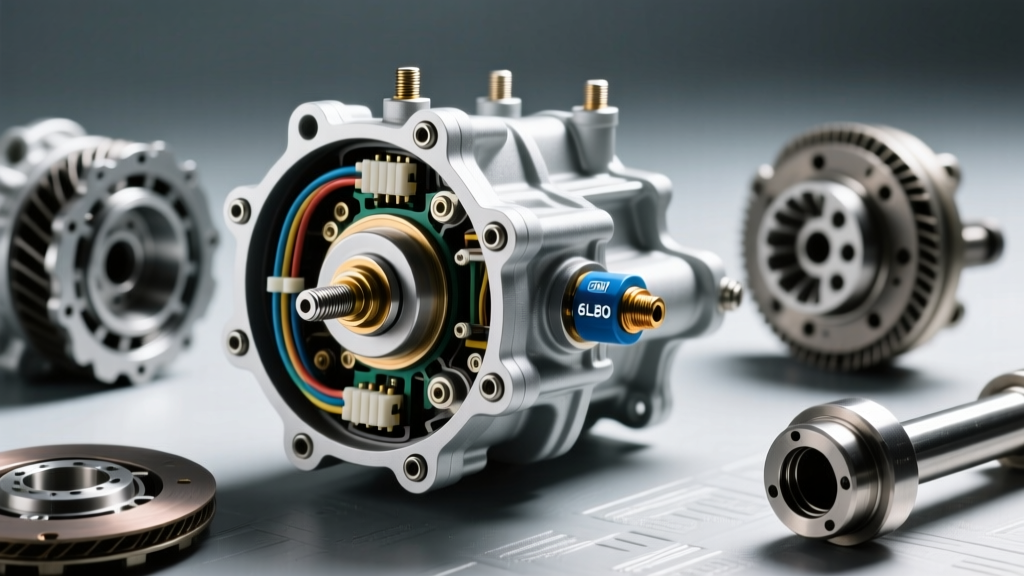
On the 6L80, the Transmission Range Sensor is not a standalone component. It consists of a series of Hall-effect switches housed inside the TEHCM, which is bolted directly to the valve body inside the transmission pan. The manual shift shaft rotates a plastic slotted rotor that passes over these Hall-effect sensors, telling the TCM exactly what gear the driver has selected. Over time, two primary failure modes emerge:
- Plastic Rotor Cracking: The heat cycling inside the transmission pan causes the slotted plastic rotor to become brittle and crack. When this happens, the rotor slips on the manual shaft, causing the physical gear selection to mismatch the electronic signal.
- Hall-Effect Sensor Degradation: Constant exposure to 200°F+ transmission fluid and microscopic clutch material debris eventually degrades the solder joints and silicon chips on the TEHCM circuit board.
Common OBD2 Diagnostic Trouble Codes
When the range sensor fails, the TCM will typically set one or more of the following codes:
- P1825: Transmission Control Module Internal Performance (Often indicates a failed range sensor circuit inside the TEHCM).
- P1915: Transmission Range Sensor Circuit Malfunction.
- P0705: Transmission Range Sensor Circuit Malfunction (PRNDL Input).
- U0101: Lost Communication with TCM (If the TEHCM mainboard has completely failed).
The Fix: TEHCM Replacement and SPS Programming
Because the range sensor is integrated into the TEHCM, there is no 'adjustment' procedure. The fix requires dropping the transmission pan, replacing the entire TEHCM assembly, and reprogramming it. As of 2026, the ACDelco OE replacement part number for most 6L80 applications is 24275093 (always verify with your specific VIN). The part typically costs between $450 and $600 through retailers like RockAuto.
Critical E-E-A-T Warning: The 6L80 TEHCM is not plug-and-play. A brand-new TEHCM will not communicate with the vehicle's ECM until it is flashed with the correct calibration files. You must use a GM MDI 2 (Multiple Diagnostic Interface) pass-through tool and an active GM SPS2 (Service Programming System) subscription to flash the module. Independent shops typically charge $150-$250 for this programming step if you do not have the software.
Differential Diagnosis: Ruling Out Speed Sensor Faults
Before condemning the internal TEHCM and committing to a costly module replacement and programming session, it is vital to rule out external sensor faults. The TCM calculates gear ratios and slip by comparing the Input Shaft Speed (ISS), Turbine Shaft Speed (TSS), and Output Shaft Speed (OSS). If the TCM loses the OSS signal, it cannot verify what gear the transmission is actually in, which can trigger limp mode and mimic the symptoms of a range sensor failure (often accompanied by harsh shifts or a locked 3rd-gear default).
Identifying the Output Transmission Speed Sensor Location
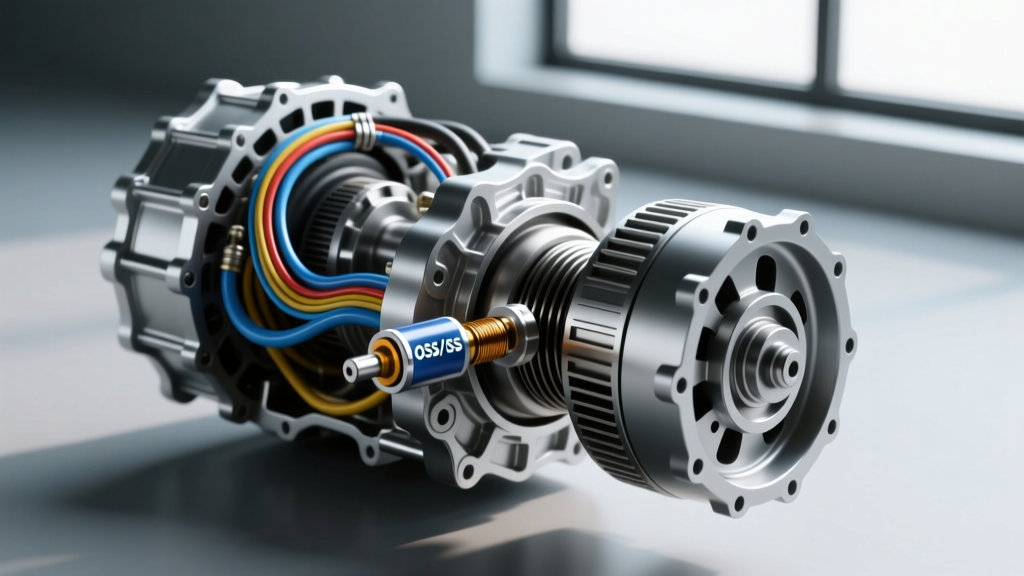
When ruling out external faults, knowing the exact output transmission speed sensor location is critical for multimeter testing. On the GM 6L80 and 6L90, the OSS is located externally on the rear extension housing (tail housing) of the transmission. It is positioned on the driver's side, pointing inward to read the reluctor teeth machined directly into the park gear ring assembly.
Unlike the internal TEHCM, the OSS is a straightforward, serviceable component. The OE ACDelco part number for the 6L80 Output Speed Sensor is 213-3844 (GM #24227797), and it generally retails for around $35 to $55. If your scanner shows P0722 (Output Speed Sensor Circuit No Signal) or P0723 (Output Speed Sensor Circuit Intermittent) alongside your shift complaints, start here before dropping the pan.
Multimeter Testing the 6L80 OSS
The 6L80 utilizes a variable reluctance/magneto-resistive style sensor. You can perform a baseline bench test without dropping the transmission:
- Disconnect the OSS electrical connector at the tail housing.
- Set your digital multimeter (DMM) to measure Ohms (Resistance).
- Probe the two terminals on the sensor side of the connector.
- A healthy 6L80 OSS should read between 1,400 and 2,200 ohms at room temperature (68°F/20°C). If the reading is infinite (open) or near zero (shorted), the sensor is internally failed and must be replaced.
6L80 Sensor and Component Replacement Matrix
Use the following data table to ensure you have the correct OE components, torque specifications, and 2026 pricing estimates before beginning your repair.
| Component | ACDelco Part # | 2026 Avg. Cost | Location | Torque Spec |
|---|---|---|---|---|
| TEHCM (Includes Range Sensor) | 24275093 | $450 - $600 | Internal (Valve Body) | 8 Nm (71 lb-in) |
| Output Speed Sensor (OSS) | 213-3844 | $35 - $55 | Rear Extension Housing | 11 Nm (97 lb-in) |
| Transmission Fluid Filter | 24236933 | $25 - $40 | Internal (Pan) | N/A (Press-fit) |
| Transmission Pan Gasket | 24236933 (Included) | N/A | Pan Flange | 10 Nm (89 lb-in) |
Step-by-Step TEHCM Service Procedure
If your diagnostics confirm an internal range sensor failure (P1825/P1915) and the OSS tests perfectly, follow this procedure to replace the TEHCM.
1. Pan Removal and Fluid Drain
Raise the vehicle safely on a lift or jack stands. Place a large drain pan beneath the transmission. The 6L80 pan does not have a drain plug. Use an 11mm socket to break loose all 16 pan bolts. Pro Tip: Leave two front bolts threaded in slightly, then pry the rear edge of the pan down with a flathead screwdriver to control the fluid spill. Expect to catch approximately 6 to 7 quarts of Dexron VI fluid. Remove the pan and discard the old gasket.
2. TEHCM Extraction
The TEHCM is the large aluminum/plastic assembly bolted to the top of the valve body. Disconnect the main vehicle wiring harness connector from the TEHCM pass-through port. Be extremely careful with the 38-way connector pins; they bend easily and will cause a secondary failure if forced. Remove the four 8mm TEHCM-to-valve-body bolts. Carefully lift the TEHCM straight up. Note the alignment of the manual valve linkage and the plastic range sensor rotor.
3. Installation and Torque
Transfer the manual valve linkage and any necessary solenoids to the new TEHCM as per the included ACDelco instruction sheet. Align the new TEHCM with the valve body and hand-start the four 8mm bolts. Torque the TEHCM bolts to exactly 8 Nm (71 lb-in) in a crisscross pattern. Reconnect the main harness, ensuring the locking tab fully engages.
4. Filter and Pan Reinstallation
Press the new filter (24236933) firmly into the valve body until it seats with a distinct click. Clean the transmission pan with brake cleaner and install the new gasket. Reinstall the pan and torque the 11mm bolts to 10 Nm (89 lb-in) working from the center outward.
5. Fluid Refill and SPS Programming
Refill the transmission through the dipstick/fill tube with exactly 6 quarts of ACDelco Dexron VI fluid. Start the vehicle, cycle through the gears, and check the fluid level at operating temperature (180°F-200°F). Finally, connect your MDI 2 interface to the OBD2 port and log into GM SPS2 to flash the new TEHCM with the latest calibration files. Without this flash, the vehicle will not start or shift.
Final Thoughts on 6L80 Diagnostics
The integration of the range sensor into the TEHCM on the GM 6L80 represents a shift toward sealed, modular transmission electronics. While it eliminates the need for external linkage adjustments, it demands a higher level of diagnostic rigor. By systematically verifying the output transmission speed sensor location and resistance first, you can confidently isolate the fault. Whether you are swapping a $45 tail-housing sensor or undertaking a full TEHCM replacement and SPS flash, adhering to OE torque specs and programming requirements is the only way to ensure long-term drivability. For further OEM wiring diagrams and technical service bulletins, technicians should consult the ACDelco Technical Resource Center or their GM Service Information portal.