The 68RFE Cooling Bottleneck: Symptom Diagnosis
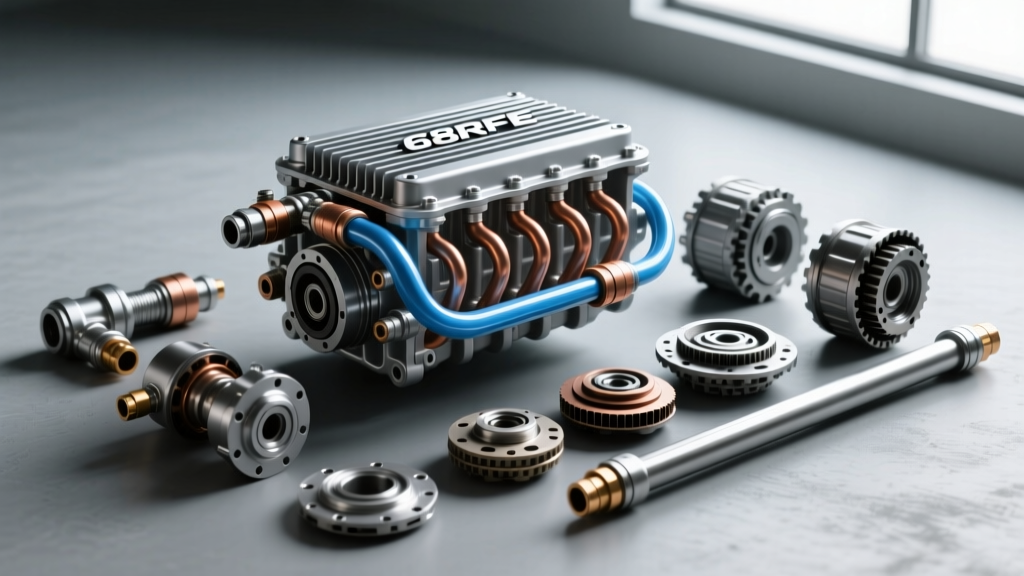
The Chrysler 68RFE transmission, predominantly found in 2007–2018 Ram 2500 and 3500 trucks equipped with the 5.7L Hemi and 6.7L Cummins engines, is a robust six-speed automatic. However, its thermal management system is a notorious weak point. When towing near the 15,000-pound GCWR, transmission fluid temperatures can easily spike past 230°F, rapidly degrading the friction modifiers in ATF+4 and leading to torque converter clutch (TCC) slip. If you are experiencing erratic shift pressures, delayed engagements, or finding puddles of red fluid near the bell housing, a 68RFE transmission cooler lines replacement and cooler upgrade is likely on your diagnostic horizon.
Before tearing into the chassis, it is critical to differentiate between a simple line failure, a clogged OEM radiator-integrated cooler, or a failing thermal bypass valve. Misdiagnosing the root cause will result in repeated failures, even after installing premium aftermarket components.
Isolating the Failure: Lines vs. Radiator vs. Bypass
The OEM cooling circuit relies on a primary cooler integrated into the engine radiator and an auxiliary tube-and-fin cooler mounted in front of the A/C condenser. The lines connecting these components utilize plastic quick-connect fittings that become notoriously brittle after 100,000 miles of thermal cycling.
Step 1: Pressure Line vs. Return Line Leaks
The pressure line exits the transmission case and routes to the radiator. Under heavy load, this line can see pressures exceeding 200 PSI. The return line operates at a much lower pressure (typically 20–40 PSI) but handles high-volume flow back to the transmission lube circuit. If your dipstick shows low fluid and you have a massive leak upon startup, the pressure line quick-connect has likely shattered. If the leak only occurs under heavy towing, the return line hose has likely ballooned and ruptured at the crimp.
Step 2: Diagnosing the Thermal Bypass Valve
The 68RFE utilizes a thermal bypass valve (located in the cooler line adapter plate on the transmission case) designed to restrict fluid flow to the coolers until the fluid reaches approximately 180°F. This prevents overcooling and moisture buildup in cold climates. However, the OEM wax-thermostat element frequently sticks in the closed position.
Pro Diagnostic Tip: Use a FLIR thermal imaging camera on the transmission adapter plate after a 10-minute drive. If the block is hot but the outgoing cooler line remains completely cold, your thermal bypass valve is stuck closed. The fluid is cooking inside the case. Upgrading to the Sonnax 92834-01K thermal bypass delete or upgrade kit is highly recommended during your repair.
Why a 68RFE Transmission Cooler Lines Replacement Demands a Cooler Upgrade
When performing a 68RFE transmission cooler lines replacement, simply swapping the OEM rubber-and-steel lines for new OEM equivalents is a missed opportunity. The factory auxiliary tube-and-fin cooler suffers from severe pressure drop and lacks the surface area required for modern towing demands. Furthermore, tube-and-fin designs are prone to internal clogging from clutch material debris. Upgrading to a high-efficiency stacked-plate or plate-and-fin cooler is mandatory for long-term 68RFE survival.
Aftermarket Cooler Brand Diagnostics: Mishimoto, Derale, Hayden
Choosing the right cooler requires balancing flow restriction (pressure drop) with thermal rejection. Below is a diagnostic breakdown of the top three brands in the diesel and heavy-duty truck space for 2026.
| Brand / Series | Core Architecture | Est. Pressure Drop | Price Range | Best Diagnostic Application |
|---|---|---|---|---|
| Mishimoto MMTC-RAM | Stacked-Plate | < 3 PSI | $280 - $350 | Heavy Towing / Sled Pulling |
| Derale Series 8000 | Plate-and-Fin | 4 - 6 PSI | $90 - $140 | Daily Driving / Light Towing |
| Hayden Rapid-Cool | Plate-and-Fin | 5 - 8 PSI | $60 - $95 | Budget Replacements / Plow Trucks |
Mishimoto: The Premium Stacked-Plate Approach
Mishimoto’s stacked-plate coolers (such as the MMTC-RAM series) represent the pinnacle of fluid dynamics. Stacked-plate designs force fluid through horizontal channels while air passes through vertical fins, offering the highest BTU rejection per square inch with the lowest pressure drop. For a 68RFE pushing 800+ lb-ft of torque at the wheels, maintaining low line pressure while maximizing cooling is vital. The brazed aluminum construction withstands vibration and physical impact far better than epoxy-bonded alternatives. According to the Mishimoto Tech Center, their stacked-plate cores can reduce fluid temps by up to 30°F compared to OEM tube-and-fin setups under identical GCWR loads.
Derale: The High-Flow Series 8000 & 9000
Derale has been a staple in transmission cooling for decades. The Series 8000 (Plate-and-Fin) offers an excellent middle ground. It uses turbulators inside the fluid channels to agitate the ATF, breaking the boundary layer of hot fluid against the metal walls. This increases heat transfer efficiency without the premium price tag of stacked-plate units. As noted in the Derale Transmission Cooler Guide, plate-and-fin coolers are ideal for trucks that see a 50/50 split between highway commuting and weekend towing. The pressure drop is slightly higher than Mishimoto but well within the 68RFE lube circuit's tolerance.
Hayden: The Budget-Friendly Rapid-Cool
Hayden’s Rapid-Cool series is a reliable, budget-conscious plate-and-fin option. While it may not match the extreme thermal rejection of a Mishimoto stacked-plate, it vastly outperforms the OEM tube-and-fin cooler. Hayden units are excellent for older trucks where the owner wants to replace a leaking, clogged OEM cooler without investing in a full boutique cooling system. However, for heavily modified 6.7L Cummins trucks, Hayden's thermal mass may be outpaced during sustained 8% grade climbs.
Precision Replacement Protocol & Torque Specifications
Executing a flawless 68RFE transmission cooler lines replacement requires attention to detail. The 68RFE holds approximately 12 to 14 quarts of ATF+4 (dry fill), and introducing air into the lube circuit can cause immediate clutch pack damage.
1. Safe Disconnect and Removal
Do not use pliers on the OEM quick-connects. You must use a dedicated 5/8-inch and 1/2-inch fuel line disconnect tool set (such as the Lisle 39960). Push the line inward to relieve tension, insert the tool to spread the internal retaining clips, and pull the line outward.
2. Adapter Plate and Bypass Valve Service
Remove the cooler line adapter plate from the transmission case. Clean the machined aluminum surface with brake cleaner and a lint-free cloth. If installing a Sonnax bypass delete or replacement valve, ensure the O-rings are lubricated with fresh ATF+4. Torque Spec: The M6x1.0 adapter plate bolts must be torqued to exactly 108 in-lbs (9 Nm). Over-torquing will strip the aluminum case threads, requiring a helicoil repair.
3. Flushing and Inline Filtration
Never bolt a new Mishimoto or Derale cooler to old, contaminated lines. Flush the radiator-integrated cooler with a dedicated transmission flush machine or compressed air and solvent. Crucially, install a Magnefine 3/8-inch inline magnetic filter on the return line before it enters the transmission. This catches the metallic debris generated by the TCC clutch, preventing it from clogging your new aftermarket cooler's micro-channels.
4. Final Fill and Thermal Cycling
Reconnect the new lines, ensuring the quick-connects emit a definitive, audible 'click'. Pull the retaining clips outward to verify they are locked. Fill the pan with 6 quarts of Mopar ATF+4, start the engine, and cycle through all gears. Check the fluid level at operating temperature (180°F). Proper thermal management is the single most effective way to ensure your 68RFE survives the next 200,000 miles.