Symptom Diagnosis: Is Your 4R75E Transmission Overheating?
The 2008 Ford F-150, particularly models equipped with the 5.4L Triton V8 and the robust 4R75E 4-speed automatic transmission, remains a staple on worksites and campgrounds in 2026. However, when towing near the truck's maximum 7,200-pound capacity, the factory cooling system often becomes the weak link. The 4R75E relies on MERCON V fluid, which provides excellent shear stability but is highly susceptible to thermal degradation. When transmission fluid temperatures exceed 220°F, the fluid's viscosity breaks down, leading to accelerated clutch pack wear, torque converter shudder, and delayed shift events.
Before ripping into the cooling lines, you must verify the overheating diagnosis. Common symptoms of a failing factory cooling setup include:
- Delayed 2-3 Shift Flare: As fluid thins from extreme heat, line pressure drops, causing the RPMs to flare during upshifts.
- TCC Shudder: The torque converter clutch struggles to maintain a locked state due to degraded friction modifiers in overheated MERCON V.
- Burnt Fluid Odor: Pulling the dipstick reveals fluid that is dark brown or black, smelling distinctly of burnt toast.
- Limp Mode Activation: The PCM may command a fail-safe cooling strategy or lock the truck in 2nd or 3rd gear if the Transmission Fluid Temperature (TFT) sensor reads above 250°F.
To accurately monitor these parameters, use an OBD-II scanner capable of reading live PID data for TFT. Normal operating temperatures for a towing 4R75E should sit between 160°F and 195°F. If you are consistently seeing 210°F or higher on the highway, an auxiliary cooler upgrade is mandatory.
Tracing the 2008 Ford F150 Transmission Cooling Line Diagram
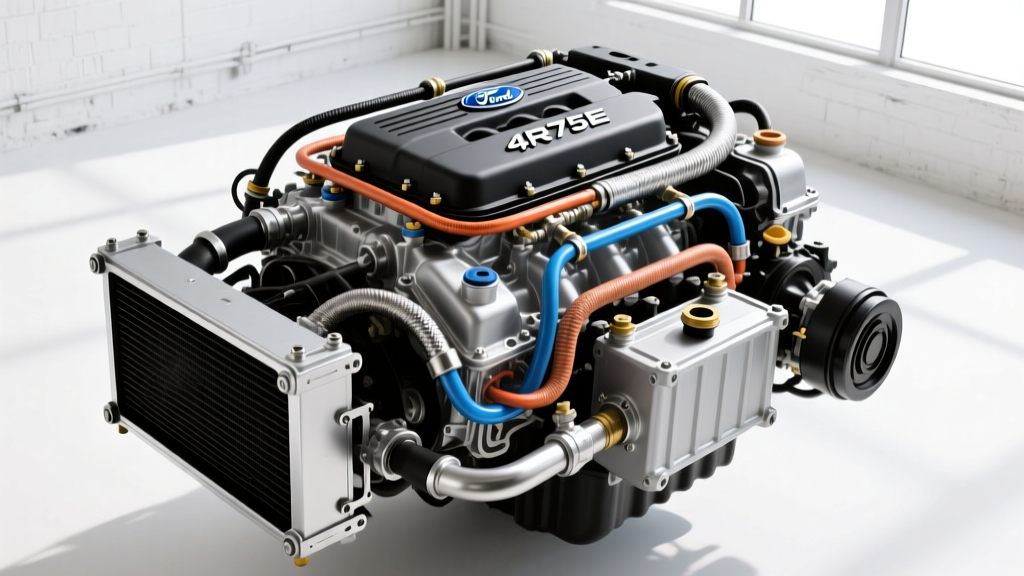
When planning an auxiliary cooler installation, understanding the factory fluid routing is essential. When troubleshooting factory routing or planning a bypass, referencing an accurate 2008 ford f150 transmission cooling line diagram is critical to identify the pressure-out and return-in ports. On the 2008 F-150 4R75E, the cooling lines are typically 3/8-inch steel tubes that transition to rubber hoses near the radiator, secured by quick-disconnect fittings.
Factory Flow Path
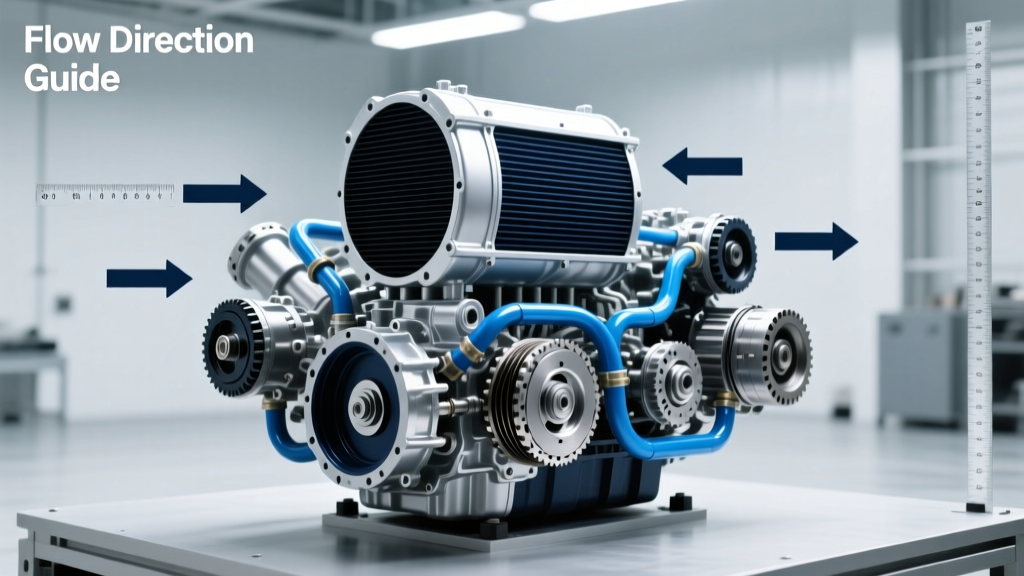
The fluid exits the transmission case under pressure from the front (upper) fitting, travels to the bottom tank of the factory engine radiator, and returns via the rear (lower) fitting. The factory radiator-integrated cooler is designed primarily for light-duty driving and cold-weather warm-ups; it lacks the thermal mass to shed the 30,000+ BTUs generated during heavy towing on a 6% grade.
Disconnecting the Factory Lines
Ford utilizes proprietary quick-disconnect fittings at the radiator tank. Do not use brute force or pry with screwdrivers, as this will crack the plastic radiator tank nipple. Instead, use a dedicated 3/8-inch and 1/2-inch fuel line disconnect tool set (such as the Lisle 39960). Insert the tool into the fitting to spread the internal retaining clips, then pull the line straight out. Expect to lose roughly 1/2 to 1 quart of MERCON V fluid during this process, so have a catch pan ready.
Selecting the Best Transmission Cooler for Towing
Not all auxiliary coolers are created equal. For a heavy-duty application like the 2008 F-150 towing a travel trailer or equipment hauler, surface area and fin density dictate cooling efficiency. Below is a comparison of the three primary cooler designs available on the market today.
| Cooler Type | Design Characteristics | Efficiency Rating | Best Application |
|---|---|---|---|
| Tube-and-Fin | Single serpentine tube with stamped aluminum fins. Prone to internal flow restriction. | Low (Baseline) | Light-duty daily drivers, Class I towing. |
| Plate-and-Fin | Multiple horizontal plates with turbulators inside to agitate fluid against the cooling surface. | Medium-High | Medium towing, boat trailers, campers under 5,000 lbs. |
| Stacked-Plate | Modular plates stacked together, creating multiple parallel flow paths. Highest surface area and lowest pressure drop. | Maximum | Heavy towing, mountain grades, commercial use. |
Top Recommendations for the 2008 F-150
Based on real-world thermal testing and GVWR (Gross Vehicle Weight Rating) calculations, stacked-plate coolers are the undisputed champions for F-150 towing setups. According to Derale Performance, a stacked-plate design can drop fluid temperatures by up to 50°F compared to a similarly sized tube-and-fin unit.
- Derale Series 8000 Stacked-Plate (Part #13840): Rated for 24,000 GVW, this 7-5/8" x 12-5/8" unit fits perfectly behind the F-150's grille opening. It features -6 AN male fittings, requiring simple hose barb adapters for the factory 3/8" lines.
- Hayden Rapid-Cool Plate-and-Fin (Part #678): A slightly more budget-friendly alternative from Hayden Automotive. While not a true stacked-plate, its internal turbulators provide excellent heat rejection for the price point, making it ideal for moderate 4,000 lb towing.
Installation Strategy: Supplement vs. Bypass
A common debate on Ford Truck Enthusiasts forums is whether to bypass the factory radiator cooler entirely or run the auxiliary cooler in series (supplement). For the 2008 F-150, supplementing is the correct choice. Bypassing the radiator cooler means your transmission fluid will take significantly longer to reach optimal operating temperature (160°F) during winter months, leading to increased wear from cold, high-viscosity fluid. By routing the factory return line into the auxiliary cooler, and then back to the transmission, you get the best of both worlds: rapid warm-up via the radiator, and massive heat shedding via the front-mounted auxiliary unit.
Step-by-Step Routing and Mounting
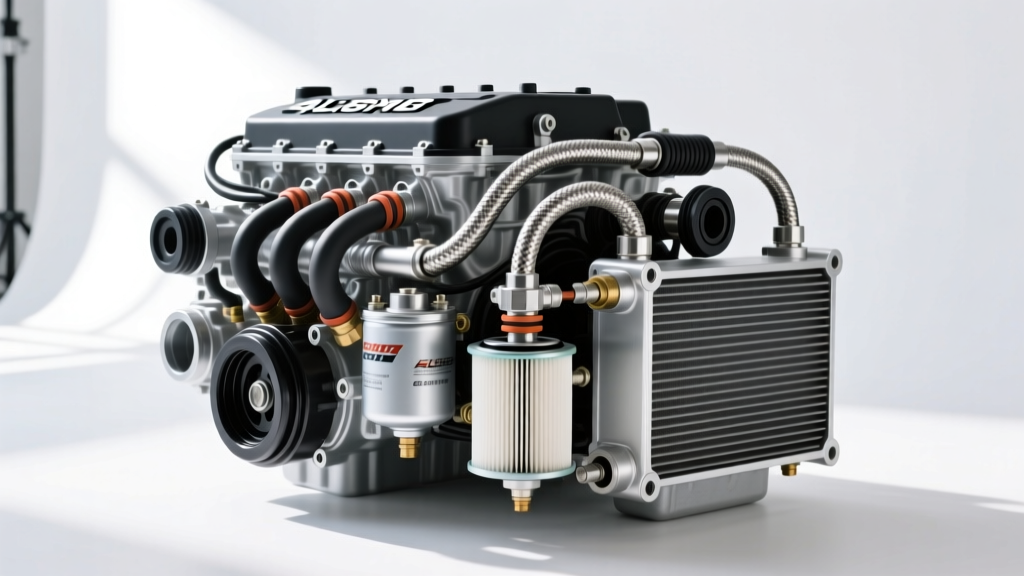
- Mounting Location: Secure the cooler in front of the A/C condenser and radiator. Use the provided rubber isolation pads to prevent metal-on-metal vibration against the grille support.
- Hose Routing: Cut the factory return line (the lower line coming OUT of the radiator). Install a 3/8" inline hose barb splice. Run a new 3/8" high-pressure transmission hose (rated for 250+ PSI) from the splice to the INLET of the auxiliary cooler.
- Return to Transmission: Run the OUTLET of the auxiliary cooler directly back to the transmission's return port.
- Securing Fittings: Use high-quality stainless steel worm-drive clamps. Torque the clamps until they seat firmly, but avoid overtightening which can cut into the rubber hose. If you adapt to AN fittings, torque the aluminum AN nuts to exactly 15-18 lb-ft to prevent stripping the threads.
Post-Installation Fluid Verification and Air Bleeding
The 2008 F-150 4R75E transmission holds approximately 13.9 quarts of MERCON V fluid (with the torque converter). Adding an auxiliary cooler and 6 feet of new 3/8" hose introduces roughly 0.75 to 1.0 extra quarts of capacity to the system. Failure to compensate for this added volume will result in a low fluid condition, causing pump cavitation and immediate transmission failure.
The Correct Fill Procedure:
- Add 1 full quart of OEM Motorcraft MERCON V through the transmission dipstick tube using a long-neck funnel.
- Start the engine, keep the truck in PARK on a level surface, and let it idle. Cycle the gear selector slowly through every gear (P-R-N-D-L), pausing for 3 seconds in each position to fill the clutch apply bores and the new cooler circuit.
- With the engine still running and the transmission at normal operating temperature (verify via OBD-II scanner reaching ~160°F), check the dipstick. The fluid level should sit precisely in the middle of the cross-hatched "HOT" zone.
- Inspect all quick-disconnects and hose barbs with a UV flashlight or clean paper towel to ensure zero weeping under line pressure (which can spike to 90+ PSI in reverse or manual 1st gear).
By correctly interpreting the factory routing, selecting a high-efficiency stacked-plate cooler, and maintaining precise fluid levels, your 2008 F-150 will tow heavy loads with transmission temperatures locked safely in the 170°F range, extending the life of your 4R75E well past the 250,000-mile mark.