Decoding the 68RFE Transmission Cooler Line Diagram for Extreme Heat
The Chrysler-built 68RFE automatic transmission, paired with the legendary 6.7L Cummins turbo-diesel in Ram 2500 and 3500 trucks, is a formidable piece of engineering. However, when subjected to the brutal ambient temperatures of the American Southwest—where summer asphalt easily exceeds 130°F—the factory cooling system becomes a critical bottleneck. As of 2026, heavy-duty towing standards have only increased, placing immense thermal stress on transmission fluid. To properly engineer an auxiliary cooling solution, you must first understand the foundational 68RFE transmission cooler line diagram and how fluid dynamics change under extreme thermal loads.
Routing an auxiliary cooler incorrectly based on a misunderstood diagram can lead to catastrophic cavitation, pressure drops across the clutch apply circuits, and ultimately, burnt clutch packs. This expert guide breaks down the exact flow dynamics, thermal bypass mechanics, and hardware specifications required to keep your 68RFE operating safely in hot-climate environments.
Port Identification and Flow Dynamics
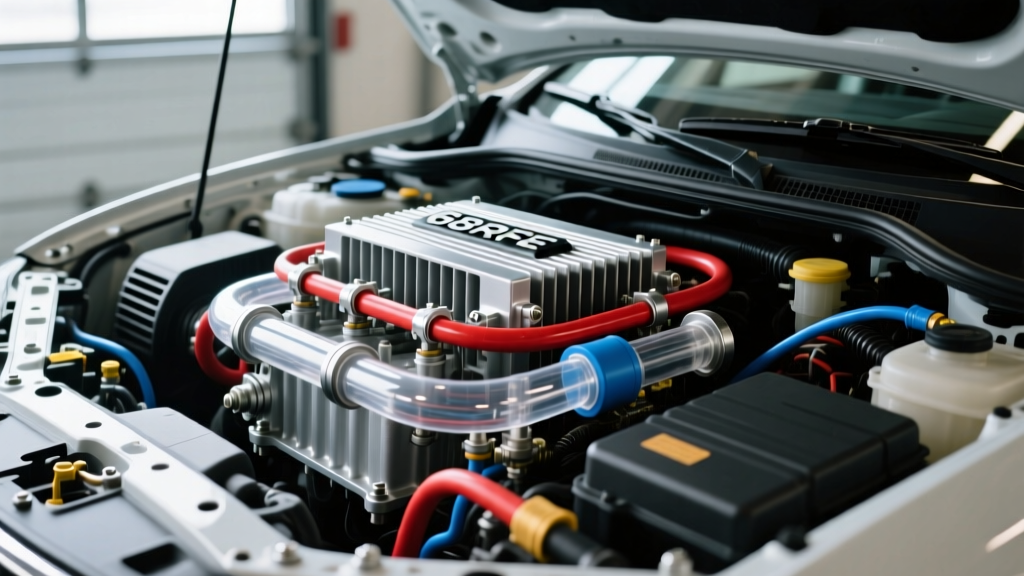
When consulting a factory 68RFE transmission cooler line diagram, it is vital to recognize that the transmission case features an adapter block mounted on the driver's side. This block contains the thermal bypass valve and the quick-disconnect fittings for the cooler lines.
- Pressure Out (To Cooler): Typically the upper port on the adapter block. This line carries hot fluid directly from the transmission's internal galleries and the torque converter.
- Return In (From Cooler): The lower port. This routes cooled, aerated fluid back into the transmission pan and lubrication circuits.
In extreme heat, the thermal bypass valve—a wax-pellet or spring-loaded mechanism designed to restrict cooler flow during cold starts—must open fully. In hot climates like Phoenix or Death Valley, this valve should rarely engage. However, if the valve sticks due to degraded fluid varnish, it will short-circuit the cooling loop, sending 220°F+ fluid straight back into the transmission.
The Thermal Reality: ATF+4 Degradation in Desert Towing
Mopar ATF+4 (Part # 68218925AB) is a highly engineered synthetic blend designed specifically for Chrysler transmissions. However, its chemical stability is entirely dependent on temperature management. According to data compiled by the Automatic Transmission Rebuilders Association (ATRA), the lifespan of synthetic transmission fluid halves for every 20°F increase above the baseline optimal temperature.
| Fluid Temperature | Relative Fluid Lifespan | Physical Symptoms & Failure Modes |
|---|---|---|
| 175°F - 185°F | 100% (Baseline Optimal) | Normal operation, optimal clutch apply friction. |
| 195°F | 50% Life Remaining | Accelerated oxidation, minor seal hardening. |
| 215°F | 25% Life Remaining | Fluid darkens, varnish begins forming on valve body bores. |
| 235°F | 12.5% Life Remaining | Severe varnishing, clutch material delamination, torque converter clutch (TCC) shudder. |
| 250°F+ | Immediate Danger | Fluid boils, total pressure loss, catastrophic transmission failure. |
In hot-climate driving, ambient air entering the radiator stack can easily be 110°F before it even reaches the transmission cooler. This minimal delta-T (temperature differential) renders the factory tube-and-fin cooler entirely inadequate for heavy towing.
Sizing and Selecting an Auxiliary Cooler for Hot Climates
For hot-climate applications, tube-and-fin coolers are obsolete. You must utilize a stacked-plate or micro-fin design to maximize surface area and turbulent fluid flow. The goal is to drop fluid temperatures by at least 30°F to 40°F over the factory setup.
Top Tier Cooler Recommendations for the 68RFE
Expert Note: Never mount an auxiliary cooler behind the factory radiator or intercooler where it will receive pre-heated air. In extreme heat, you must fabricate a bracket to mount the auxiliary cooler in front of the A/C condenser, utilizing dedicated electric puller fans if grille space is restricted.
- Derale Hyper-Cool Remote Cooler (Part # 15960): This is a heavy-duty stacked-plate cooler featuring a 1/2" hose barb and an integrated 500 CFM electric fan. It is ideal for slow-speed desert rock crawling or stop-and-go traffic in 110°F heat where ram-air is non-existent.
- Mishimoto MMTC-F2D (Ford-specific but adaptable): While marketed for Ford diesels, Mishimoto's massive stacked-plate cores are frequently adapted by Cummins owners for maximum frontal area cooling. Ensure you utilize the correct 1/2" to 5/8" step-up hose barbs.
Precision Routing, Fittings, and Torque Specifications
When executing the 68RFE transmission cooler line diagram for an auxiliary upgrade, the physical routing of the hoses is just as critical as the diagram itself. High-pressure synthetic rubber hoses are mandatory. The 68RFE can generate line pressures exceeding 175 PSI in Tow/Haul mode under heavy throttle. Standard transmission hose will balloon and rupture under these combined thermal and hydraulic stresses.
Hardware and Torque Specs
Use the following specifications when modifying the cooler lines and adapter block on the 68RFE case:
- Adapter Block to Case Bolts: M8 x 1.25 flange bolts. Torque to 18-22 ft-lbs (24-30 Nm). Do not overtighten; the aluminum case threads strip easily.
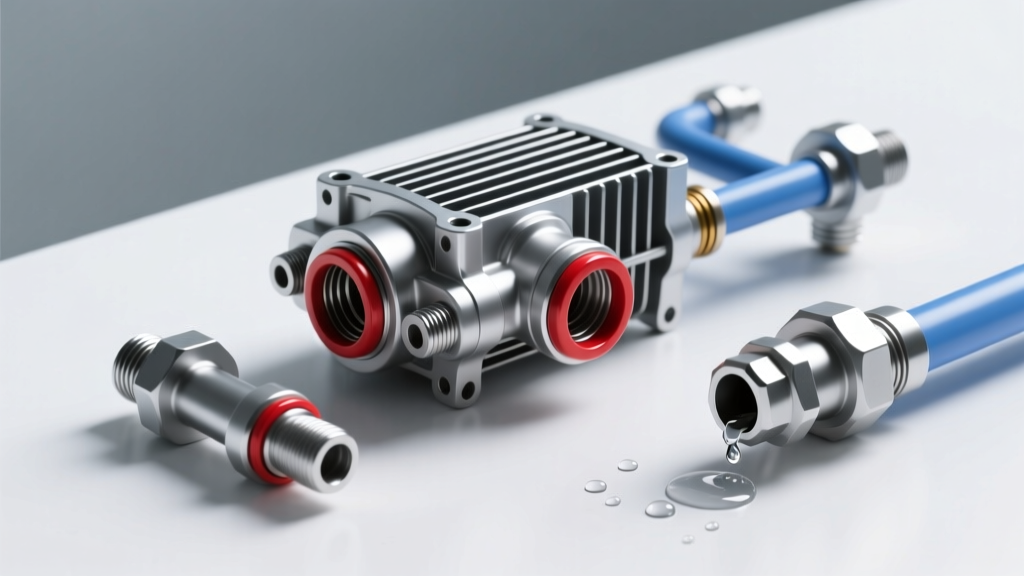
- Quick-Disconnect Fittings: The 2014+ Ram trucks use 1/2" and 5/8" O-ring sealed quick-disconnects. Always replace the internal O-rings (Mopar Part # 05210833) with Viton high-temperature seals when disconnecting.
- Hose Clamps: Use constant-torque T-bolt clamps (e.g., Ideal Tridon) rather than standard worm-gear clamps, which can slice through hot, softened rubber hoses.
- Fluid Capacity: A standard 68RFE dry fill is roughly 10.5 quarts, but adding a large auxiliary cooler and long routing lines will require an additional 2 to 3 quarts of Mopar ATF+4.
Hot-Climate Bypass Valve Elimination
In regions where temperatures never drop below freezing, many heavy-duty towing experts recommend deleting the thermal bypass valve entirely. The factory valve relies on a thermal wax element that expands to close the bypass port when cold, and shrinks to open the port when hot. In a 115°F Arizona summer, the wax element is in a constant state of expansion/contraction stress, and internal spring fatigue can cause the valve to hang partially closed.
The Fix: You can purchase a thermal bypass delete plug (often CNC-machined from 6061 aluminum with dual Viton O-rings) that replaces the factory valve mechanism in the adapter block. This forces 100% of the transmission fluid to the coolers at all times. Warning: Only perform this delete if you live in a strictly hot climate. Cold-climate drivers who delete this valve will experience severe transmission chatter and delayed engagement during winter mornings until the fluid reaches operating temperature.
Troubleshooting Hot-Climate Cavitation and Pressure Drops
Even with a perfect interpretation of the 68RFE transmission cooler line diagram, hot-climate driving introduces unique hydraulic challenges. As ATF+4 approaches 220°F, its viscosity drops significantly. Thinner fluid is more prone to cavitation (the formation of vapor bubbles in low-pressure zones) when pulled through the suction side of the transmission pump or forced through restrictive cooler cores.
Diagnostic Checklist for Overheating Trucks
- Check for Hose Ballooning: With the engine running and the transmission in gear (foot firmly on the brake), inspect the pressure-out line. If the hose swells significantly, the internal synthetic cord is failing due to heat degradation. Replace with PTFE-lined stainless braided hose.
- Verify Cooler Delta-T: Use an infrared pyrometer on the aluminum fins of the auxiliary cooler. The inlet side should be 20°F to 30°F hotter than the outlet side. If temperatures are equal across the core, fluid is channeling (bypassing internal fins) or airflow is entirely stalled.
- Inspect the Torque Converter Clutch (TCC): In extreme heat, a slipping TCC generates massive amounts of localized heat inside the converter, which is then transferred directly to the transmission fluid. If your cooler is sized correctly but temps still spike on highway grades, the TCC apply pressure must be increased via custom ECU/TCM tuning to eliminate micro-slippage.
By respecting the engineering boundaries of the 68RFE, utilizing high-flow stacked-plate coolers, and strictly adhering to proper torque and routing specifications, you can confidently tow maximum GCWR payloads through the harshest desert environments without risking a catastrophic transmission failure.