When shopping for trucks, SUVs, or commercial vans, you will inevitably encounter the designation '4x2.' While off-road enthusiasts often obsess over 4x4 transfer cases and electronic locking differentials, the 4x2 platform remains the undisputed workhorse of the global automotive and commercial fleet. Understanding the literal 4x2 drivetrain meaning is only the beginning; mastering its specific maintenance requirements is what separates premature component failure from half-a-million miles of reliable, heavy-duty service.
As an automotive drivetrain specialist, I frequently see 4x2 vehicles neglected under the false assumption that 'fewer driven wheels means less maintenance.' In reality, a 4x2 system routes 100% of the engine's torque through a single axle and a singular driveshaft, placing immense concentrated stress on specific components. This expert guide will break down the architecture, service intervals, and exact torque specifications required to keep your 4x2 drivetrain operating flawlessly in 2026 and beyond.
Decoding the 4x2 Drivetrain Meaning and Architecture
The fundamental 4x2 drivetrain meaning refers to a vehicle with four total wheels, where only two wheels receive power from the engine. In the context of passenger cars and crossovers, this typically manifests as Front-Wheel Drive (FWD) via a transaxle. However, in the truck, SUV, and commercial van segments, '4x2' almost exclusively denotes a Rear-Wheel Drive (RWD) layout. Power flows from the transmission output shaft, through a driveshaft, into a rear differential, and finally out to the left and right rear axles.
Because the RWD 4x2 layout lacks a front differential, front CV axles, and a transfer case, the rear driveline components must handle the entirety of the vehicle's towing, hauling, and acceleration loads. This concentrated torque load makes precise lubrication and mechanical alignment non-negotiable.
Rear Differential Service: Fluids, Specs, and Intervals
The rear differential is the heart of any RWD 4x2 truck. Whether you are running a Ford 8.8-inch, a GM 9.5-inch (14-bolt semi-float), or a Ram AAM 11.5-inch, the hypoid gear set generates extreme sliding friction and heat. Neglecting differential fluid degrades the anti-wear additives, leading to catastrophic gear spalling.
Fluid Selection and Friction Modifiers
Always consult your specific owner's manual, but as a baseline best practice for modern 4x2 trucks, use a full synthetic API GL-5 rated gear oil. For standard open differentials, a 75W-90 is typically sufficient. For heavy-duty towing applications or limited-slip differentials (LSD), step up to a 75W-140. Brands like Red Line Oil offer excellent shear stability under high-heat towing conditions.
- Ford 8.8-inch / 9.75-inch Axles: Require 3.5 to 5.0 pints of fluid. If equipped with a Traction-Lok LSD, you must add 4 oz of Motorcraft XL-3 Friction Modifier Additive to prevent clutch chatter during low-speed cornering.
- GM 9.5-inch / 10.5-inch Axles: Require roughly 4.0 to 5.5 pints. GM G80 locking differentials generally do not require friction modifiers, as the additive can interfere with the mechanical locker's engagement mechanism.
Differential Cover Torque Specifications
When performing a fluid drain and fill, the mating surface must be perfectly clean. Avoid cheap cork gaskets; instead, use a high-quality RTV silicone (like Permatex Ultra Black) or a premium reusable rubber gasket. Over-torquing the cover bolts will warp the housing and cause chronic leaks.
Expert Torque Spec Warning: Ford 8.8 cover bolts (typically 10mm or 3/8-inch) should be torqued to exactly 25-30 lb-ft in a crisscross pattern. GM 10-bolt and 12-bolt covers require 25 lb-ft. Stripping these shallow-threaded housings is a common DIY mistake that requires expensive Heli-Coil repairs.
Driveshaft, Yoke, and U-Joint Mastery
The driveshaft connects the transmission to the rear differential, operating at high rotational speeds (often exceeding 3,000 RPM at highway speeds). Universal joints (U-joints) compensate for the vertical articulation of the rear suspension. In the 4x2 truck world, the Spicer 1310 and Spicer 1330 series are the most common U-joints. You can verify exact replacement part numbers via the Spicer Parts catalog.
The Staked U-Joint Edge Case
Many modern GM and Ford 4x2 trucks utilize aluminum driveshafts with 'staked' U-joints from the factory. Instead of snap-rings holding the bearing caps in place, the factory uses a machine press to deform (stake) the aluminum yoke over the caps. When servicing these, you must carefully grind away the stakes with a rotary tool, press the old caps out, and install aftermarket U-joints that utilize internal snap-rings (such as the Spicer 5-1330X). Never attempt to re-stake an aluminum yoke in a home garage; it will lead to a catastrophic driveshaft separation at speed.
Greasing and Strap Bolt Torque
If your 4x2 is equipped with greasable U-joints, lubricate them every 15,000 miles using an NLGI Grade 2 lithium-complex grease. Pump grease until you see the seals just barely weep; over-pressurizing will blow out the seal lips, allowing water ingress. When reinstalling the driveshaft, the yoke strap bolts must be torqued to 15-20 lb-ft and secured with medium-strength blue threadlocker.
Pinion Seal and Yoke Leak Troubleshooting
A common issue on high-mileage 4x2 trucks is a gear oil leak at the front of the differential where the driveshaft yoke enters the pinion gear. Most DIYers immediately replace the pinion seal. However, if the new seal leaks again within 5,000 miles, the culprit is likely a grooved yoke. Over time, the rubber lip of the seal wears a permanent trench into the steel yoke surface.
The Expert Fix: Before installing a new pinion seal, run your fingernail across the yoke sealing surface. If you feel a groove, do not just install a new seal. Use a SKF Speedi-Sleeve pressed over the yoke to provide a fresh, smooth mating surface, or carefully polish the yoke with 400-grit emery cloth to remove the burr. Additionally, ensure you mark the pinion nut and yoke before removal. If you are dealing with a crush-sleeve differential, over-tightening the pinion nut to 'stop a leak' will crush the sleeve further, destroying your gear bearing preload and requiring a complete differential rebuild.
4x2 Drivetrain Maintenance Cost & Interval Matrix
To help you budget and schedule your 4x2 service, refer to the matrix below. Costs reflect 2026 average national shop rates versus DIY material costs.
| Service Component | Recommended Interval | DIY Material Cost | Professional Shop Cost | Critical Specification / Note |
|---|---|---|---|---|
| Rear Differential Fluid | Every 50k - 100k miles (or post-towing) | $40 - $80 | $150 - $250 | Use API GL-5; add LSD modifier if equipped. |
| U-Joint Replacement (Rear) | As needed (check for radial play) | $25 - $45 (per joint) | $180 - $300 | Strap bolts: 15-20 lb-ft with threadlocker. |
| Pinion Seal Replacement | As needed (upon leak detection) | $15 - $30 | $250 - $400 | Inspect yoke for grooves; do not alter crush sleeve. |
| Driveshaft Slip-Yoke Lube | Every 30k miles | $10 | $50 - $80 | Use specialized slip-yoke grease to prevent 'driveline clunk'. |
| Center Support Bearing (2-piece shafts) | Inspect every 60k miles | $40 - $90 | $300 - $500 | Mounting bolts: 35-45 lb-ft. Check rubber for dry rot. |
FWD 4x2 Systems: Transaxles and CV Axle Care
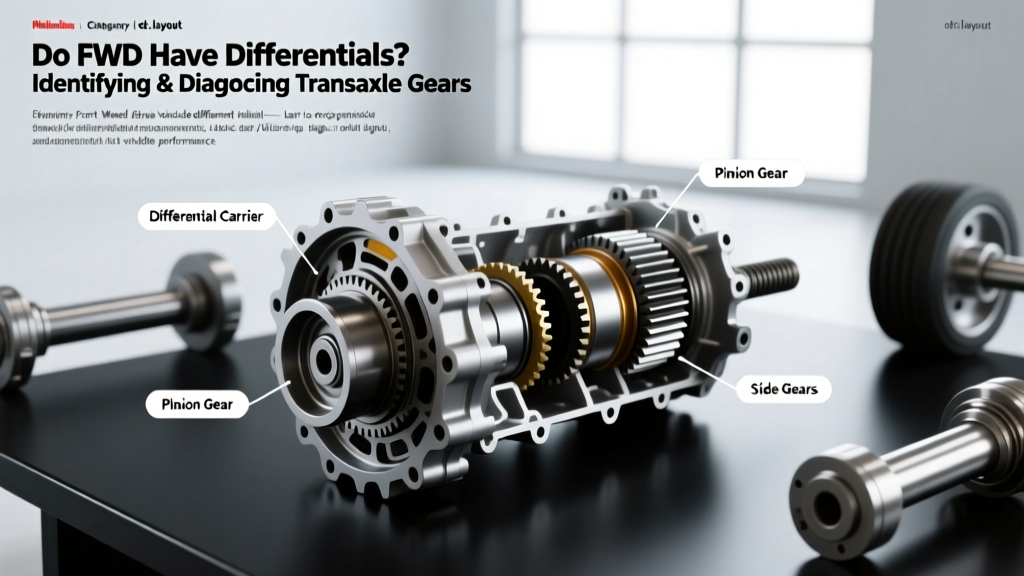
While the term '4x2' is heavily associated with RWD trucks, millions of FWD cars and CUVs also fit the literal 4x2 drivetrain meaning. In these vehicles, the transmission and differential are combined into a single transaxle. Maintenance here pivots away from heavy gear oils and focuses on Automatic Transmission Fluid (ATF) or specialized Manual Transmission Fluid (MTF).
For FWD 4x2 systems, the most critical wearable components are the Constant Velocity (CV) axles. The rubber CV boots protect the intricate ball-and-cage joints from dirt and moisture. During every oil change, physically squeeze the CV boots and inspect the inner clamps. A torn boot will expel grease and ingest road grit, destroying a $150 CV axle in less than 2,000 miles. Furthermore, transaxle fluid should be drained and filled every 60,000 miles using exact OEM formulations (e.g., Honda DW-1, Toyota WS, or GM Dexron ULV), as modern FWD transaxles rely heavily on specific fluid friction coefficients for clutch pack engagement.
Final Thoughts on 4x2 Longevity
The 4x2 drivetrain meaning extends far beyond a simple badge on the tailgate; it represents a highly efficient, concentrated torque-delivery system that requires disciplined, interval-based maintenance. By adhering to exact fluid specifications, utilizing proper torque sequences on differential covers and U-joint straps, and proactively addressing pinion yoke wear, you can easily push your 4x2 drivetrain well past the 250,000-mile mark without catastrophic failure. Treat your 4x2 with the same respect you would give to a complex 4x4, and it will reward you with unmatched reliability and lower long-term operating costs.