The 4L80E: The Undisputed King of Heavy-Duty Performance
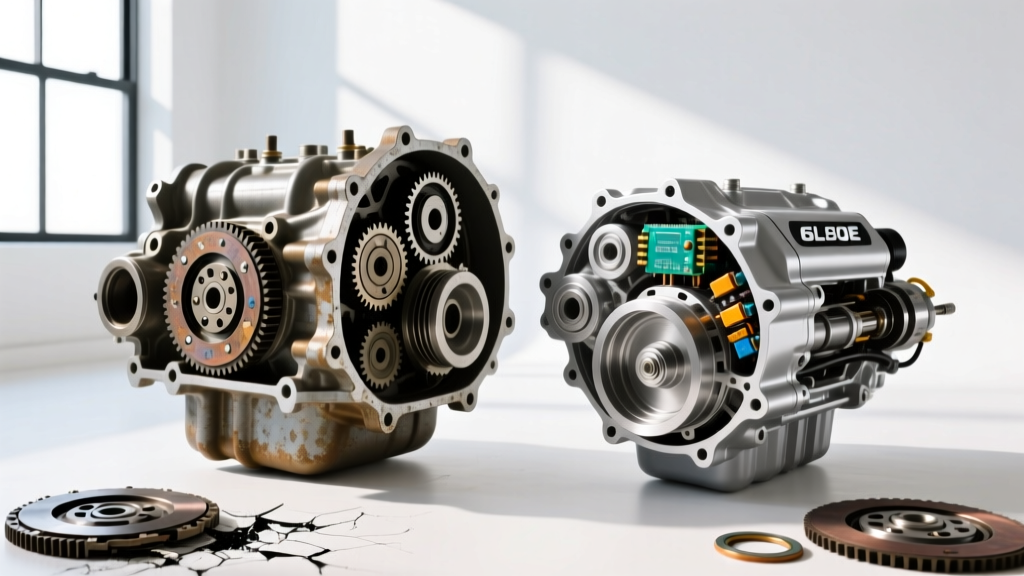
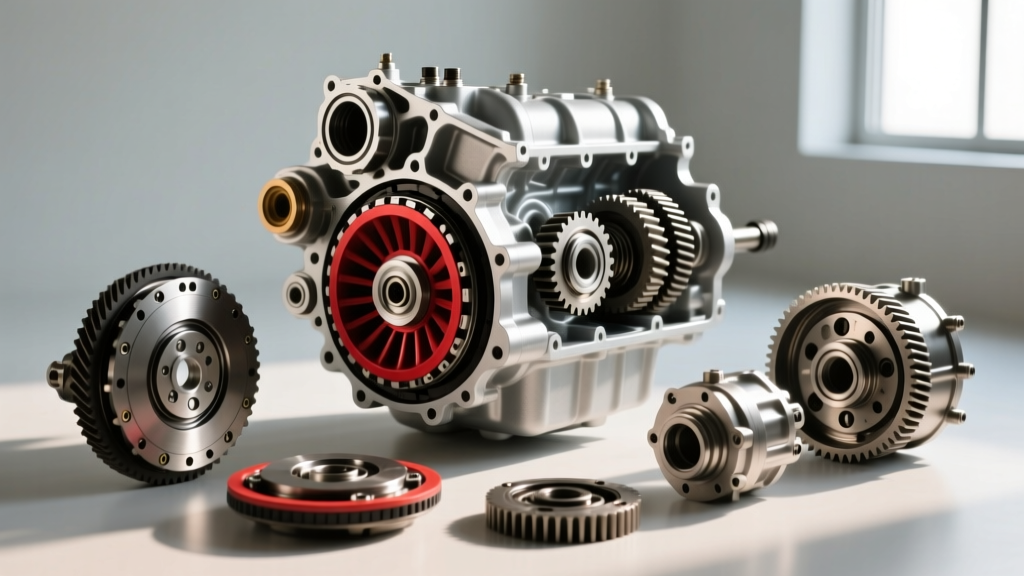
Introduced by General Motors in 1991 behind the 6.5L Detroit Diesel and 454 big-block V8s, the 4L80E has evolved into the ultimate foundation for high-horsepower LS swaps, drag racing, and heavy towing. Its massive gearset width and robust case design allow it to handle torque levels that would instantly shatter a 4L60E or fragment a ZF 8HP. However, extracting this reliability requires a strategic approach to parts selection, machining, and hydraulic tuning.
If you are planning a high-performance build for 2026, you are likely wondering about the financial commitment. When gearheads search for how much to rebuild a transmission for a 1,000-horsepower project, the answer is rarely a single number. The cost scales dramatically based on your power adder (turbo, supercharger, or nitrous), vehicle weight, and whether you are turning the wrenches yourself or paying a dedicated transmission shop.
Cost Breakdown: How Much to Rebuild a 4L80E Transmission?
Below is a realistic 2026 pricing matrix for 4L80E rebuilds, categorized by horsepower targets. These estimates assume you are starting with a usable core case and valve body.
| Build Stage | Target HP/TQ | DIY Parts Cost | Shop Rebuild Cost (Labor + Parts) | Key Upgrades Required |
|---|---|---|---|---|
| Stage 1: Heavy Duty | Up to 650 HP | $600 - $950 | $2,200 - $3,000 | Master kit, Shift kit, Corvette servo |
| Stage 2: Street/Strip | 800 - 1,200 HP | $1,800 - $2,800 | $4,500 - $6,000 | Billet shafts, Upgraded hub, High-stall TC |
| Stage 3: Pro Mod/Race | 1,500+ HP | $4,500 - $7,500+ | $8,000 - $12,000+ | Billet center support, Manual VB, Pro drums |
Note: Torque converter costs ($800 - $1,800) are excluded from the DIY parts column above, as converter stall speed must be matched to your specific engine camshaft and powerband.
Stage 1: Heavy-Duty Street & Towing (Up to 650 HP)
For a daily-driven truck, a tow rig, or a mild naturally aspirated LS swap, the 4L80E requires minimal hard-part upgrades. The focus here is on improving apply rates and preventing clutch burnout caused by sluggish factory shift timing.
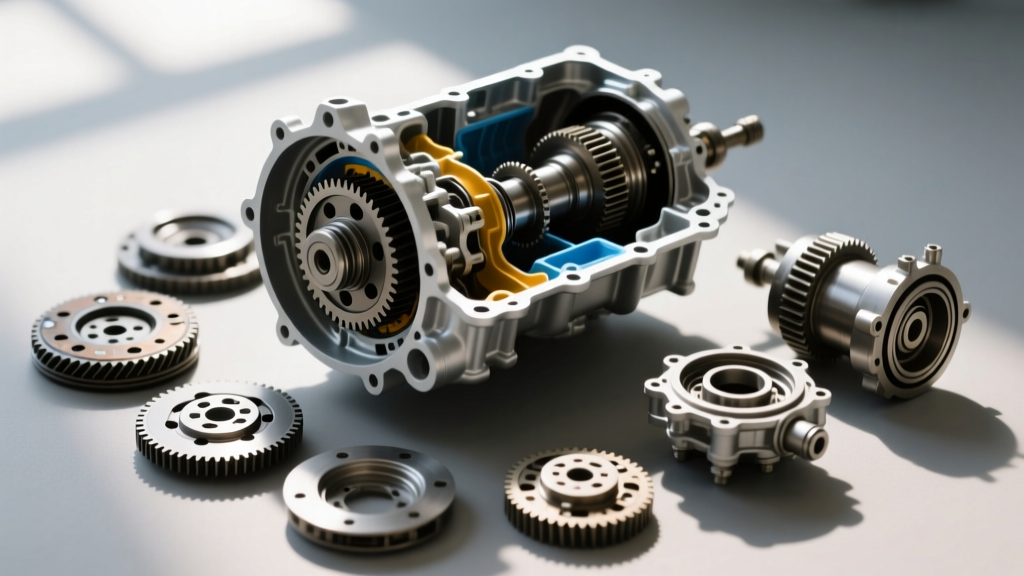
- Master Rebuild Kit ($250 - $350): Includes all frictions, steels, sealing rings, and gaskets. Look for kits featuring Raybestos GPZ or High-Energy frictions for improved heat tolerance.
- Shift Improvement Kit ($150 - $200): The TransGo SK-4L80E-HD2 is mandatory. It increases line pressure, firms up the 1-2 and 2-3 shifts, and prevents the dreaded "shift flare" that destroys the intermediate band.
- Corvette Servo ($45 - $80): GM part number 24232722. This provides a larger apply area for the intermediate band, reducing slippage during the 1-2 shift under heavy throttle.
Stage 2: Strip & Street Monster (800 - 1,200 HP)
Once you introduce power adders like a 76mm turbocharger or a roots blower pushing 15+ psi, the factory powdered-metal components and cast hubs become liability points. The shock load of a trans-brake or a high-stall converter hitting at 5,500 RPM will snap factory shafts.
- Billet Input & Output Shafts ($600 - $900): Factory shafts twist and snap under high torque. Upgrading to 300M billet steel shafts from manufacturers like Sonnax or PPE is non-negotiable at this level.
- Upgraded Forward Clutch Hub ($180 - $250): The Sonnax 34888-01 reinforced forward hub prevents the splines from stripping, a common failure point when launching heavy vehicles on sticky tires.
- Performance Torque Converter ($900 - $1,500): A billet stator and furnace-brazed fins are required to handle the torque multiplication without ballooning the converter case under high line pressure.
Stage 3: Pro Drag & Sled Pulling (1,500+ HP)
At this tier, the 4L80E ceases to be a "rebuild" and becomes a custom fabrication project. The factory case itself may require reinforcement, and the hydraulic system is completely overhauled for instantaneous, bone-crushing shifts.
- Full Manual Valve Body ($400 - $700): Eliminates the computer-controlled solenoids in favor of a mechanical spool valve setup, allowing the driver to control shifts via a ratchet shifter or pneumatic buttons.
- Billet Center Support & Overdrive Drum ($1,200 - $2,000): Prevents case cracking and overdrive roller clutch explosion under extreme deceleration and trans-brake releases.
- Deep Pan & Cooler System ($300 - $500): Fluid temperatures will easily exceed 250°F on a drag pass. A cast aluminum deep pan adds 3-4 quarts of capacity and acts as a heatsink.
Critical 4L80E Weak Points & Mandatory Fixes
Regardless of your budget, ignoring the 4L80E's inherent design flaws will result in catastrophic failure. Address these during any teardown.
1. The Lube-to-Rear Circuit Failure
In the factory design, the transmission routes lubrication oil to the rear planetary and output shaft only when the torque converter clutch (TCC) is applied or during specific gear states. Under heavy track use or when TCC is disabled, the rear planetary starves for oil, overheats, and welds itself together. Installing a Sonnax Lube-to-Rear kit (Part #34530-01K) ensures constant oil flow to the rear components regardless of TCC state.
2. Center Support Cracking
The cast aluminum center support acts as the anchor for the direct and forward clutches. Under high line pressure and heavy shock loads, the support can crack near the snap-ring groove, resulting in an immediate loss of 3rd and 4th gear. For any build exceeding 800 HP, a billet aluminum or reinforced cast center support is required.
3. Overdrive Roller Clutch
The factory overdrive roller clutch (sprag) is prone to flipping and destroying the OD hub during aggressive 3-4 shifts or when engine braking in 4th gear. Upgrading to an anti-flare sprag or a mechanical diode setup is highly recommended for performance applications.
Valve Body Tuning & Line Pressure Specifications
The 4L80E utilizes a variable force solenoid (VFS) to control line pressure, but the factory tuning prioritizes smooth, imperceptible shifts over clutch longevity. For a performance build, you must override the factory PCM tables and maximize hydraulic clamping force.
Expert Tuning Tip: Using HP Tuners or similar software, set your base line pressure to 160 PSI in all forward gears, and spike it to 280-295 PSI during wide-open throttle (WOT) shifts. Do not exceed 310 PSI, or you risk blowing out the factory case plugs and damaging the pump halves.
Final Assembly: Torque Specs & Clearances
Precision assembly is what separates a transmission that lasts 100,000 miles from one that fails on its first pass. Adhere strictly to these specifications:
- Forward Clutch Pack Clearance: 0.040" - 0.060" (Use selective pressure plates to achieve this; tighter clearances cause drag and burnt fluid).
- Direct Clutch Pack Clearance: 0.050" - 0.070".
- Intermediate Band Adjustment: The 4L80E band is non-adjustable; clearance is dictated by the servo pin length and drum wear. Ensure the drum surface is free of deep grooves.
- Oil Pan Bolts: 97 in-lbs (8 lb-ft). Warning: Overtightening the pan bolts will warp the thin steel pan, crushing the gasket and causing chronic leaks.
- Torque Converter to Flexplate: 35 lb-ft using medium-strength threadlocker (Loctite 243).
- Bellhousing to Engine Block: 35 lb-ft.
Fluid Capacity and Selection for 2026
The standard 4L80E fluid capacity is approximately 13.5 to 14.5 quarts (12.8 - 13.7 liters), depending on the torque converter size and whether an auxiliary cooler is installed. While the original spec called for Dexron III, modern builds should exclusively use Dexron VI or a dedicated full-synthetic racing fluid like Amsoil Signature Series Multi-Vehicle ATF. Dexron VI offers superior shear stability, ensuring the fluid maintains its viscosity and friction-modifier properties even when subjected to the extreme shearing forces of a high-stall converter.
Ultimately, understanding how much to rebuild a transmission like the 4L80E comes down to defining your power goals. By investing in the right hard parts and hydraulic upgrades upfront, you transform an aging 1990s truck transmission into a world-class performance powerhouse capable of surviving the most brutal track environments.