The Z33 Chassis Hydraulic Plight: Understanding 350Z Clutch Failures
The Nissan 350Z (Z33 chassis) remains a benchmark platform for sports car enthusiasts, but its manual transmission ecosystem is notorious for hydraulic and mechanical vulnerabilities. When a driver experiences a sinking, spongy, or squeaking 350z clutch pedal, the issue rarely stems from the friction disc itself. Instead, the root causes are deeply embedded in the hydraulic actuation system and the pedal assembly hardware. Paired with the robust FS6R31A 6-speed manual transmission, the factory hydraulic components were designed for comfort and emissions compliance, not the rigorous demands of high-clamp-load aftermarket clutches or track use.
In this comprehensive diagnostic and buyer's guide, we dissect the primary failure modes of the 350Z clutch actuation system. Whether you are facing a pedal that drops to the floorboard or a mechanical bind at the pivot point, understanding the exact root cause is critical before spending money on replacement parts. We will compare OEM components against premier aftermarket solutions from brands like Z1 Motorsports and Exedy, providing you with the data needed to make an informed 2026 purchasing decision.
Diagnostic Matrix: 350Z Clutch Pedal Symptoms vs. Root Causes
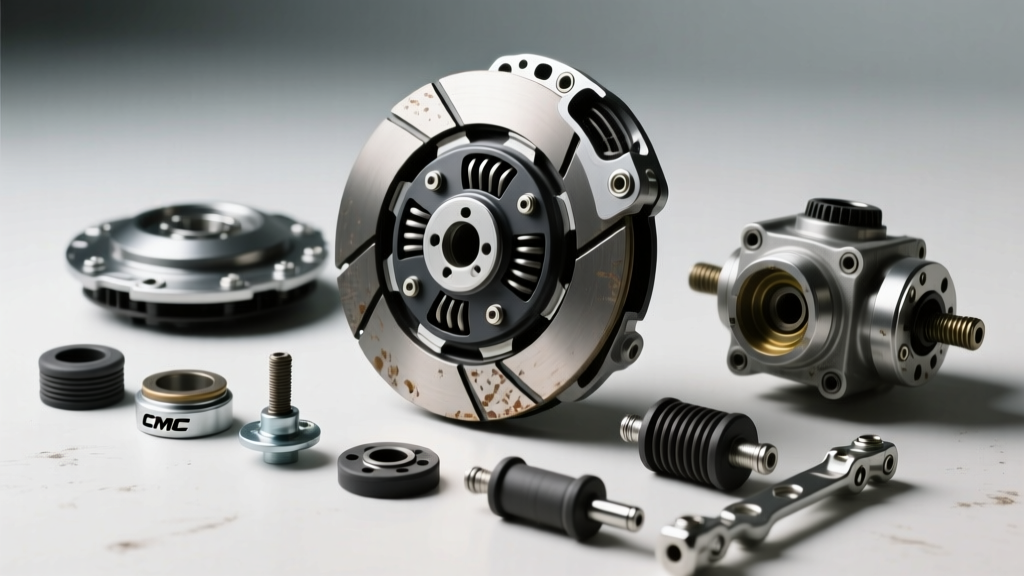
Before tearing into the transmission tunnel or ordering parts, use this diagnostic matrix to isolate the failure point. The Z33 utilizes a closed hydraulic system consisting of a Clutch Master Cylinder (CMC), a hard line, a flexible hose, and a Concentric Slave Cylinder (CSC) inside the bellhousing.
| Symptom | Probable Root Cause | Diagnostic Verification Test | Required Fix |
|---|---|---|---|
| Pedal sinks to floor, no resistance | Internal CMC seal bypass or catastrophic CSC blowout | Check fluid level in reservoir. If empty, inspect bellhousing weep hole for DOT fluid. If full, CMC is bypassing internally. | Replace CMC and/or CSC. Flush system. |
| Spongy pedal, inconsistent bite point | Aerated fluid, degraded flex line, or CMC restrictor valve | Pressure bleed the system. Inspect rubber flex line for bulging under pressure. | Upgrade to stainless braided line, delete restrictor valve, bleed with DOT 4. |
| Pedal slow to return on high-RPM shifts | CSC return spring fatigue or high-viscosity fluid contamination | Observe pedal return rate at 5,000+ RPM. Check fluid for black particulate (degrading seals). | Install aftermarket CNC CSC with heavy-duty return spring. |
| Squeaking, clicking, or lateral play | Pedal pivot ball wear, nylon bushing degradation, or return spring fatigue | Actuate pedal by hand with engine off. Listen for friction at the firewall pivot point. | Replace pedal assembly bushings, pivot pin, and return spring. |
Deep Dive: Concentric Slave Cylinder (CSC) Catastrophes
The most infamous failure point in the 350Z drivetrain is the Concentric Slave Cylinder. Unlike older pushrod-style external slaves, the Z33's CSC sits inside the bellhousing, wrapping around the transmission input shaft. This design saves space but introduces severe thermal and mechanical vulnerabilities.
The OEM Plastic Flaw and Heat Soak
The factory Nissan CSC (Part # 30620-CD00B) features a composite plastic body and a relatively weak internal return spring. The Z33's exhaust manifolds and catalytic converters route directly beneath the transmission tunnel, subjecting the bellhousing to immense radiant heat. Over time, this heat soak bakes the DOT fluid, accelerates the degradation of the CSC's internal rubber seals, and causes the plastic body to become brittle. When the CSC fails, fluid pours out of the bellhousing inspection cover, and the transmission must be dropped—a labor-intensive job that typically costs between $600 and $900 at independent shops in 2026.
OEM vs. CNC Aluminum: The Buyer's Dilemma
If your CSC has failed, or if you are already dropping the transmission for a clutch replacement, reinstalling an OEM plastic CSC is a disservice to the vehicle. Aftermarket manufacturers have engineered CNC-machined aluminum alternatives that dissipate heat more effectively and utilize robust internal springs to handle the high line pressures of Stage 2 and Stage 3 clutch kits.
- OEM Nissan CSC: ~$130. Plastic body, weak spring. Prone to heat-related seal failure. Not recommended for anything beyond stock replacement.
- Z1 Motorsports CNC Slave Cylinder: ~$249. Billet aluminum construction, integrated heavy-duty return spring, and optimized fluid displacement for faster shifts.
- Exedy Performance CSC: ~$185. Improved internal seals over OEM, but still utilizes a composite outer shell. A middle-ground option for mild street builds.
Clutch Master Cylinder (CMC) Bypass & The Restrictor Valve Issue
When the 350z clutch pedal sinks to the floor but the fluid reservoir remains full, the CMC has suffered an internal seal bypass. However, even when functioning perfectly, the OEM CMC (Part # 46010-CD00A) is heavily criticized by driving enthusiasts due to an integrated fluid restrictor valve (often called a delay valve).
Nissan engineered this restrictor to slow the flow of hydraulic fluid during clutch engagement, smoothing out the shift for daily driving and reducing drivetrain shock. Unfortunately, this valve causes a spongy pedal feel, delays disengagement during high-RPM track shifts, and creates a turbulent flow that traps microscopic air bubbles in the hydraulic line.
Upgrading the CMC: Bore Sizing Matters
When selecting a replacement CMC, bore diameter dictates pedal effort and hydraulic ratio. The OEM bore is 5/8-inch (15.87mm). Upgrading to a larger bore, such as a 3/4-inch (19.05mm) CMC, moves more fluid per pedal stroke, resulting in a firmer pedal and faster disengagement, though it slightly increases pedal effort. For track-focused Z33s, deleting the restrictor valve and upgrading to a 3/4-inch non-restrictor CMC is considered mandatory.
Mechanical Bind: Pedal Pivot, Bushings, and Return Springs
Not all clutch pedal issues are hydraulic. The physical pedal assembly in the Z33 footwell relies on a steel pivot pin, nylon bushings, and a tension return spring. After 15+ years of service, the factory grease dries out, the nylon bushings disintegrate, and the metal-on-metal contact results in an annoying squeak or a distinct 'click' when the pedal is depressed.
Furthermore, if you have installed an aftermarket clutch with a high-pressure plate (e.g., an Exedy Twin Plate or OS Giken unit), the immense diaphragm spring pressure can overwhelm the factory return spring, causing the pedal to hang on the floor during aggressive downshifts. Replacing the pedal pivot hardware and upgrading to a stiffer return spring is a cheap, highly effective fix that requires no transmission removal.
2026 Buyer’s Comparison Chart: Complete Actuation Overhauls
When replacing the clutch actuation system, it is highly recommended to replace the CMC, CSC, and flexible hydraulic line simultaneously. Below is a comparison of complete overhaul strategies based on build goals.
| Build Profile | Recommended CMC | Recommended CSC | Hydraulic Line | Est. Parts Cost (2026) |
|---|---|---|---|---|
| Budget / Daily Driver | OEM Nissan (5/8') | OEM Nissan Composite | OEM Rubber Flex Line | $280 - $320 |
| Street / Weekend Warrior | Z1 Non-Restrictor (5/8') | Z1 CNC Aluminum | Stainless Braided Line | $450 - $520 |
| Track / High-Clamp Load | CJ Motorsports (3/4') | Z1 CNC Aluminum | Stainless Braided Line + AN Fittings | $600 - $750 |
Essential Torque Specs & Fluid Bleeding Protocols
Proper installation and bleeding are critical to the longevity of your new components. The Z33 hydraulic system is notoriously difficult to bleed manually due to the high mounting position of the CSC on the FS6R31A bellhousing, which creates a natural air trap.
Crucial Torque Specifications
- CSC to Bellhousing Mounting Bolts (M8 x 1.25): 16 lb-ft (22 Nm). Do not overtighten; the aluminum threads on the bellhousing strip easily.
- CMC to Firewall Pushrod Nut: 11 lb-ft (15 Nm). Ensure pushrod free-play is adjusted to 1-2mm to prevent the CMC piston from resting on the internal compensating port, which will cause system pressure buildup and premature seal failure.
- Transmission to Engine Block (FS6R31A): 48 lb-ft (65 Nm) for the primary M12 bolts.
The Pressure Bleeding Mandate
Attempting to gravity bleed or manually pump the pedal on a 350Z often leaves trapped air, resulting in a spongy pedal that damages the new CSC seals through cavitation. We strongly mandate the use of a pressure bleeder (such as the Motive Products 0107) set to 15-20 PSI. Furthermore, while Nissan's factory manual specifies DOT 3 fluid, upgrading to a high-quality DOT 4 fluid (like Motul RBF 600 or Valvoline Synthetic DOT 4) provides a significantly higher dry boiling point (594°F vs 401°F), offering crucial protection against the Z33's aggressive transmission tunnel heat soak.
For verified OEM part numbers and aftermarket fitment data, enthusiasts should consult resources like Nissan Parts Deal for factory schematics, and specialized Z-car performance retailers like Z1 Motorsports for proven CNC actuation upgrades. By addressing the root causes of hydraulic failure and selecting the correct components for your specific torque requirements, you can permanently eliminate 350Z clutch pedal issues and restore the precise, communicative shifting the Z33 chassis was meant to deliver.