The Physics of Torque Transfer: Fluid Coupling vs. Friction Plate
When selecting, tuning, or diagnosing a 3/4-ton heavy-duty truck, the drivetrain's torque transfer mechanism dictates ultimate reliability under load. Whether you are piloting a RAM 2500 equipped with the 68RFE or Aisin AS69RC, or a Silverado 2500 with the legendary Allison 1000, the automatic's 2500 torque converter operates on fundamentally different physics than a traditional manual friction clutch (such as those paired with the G56 or NV5600 manual transmissions). Understanding these differences is critical for heavy-duty towing, performance tuning, and accurately diagnosing drivetrain failure symptoms.
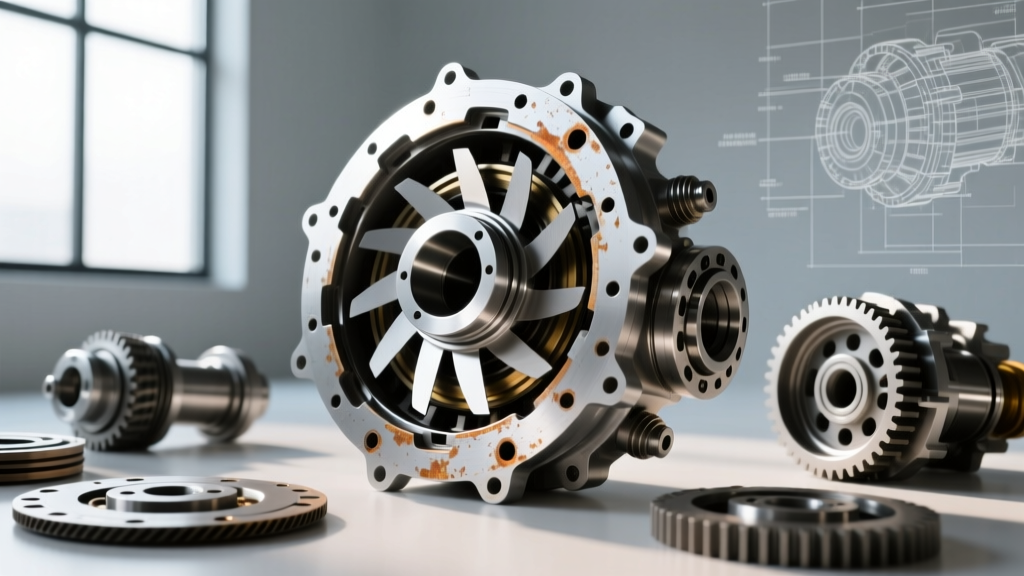
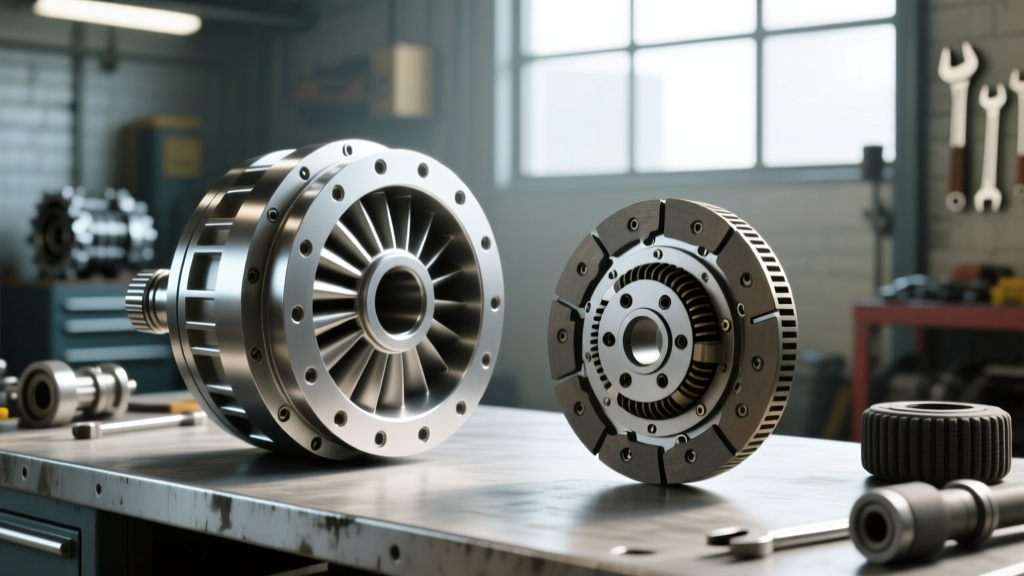
At its core, a manual clutch is a binary mechanical device. It relies on the static and kinetic friction between a flywheel, a friction disc, and a pressure plate to transfer engine torque directly to the transmission input shaft. The transfer ratio is strictly 1:1. Conversely, a 2500 torque converter is a hydrokinetic fluid coupling. It utilizes an impeller (driven by the engine), a turbine (driving the transmission), and a stator (which redirects fluid flow). This hydrodynamic design allows for torque multiplication—often achieving a 2.2:1 to 2.5:1 ratio off the line—giving heavy-duty automatic trucks a massive advantage when launching with a 15,000-pound trailer.
Stall Speed and Torque Multiplication
In a stock Allison 1000 or 68RFE application, the stall speed (the RPM at which the engine can no longer increase RPM while the turbine is held stationary) is typically tuned between 1,600 and 1,800 RPM. This low stall speed ensures that the engine remains in its peak torque band during heavy towing launches without excessive fluid shearing. A manual clutch, lacking fluid coupling, requires the driver to manually modulate the friction zone (slipping the clutch) to achieve a similar launch effect, which generates immense localized heat on the friction disc and risks severe glazing or warping of the flywheel.
Heavy-Duty Towing: Comparison Matrix
How do these two systems compare when subjected to the extreme demands of commercial and heavy-duty towing? The following matrix breaks down the operational characteristics of a stock automatic torque converter, a performance billet upgrade, and a heavy-duty manual clutch setup.
| Specification | Stock 2500 TC (e.g., Allison 1000) | Billet Triple-Disc TC Upgrade | HD Manual Clutch (e.g., South Bend) |
|---|---|---|---|
| Torque Multiplication | 2.2:1 (Hydrodynamic) | 2.4:1 (Optimized Stator) | 1:1 (Direct Mechanical) |
| Max Torque Capacity | ~550 lb-ft (Before TCC Slip) | 1,200+ lb-ft (Multi-Disc Lockup) | ~800 lb-ft (Friction Dependent) |
| Heat Generation (Towing) | High (Requires External Cooler) | Moderate (Efficient TCC Lockup) | Low (Ambient Air Cooling) |
| Primary Failure Mode | TCC Shudder / Fluid Overheating | Input Shaft Shear (Extreme HP) | Friction Material Glazing / Chatter |
| Average Replacement Cost | $1,800 - $2,500 (Part + Labor) | $3,500 - $5,000 (Part + Labor) | $2,200 - $3,500 (Part + Labor) |
Diagnostic Divergence: Failure Symptoms Compared
Because the mechanical and hydrodynamic principles differ so vastly, the failure symptoms of a 2500 torque converter and a manual clutch require entirely different diagnostic approaches. Misdiagnosing a torque converter clutch (TCC) issue as a transmission internal failure can lead to thousands of dollars in unnecessary rebuild costs.
2500 Torque Converter Failure Symptoms
Diagnosing a failing torque converter in a heavy-duty automatic requires monitoring transmission fluid temperature (TFT), line pressures, and TCC slip RPM via an OBD-II scanner. According to Sonnax Technical Resources, internal converter degradation often manifests before hard parts fail.
- TCC Shudder: Felt as a rhythmic vibration, typically between 40 and 55 mph under light throttle. This occurs when the Pulse Width Modulated (PWM) TCC apply strategy attempts to maintain a partial lockup, but degraded friction material on the TCC piston causes rapid slip-and-grip cycles. Contaminated Dexron VI or TES 295 fluid is often the culprit.
- Transmission Fluid Overheating: When towing a heavy load up a 6% grade, a failing torque converter will exhibit excessive internal slip. If fluid temperatures consistently exceed 220°F (104°C) despite an upgraded external cooler, the stator's one-way clutch may be failing to freewheel, causing the fluid to churn and generate massive parasitic heat.
- Cover Ballooning: In modified diesel applications (e.g., 6.7L Cummins or Duramax pushing 35+ PSI of boost), the stock stamped-steel TC cover can physically expand or 'balloon' under high hydraulic pressure. Symptoms include delayed forward engagement, a loss of transmission fluid into the bellhousing (if the front seal blows), and a noticeable decrease in torque transfer efficiency.
- Stator Clutch Failure: If the one-way stator clutch seizes, the truck will feel incredibly sluggish off the line and suffer from severe overheating. If it freewheels in both directions, the truck will lose all torque multiplication, feeling as though it is launching in second gear.
Manual Clutch Failure Symptoms
A manual clutch failure is generally more visceral and mechanical. Without fluid dynamics to mask wear, the driver feels the degradation directly through the chassis and pedal.
- RPM Flare (Slippage): Under heavy towing load or in higher gears (5th or 6th), applying throttle results in engine RPM climbing without a proportional increase in vehicle speed. This indicates the friction disc has worn past its service limit or the pressure plate diaphragm spring has lost clamping force.
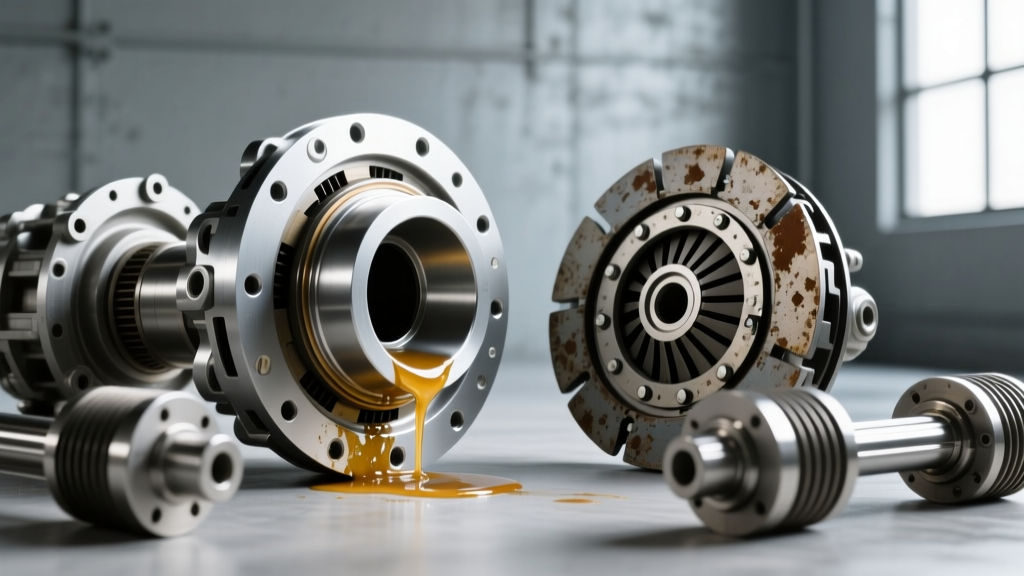
- Clutch Chatter: A violent shaking upon initial engagement from a stop. This is typically caused by oil contamination on the friction disc (often from a leaking engine rear main seal or transmission input shaft seal) or hot spots/warping on the dual-mass or solid flywheel.
- Hard Pedal or Throwout Bearing Noise: A grinding or whining noise that changes pitch with engine RPM and disappears when the clutch pedal is fully depressed usually points to a failing hydraulic throwout bearing or a worn pilot bearing, rather than the friction assembly itself.
Upgrade Paths: Billet Covers and Multi-Disc Lockups
For heavy-duty truck owners who demand the towing capacity of an automatic but require the durability of a manual, the aftermarket has developed the Billet Multi-Disc Torque Converter. Unlike a stock converter that relies on a single friction surface for TCC lockup, performance units from manufacturers like SunCoast or PCS utilize a triple-disc or quad-disc clutch pack inside the converter.
By distributing the clamping force across three friction surfaces, these converters can handle over 1,200 lb-ft of engine torque without slipping, effectively mimicking the direct 1:1 mechanical lock of a manual clutch while retaining the 2.4:1 torque multiplication off the line. Furthermore, the stamped steel cover is replaced with a precision-machined billet steel cover, entirely eliminating the ballooning issue seen in high-boost diesel applications. As noted by Allison Transmission engineering guidelines, maintaining strict hydraulic line pressure is vital when upgrading to these multi-disc setups, often requiring a concurrent transmission valve body upgrade to increase TCC apply pressure from a stock ~110 PSI to over 160 PSI.
Expert Diagnostic Tip: Before condemning a 2500 torque converter for shudder or slip, always verify the condition of the transmission fluid and the external cooling loop. A restricted cooler line or a failing thermal bypass valve can cause localized fluid starvation at the TCC, mimicking internal converter failure. Always perform a TCC slip test via live data: at 60 MPH in top gear, TCC slip should read 0-20 RPM. Anything over 50 RPM indicates internal friction wear or hydraulic pressure loss.
The Verdict: Application Dictates the Drivetrain
The choice and maintenance of a 2500 torque converter versus a manual friction clutch ultimately come down to application. For stop-and-go commercial towing, steep grade hauling, and daily drivability, the hydrodynamic torque multiplication and modern PWM lockup strategies of an automatic torque converter are unmatched. However, they require rigorous fluid maintenance and robust cooling systems to manage the inherent heat of fluid shearing. Conversely, the manual clutch offers unparalleled mechanical efficiency and zero fluid heat generation, making it ideal for dedicated drag-pulling or extreme off-road applications where driver modulation is preferred. Understanding the distinct failure symptoms of both systems ensures that when the drivetrain inevitably protests under heavy load, the correct component is diagnosed and replaced.