The AWD Illusion: Why Your 2017 Nissan Rogue Needs a Rear LSD
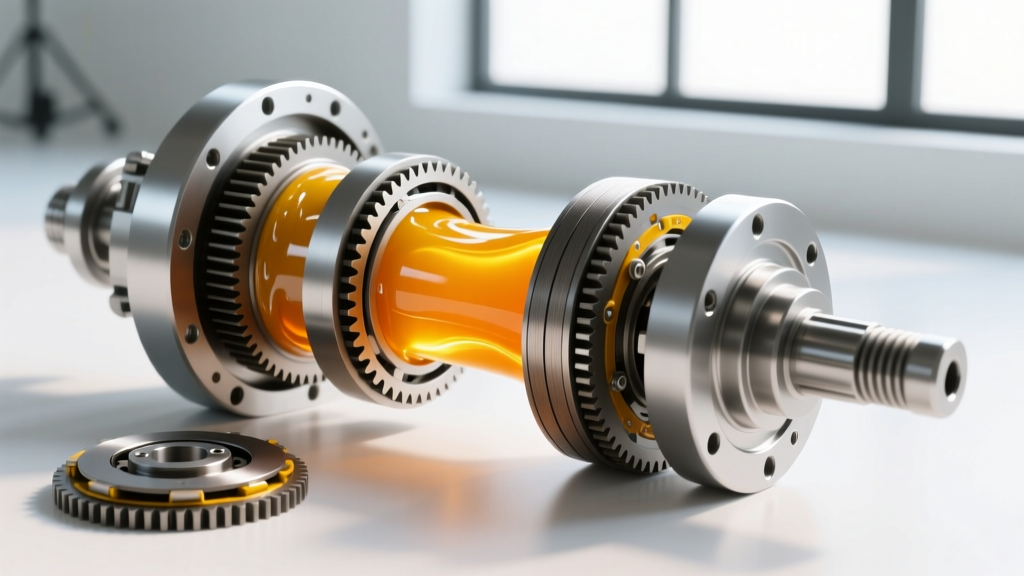
As we navigate the used and enthusiast market in 2026, the T32-generation Nissan Rogue remains a highly capable compact crossover. However, many owners misunderstand how its All-Wheel Drive (AWD) system actually functions. The 2017 Nissan Rogue rear differential is, from the factory, an open differential. While the vehicle features an advanced electromagnetic Rear Drive Module (RDM) that can send up to 50% of engine torque to the rear axle, that system only manages front-to-rear power distribution. It does absolutely nothing to manage side-to-side traction across the rear wheels.
If you are driving your 2017 Nissan Rogue in deep snow, mud, or off-camber trails, and one rear wheel loses traction, the factory open differential will route all rear-biased torque to the spinning wheel. The result? You are stranded, despite the AWD badge on the back. Upgrading the 2017 Nissan Rogue rear differential to a Limited Slip Differential (LSD) is the ultimate fix for this traction bottleneck. In this comprehensive buyer's guide, we compare the OEM open setup against aftermarket LSD options, detailing the exact fluid specifications, torque specs, and real-world costs required for the swap.
Anatomy of the T32 Rogue Drivetrain
Before tearing into the rear axle, it is vital to understand the drivetrain layout. The 2017 Rogue utilizes a Jatco CVT8 (JF016E) transaxle connected to a Power Take-Off (PTO) unit. This PTO spins a two-piece driveshaft that feeds into the RDM. The RDM uses a clutch pack to engage the rear final drive assembly. The rear differential itself houses a ring and pinion gear set (typically a 3.357 final drive ratio for the 2.5L QR25DE engine) and a carrier assembly. The factory open carrier uses standard spider gears that allow the outer wheel to spin faster during cornering, but offer zero resistance when one wheel encounters zero-friction surfaces.
OEM Open Differential vs. Aftermarket LSD: The Core Differences
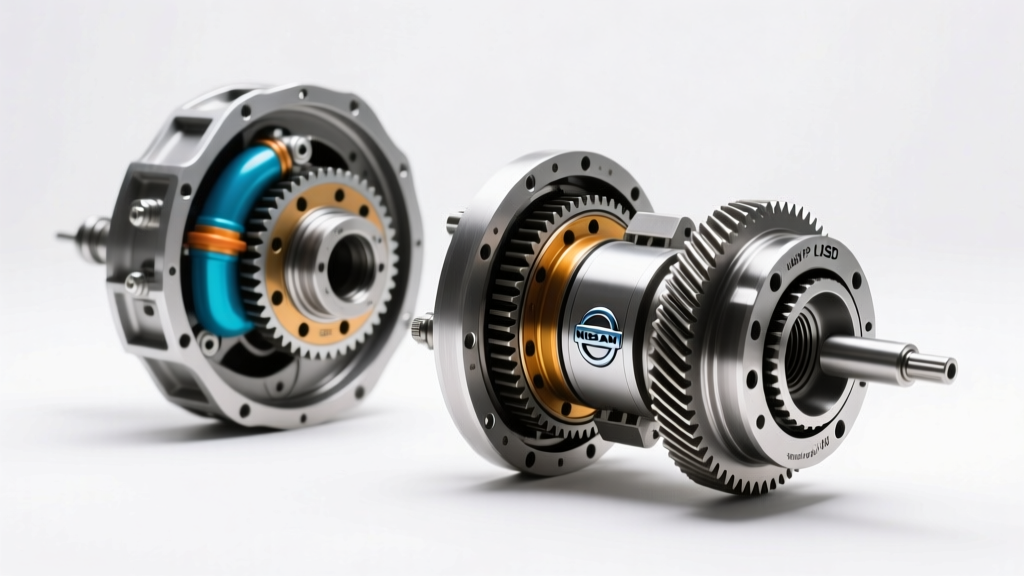
When evaluating an upgrade, you are essentially choosing between maintaining the factory status quo or investing in mechanical torque biasing. Below is a direct comparison of the OEM open differential versus a high-quality aftermarket clutch-type LSD (such as a Cusco or Kaaz unit).
| Feature | OEM Open Differential | Aftermarket LSD (e.g., Cusco 1.5-Way) |
|---|---|---|
| Traction on Split Surfaces | Poor (1-wheel peel, loss of forward momentum) | Excellent (Mechanical torque biasing to gripping wheel) |
| Maintenance Interval | Every 60,000 miles (Standard GL-5) | Every 30,000 miles (Requires Friction Modifier) |
| NVH (Noise/Vibration) | Silent operation | Mild clunk/chatter on tight low-speed turns |
| Cost (Part + Install) | $0 (Already equipped) | $1,200 - $1,800 (Parts + Machine work/Labor) |
| Cornering Dynamics | Neutral, understeer-biased | Improved rotation, slight oversteer on throttle lift |
Real-World Traction Scenarios for the Rogue
Snow, Ice, and the AWD Bottleneck
The most common complaint among T32 Rogue owners in northern climates is the vehicle's tendency to 'cross-axle' on icy inclines. Because the RDM relies on wheel speed sensors to detect slip, it will send power to the rear. But if the left rear tire is on black ice and the right rear is on dry asphalt, the open differential acts as a path of least resistance. An LSD mechanically locks the axles together under load, ensuring the right rear tire pushes the vehicle forward even if the left is spinning.
Light Overlanding and Trail Riding
For owners pushing their Rogues onto forest service roads, ruts and off-camber rocks will easily lift a single rear wheel or unload the suspension. The factory open diff will immediately halt forward progress. Upgrading to an LSD transforms the Rogue into a surprisingly capable light overlander, working in perfect harmony with the RDM's electronic traction control.
Buyer’s Guide: Top LSD Options & Compatibility
Finding a direct-drop-in LSD for the 2017 Nissan Rogue rear differential requires careful verification of your axle spline count and carrier bearing dimensions. The T32 chassis shares much of its underpinnings with the global Nissan X-Trail and Juke Nismo, which opens up the Japanese domestic market (JDM) catalog for upgrades.
1. Cusco Type RS (1.5-Way)
The Cusco Type RS is a clutch-based LSD renowned for its durability and progressive locking characteristics. The 1.5-way design means it locks under acceleration and provides partial locking under deceleration, making it ideal for street-driven AWD crossovers that see occasional snow or dirt. Estimated Price: $850 - $1,050. According to the Cusco Official Global Site, these units utilize forged chrome-molybdenum clutch plates that resist wear far better than OEM friction discs.
2. OS Giken Super Lock
For those with a higher budget seeking absolute smoothness, the OS Giken Super Lock uses a patented spring-loaded clutch pack that eliminates the low-speed cornering chatter common in aggressive LSDs. It operates almost silently on the street but provides up to 100% lockup under heavy throttle. Estimated Price: $1,300 - $1,500.
Installation Specs, Fluid Requirements, and Torque Data
Swapping the carrier in the 2017 Nissan Rogue rear differential is not a simple drain-and-fill job. It requires removing the entire rear subframe or dropping the rear final drive assembly, pressing out carrier bearings, and setting precise gear backlash. As documented in the NicoClub Nissan Service Manuals, improper backlash will lead to catastrophic ring and pinion failure within 1,000 miles.
Critical Torque Specifications
- Ring Gear Bolts: 65 - 75 lb-ft (Must use Red Loctite 272 or equivalent high-strength threadlocker)
- Companion Flange Nut: 135 - 145 lb-ft (Crucial for setting pinion bearing preload)
- Drain / Fill Plug (M18x1.5): 25 - 32 lb-ft
- Rear Final Drive Mounting Bolts: 55 - 65 lb-ft
- Target Backlash: 0.005 - 0.007 inches (Measured via dial indicator on the ring gear face)
Differential Fluid & Friction Modifiers
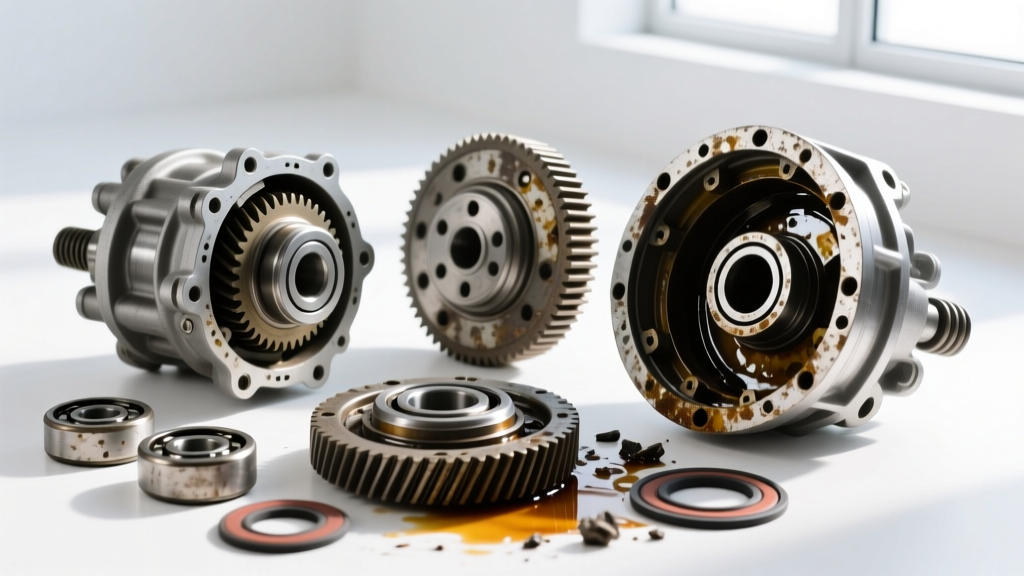
The factory fluid capacity for the 2017 Rogue rear differential is remarkably small: exactly 0.43 Liters (0.91 US Pints). Because the volume is so low, fluid degradation happens rapidly, especially with the added friction of an LSD clutch pack.
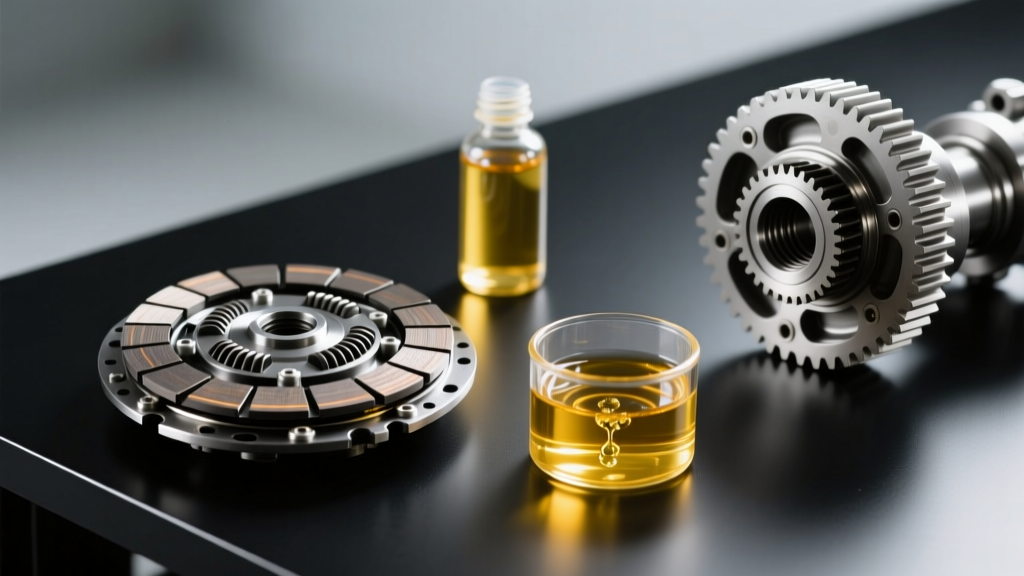
For an open differential, a standard API GL-5 75W-90 or 80W-90 is sufficient. However, if you install a clutch-type LSD, you must add a friction modifier to prevent the clutch plates from grabbing and releasing violently (chatter) during tight parking lot turns. We recommend draining the OEM fluid and filling with a high-quality synthetic like AMSOIL Severe Gear 75W-90, paired with 2 to 3 ounces of a dedicated LSD friction modifier (such as Red Line Limited Slip Friction Modifier or Nissan Genuine LSD Modifier). Helical/Torsen-style diffs do not require friction modifiers, making them a lower-maintenance alternative, albeit with slightly less ultimate lockup capability.
Final Verdict: Is the Upgrade Worth It in 2026?
If your 2017 Nissan Rogue is strictly a pavement commuter in a mild climate, the OEM open differential is perfectly adequate, and your money is better spent on high-quality all-season tires and routine CVT maintenance. However, if you live in a region with heavy winter snowfall, frequently drive on unmaintained forest roads, or are frustrated by the AWD system's inability to push you out of muddy ruts, upgrading the 2017 Nissan Rogue rear differential to an LSD is a transformative modification. By pairing a Cusco or OS Giken unit with the correct synthetic GL-5 fluid and friction modifier, you unlock the true potential of the Rogue's electromagnetic AWD system, turning a capable grocery-getter into a genuinely sure-footed all-weather machine.