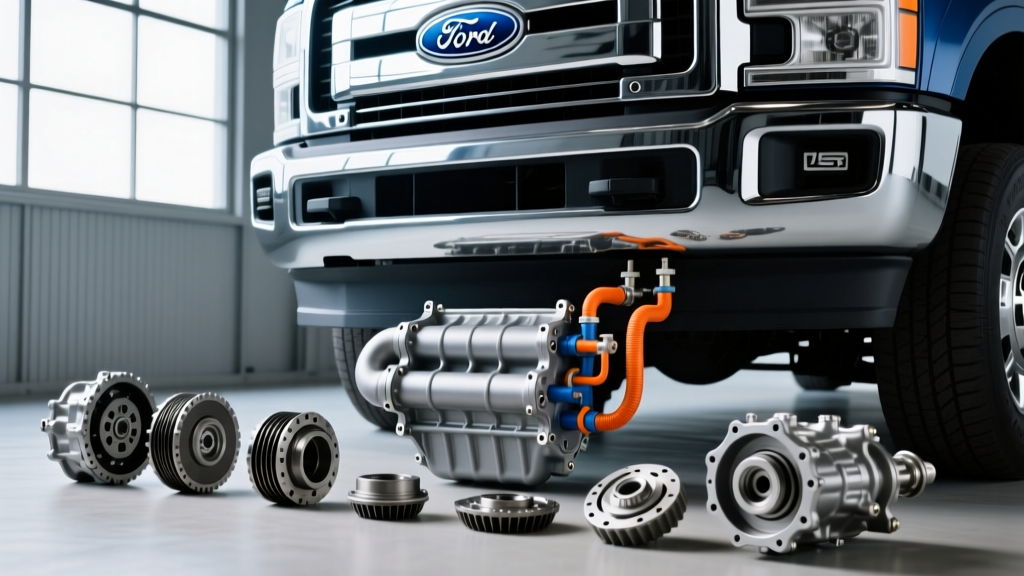
Understanding the 2016 Ford F-150 Transmission Cooling Architecture
The 2016 Ford F-150 represents a pivotal year in Ford’s truck lineup, featuring the widespread adoption of the 3.5L EcoBoost V6 and the legendary 5.0L Coyote V8. Both engines are primarily mated to the robust 6R80 six-speed automatic transmission, while the 2.7L EcoBoost utilizes the 6F35. When discussing 2016 Ford F150 transmission cooler lines, it is critical to understand that the factory cooling system is designed for moderate duty cycles. However, for owners utilizing the Max Tow Package or frequently operating in high-ambient temperatures, the factory setup can become a bottleneck.
The OEM cooling routing sends hot transmission fluid from the 6R80 case to the bottom tank of the engine radiator, then out to an auxiliary air-to-fluid cooler mounted in front of the AC condenser, before returning to the transmission. Over time, the OEM lines are prone to specific failure modes, and upgrading both the lines and the auxiliary cooler type is a necessary evolution for heavy-duty reliability.
Anatomy and Failure Points of OEM Cooler Lines
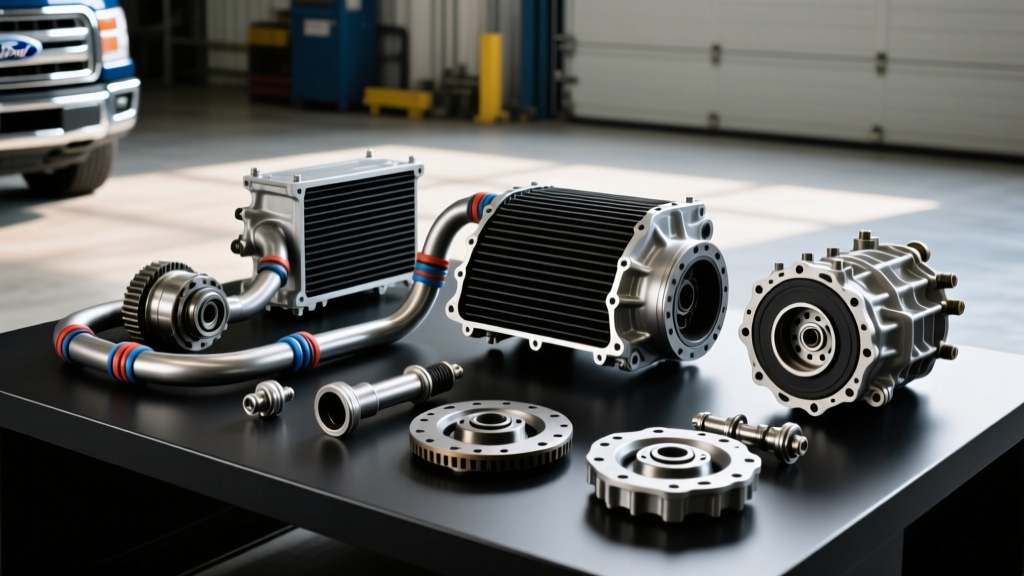
The factory 2016 Ford F150 transmission cooler lines are a hybrid assembly consisting of steel hard-lines, rubber isolation hoses, and aluminum quick-disconnect fittings. While this design reduces NVH (Noise, Vibration, and Harshness), it introduces several vulnerability points:
- Crimp Corrosion: The junction where the rubber hose is crimped onto the steel hard-line is highly susceptible to galvanic corrosion and moisture intrusion, leading to slow weeping of MERCON LV fluid.
- Crossmember Abrasion: The rearward line routing passes dangerously close to the transmission crossmember. If the factory retaining clips degrade, the line vibrates against the steel frame, wearing through the hard-line wall.
- Quick-Disconnect O-Ring Failure: The plastic retaining clips and internal O-rings at the radiator and transmission case become brittle after years of thermal cycling, resulting in sudden fluid dumps under high line pressure.
Step-by-Step OEM Line Replacement Guide
Replacing the 2016 Ford F150 transmission cooler lines requires specific tools to avoid damaging the fragile aluminum ports on the transmission case and radiator. Below is the professional procedure for safely swapping the OEM lines.
Required Tools and Materials
- Lisle 39400 Fuel Line Disconnect Tool Set (specifically the 1/2' and 5/8' sizes)
- Motorcraft W717784-S437 Quick-Connect Retainer Clips
- Motorcraft MERCON LV Transmission Fluid (approx. 5 quarts for line/cooler drain)
- Flare-nut crowfoot wrench set (metric)
Torque Specifications and Fluid Data
| Component | Specification | Notes |
|---|---|---|
| Cooler Line Adapter to 6R80 Case | 20 Nm (15 lb-ft) | Use aluminum-safe thread sealant if threads are damaged |
| Line to Crossmember Bracket Bolts | 47 Nm (35 lb-ft) | Apply anti-seize to prevent future galvanic binding |
| Radiator Quick-Disconnect Fittings | Hand-Tight + Clip | Ensure O-rings are lubricated with MERCON LV before insertion |
| 6R80 Total Dry Fill Capacity | 12.4 Quarts (11.7L) | Line/cooler service only requires ~4.5 Quarts |
Pro-Tip: Never use standard pliers to remove the OEM quick-disconnects. Insert the correct Lisle disconnect tool into the fitting until it bottoms out, push the line inward to relieve pressure on the internal collets, and pull the line outward. Forcing the line without the tool will destroy the radiator side-tank nipple, turning a $150 line job into a $600 radiator replacement.
Transmission Cooler Types and Selection for the F-150
If you are replacing your 2016 Ford F150 transmission cooler lines due to a towing-related overheat event, simply swapping the lines back to OEM is a missed opportunity. Upgrading the auxiliary cooler requires understanding the three primary cooler architectures available on the aftermarket.
1. Tube-and-Fin Coolers (Entry-Level)
These coolers feature a serpentine tube running through a finned housing. They are the cheapest option and offer the lowest flow restriction. However, their thermal transfer efficiency is poor compared to modern designs. Verdict: Not recommended for the 2016 F-150 if towing over 5,000 lbs. They cannot shed the BTU load generated by the 6R80 under heavy torque converter slip.
2. Plate-and-Fin Coolers (Mid-Range)
Fluid flows through a series of dimpled aluminum plates stacked together, with exterior fins dissipating heat. They offer a 20-30% efficiency gain over tube-and-fin designs and provide a moderate drop in fluid pressure. Verdict: Acceptable for daily drivers who occasionally tow a light boat or camper, but they lack the sheer surface area required for mountainous towing.
3. Stacked-Plate Coolers (Heavy-Duty / Towing)
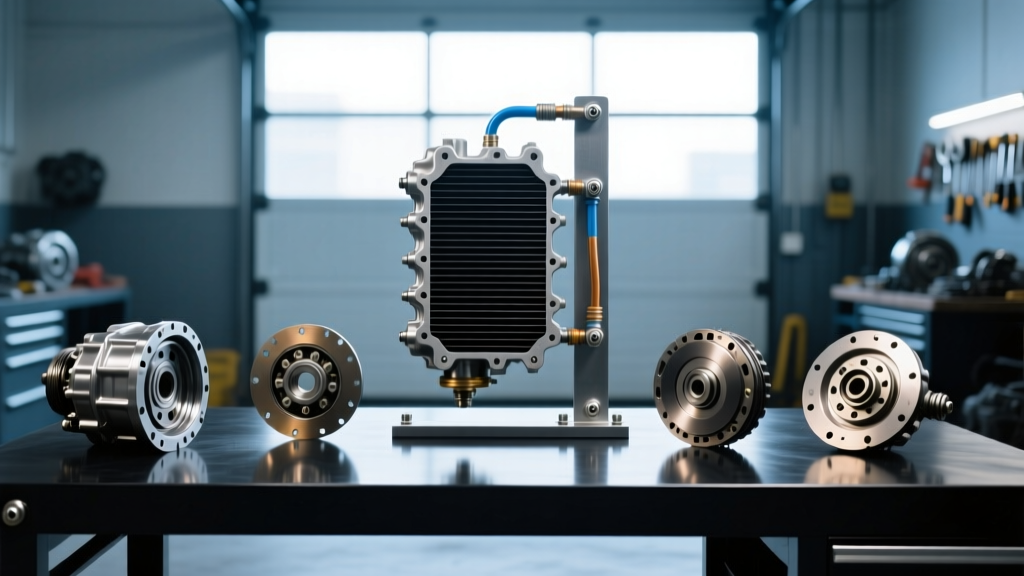
Stacked-plate coolers (such as the Derale Series 9000 or Mishimoto equivalent) eliminate external fins entirely. Instead, the fluid passes through a series of stamped aluminum plates that are furnace-brazed together. The exterior of the plates features turbulators that agitate the fluid, preventing boundary layer stagnation and maximizing thermal transfer. Verdict: The absolute best choice for the 2016 F-150. They offer the highest BTU/hr dissipation per square inch, crucial for the tight packaging behind the F-150’s aggressive front grille.
Integrating an Aftermarket Cooler: The 6R80 Bypass Valve Factor
The most critical aspect of selecting and installing an auxiliary cooler on the 2016 F-150 is understanding the 6R80’s internal thermal bypass valve. Located inside the transmission case, this valve prevents fluid from traveling to the cooler when the transmission is cold, allowing the fluid to reach optimal operating temperature (190°F - 200°F) rapidly to reduce wear and improve shift quality.
WARNING: If you plumb an auxiliary cooler incorrectly, you can defeat the thermal bypass logic, causing the transmission to run perpetually cold in winter months, leading to torque converter shudder and delayed shift points.
The Correct Plumbing Sequence
To maintain the integrity of the OEM thermal management system while adding stacked-plate cooling capacity, you must plumb the system in a specific series order:
- Transmission OUT (Hot) → Factory Radiator Bottom Tank
- Radiator OUT → Factory Auxiliary Cooler (or bypass if removed)
- Factory Cooler OUT → NEW Stacked-Plate Auxiliary Cooler IN
- NEW Cooler OUT → Transmission IN (Return)
By placing the high-efficiency stacked-plate cooler at the very end of the circuit, you ensure that the internal bypass valve still controls the flow to the entire cooling system. When the fluid is cold, the valve closes, and fluid bypasses the radiator and both auxiliary coolers. When the fluid reaches 190°F, the valve opens, sending fluid through the radiator and both air-coolers for maximum heat rejection.
Troubleshooting Common 2016 F-150 Cooling Issues
Why is my transmission overheating only in stop-and-go traffic?
The 2016 F-150 relies heavily on ram-air effect at highway speeds. In stop-and-go traffic, the auxiliary cooler is starved of airflow. Furthermore, the torque converter unlocks frequently, generating massive amounts of heat. If you experience this, your factory auxiliary cooler fins are likely clogged with road debris, or the AC condenser is blocking airflow. Upgrading to a stacked-plate cooler with an integrated electric fan (a remote-mount setup) is the only permanent fix for low-speed thermal buildup.
Can I bypass the factory radiator cooler entirely?
While some off-road enthusiasts attempt to cap the radiator nipples and run lines directly to a massive front-mount cooler, this is highly discouraged for the 6R80. The radiator acts as a thermal buffer, pulling the initial 230°F+ spike out of the fluid before it hits the air-to-fluid cooler. Bypassing the radiator forces the auxiliary cooler to do 100% of the work, which often exceeds the cooler's thermal saturation point during heavy towing. For more community-driven teardowns and bypass valve discussions, reference the extensive archives on F150Forum's 6R80 technical threads.
Final Thoughts on Line Maintenance and Selection
Maintaining the health of your 2016 Ford F150 transmission cooler lines is not just about preventing leaks; it is about maintaining the precise line pressure required for the 6R80’s clutch packs to engage crisply. A pinhole leak in the return line can introduce aerated fluid into the transmission pan, leading to catastrophic pump cavitation and clutch slip. When performing any line repair, always upgrade to a heavy-duty stacked-plate cooler, utilize fresh OEM quick-disconnect retainers, and adhere strictly to the MERCON LV fluid specification. By understanding the intersection of line routing, cooler architecture, and thermal bypass logic, you can ensure your F-150 remains reliable whether commuting or pulling a 10,000 lb trailer through the Rockies.