The 2015 Ram 2500 Drivetrain: AAM 11.5" Axle Overview
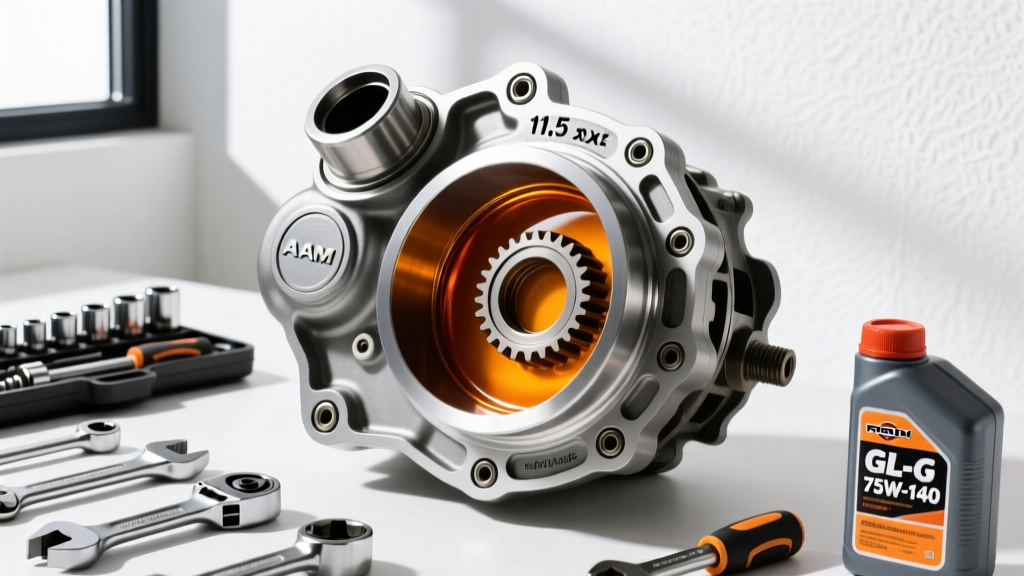
As we navigate the 2026 automotive landscape, the 2015 Ram 2500 remains a cornerstone of the heavy-duty truck market. Whether equipped with the legendary 6.7L Cummins turbodiesel or the 6.4L HEMI V8, the rear axle tasked with managing this immense torque is almost universally the AAM 11.5" (American Axle Manufacturing) unit. Identifiable by its large, 14-bolt differential cover, this axle is engineered for extreme payload and towing capacities. However, after a decade of heavy use, thermal cycling, and exposure to heavy towing loads, the internal components require meticulous maintenance.
Understanding the exact 2015 Ram 2500 rear differential fluid capacity and the precise service intervals is no longer just a recommendation; it is a critical necessity to prevent catastrophic ring and pinion failure. In this comprehensive diagnostic and service guide, we break down the exact fluid specifications, torque sequences, and advanced symptom troubleshooting techniques required to keep your AAM 11.5" axle operating flawlessly.
2015 Ram 2500 Rear Differential Fluid Capacity & Specifications
One of the most common errors DIYers make is under-filling or over-filling the differential housing, leading to aeration, overheating, or blown seals. The AAM 11.5" rear axle requires a specific volume of API GL-5 certified synthetic gear oil to ensure the hypoid gear set and bearings remain fully submerged and lubricated under high-load towing conditions.
| Specification Category | Factory Requirement & Data |
|---|---|
| Axle Model | AAM 11.5" (14-Bolt Cover) |
| Fluid Type | 75W-90 Full Synthetic API GL-5 |
| 2015 Ram 2500 Rear Differential Fluid Capacity | 74 oz (2.2 Quarts / 2.08 Liters) |
| Friction Modifier | NOT Required (Helical/Torsen LSD or Open) |
| Cover Bolt Torque Spec | 25 ft-lbs (34 Nm) |
| OEM Fluid Part Number | Mopar 05083822AD (or equivalent) |
| Recommended Gasket | Lube Locker LL-11.5 (Reusable Viton O-Ring) |
Note: Always purchase three quarts of 75W-90 to ensure you have enough to reach the fill plug threshold, as complete extraction of old fluid from the axle tubes can sometimes require slightly more than the baseline 74 oz.
Symptom Diagnosis: Decoding Rear Differential Noises
Before draining the fluid, a proper drivetrain technician will perform a dynamic road test. The AAM 11.5" axle communicates its internal health through distinct acoustic signatures. Here is how to diagnose the most common failure modes in 2015 Ram 2500 rear differentials.
Coast-Down Whine vs. Drive Whine
If your Ram 2500 emits a high-pitched whine when you let off the throttle (coast-down), the issue is typically isolated to the pinion bearing preload or wear on the coast side of the ring and pinion gear teeth. Conversely, a whine that occurs only under acceleration (drive whine) points to wear on the drive side of the hypoid gear teeth or insufficient fluid reaching the upper pinion bearing due to low fluid levels or degraded viscosity.
According to lubrication engineers at Valvoline Global Operations, GL-5 gear oils rely on sulfur-phosphorus additives to create a sacrificial film on the gear teeth. Over 60,000+ miles of heavy towing, these polymers shear down, losing their film strength and allowing metal-on-metal micro-welding, which manifests as a whine.
Chatter and Binding in Corners
Many enthusiasts mistakenly add a limited-slip friction modifier to the 2015 Ram 2500's rear differential. This is a critical error. The AAM 11.5" axle utilizes a helical gear design (similar to a Detroit Truetrac) or an electronic locking differential (ELRD). Neither of these systems uses clutch packs. Adding friction modifier to a helical gear diff will not cure cornering chatter; if you experience binding, the issue is likely worn side gears, damaged helix angles, or binding axle shaft splines, not a lack of additive.
The "Clunk" on Load Reversal
A distinct metallic clunk when shifting from Reverse to Drive indicates excessive backlash between the ring and pinion gears, or worn slip yoke splines on the rear driveshaft. While checking the differential fluid, use a dial indicator on the ring gear. Factory backlash specification for the AAM 11.5" is generally between 0.006" and 0.010". If your measurement exceeds 0.015", the gear set is worn and requires a rebuild.
Step-by-Step Service & Troubleshooting Procedure
Executing a rear differential service on the 2015 Ram 2500 requires precision. Follow this framework to ensure a leak-free, properly lubricated assembly.
1. Extraction and Metallurgical Inspection
Unlike some front differentials, the AAM 11.5" rear cover does not have a dedicated drain plug; the cover must be removed. Place a high-capacity catch pan beneath the axle. Remove the fourteen 13mm cover bolts using a star-pattern sequence to prevent warping the cover flange. Once the fluid drains, inspect the mating surface and the interior of the housing.
- Normal Wear: A fine, silver-grey paste on the magnet is normal. This is microscopic gear lapping material.
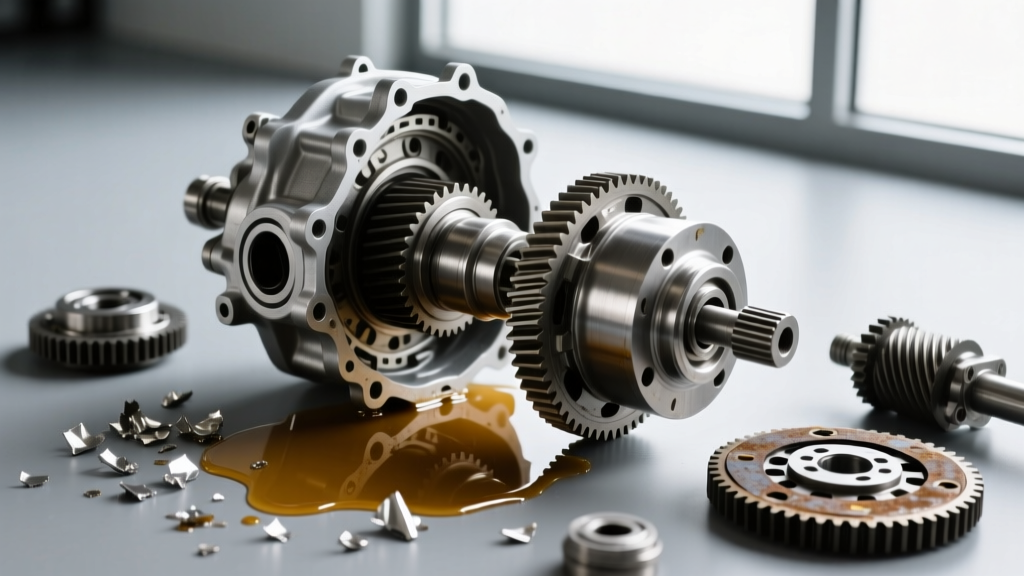
- Abnormal Wear: Brass-colored flakes indicate pinion or side bearing cage failure. Chunky, ferrous metal shards point to catastrophic gear tooth spalling and require immediate teardown.
2. The RTV vs. Gasket Debate
The factory service manual from Mopar dictates the use of High-Temp Black RTV silicone. While effective, RTV requires meticulous cleaning, cure time, and risks "squeeze-out" that can clog internal oil galleries. For modern 2026 servicing, we strongly recommend upgrading to a Lube Locker LL-11.5 reusable gasket. This gasket uses a steel core with a molded Viton O-ring, providing a superior seal without the mess or cure time of RTV, and allows for easier future diagnostic inspections.
3. Refilling and Torque Sequence
Clean the mating surfaces with a brass scraper and brake cleaner. Install your gasket or apply a continuous 3mm bead of RTV. Reinstall the cover and hand-thread the 13mm bolts. Using a calibrated torque wrench, tighten the bolts to 25 ft-lbs (34 Nm) in a crisscross star pattern. Next, locate the fill plug (typically a 3/8" square drive or 17mm hex on the front of the differential housing). Pump 75W-90 synthetic fluid into the housing until it reaches the absolute bottom lip of the fill hole. The exact 2015 Ram 2500 rear differential fluid capacity of 74 oz is a guideline; the physical fill hole is your ultimate level indicator.
Edge Cases: Breather Valves and Seal Failures
A frequently overlooked troubleshooting point for rear differential fluid leaks on the 2015 Ram 2500 is the axle breather valve. Located on the upper left axle tube, this one-way valve allows expanding air to escape as the differential heats up during towing.
If this valve becomes clogged with road grime or mud, the internal pressure of the axle will skyrocket. Since the fluid cannot escape through the steel housing, it will blow past the weakest points: the pinion seal or the inner axle shaft seals. If you are diagnosing a recurring pinion seal leak on a freshly serviced AAM 11.5" axle, always verify the breather valve is clear and functioning before replacing the seal. According to engineering documentation from American Axle & Manufacturing (AAM), maintaining clear ventilation pathways is critical to preserving seal integrity under severe thermal loads.
Conclusion
Maintaining the 2015 Ram 2500 rear differential is about more than just swapping out old oil; it is an exercise in precision diagnostics and metallurgical awareness. By adhering strictly to the 74 oz fluid capacity, utilizing 75W-90 GL-5 synthetic without unnecessary friction modifiers, and torquing the 14-bolt cover to 25 ft-lbs, you ensure the longevity of the AAM 11.5" axle. Whether you are diagnosing a coast-down whine or preemptively servicing a fleet truck, these exact specifications and troubleshooting frameworks will keep your drivetrain operating at peak efficiency well beyond the 150,000-mile mark.