The Core Purpose: Bridging the Gap Between Engine and Transmission
If you own a 2014 GMC Acadia equipped with the 3.6L V6 engine, your vehicle relies on the GM Hydra-Matic 6T70 or 6T75 six-speed automatic transmission. Sitting right between the engine's flexplate and the transmission input shaft is a vital, donut-shaped component: the torque converter. For beginners, understanding the 2014 GMC Acadia torque converter can seem daunting, but it essentially acts as a fluid coupling. This hydraulic bridge allows your engine to keep spinning and generating power even when your vehicle is completely stopped at a red light, preventing the engine from stalling out.
Unlike a manual transmission that uses a friction clutch to physically connect and disconnect the engine from the gearbox, your Acadia uses automatic transmission fluid (ATF) to transfer power. To truly understand how this system operates, we need to break down its internal anatomy and the specific engineering behind GM's 6T75 platform.
The Three Main Components (The 'Two Fans' Analogy)
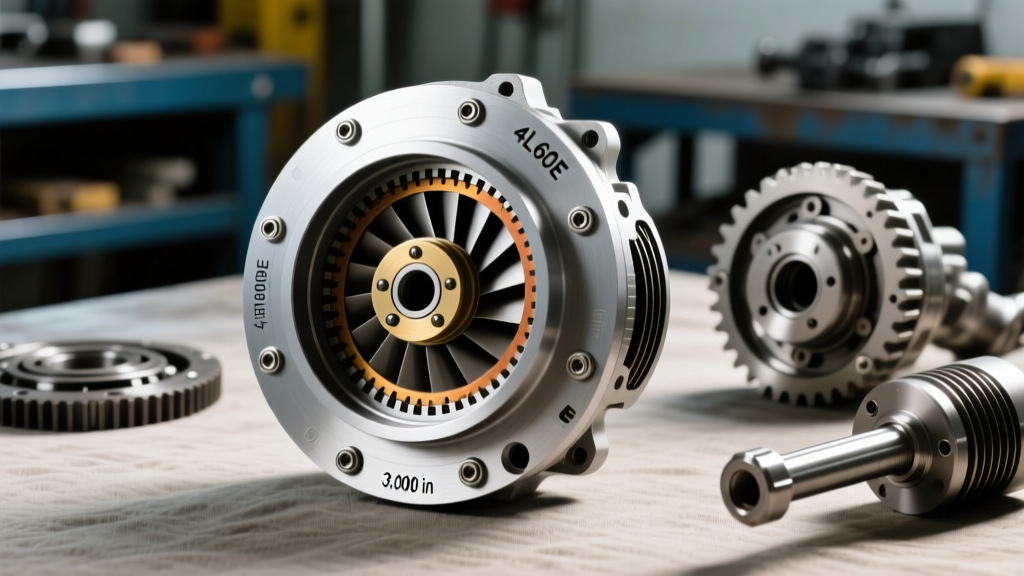
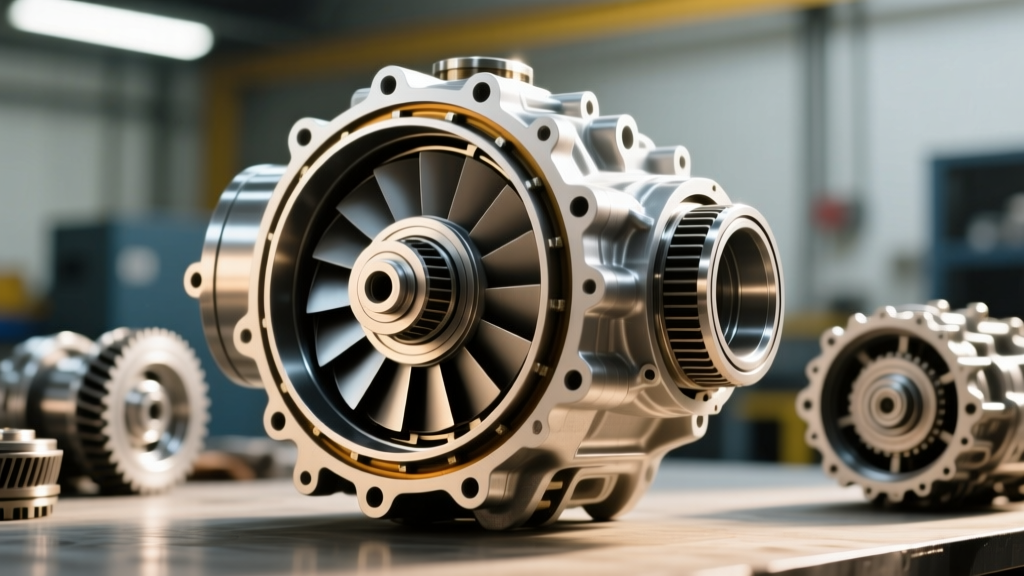
The easiest way to visualize a torque converter is to imagine two electric fans facing each other. If you turn on the first fan, the air it blows will push the blades of the second fan, causing it to spin. In your Acadia's torque converter, transmission fluid replaces the air, and three primary components manage this energy transfer:
1. The Impeller (Pump)
The impeller is bolted directly to the outer housing of the torque converter, which is bolted to the engine's flexplate. As the engine spins, the impeller spins at the exact same RPM. Its curved blades act like a centrifugal pump, throwing automatic transmission fluid outward and toward the turbine. In the 2014 Acadia, this component is responsible for creating the initial hydraulic pressure that drives the entire system.
2. The Turbine
The turbine sits directly across from the impeller and is connected to the transmission's input shaft. When the fluid thrown by the impeller strikes the curved blades of the turbine, it forces the turbine to spin. This is how engine power is transferred into the transmission and eventually to your Acadia's wheels. The fluid then exits the center of the turbine and is routed back to the impeller to repeat the cycle.
3. The Stator
Sitting right in the middle between the impeller and the turbine is the stator. This is the 'magic' component that gives the torque converter its name. The stator is mounted on a one-way clutch. Its job is to catch the fluid returning from the turbine and redirect it back into the impeller in a way that aids the impeller's rotation. This redirection is what multiplies the engine's torque, giving your heavy 3-row SUV the extra low-end grunt it needs to get moving from a dead stop.
The Three Phases of Torque Converter Operation
As you drive your 2014 GMC Acadia, the torque converter operates in three distinct phases based on your speed and throttle input:
- Stall Phase: When you are stopped with your foot on the brake and the engine idling, the impeller is spinning, but the turbine is held stationary by the brakes. The fluid is churning, but the one-way clutch allows the stator to freewheel. No torque multiplication is happening, and minimal heat is generated.
- Acceleration Phase: As you release the brake and press the throttle, the impeller spins much faster than the turbine. The stator locks up via its one-way clutch, redirecting fluid to multiply torque. In the 6T75 transmission, this torque multiplication ratio is typically around 2.0:1, effectively doubling the engine's low-end twisting force to move the Acadia's 4,600+ lb curb weight.
- Coupling Phase: Once you reach cruising speed (usually around 40-50 MPH), the turbine catches up and spins at nearly the same speed as the impeller. At this point, the fluid flow reverses its angle, causing the stator's one-way clutch to release. The stator freewheels, and the unit acts as a simple fluid coupling. However, fluid friction still results in a slight RPM loss (slip) between the engine and transmission, which hurts fuel economy.
- OEM GM Torque Converter: $600 - $850
- Aftermarket Remanufactured Unit: $250 - $450 (Brands like Powertrain Industries or MTC)
- Labor (6.5 to 8.5 Hours): $900 - $1,400 (at $130-$160/hr)
- Fluid and Seals: $80 - $120
- Total Estimated Cost: $1,250 - $2,300 depending on shop rates and parts choice.
The Torque Converter Clutch (TCC): Unlocking Highway Efficiency
To solve the fuel-wasting slip of the coupling phase, GM equipped the 2014 Acadia's torque converter with a Torque Converter Clutch (TCC), also known as a lockup clutch. This is a friction-lined piston located inside the converter. When the vehicle reaches a steady cruising speed, the transmission's valve body applies hydraulic pressure to the TCC, physically locking the turbine to the impeller housing.
According to General Motors engineering specifications, the 6T70/6T75 transmissions are designed to apply the TCC lockup as early as 2nd gear and maintain it through 6th gear under light throttle conditions. This creates a direct 1:1 mechanical connection between the engine and transmission, eliminating slip, reducing fluid temperatures, and maximizing highway fuel efficiency. Modern TCC systems also use 'controlled slip' during lockup to absorb engine vibrations, ensuring the 3.6L V6 remains smooth and quiet in the cabin.
2014 GMC Acadia Drivetrain & Torque Converter Specifications
| Specification | 2014 GMC Acadia (6T70/6T75) |
|---|---|
| Engine | 3.6L V6 (LFX) |
| Transmission | GM Hydra-Matic 6-Speed Auto (6T70/6T75) |
| TC Diameter | ~258mm / 262mm (Application Dependent) |
| Stall Speed | ~1,800 - 2,000 RPM |
| Torque Multiplication Ratio | ~2.0:1 |
| Fluid Type | ACDelco DEXRON VI |
| Fluid Capacity (Service) | ~6.0 Quarts (5.7 Liters) |
Recognizing Torque Converter Symptoms in the 6T75 Transmission
Because the torque converter operates under intense hydraulic pressure and heat, it is susceptible to wear. Recognizing the symptoms early can save you from a catastrophic transmission failure. Data from the National Highway Traffic Safety Administration (NHTSA) and independent repair networks highlight several common failure points for this specific GM platform:
1. TCC Shudder (The 'Rumble Strip' Effect)
This is the most common symptom in the 6T75. As the friction material on the TCC piston wears down or the DEXRON VI fluid loses its friction-modifying additives, the clutch cannot maintain a smooth lockup. You will feel a rhythmic vibration or shudder through the chassis, usually between 40 and 60 MPH under light acceleration. It feels exactly like driving over highway rumble strips.
2. Transmission Overheating
If the stator's one-way clutch fails and seizes in the locked position, it will continuously multiply torque even at highway speeds. This creates massive amounts of hydraulic friction, rapidly overheating the transmission fluid and burning out the internal clutch packs of the 6T75.
3. Check Engine Light (OBD-II Codes)
A failing TCC solenoid or excessive slip will trigger the ECU. Common codes include P0741 (Torque Converter Clutch Circuit Performance or Stuck Off) and P0742 (Torque Converter Clutch Circuit Stuck On). If you see these codes, immediate diagnosis is required to prevent the transmission from entering 'limp mode'.
Replacement Costs, Fluids, and Torque Specs
If your 2014 GMC Acadia torque converter has failed, replacement requires removing the entire transmission assembly. This is a labor-intensive job that requires specialized tools and precise torque specifications.
Pricing Breakdown (2026 Estimates)
Critical Installation Specs
For DIYers or those verifying their mechanic's work, proper installation is paramount. The torque converter must be fully seated onto the transmission input shaft and oil pump gear before mating it to the engine. You must measure the distance from the bellhousing mounting pad to the torque converter mounting pads; it should typically be at least 3/4 to 1 inch recessed. If it is not fully seated, tightening the bellhousing bolts will crush the transmission oil pump, resulting in immediate failure upon startup.
When securing the torque converter to the engine flexplate, the M10 flexplate-to-TC bolts must be torqued to 35-45 Nm (26-33 lb-ft) in a star pattern. Always use new OEM bolts and apply a medium-strength thread locker (like Loctite 243) to prevent them from backing out due to harmonic vibrations from the 3.6L V6. Finally, refill the system with exactly 6.0 quarts of ACDelco DEXRON VI fluid, check the level at operating temperature (180°F - 200°F) with the engine idling in Park, and perform the TCC adaptive learning reset via an OBD-II bidirectional scanner.