The Hidden Power Leak: Diagnosing Stock Torque Converter Failure
In the pursuit of horsepower, enthusiasts and professional builders often overlook the critical link between the engine and the transmission. If you are pushing 500+ horsepower through a GM 6L80E or a heavily modified 4L60E, a failing factory torque converter will not only rob you of elapsed time (ET) at the track but can catastrophically destroy your transmission's internal clutches. Recognizing bad torque converter symptoms early is the first step toward a reliable, high-output drivetrain. For builders and tuners operating in 2026, upgrading to a high-performance Transtar torque converter is the definitive solution to eliminate slip, manage extreme heat, and handle aggressive lockup tuning profiles.
1. TCC Shudder and Lockup Slip (The 6L80E Nightmare)
The most common symptom of a failing torque converter in modern overdrive transmissions is Torque Converter Clutch (TCC) shudder. In a 6L80E or 6R80, this manifests as a rhythmic vibration between 40 and 55 mph when the TCC is applying. To diagnose this accurately, you must move beyond 'butt-dyno' feelings and use a bidirectional scan tool. Monitor the 'TCC Slip RPM' PID. Under normal locked conditions, TCC slip should read between -10 and +20 RPM. If you see slip spikes exceeding 75 RPM while the TCC duty cycle is commanded above 80%, your converter's internal friction material is glazed or degraded. This slip generates massive heat, rapidly breaking down synthetic ATF and varnishing the valve body.
2. Overheating and Fluid Degradation
A stock converter relies on a stamped steel cover and single-plane friction disc. When subjected to the increased line pressure and aggressive shift schedules of a performance tune, the cover flexes. This flexing prevents the TCC piston from applying uniform pressure, resulting in micro-slippage. The byproduct is extreme heat. If your transmission fluid temperature (TFT) routinely exceeds 220°F (104°C) during highway cruising or track staging, the converter is failing to transfer mechanical energy efficiently. Dropping the pan will often reveal a glitter-like suspension of metallic and friction particulates—a death sentence for your transmission's solenoid pack and mechatronic unit if left unaddressed.
Why Upgrade? The Transtar Torque Converter Advantage
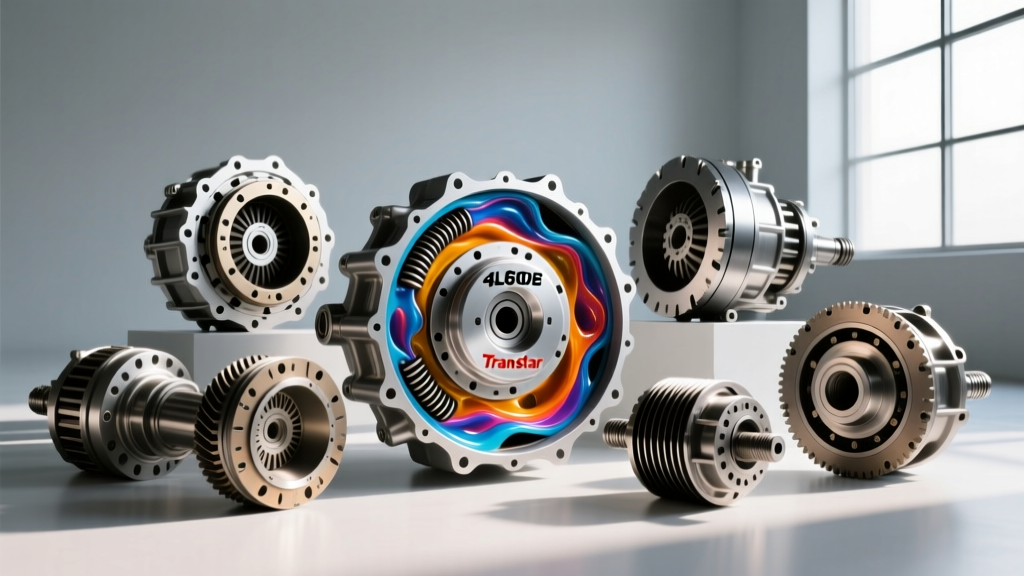
When bad torque converter symptoms dictate a replacement, simply dropping in another OEM-style unit is a wasted opportunity for a performance build. Sourcing a Transtar torque converter from their performance catalog provides access to units built specifically for high-horsepower applications. Transtar's network supplies converters featuring billet CNC-machined covers, which eliminate the flex inherent in stamped steel. This rigidity ensures that the TCC piston applies clamping force evenly across the friction surface, even when line pressure is pushed to 250+ PSI via aftermarket valve body upgrades.
Furthermore, high-end Transtar-supplied converters utilize furnace-brazed turbine fins. This prevents the fins from stripping or deforming under the violent torque multiplication required during a 3500+ RPM flash stall launch. For vehicles utilizing E85 or forced induction, where low-end torque is instantaneous and violent, a billet stator and heavy-duty sprag are mandatory to prevent catastrophic internal implosion.
Specification Comparison: OEM vs. Performance Billet
| Feature | OEM 6L80E Converter | Transtar Billet Performance Upgrade |
|---|---|---|
| Cover Material | Stamped Steel (Prone to flex) | Billet CNC Machined Steel |
| TCC Friction Design | Single Woven Paper Disc | Dual-Plate Kevlar/Carbon Matrix |
| Stall Speed Range | 1600 - 1800 RPM | 2800 - 3600 RPM (Custom Matched) |
| Hub & Pilot Design | Splined (Wears pump seals) | Hardened Billet Steel (Precision ground) |
| Max Torque Capacity | ~450 lb-ft | 850 - 1,200+ lb-ft |
Selecting the Right Stall Speed for Your Build
A major symptom of a mismatched torque converter is sluggish off-the-line acceleration combined with excessive heat generation at cruising speeds. Choosing the correct stall speed is not about picking the highest number available; it is about matching the converter's flash stall to your engine's torque curve and camshaft profile. According to drivetrain engineering principles documented by Transmission Digest, the ideal flash stall should occur 500 to 800 RPM below the engine's peak torque RPM.
Street/Strip vs. Dedicated Track Applications
For a street/strip 4L60E or 6L80E build running a mild camshaft (e.g., 224/230 duration at .050), a 2800-3000 RPM stall converter is the sweet spot. It allows the engine to bypass the lazy, low-RPM torque deficits of a high-overlap cam while remaining docile enough for highway driving. However, if you are running a dedicated track car with a solid roller camshaft making peak torque at 5800 RPM, you will need a 4000+ RPM stall. In these extreme cases, the multi-plate TCC clutches found in premium Transtar performance units are vital, as they can handle the aggressive 'lock on 2-3 shift' tuning strategies utilized in modern HP Tuners VCM Editor software without burning up the friction material.
Installation Essentials: Torque Specs and Clearances
Even the best Transtar torque converter will fail prematurely if installed incorrectly. The most common cause of premature pump and converter hub failure is improper preparation and clearance checking. When swapping out a failed unit, adhere strictly to the following installation protocols:
- Hub Preparation: Never use standard sandpaper on the converter hub where it rides in the transmission front seal. Use 400-grit emery cloth to polish the surface, removing any microscopic grooves left by the old seal. A damaged hub will destroy a new seal in under 500 miles, leading to catastrophic fluid loss.
- Pilot Clearance: Measure the gap between the torque converter pilot and the engine crankshaft bore. You must have a minimum of 1/8-inch to 3/16-inch clearance. If the converter is 'bottomed out' in the crank, it will push forward against the transmission pump gears upon tightening, shattering the pump housing.
- Flexplate Torque: For GM LS/LT applications utilizing a 6L80E, the flexplate to crankshaft bolts must be torqued to 65 lb-ft using a high-strength threadlocker (e.g., Loctite 262). The converter to flexplate nuts/bolts should be torqued to 35-40 lb-ft.
- Fluid Fill Procedure: A dry 6L80E transmission and new converter will require up to 11.5 quarts of fluid. Always pre-fill the torque converter with 2 to 3 quarts of the specified ATF (such as Mobil 1 Synthetic LV ATF HP) before installation to prevent a dry-start condition that will instantly score the TCC apply surface and stator bearings.
Cost Breakdown: Is a Performance Upgrade Worth It?
Addressing bad torque converter symptoms with a stock replacement might cost between $350 and $500 for the part, but it leaves you vulnerable to the same failure points once you apply a performance tune. A high-quality Transtar torque converter built to performance specifications typically ranges from $850 to $1,400, depending on the specific application (e.g., 4L80E vs. 6L80E) and custom stall requirements. When you factor in the cost of a transmission rebuild—which easily exceeds $3,500 in labor and hard parts if a stock converter grenades and sends shrapnel through the valve body and clutch packs—the $1,000 investment in a billet, multi-clutch converter is the cheapest insurance policy a builder can purchase.
For further technical specifications on TCC friction materials and valve body pressure management, builders should consult the engineering resources available through Sonnax and the extensive aftermarket catalog provided by Transtar Industries. By diagnosing symptoms early and upgrading to a converter built for your specific horsepower goals, you ensure that every ounce of torque makes it safely to the pavement.