The Great Actuator Identity Crisis: Hydraulic vs. Electric
When owners and independent mechanics search for a 2014 Ford Focus clutch actuator, they are almost immediately colliding with one of the most infamous transmission debates of the decade. It is vital to establish a technical baseline before turning a single wrench: the 2014 Ford Focus was sold with two vastly different transmission architectures, and the term 'actuator' means something entirely different for each.
If your 2014 Focus is equipped with the notorious DPS6 PowerShift automatic transmission, the 'clutch actuators' are actually dual electric stepper motors that physically engage the dry clutches. These electric actuators were the subject of massive lawsuits and extended warranty programs. However, if you are reading this preventive maintenance guide, we are focusing strictly on the manual transmission models (equipped with the IB5 or MTX-75 gearboxes). In a manual Focus, the clutch actuator is a purely hydraulic component known as the Concentric Slave Cylinder (CSC), working in tandem with a firewall-mounted master cylinder.
Misdiagnosing hydraulic clutch symptoms as mechanical clutch wear is a costly mistake in 2026. A failing hydraulic actuator will mimic a worn friction disc, leading to unnecessary transmission pulls. This guide details the exact diagnostic protocols, fluid specifications, and preventive maintenance routines required to keep the manual Focus hydraulic clutch system operating flawlessly.
Anatomy of the Focus Hydraulic Clutch System
The manual 2014 Ford Focus utilizes a closed-loop hydraulic system consisting of three primary components:
- The Master Cylinder: Mounted on the firewall, it translates pedal mechanical force into hydraulic pressure.
- The Hydraulic Line: A combination of rigid steel lines and flexible polymer hoses featuring quick-connect fittings that route fluid from the engine bay to the transmission bellhousing.
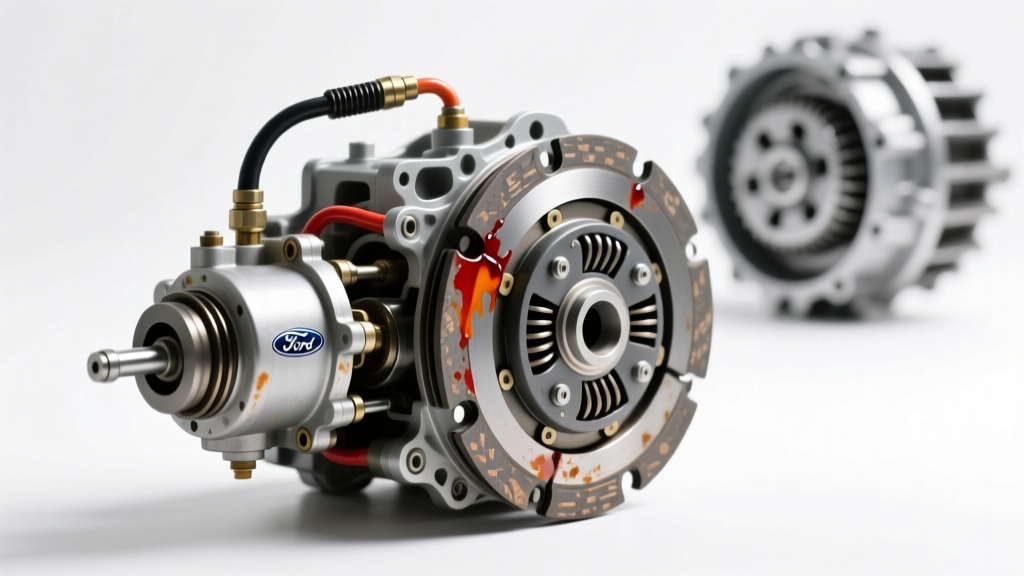
- The Concentric Slave Cylinder (CSC): The actual 'actuator' located inside the bellhousing. It wraps around the transmission input shaft and combines the functions of a traditional slave cylinder and a release bearing into a single unit.
Because the CSC is mounted internally, any fluid leak from the actuator seal will drip directly onto the clutch friction material or exit through the bottom bellhousing inspection cover. This design makes early preventive diagnosis absolutely critical.
Core Symptoms of a Failing Hydraulic Actuator
Before condemning the clutch disc and pressure plate, evaluate the hydraulic system for these specific failure modes:
1. Gear Crunching and Synchro Resistance
If you experience grinding when shifting into 1st or Reverse from a stop, the hydraulic actuator is likely failing to provide full clutch disengagement. The MTX-75 transmission is highly sensitive to clutch drag. Even a 5% loss of hydraulic volume due to a bypassing master cylinder seal will prevent the clutch disc from fully separating from the flywheel, forcing the synchronizers to absorb the rotational energy.
2. The 'Spongy' Pedal with False Engagement Points
A pedal that feels mushy or returns slowly to the up-position indicates air ingress or hygroscopic fluid degradation. Unlike brake systems, the clutch hydraulic line lacks a massive fluid reservoir, meaning even a microscopic leak at the quick-connect fitting will introduce air into the CSC.
3. Bellhousing Weeping
The presence of DOT 4 fluid on the lower transmission-to-engine block mating surface is the definitive death knell for the internal CSC actuator. Once the internal PTFE seals weep, the CSC must be replaced.
Diagnostic Measurement Matrix
Use the following specifications to benchmark your hydraulic system's health. Keep a digital caliper and a brake fluid moisture tester on hand.
| Diagnostic Metric | Specification / Threshold | Failure Symptom / Action Required |
|---|---|---|
| Pedal Freeplay | 0.25 - 0.50 in (6 - 12 mm) | Excessive freeplay causes incomplete disengagement and CSC bearing wear. |
| Master Cyl Pushrod Travel | 1.10 - 1.18 in (28 - 30 mm) | Reduced travel indicates internal seal bypass; replace master cylinder. |
| Fluid Moisture Content | Less than 2.0% | Moisture causes seal swelling and internal corrosion; flush immediately. |
| System Bleed Pressure | 15 - 20 PSI (Maximum) | Exceeding 20 PSI will rupture the plastic quick-connect line fittings. |
Step-by-Step Hydraulic Diagnosis and Pressure Testing
To accurately diagnose the hydraulic clutch actuator without removing the transmission, follow this pressure-testing protocol:
- Visual Line Inspection: Trace the hydraulic line from the master cylinder to the bellhousing. Look for chafing near the subframe mounts and check the quick-connect retainer clips for brittleness.
- Master Cylinder Bypass Test: With the engine off, pump the clutch pedal 10 times rapidly. On the 11th press, hold steady pressure. If the pedal slowly sinks toward the floor over 15 seconds, the internal master cylinder cup seals are bypassing fluid back into the reservoir.
- Clutch Pedal Position (CPP) Switch Correlation: Use an OBD2 scanner capable of reading Ford-specific PID data. Monitor the CPP switch state while a helper depresses the pedal. If the hydraulic system is healthy, the switch should trigger exactly at the point where the CSC begins to move the release fingers. A disparity indicates hydraulic slack.
- Bellhousing Leak Verification: Remove the lower rubber inspection plug on the MTX-75/IB5 bellhousing. Insert a borescope. If you see amber, oily residue on the clutch fork or input shaft seal area, the CSC actuator has failed.
Preventive Maintenance: Fluid Science and Flushing
The most neglected aspect of the 2014 Ford Focus manual transmission is the clutch hydraulic fluid. Ford specifies DOT 4 Low Viscosity (LV) fluid, specifically meeting ISO 4925 Class 6 standards (Motorcraft PM-1054 or equivalent). Standard DOT 3 or high-viscosity DOT 4 fluids will cause sluggish actuator response in cold climates and can degrade the specialized seals inside the Focus CSC.
DOT 4 LV fluid is highly hygroscopic. By year three, an unflushed system will absorb enough ambient moisture to drop the fluid's boiling point and promote internal aluminum oxidation within the master cylinder bore. To prevent actuator failure, the hydraulic clutch circuit must be flushed every 30,000 miles or 24 months.
Expert Warning: Never use a manual vacuum bleeder on the Focus clutch system. The vacuum can pull the internal CSC seals inward, causing them to roll and permanently leak. Always use a low-pressure motive bleeder (15 PSI) attached to the master cylinder reservoir to push fluid down through the actuator.
Replacement Protocol: OEM Parts, Costs, and Torque Specs
If your diagnosis confirms a failed CSC actuator or a bypassing master cylinder, rely on OEM or premium European clutch manufacturers. Avoid unbranded white-box parts, as the CSC bearing tolerances are critical for the MTX-75 input shaft.
Recommended Part Numbers (2026 Pricing)
- Concentric Slave Cylinder (CSC): LuK LSC113 or Sachs SH6115 (Approx. $95 - $130 via RockAuto)
- Master Cylinder Assembly: Motorcraft CM-138131 (Approx. $110 - $140)
- Hydraulic Fluid: Motorcraft PM-1054 DOT 4 LV (Approx. $12 per liter)
Labor and Torque Specifications
Replacing the CSC requires dropping the front subframe and removing the transmission. Book time is generally 6.2 to 6.8 hours. At an average independent shop rate of $135/hr in 2026, expect labor costs between $830 and $920, bringing the total repair to roughly $1,000.
When reinstalling the MTX-75 or IB5 transmission, precise torque sequencing is required to prevent bellhousing cracking and input shaft misalignment:
- Upper Bellhousing Bolts (M12): 59 lb-ft (80 Nm)
- Lower Bellhousing Bolts (M10): 35 lb-ft (47.5 Nm)
- Master Cylinder to Firewall Nuts: 13 lb-ft (17 Nm)
- Flywheel to Crankshaft Bolts: 74 lb-ft (100 Nm) plus an additional 60-degree angle turn.
For ongoing technical service bulletins and warranty history regarding Ford manual and automatic transmission components, always consult the NHTSA database and Ford Owner Support portals before authorizing major drivetrain repairs.
Summary Checklist for Longevity
Treating the hydraulic clutch actuator as a wearable maintenance item rather than a 'replace-when-broken' component will save your MTX-75 synchronizers and your wallet. Stick to DOT 4 LV fluid, respect the 15 PSI bleeding limit, and monitor your pedal freeplay monthly. By understanding the distinct hydraulic architecture of the manual Focus, you can confidently diagnose actuator symptoms and keep your vehicle shifting precisely for years to come.