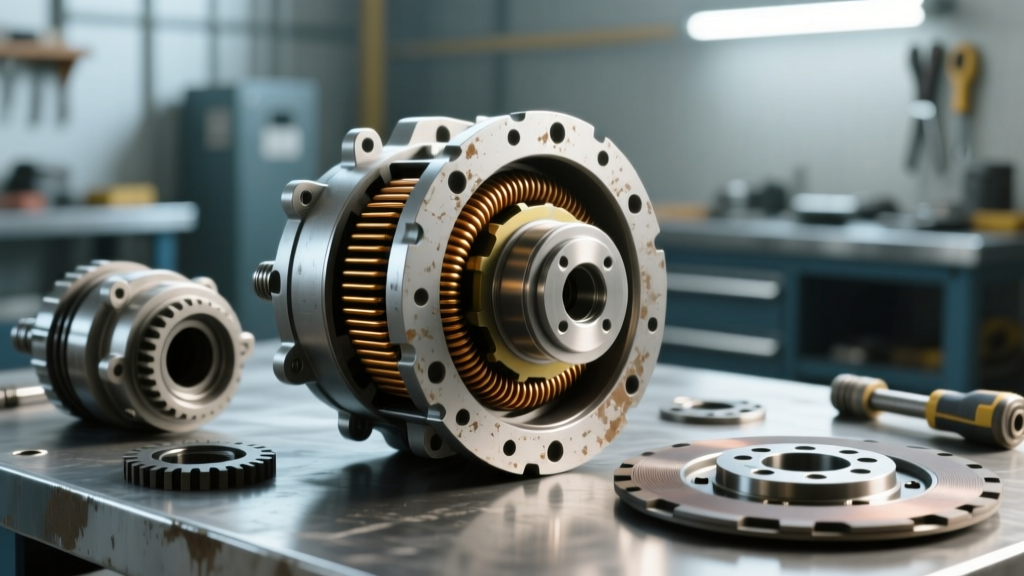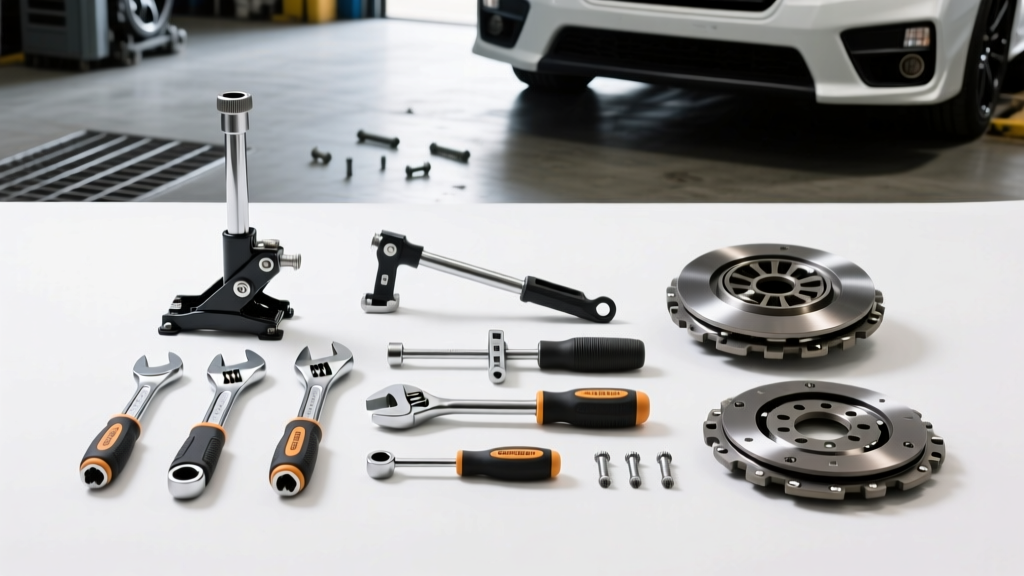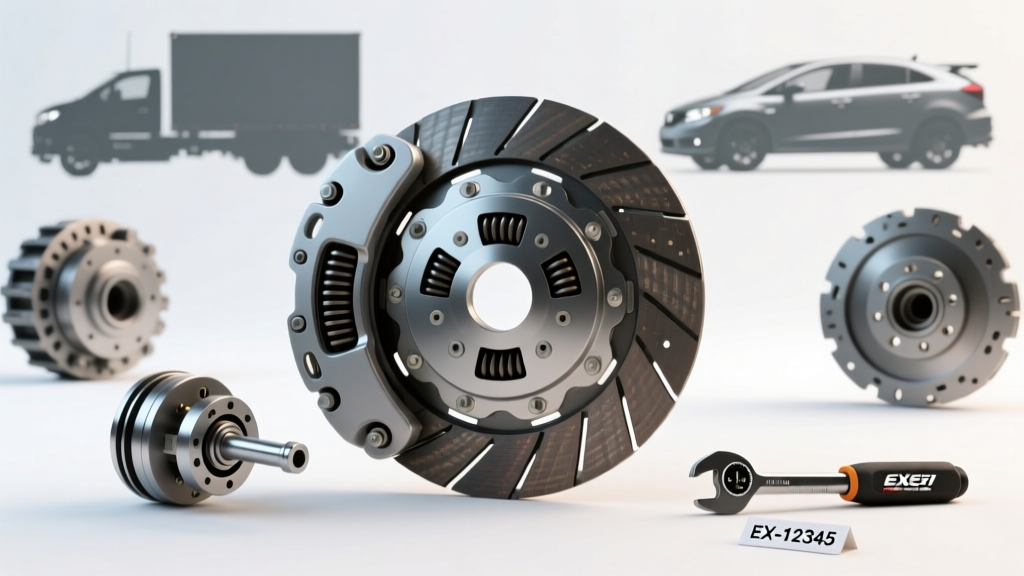
When tackling a 2013 Honda Civic Si clutch replacement, enthusiasts and professional mechanics alike are engaging with one of the most refined transverse front-wheel-drive (FWD) manual platforms of the modern era. However, to truly understand the engineering nuances of the 9th-generation Civic Si, it is highly educational to contrast its clutch service procedures with those of longitudinal rear-wheel-drive (RWD) and four-wheel-drive (4WD) trucks and SUVs. Whether you are swapping the clutch on a K24Z7-powered coupe or wrestling with a transfer case on a mid-size pickup, understanding the architectural differences in drivetrain service is critical for 2026 repair standards.
The Transverse vs. Longitudinal Divide
The 2013 Honda Civic Si utilizes a transverse engine layout, meaning the K24Z7 engine and its 6-speed manual transmission are mounted side-by-side in the engine bay. This compact packaging requires the entire drivetrain to be supported by a front subframe. During a 2013 Honda Civic Si clutch replacement, the mechanic must unbolt the passenger-side engine mount, the transmission mount, and lower the rear subframe to slide the transmission out from the driver's side axle.
Conversely, trucks and SUVs—such as the Toyota Tacoma (RA61F transmission) or the Jeep Wrangler (NSG370 transmission)—utilize a longitudinal layout. The engine sits front-to-back, and the transmission bolts directly to the rear of the block, feeding into a transfer case or a long driveshaft. Replacing a clutch in these vehicles requires working underneath the chassis, dropping the driveshafts, unbolting the transmission crossmember, and often supporting the massive weight of a cast-iron transfer case using a specialized transmission jack.
2013 Civic Si Clutch Kit Selection & Part Numbers
For the 9th-gen Si, selecting the correct friction material is paramount. The K24Z7 produces 201 horsepower and 170 lb-ft of torque, which is manageable for high-quality organic discs but requires upgraded hardware for forced-induction builds.
- OEM Replacement: Exedy HHC03 (OEM equivalent). Features a single-mass flywheel design, avoiding the dual-mass flywheel (DMF) failure points seen in some European compacts.
- Stage 1 Street/Track: ACT HC2-HDSS (Heavy Duty Pressure Plate, Sprung Cerametallic Disc). Ideal for lightly modified K24s running aggressive VTEC crossover tunes.
- Hydraulic Throw-out Bearing: The Civic Si uses a Concentric Slave Cylinder (CSC). When performing the replacement, it is mandatory to replace the CSC (Honda PN 46920-TR0-A01) to prevent premature hydraulic failure.
According to Exedy USA, ensuring the flywheel surface is machined or replaced to OEM tolerances (minimum thickness 0.902 inches) is vital for proper clamping force.
How Truck and SUV Clutch Replacements Differ
When shifting focus to trucks and SUVs, the sheer mass and torque requirements change the parts landscape entirely. A 2013 Toyota Tacoma 4.0L V6 or a Chevrolet Silverado 1500 with the 5.3L V8 requires heavy-duty clutch kits designed for towing and off-road shock loads.
Truck & SUV Component Realities
Unlike the Civic Si's lightweight aluminum flywheel, trucks often utilize massive dual-mass flywheels (DMF) or heavy single-mass nodular iron units to absorb driveline harmonics. For instance, the LUK RepSet for a Silverado includes a DMF that can weigh upwards of 45 pounds, compared to the Civic Si's 18-pound single-mass unit. Furthermore, trucks frequently utilize external slave cylinders mounted on the bellhousing, which are vastly easier to service than the internal CSC found inside the Civic Si's bellhousing.
Comparative Drivetrain Specifications
| Specification | 2013 Honda Civic Si | 2013 Toyota Tacoma 4.0L | 2013 Jeep Wrangler 3.6L |
|---|---|---|---|
| Layout | Transverse FWD | Longitudinal RWD/4WD | Longitudinal 4WD |
| Transmission | 6-Speed Manual | RA61F 6-Speed | NSG370 6-Speed |
| OEM Clutch Kit | Exedy HHC03 | LUK 624308309 | LUK 624323400 |
| Flywheel Type | Single-Mass (Aluminum) | Single-Mass (Iron) | Dual-Mass (DMF) |
| Slave Cylinder | Internal (CSC) | External | Internal (CSC) |
| Fluid Capacity | 1.6 Qt (Honda MTF) | 2.0 Qt (75W-90 GL-4) | 2.4 Qt (Mopar NSG-370) |
Procedural Differences: Subframe Drops vs. Crossmember Removal
The physical extraction of the transmission highlights the starkest contrast between these vehicle classes. For the 2013 Honda Civic Si clutch replacement, the vehicle is lifted, the front wheels are removed, and the axle nuts are broken loose (torqued to a massive 134 lb-ft from the factory). The lower ball joints are popped, allowing the front hub assemblies to swing outward so the CV axles can be pulled from the transmission. The rear subframe is then unbolted and lowered using a floor jack, providing just enough clearance to slide the 6-speed transmission out toward the passenger side.
In contrast, replacing the clutch on a 4WD SUV like the Jeep Wrangler requires crawling underneath to disconnect the front and rear driveshafts from the transfer case. The transfer case and transmission are often unbolted from each other, or dropped as a single massive unit. The crossmember must be unbolted from the frame rails, and the shifter linkage or cables must be detached from the cabin side. The physical strain and equipment requirements (a high-lift transmission jack and an extra set of hands) make truck and SUV clutch jobs significantly more labor-intensive than FWD compacts.
Hydraulic Systems and Bleeding Protocols
Both the Civic Si and modern trucks utilize hydraulic clutch actuation, but the bleeding procedures differ wildly. The Civic Si's internal Concentric Slave Cylinder (CSC) is notorious for trapping air. Mechanics in 2026 frequently rely on reverse-bleeding tools or vacuum bleeders attached to the master cylinder reservoir to ensure the CSC is fully extended before the transmission is even installed. If air is trapped in the CSC, the clutch will not fully disengage, leading to gear grind and premature wear.
Trucks with external slave cylinders, like the Tacoma or older Silverados, are much more forgiving. The bleeder valve is located on the outside of the bellhousing, making it accessible without removing the transmission. A simple two-person manual bleed or a standard pressure bleeder is usually sufficient to achieve a firm pedal feel.
Critical Torque Specifications
Adhering to factory torque specs is non-negotiable. Below are the critical fastener torques for the 2013 Civic Si:
- Flywheel to Crankshaft: 76 lb-ft (103 Nm). Always use new Honda OEM stretch bolts (PN 90022-PAA-A01).
- Pressure Plate to Flywheel: 19 lb-ft (26 Nm) in a star pattern.
- Bellhousing to Engine Block: 47 lb-ft (64 Nm).
- Front Axle Nuts: 134 lb-ft (181 Nm). Never reuse the staked axle nut.
For trucks, flywheel torque specs are often higher and may involve a torque-to-yield angle. For example, the Jeep Wrangler 3.6L flywheel bolts require 25 lb-ft followed by an additional 90-degree turn.
2026 Cost Analysis: FWD Sport Compact vs. 4WD Trucks
Labor rates and parts pricing have shifted significantly by 2026. According to data aggregated from RockAuto and regional shop estimators, the financial footprint of these jobs varies based on complexity.
- 2013 Civic Si: Parts (Exedy Kit + CSC + Fluid) range from $450 to $750. Labor typically takes 4.5 to 6 hours. Total shop cost: $1,100 - $1,600.
- Mid-Size Truck (Tacoma): Parts (LUK Kit + Flywheel) range from $600 to $900. Labor is 6 to 8 hours due to 4WD components. Total shop cost: $1,500 - $2,200.
- Heavy-Duty SUV (Wrangler/Silverado): Parts (DMF + HD Kit) can exceed $1,200. Labor often pushes 8 to 10 hours. Total shop cost: $2,000 - $3,000+.
Final Thoughts for the Drivetrain Specialist
Mastering the 2013 Honda Civic Si clutch replacement provides an excellent foundation in FWD transverse architecture, hydraulic CSC management, and precision torque application. However, expanding your expertise to encompass the longitudinal, heavy-duty realities of trucks and SUVs ensures you are prepared for the full spectrum of manual transmission service. Whether you are aligning a lightweight K-series input shaft or supporting a 150-pound truck transmission and transfer case assembly, respecting the unique engineering of each platform is the hallmark of a true drivetrain specialist.
For more community-driven troubleshooting and torque verification, enthusiast hubs like the 9th Gen Civic Forum remain invaluable resources for documenting edge cases and aftermarket clutch compatibility.