The Semantic Trap: Drivetrain Hydraulics vs. HVAC Electrics
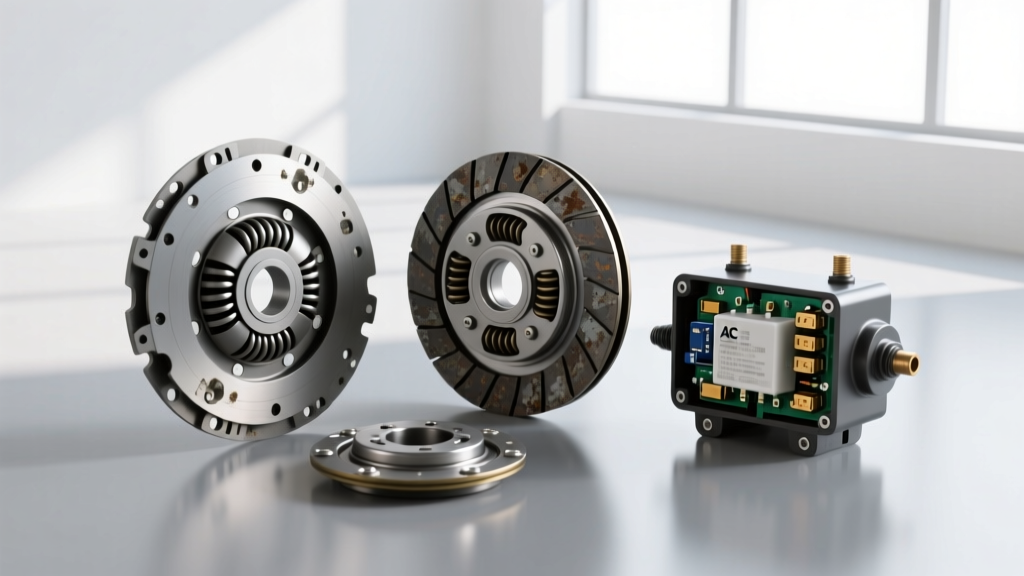
Walk into any automotive service center in 2026, and you will inevitably hear a customer complain that their 'clutch is clicking and not engaging.' For the uninitiated DIYer, the term 'clutch' spans two entirely different vehicle systems: the manual transmission's hydraulic drivetrain clutch and the air conditioning compressor's electromagnetic clutch. When an A/C system fails to blow cold air and a rapid ticking noise emanates from the engine bay, novice mechanics frequently search for ac clutch relay symptoms, assuming an electrical fault in the HVAC system is somehow tied to their manual transmission's engagement issues.
This diagnostic confusion can lead to hundreds of dollars in misdirected parts purchases. A failing A/C clutch relay (such as the ubiquitous Standard Motor Products RY-116T) will indeed cause the compressor to rapidly cycle or fail to engage, but it has zero mechanical connection to your left foot. Conversely, true clutch pedal problems—ranging from soft and spongy to rock-hard or violently vibrating—point directly to hydraulic master/slave cylinder failures, dual-mass flywheel (DMF) degradation, or pushrod misadjustments. In this model-specific repair guide, we will dissect the exact failure modes of manual clutch pedals across three notorious platforms, while teaching you how to definitively rule out HVAC electrical gremlins.
Model-Specific Clutch Pedal Problems: A Deep Dive
To properly diagnose clutch pedal anomalies, we must look at the specific engineering quirks of modern manual transmissions. The following three vehicles represent the most common clutch pedal complaints seen in independent shops today.
Subaru WRX (2015-2021 VA Chassis): The Spongy Pedal Phenomenon
The 6-speed manual transmission paired with the FA20DIT engine is legendary, but its hydraulic release system is notorious for developing a soft, spongy clutch pedal that fails to fully disengage the clutch during aggressive 2-3 shifts. This is rarely a master cylinder failure; instead, it is a slave cylinder cavitation issue.
- The Failure Mode: The OEM slave cylinder's bleeder valve is positioned in a way that traps microscopic air bubbles in the long hydraulic line. Over time, heat soak from the nearby exhaust cross-pipe degrades the DOT 4 fluid, leading to vapor lock and a pedal that sinks to the floor.
- The Fix: Replace the slave cylinder with the updated OEM part (Subaru #30521AA140) or an aftermarket Exedy unit.
- Torque Spec: Slave cylinder mounting bolts must be torqued to exactly 18 ft-lbs (24 Nm). Overtorquing will crack the cast aluminum bellhousing boss.
- Bleeding Protocol: A standard manual pedal-pump bleed will fail here. You must use a pneumatic pressure bleeder set to 15 PSI to force fluid through the line without introducing cavitation.
Honda Civic Si (2017-2024): The Brick-Wall Hard Pedal
Owners of the 10th and 11th generation Civic Si (L15B7 turbo) frequently report a clutch pedal that becomes progressively harder to press, eventually feeling like a brick wall and refusing to disengage the transmission for gear changes. While many blame the clutch pressure plate, the root cause is almost always at the pedal box.
- The Failure Mode: The plastic master cylinder pushrod bushing degrades, or the aftermarket 'clutch return spring' installed by a previous owner alters the pedal geometry. This eliminates the required free-play, causing the master cylinder to remain partially engaged, which blocks the fluid return port and builds immense hydraulic pressure.
- The Fix: Inspect the master cylinder pushrod (Honda #46920-TBG-A04). Ensure there is exactly 0.5mm to 1.0mm of free-play measured at the pedal pad before hydraulic resistance is felt.
- Pro Tip: Remove any aftermarket helper springs. The OEM hydraulic system is balanced; adding springs creates lateral wear on the master cylinder bore, leading to internal bypass leaks.
Ford Mustang GT (2018-2023 S550 Gen 2): Vibrating Pedal and DMF Failure
When a Mustang GT driver feels a rhythmic, buzzing vibration traveling directly up the clutch pedal shaft—specifically between 1,100 and 1,400 RPM under load—the issue is not hydraulic. It is mechanical resonance from a failing Dual Mass Flywheel (DMF) mating with the MT-82 manual transmission.
- The Failure Mode: The internal torsional dampening springs inside the DMF collapse. Without these springs absorbing the crankshaft's torsional spikes, the harmonic vibration travels through the release bearing, down the hydraulic line, and into the pedal.
- The Fix: Replace the flywheel assembly. We recommend the ZF Sachs DMF (Part #DMF080) paired with a fresh OEM clutch kit. Avoid single-mass flywheel (SMF) conversions if you drive the car daily, as they transfer gear rattle into the cabin.
- Torque Spec: The DMF-to-crankshaft bolts are torque-to-yield. The specification is 74 ft-lbs + 90 degrees. Always use new OEM Ford hardware.
Diagnostic Matrix: Pedal Feel vs. Electrical Clicks
To prevent misdiagnosis, use this matrix to separate true drivetrain clutch pedal problems from AC clutch relay symptoms.
| Symptom Reported | System Affected | Root Cause | Verification Test |
|---|---|---|---|
| Clicking under hood + Warm cabin air | HVAC (A/C Compressor) | Failing AC clutch relay or low refrigerant pressure switch tripping. | Jump the AC relay pins in the fuse box. If compressor engages, replace relay. |
| Spongy pedal + Grinding into reverse | Drivetrain (Hydraulics) | Air in slave cylinder or worn master cylinder internal seals. | Check fluid level in reservoir; perform 15 PSI pressure bleed. |
| Hard pedal + Inability to shift | Drivetrain (Pedal Box) | Blocked master cylinder return port due to zero free-play. | Measure pedal free-play; crack bleeder valve to release trapped pressure. |
| Pedal vibration at 1,200 RPM | Drivetrain (Flywheel) | Collapsed DMF internal springs or warped friction surface. | Inspect flywheel runout with a dial indicator (Max 0.5mm allowed). |
Advanced Hydraulic Bleeding: The 2026 Pressure Method
If you have confirmed your issue is a soft or spongy clutch pedal and not an HVAC electrical fault, proper bleeding is paramount. Modern manual transmissions feature long, convoluted hydraulic lines with integrated delay valves (designed to make the clutch engage smoothly for novice drivers). These delay valves trap air.
- Preparation: Extract all old DOT 3 or DOT 4 fluid from the reservoir. Refill with fresh, high-performance DOT 4 fluid (e.g., Motul RBF 600) to handle the extreme heat of modern engine bays.
- Pressure Application: Attach a Motive Products power bleeder to the reservoir. Pump to exactly 15 PSI. Do not exceed 20 PSI, or you risk blowing out the rubber diaphragm inside the slave cylinder.
- The 'Gravity-Plus' Trick: Open the slave cylinder bleeder screw. Allow fluid to flow for 3 minutes. Then, have an assistant slowly depress the clutch pedal while the pressure bleeder is still attached. This combination of positive pressure and mechanical volume displacement forces trapped air bubbles past the delay valve.
- Verification: Close the bleeder, remove the pressure tank, and pump the pedal 20 times. The pedal should return crisply with zero sponginess at the top of the stroke.
2026 Repair Cost & Sourcing Guide
Sourcing high-quality drivetrain components is critical. Avoid unbranded marketplace kits, as their slave cylinders often feature plastic pushrods that shatter under the 400+ lb clamping force of modern turbocharged engines. Below is a realistic cost breakdown for 2026.
- Subaru WRX Slave Cylinder Replacement: OEM Subaru part via RockAuto runs approximately $65. Labor is 1.5 hours ($180-$225). Total: $245 - $290.
- Honda Civic Si Master Cylinder & Pushrod: OEM Honda master cylinder is $95. Pedal box adjustment is 0.5 hours of labor. Total: $150 - $175.
- Ford Mustang GT DMF & Clutch Kit: A complete Exedy USA or Sachs DMF kit costs between $650 and $850. Labor for dropping the MT-82 transmission and rear subframe is intensive (7.5 hours). Total: $1,400 - $1,800.
Final Diagnostic Verdict
When a vehicle presents with engagement issues, always isolate the system. If the cabin is warm and the compressor clicks, chase the AC clutch relay symptoms through the HVAC fuse box and refrigerant pressure sensors. But if the anomaly is felt physically through the left foot—whether soft, hard, or vibrating—you are dealing with a drivetrain hydraulic or mechanical fault. By applying model-specific torque specs, utilizing pressure bleeding techniques, and understanding the unique failure modes of the WRX, Civic Si, and Mustang GT, you can confidently resolve clutch pedal problems on the first attempt.