The Great Debate: Internal Radiator Cooler vs. External Auxiliary
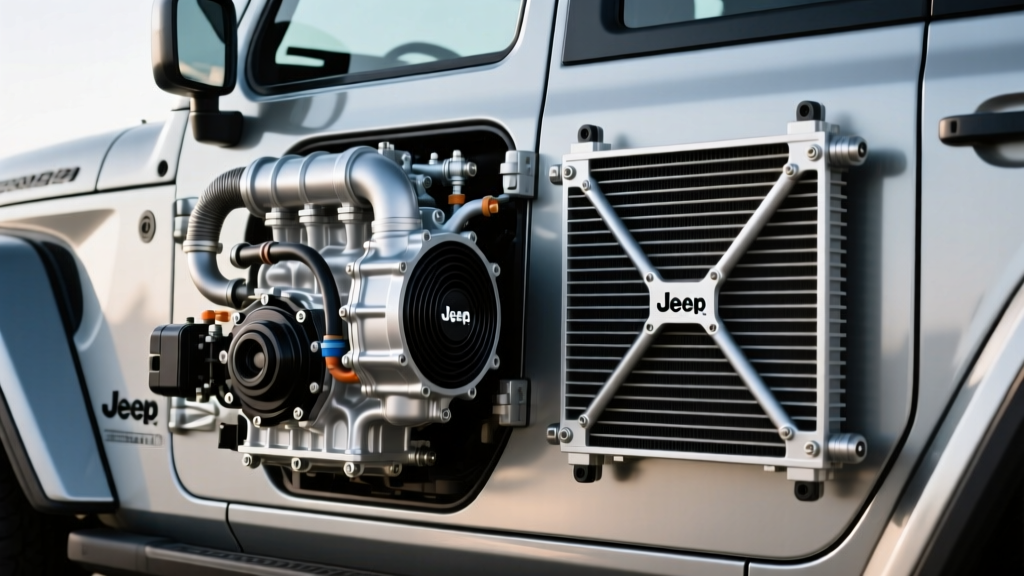
When modifying, towing, or repairing a 4x4, the debate between relying on an internal radiator cooler versus installing an external auxiliary unit is a common crossroads. For the Jeep Wrangler, this decision is heavily influenced by the generation, the specific transmission model, and the vehicle's primary use case. Whether you are crawling rocks in a 2015 JK with the 42RLE 4-speed or overlanding in a 2024 JL equipped with the ZF 8HP 8-speed (850RE), understanding the thermal dynamics of your rig is critical. This model-specific repair guide breaks down the jeep wrangler transmission cooler vs radiator cooler dilemma, providing exact part numbers, torque specifications, and routing procedures to ensure your drivetrain survives extreme environments.
Understanding the Wrangler's Factory Cooling Architecture
To make an informed repair or upgrade decision, you must first understand how Chrysler engineered the factory cooling circuits across the Wrangler's two most prominent modern generations.
The JK Generation (2007-2018): 42RLE and W5A580
The JK Wrangler routes hot Automatic Transmission Fluid (ATF) from the transmission directly to a tube-and-fin heat exchanger located inside the bottom tank of the engine radiator. The goal is twofold: to bring the ATF+4 fluid up to operating temperature quickly during cold starts, and to shed heat during normal highway driving. However, the Wrangler's aerodynamic profile (often compared to a brick) and low-speed off-road crawling generate massive heat soak in the engine bay. When the radiator coolant reaches 220°F+ during a slow crawl, the internal transmission cooler stops shedding heat and actually begins adding heat to the ATF, leading to rapid fluid degradation and clutch pack glazing.
The JL Generation (2018-2026): ZF 8HP (850RE)
The JL Wrangler utilizes the ZF 8HP75 (Chrysler designation 850RE) 8-speed transmission. This unit is highly sensitive to fluid temperature, utilizing a complex Thermal Management Module (TMM) that interacts with the engine's coolant system to regulate shift logic and torque converter lockup. Unlike the simpler JK setup, bypassing the radiator entirely on a JL without addressing the TMM can trigger limp mode or erratic shift mapping. For the JL, the 'transmission cooler vs radiator cooler' debate is less about complete deletion and more about supplementing or upgrading the factory external cooler loop.
Failure Mode: The 'Strawberry Milkshake' and Radiator Bypass
The most compelling argument for removing the internal radiator cooler on older JK and TJ Wranglers is the catastrophic failure mode known in the off-road community as the 'Strawberry Milkshake of Death' (SMOD). The factory radiator's internal ATF tank is sealed via crimped aluminum and rubber gaskets. Over time, heat cycles and vibration cause these crimps to fail or the internal solder joints to crack.
When this happens, engine coolant (under 15-18 PSI) forces its way into the ATF lines (under 40-60 PSI when hot), or ATF pushes into the coolant. The resulting emulsion looks like a pink strawberry milkshake. Because ATF+4 contains friction modifiers essential for the 42RLE's clutch packs, coolant contamination destroys the transmission's friction surfaces in less than 50 miles. The repair? A complete transmission rebuild and a new radiator, often totaling over $3,500.
Master Tech Insight: 'If you pull the dipstick on a high-mileage JK and the ATF looks like a pink, frothy latte, do not start the engine. The coolant has already saturated the paper-based friction clutches. Your only path forward is a teardown, hot-flush of the torque converter, and a complete radiator replacement or bypass.'
Step-by-Step Radiator Bypass and External Cooler Install (JK Focus)
For JK owners looking to eliminate the SMOD risk and improve high-load cooling, bypassing the radiator and installing a dedicated external plate-and-fin cooler is the gold standard repair. Here is the exact procedure.
Tools and Parts Required
- Cooler: Derale Series 9000 Plate-and-Fin (Part #13504) or Hayden 678 Rapid-Cool.
- Fittings: Hayden 697 Quick-Disconnect to 5/16" Barb adapters (for W5A580) or standard 5/16" hose barbs for 42RLE threaded lines.
- Hose: 10 feet of 5/16" SAE J1532 approved transmission oil cooler hose.
- Plugs: 5/8"-18 UNF O-ring boss plugs (to seal the radiator ports).
- Fluid: 3 Quarts of Mopar ATF+4.
Line Routing and Torque Specifications
- Drain and Disconnect: Drop the transmission pan to drain the fluid (expect 4-5 quarts). Disconnect the two ATF lines at the radiator. Note the flow direction: the line coming from the transmission is the pressure (hot) line; the line returning to the transmission is the return (cool) line.
- Cap the Radiator: Thread the 5/8"-18 UNF plugs into the radiator's ATF ports. Torque spec: 18 lb-ft. Do not overtighten, as the radiator tank is aluminum and will crack.
- Mount the Cooler: Mount the external cooler in front of the A/C condenser, ideally using zip-ties with rubber isolation pads to prevent vibration fatigue on the cooler fins. Torque spec for mounting brackets: 10 lb-ft.
- Route the Lines: Run the hot line from the transmission to the bottom inlet of the external cooler. Run the return line from the top outlet of the cooler back to the transmission. This ensures the cooler remains completely full of fluid, preventing aeration.
- Refill and Verify: Refill the transmission with ATF+4. Start the engine, cycle through the gears, and check the level at operating temperature (140°F-160°F). The 42RLE total system capacity is 8.5 quarts, but a bypass and cooler swap typically requires adding 2 to 2.5 quarts.
JL Wrangler Thermal Management: Supplementing vs. Bypassing
If you are wrenching on a 2018+ JL Wrangler with the ZF 8-speed, the radiator bypass method used on the JK is not recommended. The ZF 8HP relies on the engine's thermal management system to warm the transmission fluid rapidly for emissions and efficiency compliance. If the transmission control module (TCM) detects that the fluid is not warming up at the expected rate, it will delay torque converter lockup and hold lower gears, generating more heat.
Instead of a full bypass, JL owners should opt for a Series Supplement or a Thermostatic External Cooler. The Mishimoto Jeep Wrangler JL Transmission Cooler (MMTC-WRG-02) is engineered specifically to integrate with the JL's factory thermal bypass valve. It routes fluid to the external stacked-plate cooler only when the internal thermostat opens (typically around 180°F), preserving cold-start warmup times while providing a massive 45% increase in cooling capacity during heavy towing or low-speed rock crawling.
Cooler Sizing Chart: Matching GVWR and Axle Ratios
Selecting the correct external cooler requires matching the Gross Vehicle Weight Rating (GVWR) and your specific drivetrain losses. Wranglers with 4.88 or 5.13 axle gears generate significantly more parasitic heat at highway speeds than stock 3.45 gears.
| Wrangler Model | Transmission | Use Case / Gearing | Recommended Cooler Type | Target GVWR Rating |
|---|---|---|---|---|
| JK (2007-2011) | 42RLE (4-Spd) | Stock / 35" Tires | Plate-and-Fin (e.g., Derale 13503) | 16,000 lbs |
| JK (2012-2018) | W5A580 (5-Spd) | Towing / 4.88 Gears | Stacked-Plate (e.g., Hayden 678) | 24,000 lbs |
| JL (2018-2026) | ZF 8HP (8-Spd) | Overland / Heavy Tow | Thermostatic Stacked-Plate | 20,000 lbs (Supplemental) |
Note: Always choose a cooler rated for a higher GVWR than your vehicle's actual weight. A larger cooler provides more surface area and requires less airflow, which is crucial for the Wrangler's flat, vertical grille design.
Thermostatic Bypass Valves: Do You Need One?
If you live in a climate where winter temperatures regularly drop below 30°F, installing an inline thermostatic bypass valve (like the Hayden 167) is highly recommended when deleting the radiator cooler on a JK. ATF+4 becomes highly viscous in freezing temperatures. Without the radiator's warm-up loop, pushing cold, thick fluid through an external cooler mounted in the freezing air can starve the transmission of lubrication during the first 5 miles of driving, causing severe pump cavitation and clutch drag. A thermostatic valve keeps the fluid in a tight, bypassed loop until it reaches 180°F, at which point it opens the circuit to the external cooler.
Sourcing Quality Components
When executing this repair, avoid cheap, unbranded tube-and-fin coolers from generic marketplaces. The pressure spikes in the 42RLE and ZF 8HP during hard downshifts can easily blow the end-caps off poorly brazed coolers, dumping your ATF onto the hot exhaust. Stick to proven manufacturers. You can find application-specific kits and heavy-duty universal coolers through reputable off-road drivetrain suppliers like Quadratec Transmission Coolers or directly from Hayden Automotive. Expect to spend between $120 and $280 for a high-quality cooler and fitting kit, a fraction of the cost of a transmission rebuild.
Conclusion
The choice between a jeep wrangler transmission cooler and the factory radiator cooler ultimately comes down to risk tolerance and operational environment. For the JK owner, bypassing the radiator eliminates the catastrophic SMOD failure and drastically reduces heat soak during low-speed crawling. For the JL owner, upgrading to a thermostatic external supplement respects the ZF 8HP's complex thermal logic while providing the overhead needed for heavy towing. By following the exact torque specs and routing procedures outlined above, you can ensure your Wrangler's drivetrain remains cool, pressurized, and ready for the trail.