The Home Mechanic’s Dual Frontier: Drivetrains and Appliances
For the dedicated weekend wrench, mechanical principles do not stop at the garage door. The same fundamental laws of rotational inertia, friction materials, and release mechanisms govern both your daily driver’s manual transmission and your home’s laundry equipment. While automotive clutch replacement is a rite of passage for any gearhead, tackling a washing machine clutch replacement offers a surprising masterclass in preventive maintenance, wear patterns, and the cost of neglect. In 2026, as manual transmissions become increasingly specialized and appliance repair costs surge, understanding the crossover between these two systems is invaluable for the home mechanic.
This preventive maintenance guide bridges the gap between the driveway and the laundry room. We will explore the critical maintenance intervals for daily driver manual transmissions—focusing on popular platforms like the Honda K-Series, Subaru FA24, and Tremec TR-3450—while drawing mechanical parallels to the ubiquitous Whirlpool direct-drive washing machine clutch assembly.
Daily Driver Clutch Systems: Preventive Maintenance Essentials
The modern daily driver manual transmission is a marvel of engineering, but it relies heavily on preventive maintenance to avoid catastrophic failure. Unlike automatic transmissions that rely on fluid dynamics, a manual clutch is a purely mechanical and hydraulic friction interface. Neglecting its peripheral systems is the leading cause of premature replacement.
Hydraulic Fluid Hygroscopy and Master Cylinder Health
Most daily drivers utilize a hydraulic clutch actuation system sharing the same DOT 3 or DOT 4 brake fluid as the braking system. Because glycol-based fluids are hygroscopic (they absorb moisture from the air), the fluid degrades over time. This moisture accumulation leads to internal corrosion of the clutch master cylinder bore and the slave cylinder piston.
- Preventive Action: Flush the clutch hydraulic circuit every 24 months or 30,000 miles. Use a pressure bleeder (like the Motive Products Power Bleeder) to push fresh fluid through the system, preventing the slave cylinder from seizing.
- Edge Case: On Honda K-Series engines (e.g., Civic Si, Accord Euro R), the factory clutch delay valve can cause sluggish engagement and premature synchro wear. Many enthusiasts delete this valve and install an aftermarket -3AN stainless steel clutch line to ensure immediate, 1:1 hydraulic response.
Flywheel Step Height and Resurfacing Limits
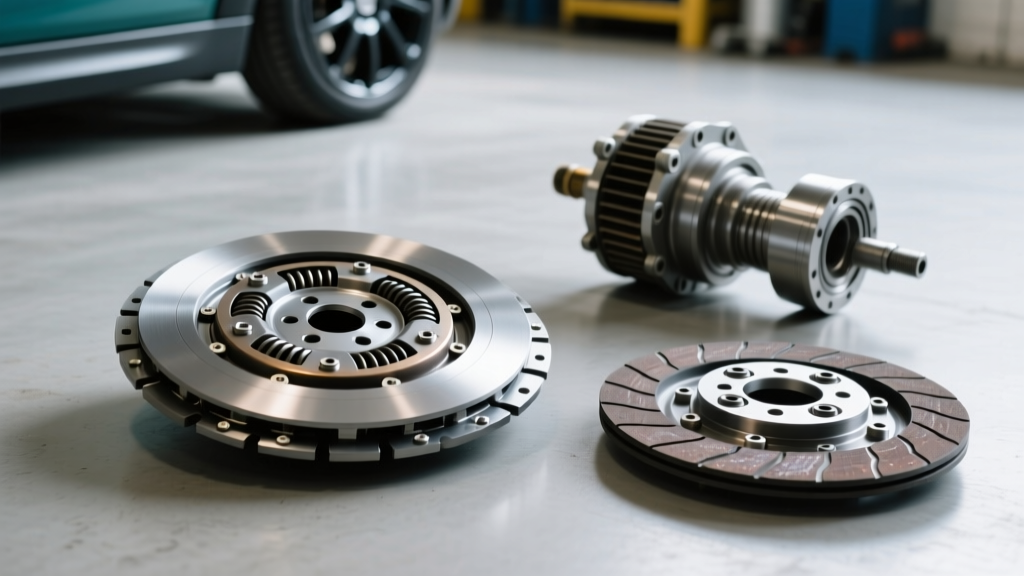
When replacing a clutch kit, the flywheel must be inspected. A common failure mode among DIYers is installing a new friction disc on an unturned, glazed dual-mass or single-mass flywheel. More critically, the step height—the distance between the flywheel friction surface and the pressure plate mounting surface—must be verified with a dial indicator.
For example, the Honda K20C1 requires a step height between 0.50mm and 0.55mm. If a machine shop resurfaces the flywheel but fails to shim or machine it back to the correct step height, the pressure plate diaphragm spring will operate at an incorrect angle, leading to a heavy pedal feel and incomplete disengagement. Always opt for OEM-spec replacements like the LUK 624-3067-00 RepSet, which includes the correct alignment tool and release bearing.
The Pilot Bearing: A Tiny Component with Catastrophic Potential
The pilot bearing (or bushing) supports the tip of the transmission input shaft inside the engine’s crankshaft. If this needle bearing seizes due to lack of lubrication or heat contamination, it can hold the input shaft spinning even when the clutch pedal is fully depressed. In extreme edge cases, a seized pilot bearing has enough rotational force to snap the transmission input shaft or destroy the main case bearing upon forced gear engagement.
The Appliance Benchmark: Washing Machine Clutch Replacement
To truly appreciate automotive friction systems, we must look at the appliance benchmark. The classic Whirlpool/Kenmore direct-drive washer relies on a mechanical clutch assembly (Part #285785) that is conceptually identical to an automotive drum brake and friction clutch combined. During the wash cycle, the clutch allows the transmission to agitate. During the spin cycle, the clutch engages to spin the inner tub at 600+ RPM.
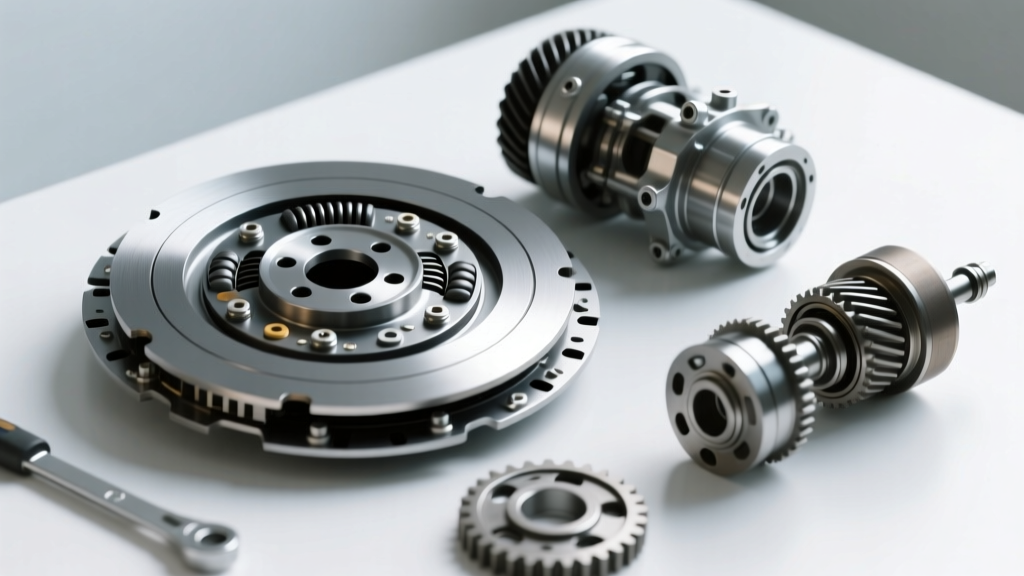
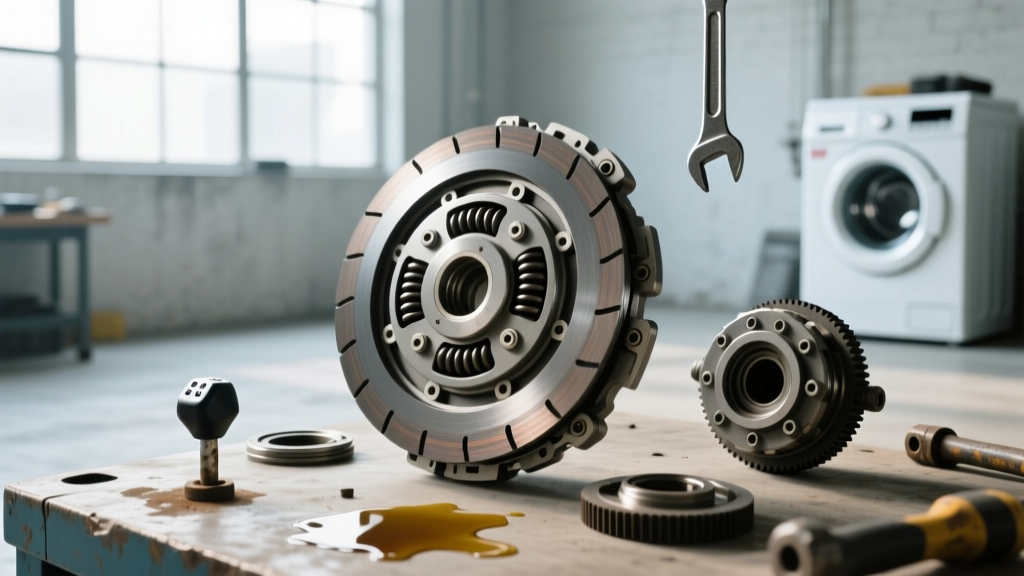
Just like a daily driver, the washing machine clutch suffers from friction material degradation. The clutch pads wear down, and the brake cam glazes over. If a homeowner ignores the early signs of a slipping spin cycle (the automotive equivalent of high-RPM slipping in 4th gear), the clutch lining will disintegrate, sending metallic debris into the transmission gearcase and destroying the neutral drain mechanism. Performing a washing machine clutch replacement requires compressing the heavy clutch spring, removing the C-clip, and inspecting the brake band—procedures that mirror the use of a heavy-duty automotive clutch alignment tool and flywheel lock.
Comparative Wear Matrix: Automotive vs. Appliance
Understanding the parallels between these systems helps mechanics develop a holistic diagnostic mindset. Below is a 2026 preventive maintenance comparison matrix.
| System Component | Automotive Daily Driver (e.g., Subaru 6MT) | Appliance (Whirlpool Direct Drive) | Preventive Maintenance Action |
|---|---|---|---|
| Friction Interface | Exedy HFD01 Organic Disc | Clutch Pads & Lining (Part 285785) | Monitor for slippage under load/high RPM. |
| Release Mechanism | Hydraulic Slave Cylinder & Fork | Brake Cam & Agitator Dogs | Flush hydraulics (Auto); Inspect cam wear (Appliance). |
| Rotational Mass | Dual-Mass or Single-Mass Flywheel | Inner Spin Tub & Gearcase Shaft | Resurface/Replace mass; check for runout and balance. |
| Avg. Parts Cost (2026) | $250 - $650 (LUK, Sachs, Exedy) | $45 - $75 (OEM Whirlpool Kits) | Source via RockAuto or RepairClinic. |
| Failure Consequence | Stranded vehicle, input shaft damage | Flood risk, gearcase seizure | Replace at first sign of slip or abnormal noise. |
Torque Specifications & Alignment for the Daily Driver
When executing a clutch replacement on a daily driver, precision is non-negotiable. The home mechanic must adhere to factory torque sequences to prevent warping the pressure plate diaphragm or cracking the flywheel. Below are critical specifications for two of the most popular daily driver platforms on the road today.
Honda K-Series (Civic Si, Acura TSX)
- Flywheel Bolts: 76 lb-ft (103 Nm) followed by an additional 90-degree turn. Always use new, pre-applied threadlocker bolts from the dealer.
- Pressure Plate Bolts: 19 lb-ft (26 Nm) in a crisscross, star-pattern sequence to ensure even clamping load.
- Bellhousing to Block: 47 lb-ft (64 Nm).
Subaru FA24 / FB20 (BRZ, GR86, WRX)
- Flywheel Bolts: 69 lb-ft (94 Nm). Subaru flywheels are prone to warping if torqued out of sequence.
- Release Bearing Sleeve: Inspect for grooves. Apply a microscopic amount of high-temp molybdenum grease to the transmission input shaft splines. Over-greasing will cause grease to sling onto the friction disc during operation, resulting in immediate, catastrophic clutch slip.
The Cost of Neglect: 2026 Market Realities
In 2026, the cost of professional manual transmission service has risen significantly due to a shrinking labor pool capable of properly aligning and bleeding clutch systems. According to industry data, dealership labor rates for a clutch replacement on a rear-wheel-drive daily driver (like the Mazda MX-5 or Ford Mustang EcoBoost) now average between $1,200 and $1,800, largely driven by the 6-to-8 hour book time required to drop the exhaust, driveshaft, and transmission crossmember.
Conversely, a washing machine clutch replacement requires a $25 socket set, a putty knife to release the cabinet clips, and about 45 minutes of labor. By mastering the appliance repair, the home mechanic builds the spatial awareness, patience, and tool-handling skills required to tackle the automotive equivalent in their own garage. Whether you are torquing a Tremec bellhousing or compressing a Whirlpool clutch spring, the discipline of preventive maintenance remains the universal language of the true mechanic.