The Viscosity Trap: Why Passenger Car Formulas Fail Heavy Trucks
As we navigate the 2026 landscape of heavy-duty towing, commercial hauling, and extreme off-road overlanding, the mechanical stress placed on truck and SUV drivetrains has reached unprecedented levels. Modern 3/4-ton and 1-ton trucks routinely tow in excess of 15,000 pounds, generating massive amounts of friction and thermal energy within the axle housings. Despite this, a dangerous misconception persists among DIY enthusiasts and even some quick-lube technicians: the belief that all gear oils are fundamentally interchangeable. Many owners mistakenly assume that the same standard car differential fluid used in a lightweight commuter sedan or a crossover SUV is adequate for a heavily loaded truck. This is a critical error that inevitably leads to catastrophic bearing and gear failure.
Passenger car differentials—such as the open, light-duty units found in a Honda CR-V or Toyota Camry—operate under relatively low thermal stress and feature minimal hypoid offset. In contrast, heavy-duty truck and SUV axles utilize deep hypoid gear sets. The sliding action inherent in hypoid gears creates extreme boundary friction. When a truck is hauling a camper up a 6% grade, differential sump temperatures can easily exceed 275°F (135°C). At these temperatures, conventional 75W-90 or 80W-90 GL-5 fluids formulated for light-duty cars experience severe kinematic viscosity shear. The sulfur-phosphorus Extreme Pressure (EP) additives oxidize rapidly, forming corrosive byproducts that etch bearing races and accelerate ring and pinion wear.
Heavy-Duty Axle Upgrade Matrix: Dana, AAM, and Sterling
Upgrading your truck or SUV requires matching the fluid viscosity to the specific axle architecture and its intended use case. Below is a comprehensive reference matrix for the most common heavy-duty axles found in Ford, GM, and Ram trucks, detailing the precise upgrade paths away from light-duty car formulas.
| Axle Model | Ring Gear | OEM Fill Spec | Performance Upgrade | Cover Bolt Torque | Fluid Capacity |
|---|---|---|---|---|---|
| Dana 60 (Front/Rear) | 9.75" / 10.5" | 80W-90 GL-5 | 75W-140 Full Synthetic | 30 - 35 lb-ft | 3.5 - 4.0 Pints |
| Ford Sterling 10.5" | 10.5" | 75W-140 Synthetic | 75W-140 + Friction Mod | 33 lb-ft | 3.7 Pints |
| GM/AAM 11.5" | 11.5" | 75W-90 Synthetic | 75W-140 Full Synthetic | 30 lb-ft | 4.1 Pints |
| Dana 80 (Rear) | 11.25" | 80W-90 GL-5 | 75W-140 Full Synthetic | 35 lb-ft | 4.5 Pints |
The Physics of Hypoid Sliding and the Synthetic 75W-140 Advantage
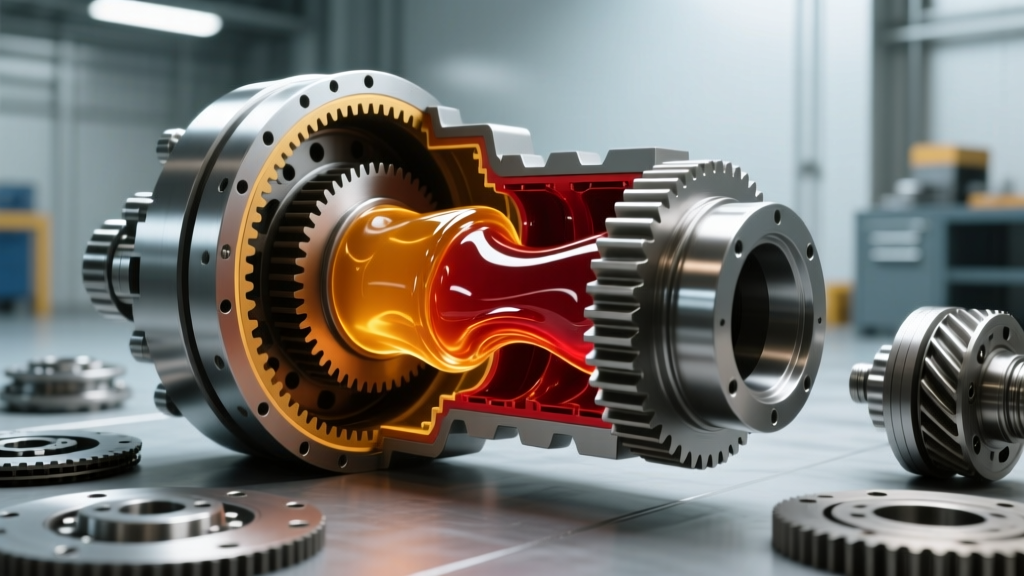
To understand why an upgrade is mandatory for trucks and SUVs, you must understand the physics of the hypoid gear set. Unlike the spiral bevel gears found in some front-wheel-drive transaxles, hypoid gears feature an offset centerline. This design lowers the driveshaft for better ground clearance and cabin space, but it forces the pinion gear to slide across the face of the ring gear teeth rather than just rolling. This sliding action requires a fluid with immense film strength to prevent metal-on-metal contact.
While a standard car differential fluid relies on cheaper base stocks that thin out under high shear, premium 75W-140 full synthetic gear oils utilize Polyalphaolefin (PAO) and Ester base stocks. According to engineering data published by AMSOIL, synthetic 75W-140 formulations maintain a stable protective hydrodynamic film even when sump temperatures spike past 300°F during continuous heavy towing. Furthermore, synthetics resist foaming—a common issue in truck axles where the ring gear acts as a centrifugal pump, churning the oil into a froth that fails to lubricate the upper pinion bearing.
Addressing the Limited-Slip Clutch Pack
If your truck or SUV is equipped with a clutch-type limited-slip differential (LSD), such as the Ford Trac-Lok, GM Eaton Posi, or Dana Trac-Lok, the fluid upgrade must be paired with a dedicated friction modifier. Without it, the clutches will chatter violently during low-speed cornering, destroying the friction discs.
Expert Drivetrain Tip: Never rely on "pre-mixed" synthetic gear oils that claim to contain friction modifiers. The exact volume of modifier required varies wildly based on clutch pack wear and spring tension. Always add a dedicated modifier like Motorcraft XL-3 (Part# E9FZ-19580-A) or GM ACDelco (Part# 88900338) in 1-ounce increments during the fill process, performing figure-eight test drives until the chatter ceases.
Precision Maintenance: Sealing Protocols and Torque Sequences
The physical act of servicing a truck differential is vastly different from draining a car's differential fluid. Most heavy-duty truck axles (like the Dana 60 and Sterling 10.5") do not feature a dedicated drain plug. The fluid must be evacuated by removing the entire differential cover, which provides a critical opportunity to inspect the internal components for metallic debris and clean the housing.
RTV Silicone vs. Pre-Cut Reusable Gaskets
Historically, technicians relied on RTV (Room Temperature Vulcanizing) silicone to seal differential covers. While effective when applied correctly, RTV is prone to user error; excess silicone squeezed into the housing can break off and clog the axle tube oil passages, starving the wheel bearings. For modern performance builds, reusable elastomer gaskets are the superior choice.
- LubeLocker Reusable Gaskets: Featuring a steel core with molded nitrile rubber O-rings, these gaskets (e.g., Part# LL-D060 for Dana 60) seal instantly without curing time and can be reused indefinitely.
- Fel-Pro PermaDry Gaskets: Traditional cork/rubber composite gaskets (e.g., Part# RDS55341) are cost-effective but require careful torque management to avoid crushing the material.
- Permatex Ultra Black RTV: If you must use RTV, Permatex Ultra Black (Part# 85084) is formulated to resist the aggressive solvents found in modern synthetic gear oils. Apply a continuous 3/16" bead and allow 1 hour of tack time before filling.
The Critical Torque Sequence
Overtightening differential cover bolts is a leading cause of axle fluid leaks and warped cast-iron housings. According to Dana Spicer engineering specifications, cover bolts must be torqued in a crisscross star pattern to ensure even clamping force. For a Dana 60 or GM 11.5" axle, the final torque specification is strictly 30 to 35 lb-ft. Always use a calibrated inch-pound or low-range foot-pound torque wrench, as standard 1/2" drive wrenches cannot accurately measure forces this low.
Post-Upgrade Break-In and Diagnostic Protocols
If your truck or SUV upgrade involves installing a new ring and pinion gear set (such as re-gearing from 3.73 to 4.56 for larger off-road tires), the maintenance protocol changes drastically. New gears require a dedicated break-in period to properly mate the lapped surfaces. Fill the axle with a high-quality conventional 85W-140 GL-5 fluid for the break-in phase. Drive the vehicle under moderate load for exactly 500 miles, ensuring you do not exceed 55 MPH or tow any trailers. After 500 miles, drain the break-in fluid—which will be heavily contaminated with microscopic metallic paste—and refill with your chosen 75W-140 full synthetic performance fluid.
Diagnosing Gear Oil Degradation
Even the best synthetic fluids eventually succumb to mechanical shear and thermal cycling. When performing routine 30,000-mile maintenance intervals, inspect the drained fluid for the following warning signs:
- Glitter/Metallic Sheen: Normal for the first few oil changes on a new axle, but indicates bearing wear if present in high volumes on a high-mileage truck.
- Chunky Metallic Particles: Indicates catastrophic spalling on the ring gear or pinion teeth. Requires immediate teardown and inspection.
- Sulfurous Odor & Dark Sludge: Signifies that the EP additives have completely oxidized and the fluid has lost its boundary lubrication properties, a common occurrence when light-duty car fluids are subjected to heavy truck towing.
Cost Analysis: DIY Synthetic Upgrade vs. Dealership Service
Transitioning to a severe-duty synthetic gear oil regimen is an investment in the longevity of your truck's drivetrain. In 2026, dealership service departments typically charge between $250 and $400 per axle for a differential fluid exchange, often utilizing bulk conventional oils that do not meet the demands of heavy towing. Conversely, a complete DIY synthetic upgrade for a solid front and rear axle setup requires approximately 8 to 9 quarts of premium 75W-140 synthetic oil (averaging $22 to $28 per quart), plus $30 for reusable gaskets and friction modifier. This brings the total out-of-pocket cost to roughly $220 to $280 for both axles. Not only does the DIY route save significant labor costs, but it also guarantees that your heavy-duty truck is protected by top-tier chemistry, entirely eliminating the risks associated with inadequate car differential fluid formulations.