The Heavy-Duty Drivetrain Dilemma
When pushing a 3/4-ton or 1-ton truck to its limits—whether towing a 12,000-pound fifth-wheel or crawling through off-camber trails—the differential is the unsung hero of the drivetrain. For decades, General Motors popularized the term "Positraction," embedding it into the automotive lexicon. However, as of 2026, the shift toward high-torque diesel tunes, heavier EV truck platforms, and aggressive off-road builds requires a deeper understanding of traction devices. When fleet managers and off-road enthusiasts debate positraction vs limited slip differential configurations, they are often comparing vintage clutch-pack designs against modern helical gear or electromagnetic locking systems. This guide breaks down the maintenance realities, fluid dynamics, and performance upgrades for heavy-duty truck and SUV axles.
Decoding the Terminology: Positraction vs Limited Slip Differential
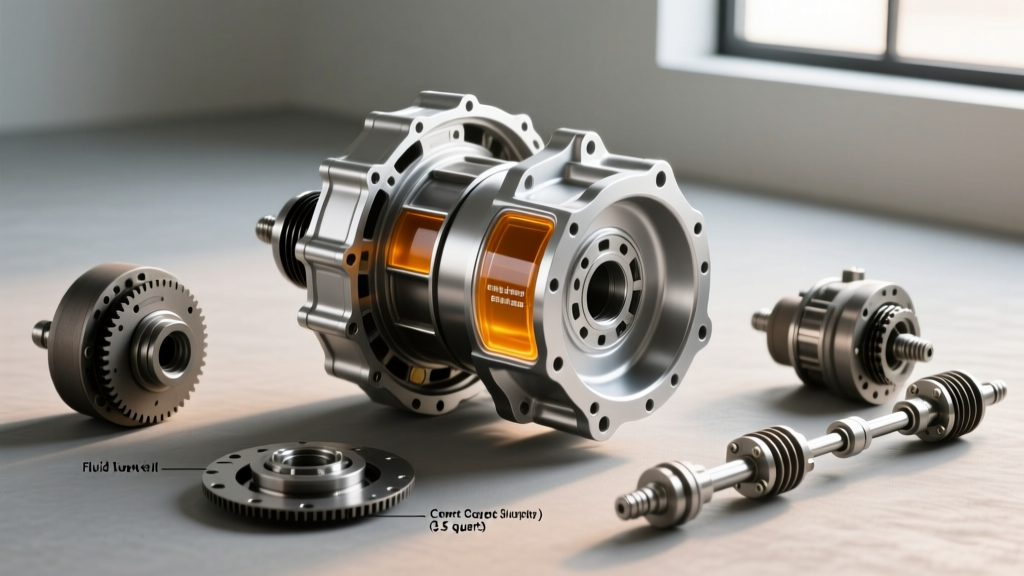
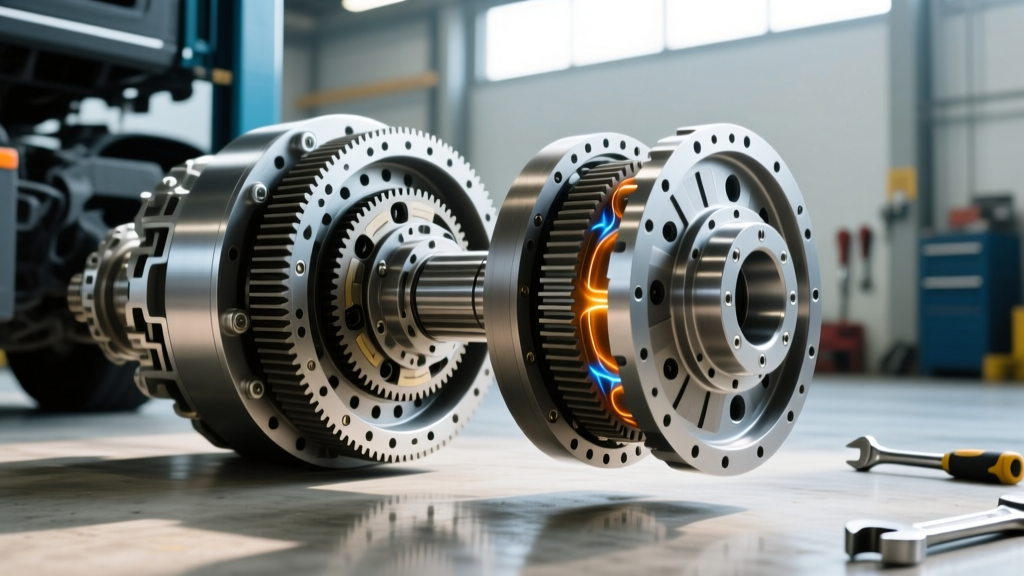
To maintain or upgrade your axle effectively, you must first understand what is inside the housing. "Positraction" is strictly a GM trademark for their clutch-type limited-slip differential (LSD). It utilizes a series of alternating steel and friction-lined clutch packs preloaded by S-shaped springs to bind the side gears to the carrier case when torque is applied.
Conversely, the broader term "limited slip differential" encompasses a wider array of technologies:
- Clutch-Type LSDs: The traditional Posi design, as well as aftermarket variants like the Auburn High-Performance series. These require specific friction modifiers and wear over time.
- Helical Gear LSDs: Devices like the Eaton Detroit Truetrac use precision-cut helical gears to multiply torque bias without the need for clutch packs or specialty additives.
- Locking Differentials: Automatic lockers (Detroit Locker) or selectable lockers (Eaton E-Locker, ARB Air Locker) provide 100% mechanical lockup, bypassing the "slip" aspect entirely for maximum traction.
The Reality of Clutch-Pack Wear in Towing Applications
If your truck or SUV is equipped with a factory clutch-type Posi or LSD, maintenance is not just about changing the oil; it is about managing friction material degradation. Under heavy towing loads, the cross-pin and side gears generate immense heat. If the differential fluid degrades, the clutch packs will glaze, leading to the notorious "Posi chatter" during low-speed turns, or worse, complete slip under heavy throttle.
In high-mileage trucks (typically past 80,000 miles of towing), the S-springs can fatigue, and the friction material wears down to the steel backing plates. At this stage, no amount of friction modifier will save the unit. The carrier must be rebuilt with a new clutch pack kit (e.g., Eaton P/N 917-120 for GM 14-bolt applications) or replaced entirely.
Fluid Dynamics: Viscosities, Additives, and 2026 Formulations
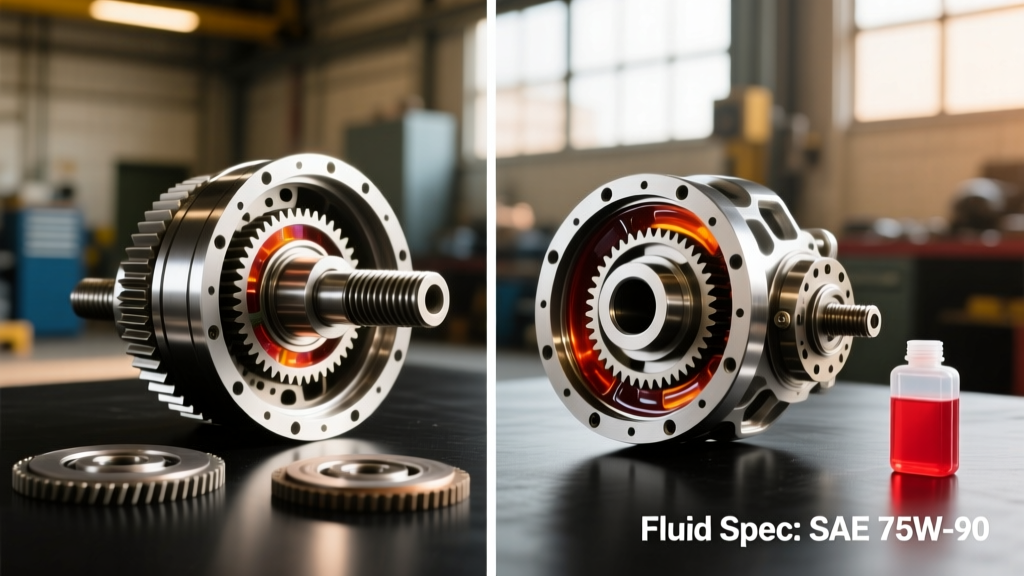
Modern heavy-duty synthetic gear oils have evolved significantly. For trucks subjected to sustained highway towing or low-speed trail crawling, a 75W-90 is often insufficient to maintain the hydrodynamic film strength required to protect the ring and pinion gears. Upgrading to a 75W-140 full synthetic is the industry standard for severe-duty applications. According to AMSOIL's technical data on Severe Gear formulations, the higher viscosity resists thermal breakdown and prevents gear scoring under extreme shock loading.
The Friction Modifier Balancing Act
Clutch-type LSDs require a limited-slip friction modifier (such as GM P/N 10043161 or Ford P/N XL-3) to prevent chatter. However, overusing this additive reduces the friction coefficient too much, causing the clutches to slip under heavy load. Always start with the manufacturer's recommended baseline (usually 2 to 4 ounces), and only add more in 1-ounce increments if chatter persists during test drives.
Heavy-Duty Axle Service Matrix
Precision maintenance requires adherence to exact specifications. Below is the critical service data for the most common heavy-duty truck axles:
| Axle Model | Common Application | Fluid Capacity (Approx.) | Cover Bolt Torque | Fill Plug Torque |
|---|---|---|---|---|
| Dana 60 (Rear) | Ram 2500 / Ford F-250 | 3.5 - 4.0 Pints | 35 - 45 lb-ft | 20 - 25 lb-ft |
| GM 11.5" (14-Bolt) | Silverado / Sierra 2500HD | 4.5 - 5.0 Pints | 25 - 30 lb-ft | 20 - 25 lb-ft |
| Ford 10.5" Sterling | F-250 / F-350 Super Duty | 3.5 - 4.2 Pints | 25 - 30 lb-ft | 20 - 25 lb-ft |
| Dana 70HD | Ram 3500 Dually (Older) | 5.0 - 6.0 Pints | 35 - 45 lb-ft | 25 - 30 lb-ft |
Note: Always torque cover bolts in a crisscross pattern to ensure even gasket compression and prevent housing distortion.
Performance Upgrades: Helical vs. Locking Carriers
When a factory clutch-type Posi fails, or when an open differential proves inadequate for off-road SUV builds, upgrading the carrier is the most effective performance modification. Eaton's automotive differential catalog outlines two primary upgrade paths for heavy-duty trucks:
1. The Helical Upgrade: Eaton Detroit Truetrac
The Truetrac is a torque-biasing helical gear differential. It requires zero friction modifiers and operates silently. It multiplies torque up to 3.5:1 from wheel to wheel, making it the ultimate "set it and forget it" upgrade for daily-driven tow rigs and overlanding SUVs.
Cost Estimate: $750 - $950 for the unit (e.g., P/N 917A688 for GM 11.5"), plus $400 - $600 for professional installation and setup.
2. The Selectable Upgrade: Eaton E-Locker
For dedicated rock crawlers or trucks navigating extreme mud and snow, an electromagnetic locking differential provides 100% lockup at the flip of a dash switch. When disengaged, it operates as an open diff for civilized street manners.
Cost Estimate: $1,100 - $1,400 for the unit, plus additional labor for routing the wiring harness through the axle housing.
The Rebuild Edge Case: Solid Spacer Conversions
If you are upgrading your ring and pinion or swapping carriers in a high-torque diesel truck, you must address the pinion bearing preload. Factory axles use a "crush sleeve" to set pinion bearing preload. Under the shock load of a tuned diesel engine launching a heavy truck, these sleeves can over-crush, leading to catastrophic pinion bearing failure and destroyed ring gears.
As detailed in Spicer's heavy-duty differential resources, the professional solution is a Solid Spacer Conversion Kit (e.g., Ratech P/N 4115 for Dana 60). This replaces the crush sleeve with a machined steel spacer and shims. Setting the preload with a solid spacer requires an inch-pound torque wrench and patience, targeting exactly 20-30 in-lbs of rotational drag (for new bearings), but it guarantees the pinion depth will never shift under extreme towing loads.
The Figure-8 Break-In Protocol
If you opt to rebuild your existing clutch-type Positraction or install a new clutch-based LSD, the break-in procedure is non-negotiable. Failure to perform this will result in permanent clutch glazing.
The 15-Mile Figure-8 Protocol:
1. Find a large, empty, paved area (like an abandoned parking lot).
2. Drive the vehicle in a series of tight figure-8 patterns at 5 to 10 MPH.
3. This maneuver forces the outside wheel to rotate faster than the inside wheel, intentionally slipping the clutch packs under light load.
4. Repeat this for 10 to 15 minutes, allowing the friction modifier to fully saturate the porous clutch material and mate the surfaces evenly.
5. Follow up with 50 miles of varied highway driving, avoiding heavy towing or drag racing for the first 500 miles.
Diagnosing Differential Noise and Wear
Proper maintenance also means recognizing the auditory warnings of impending failure before the axle housings locks up on the highway:
- Chatter on Turns: Classic sign of depleted friction modifier or glazed clutch packs in a Posi/LSD. Address with fluid and additive service immediately.
- Coast-Down Whine: Usually indicates excessive ring and pinion backlash or worn pinion bearings. Target backlash for heavy-duty truck axles is typically 0.006" to 0.010". Check with a dial indicator mounted to the housing.
- Clunk on Engagement: Often points to worn side gear thrust washers or a failing cross-pin inside the carrier, allowing excessive rotational play before the driveline catches.
Conclusion
Maintaining and upgrading the differential in a modern truck or SUV requires moving beyond basic fluid swaps. Understanding the mechanical differences inherent in the positraction vs limited slip differential debate allows owners to choose the right traction device for their specific payload and terrain requirements. By adhering to strict torque specifications, utilizing severe-duty 75W-140 synthetics, and considering robust upgrades like helical carriers or solid spacer conversions, you can ensure your drivetrain survives the harshest demands of the road and the trail.