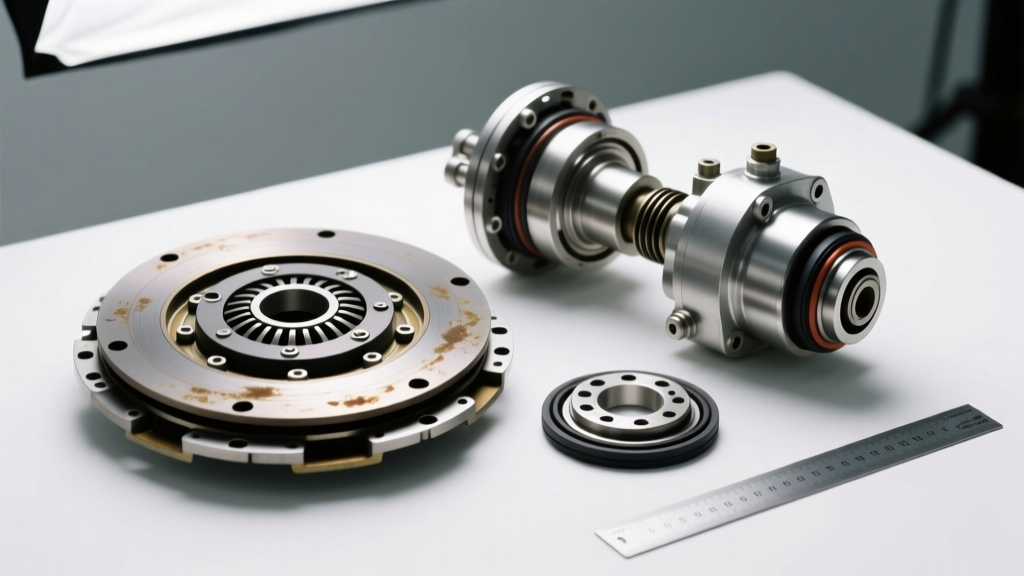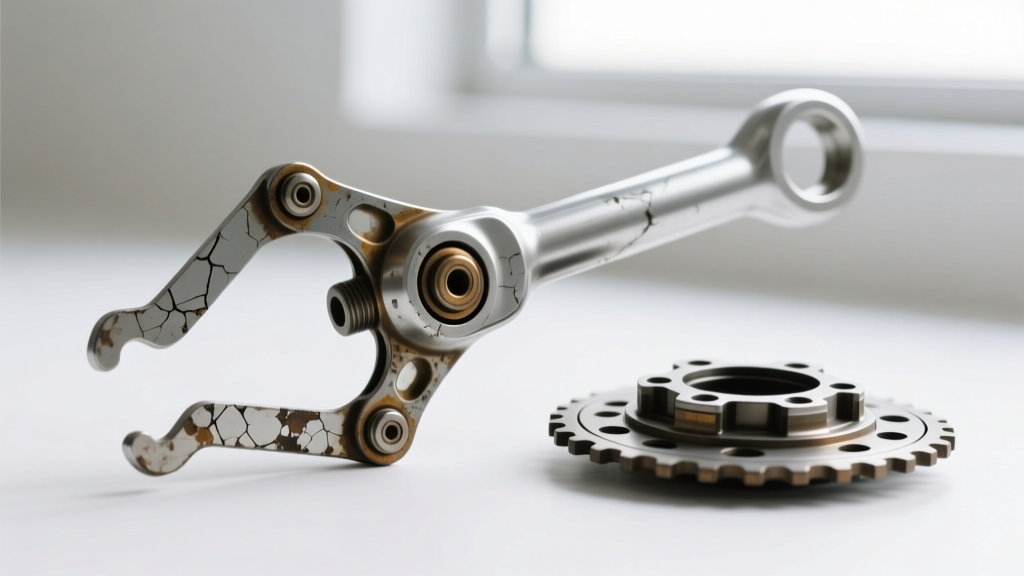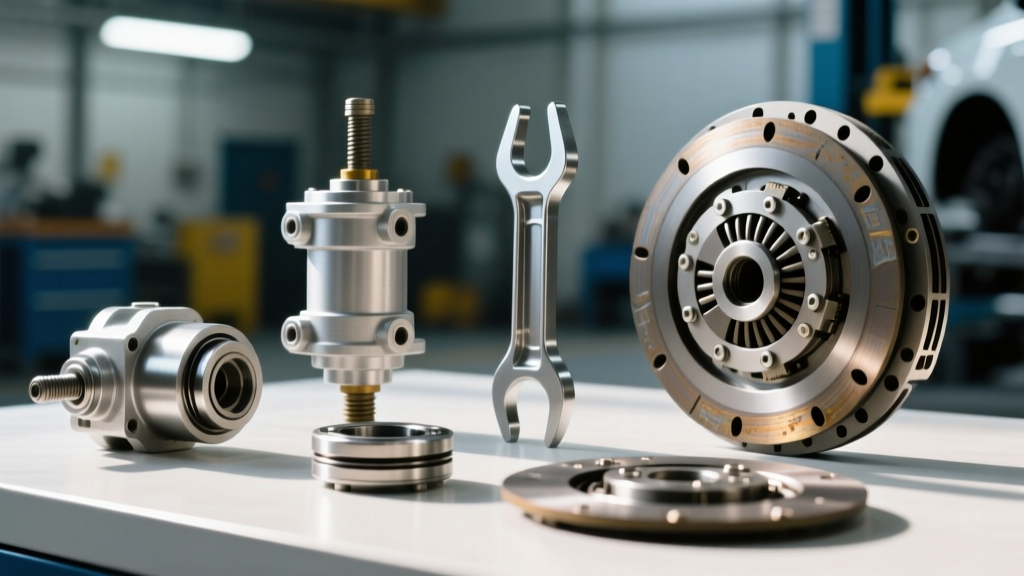
The Mechanical Disconnect: Forks, Pivots, and Leverage
When diagnosing manual transmission actuation, the mechanical realities of automotive drivetrains differ vastly from two-wheeled platforms. While riders obsess over cable tension, hydraulic fluid bleeds, and direct-push actuator arms for precise clutch control motorcycle setups, automotive technicians must manage the mechanical leverage and friction points of the clutch fork and pivot ball. In a car, the slave cylinder does not push the release bearing directly; it pushes a stamped steel or cast aluminum fork that pivots on a hardened steel ball or pin. This introduces a fulcrum, leverage ratios, and mechanical wear points that do not exist in most direct-push motorcycle systems.
As we move through 2026, the resurgence of restomods, track-prepped manual swaps, and high-torque diesel applications has pushed mechanical clutch actuation components to their absolute limits. A worn pivot ball or deflected clutch fork will mimic hydraulic failure, mask itself as a warped flywheel, or cause catastrophic release bearing disintegration. Understanding the exact failure modes of these components is critical for accurate drivetrain diagnostics.
The Physics of the Fulcrum: Why Automotive Forks Fail
The automotive clutch fork operates as a first-class lever. The pivot ball acts as the fulcrum. The slave cylinder applies force to one end (the effort arm), while the fork pads push the release bearing against the pressure plate diaphragm spring (the load arm). In high-performance transmissions like the Tremec Magnum or the Ford MT82, the clamping force of modern multi-disc or high-torque single-disc pressure plates can exceed 2,800 lbs. This immense load is transferred through the fork pads, down the fork arms, and directly into the pivot ball socket.
Unlike the linear, low-friction pushrods found in motorcycle hydraulic setups, the clutch fork pivot must endure high lateral shear forces and rotational friction simultaneously. Over time, this causes three primary failure modes:
- Pivot Ball Flattening: The spherical surface develops a flat spot, altering the pedal geometry and causing a 'dead zone' in pedal travel.
- Fork Pad Erosion: The contact points between the fork and the release bearing carrier wear down, requiring excessive slave cylinder stroke to achieve disengagement.
- Socket Galling: The interior of the fork's pivot socket loses its lubrication and galls against the ball, creating high-pitch squeals and erratic pedal resistance.
Diagnostic Matrix: Symptoms of Fork and Pivot Degradation
Differentiating between a failing hydraulic master cylinder, a warped flywheel, and a worn clutch fork requires a systematic approach. Use the following diagnostic matrix to isolate the mechanical fault.
| Symptom Profile | Pedal Feel & Feedback | Audible Indicators | Probable Mechanical Root Cause |
|---|---|---|---|
| Incomplete Disengagement (Grinding into 1st/Reverse) | Spongy at the top of travel, abrupt and overly stiff at the firewall. | Low-frequency scraping during shifts; no noise at idle. | Excessive wear on clutch fork pads (>0.040" material loss) reducing effective throw. |
| Engagement Chatter & Shudder | Pulsating feedback through the pedal during the friction zone; feels like a warped rotor. | Metallic rattling or 'clunk' when engaging gear under load. | Pitted or flattened pivot ball causing the fork to bind and release erratically. |
| High-Pitch Squeak on Depress | Normal hydraulic resistance, but accompanied by a 'chirp' or squeak. | Squeaking synchronized exactly with pedal movement; stops when pedal is held down. | Dry or galled pivot ball socket; lack of molybdenum disulfide lubrication. |
| Sudden Loss of Pedal Tension (No Fluid Leak) | Pedal drops to the floor with zero resistance; cannot be pumped back up. | Loud metallic 'snap' or 'pop' from the bellhousing upon initial failure. | Catastrophic fork fracture at the pivot neck, or external pivot pin shear (common in Getrag). |
Deep Dive: Transmission-Specific Pivot Specifications
To diagnose and repair these issues correctly, technicians must reference exact OEM specifications. Guesswork leads to rapid repeat failures. Below are the critical parameters for three of the most common manual transmissions on the road today.
Tremec T56 / Magnum (GM & Ford Applications)
The T56 utilizes an internal stamped steel fork (Part # TUE-2004 for standard, TUE-2046 for Magnum) that rides on a threaded, hardened steel pivot ball (Part # TUE-2005). The pivot ball threads directly into the bellhousing or transmission case.
- Pivot Ball Torque: 22-25 lb-ft using medium-strength threadlocker (Loctite 243). Never install dry, or vibration will back the ball out, destroying the fork.
- Fork Pad Wear Limit: Maximum allowable wear is 0.030 inches. Measure with a micrometer at the thinnest point of the sintered iron pad.
- Clearance Check: With the transmission installed and the clutch depressed, there should be exactly 1/16" to 1/8" of over-center travel before the fork hits the bellhousing wall or internal stop.
Getrag 420G (BMW E46 M3 & E39 540i)
The Getrag 420G uses an external actuation setup. The clutch fork is mounted outside the bellhousing and rides on a steel pivot pin pressed into the bellhousing casing, secured by a notoriously weak plastic retaining clip (Part # 23227541709).
- Failure Mode: The plastic retaining clip degrades from heat cycles and clutch dust. The pivot pin backs out, causing the fork to slip off the ball, resulting in immediate pedal drop.
- Best Practice: During any 2026-era clutch replacement on a Getrag 420G, discard the plastic clip. Upgrade to an aftermarket aluminum pivot pin retainer or safety-wire the pin to the bellhousing bolt.
- Lubrication: Apply a thin layer of Honda Moly 60 (Part # 08798-9010) to the external pivot ball. Avoid aerosol white lithium, which attracts abrasive silica dust from the clutch disc.
Ford MT82 (Mustang GT / Coyote Swaps)
The MT82 utilizes a cast aluminum fork rather than stamped steel. While lighter, aluminum is susceptible to deflection under the high clamping loads of modern aftermarket twin-disc clutches.
- Deflection Measurement: If the fork exhibits more than 0.015" of lateral flex when 150 lbs of pressure is applied to the slave cylinder pushrod, the fork must be replaced. Deflection robs the release bearing of travel, leading to incomplete disengagement and gear crunch.
- Hydraulic Interference: The MT82 relies heavily on the concentric slave cylinder (CSC). A worn pivot ball will alter the angle of the fork, causing the CSC to bind on the transmission input shaft bearing retainer collar.
The 'Dead Pedal' Phenomenon vs. Hydraulic Failure
A common misdiagnosis in manual transmission repair is blaming the hydraulic master or slave cylinder for a 'dead pedal' feel. Because motorcycle clutch control systems rely almost entirely on flawless hydraulic pressure or cable tension to manage the friction zone, mechanics often default to bleeding the system or replacing the master cylinder when a car's pedal feel degrades.
However, if you have bled the system using a pressure bleeder at 15 PSI, verified the master cylinder pushrod free-play (typically 0.020" to 0.040" at the firewall), and the pedal still feels 'notchy' or exhibits a dead spot in the middle of its travel, the issue is mechanical. A flattened pivot ball creates a micro-gap between the ball and the fork socket. As the pedal is pressed, the slave cylinder must first take up this mechanical slack before applying leverage to the pressure plate. This manifests as a sudden loss of hydraulic feedback, perfectly mimicking a failing master cylinder internal seal.
Expert Diagnostic Tip: To isolate hydraulic vs. mechanical faults without dropping the transmission, use an inspection camera through the bellhousing access cover. Have an assistant press the clutch pedal slowly. Watch the pivot ball socket. If the slave cylinder pushrod moves smoothly but the fork exhibits a 'jump' or hesitation before engaging the release bearing, the pivot ball is flattened or the fork socket is galled.
Best Practices for Pivot Replacement and Lubrication
When replacing a clutch fork and pivot assembly, the lubrication chemistry is just as critical as the torque specifications. The environment inside a bellhousing is hostile: temperatures routinely exceed 250°F (121°C), and abrasive friction material dust is constantly circulating.
The Lubrication Hierarchy
- Molybdenum Disulfide (Moly) Paste (Best): Products like Honda Moly 60 or Valvoline Moly-Fortified Grease contain solid lubricants that bond to the steel surfaces. Even if the grease base burns off, the moly coating remains to prevent galling. This is the OEM standard for SAE clutch actuation guidelines.
- PTFE / Synthetic Grease (Acceptable): High-temperature synthetic greases with PTFE (Teflon) work well but require more frequent reapplication during track use.
- Standard Chassis Grease / White Lithium (NEVER USE): These greases have low melting points. They will liquefy, sling off the pivot ball, and contaminate the clutch friction disc, causing severe clutch slip and requiring a complete teardown to fix.
Summary Checklist for Drivetrain Technicians
Before signing off on any manual transmission clutch job in 2026, ensure the following fork and pivot criteria are met:
- [ ] Inspect the Pivot Ball: Roll the ball on a known-flat machined surface. Any wobble or visible flat spots mandate replacement.
- [ ] Measure Fork Pads: Verify pad thickness is within 0.030" of OEM spec. Check for uneven wear, which indicates a bent fork or misaligned bellhousing.
- [ ] Verify Bellhousing Runout: Use a dial indicator on the bellhousing bore. Runout exceeding 0.005" will force the clutch fork to operate at an angle, accelerating pivot wear exponentially.
- [ ] Apply Correct Lubricant: Coat the pivot ball and fork socket with Moly paste. Do not over-apply; excess grease will attract clutch dust and form an abrasive grinding paste.
- [ ] Torque and Secure: Torque internal pivot balls to 22-25 lb-ft with threadlocker. Secure external pins with upgraded metal retainers.
By treating the clutch fork and pivot not as an afterthought, but as the critical mechanical leverage point it is, technicians can eliminate ghost-shifting, pedal chatter, and premature release bearing failures, delivering a drivetrain feel that rivals the most refined direct-actuation systems on the market.