Introduction: Applying Automotive NVH Protocols to 1/10 Scale AWD
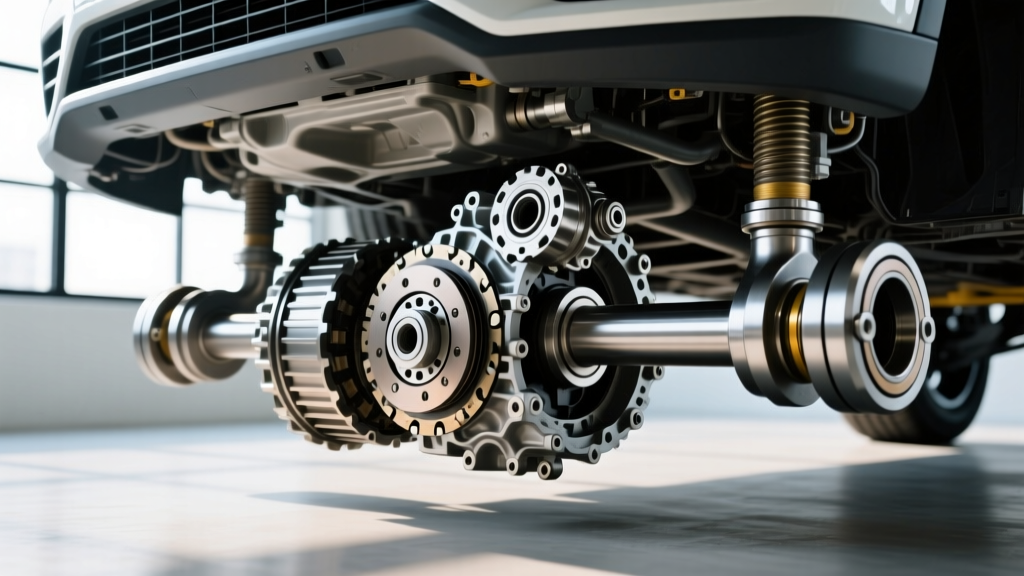
While the Traxxas Slash 4x4 is a 1/10th scale radio-controlled platform, its three-differential all-wheel-drive layout mirrors the kinematic principles of full-scale automotive transfer cases and AWD systems like the Subaru Symmetrical AWD or Audi Quattro. Diagnosing NVH (Noise, Vibration, and Harshness) in micro-drivetrains requires the same systematic, step-by-step approach used by automotive transmission engineers. When a drivetrain begins to emit grinding, whining, or binding noises, it is a direct indicator of metallurgical fatigue, fluid shear breakdown, or bearing failure. In this 2026 technical guide, we apply professional automotive diagnostic frameworks to isolate and resolve center differential noise in the Traxxas Slash 4x4, referencing exact OEM part numbers, fluid viscosities, and aftermarket upgrade paths.
Architecture of the Traxxas Slash 4x4 Center Differential
To diagnose a noise, you must first understand the mechanical architecture generating it. The Traxxas Slash 4x4 center differential (OEM Part #6873) is a bevel-gear open differential encased in a composite housing (Part #6878). Unlike full-scale vehicles that use complex viscous couplings or Torsen limited-slip differentials to manage front-to-rear torque biasing, the Slash 4x4 relies on high-viscosity silicone fluid to create hydrodynamic drag across the spider and side gears. Under normal grip, torque is distributed 50/50. However, when slip occurs, the sheer thickness of the factory 500,000-weight (500K) silicone oil acts as a fluid coupling, resisting differential action and transferring torque to the axle with traction.
The center differential interfaces directly with the transmission output via the center driveshaft (Part #6893) and rests on two 5x8x2.5mm ball bearings (Part #168724). Because the center diff handles the total combined torque output of the Velineon 3500 brushless motor before dividing it to the front and rear axles, it is highly susceptible to gear tooth spalling, cross-pin galling, and bearing collapse if subjected to high-traction surfaces or aggressive launch profiles.
Step-by-Step Drivetrain Noise Diagnosis Protocol
Step 1: Acoustic Isolation and Driveline Binding Test
The most common mistake in micro-drivetrain diagnosis is misattributing noise origin. A whining sound could originate from the spur gear/slipper clutch assembly, the front/rear ring-and-pinion sets, or the center differential itself. Begin by elevating the chassis on a dedicated RC stand. With the battery disconnected, manually rotate the rear driveshaft while holding the front driveshaft stationary. This forces the center differential to operate under maximum internal friction.
- High-Pitched Whining: If you hear a rhythmic whining that scales with rotation speed, suspect bearing failure (Part #168724) or improper gear mesh at the transmission output.
- Crunching or Grinding: This indicates catastrophic powdered metal (PM) gear failure inside the diff case, where spider gear teeth have sheared and are circulating through the silicone oil.
- Binding or Notchy Rotation: Often caused by a bent cross-pin or a collapsed bearing race creating uneven side-gear preload.
Pro-Tip: Use an automotive mechanic's stethoscope with the probe removed. Place the metal hose directly against the composite center diff housing while spinning the driveline. The acoustic amplification will instantly isolate whether the NVH is localized to the center diff or bleeding in from the transmission bulkhead.
Step 2: Disassembly and Metallurgical Inspection
Once isolated to the center differential, proceed with teardown. Remove the center driveshaft and unbolt the differential cover using a 2.0mm hex driver. Carefully separate the composite housing. Note that the OEM housing is prone to warping if over-torqued during previous rebuilds; inspect the mating surfaces for stress fractures.
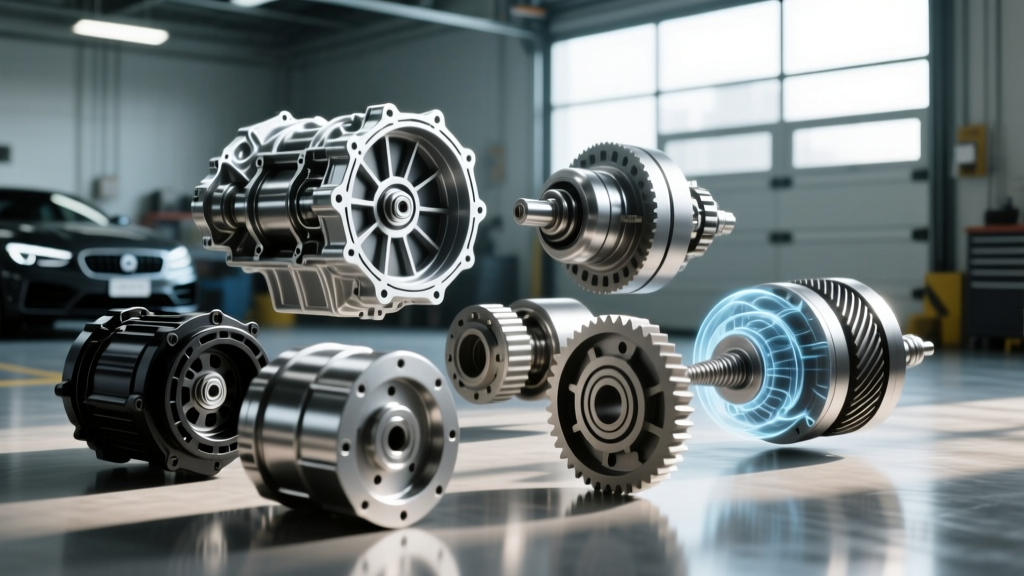
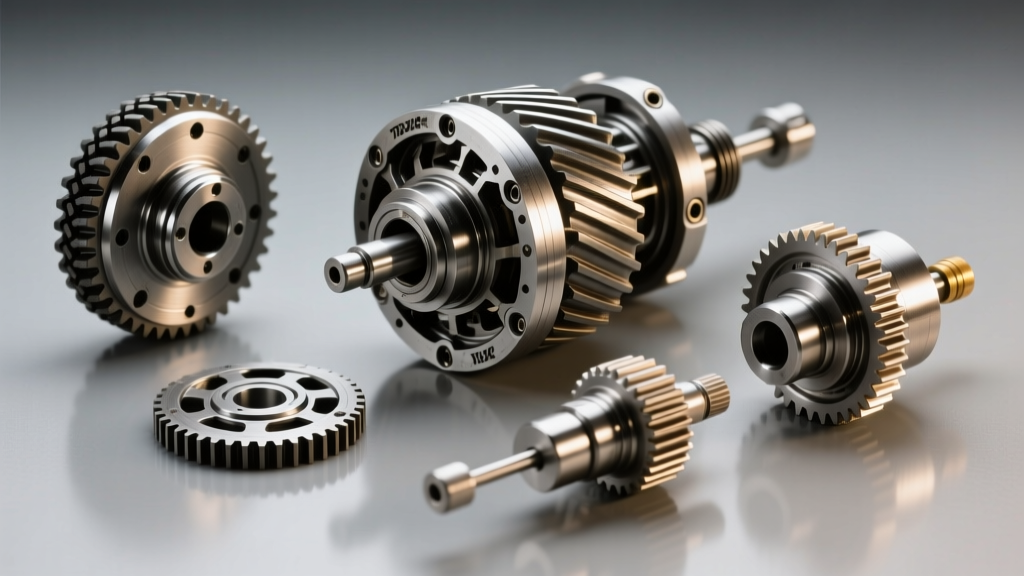
Extract the spider gears, side gears, and cross-pins. The factory gears are manufactured using powdered metal (PM) sintering. While cost-effective and sufficiently strong for dirt and loose gravel, PM gears are highly susceptible to tooth root fatigue on high-bite surfaces like prepped clay tracks or asphalt. Inspect the gear teeth under magnification. Look for micro-pitting, spalling on the convex flanks, or complete shear at the root. If the 500K silicone oil appears grey or contains metallic glitter, the differential has suffered internal abrasion and requires a complete rebuild.
Step 3: Evaluating the Slipper Clutch and Spur Gear Interface
Before reassembling the center diff, rule out the slipper clutch. A slipping clutch pad under heavy load generates a high-frequency squeal that travels down the driveline and mimics a failing center differential. Inspect the 52-tooth spur gear and the slipper pressure plate. If the friction pad is glazed or the tension spring has backed out, recalibrate the slipper by compressing the spring until it is flush with the nut, then backing it off exactly one-quarter turn for optimal torque management.
Diagnostic Matrix: Noise Profiles and Component Failures
| Acoustic Symptom | Probable Mechanical Fault | OEM Part Reference | Corrective Action | Est. Cost (USD) |
|---|---|---|---|---|
| Rhythmic Metallic Grinding | Spider/Side gear tooth shear | #6873 (Complete Diff) | Replace gears, flush case | $15 - $22 |
| High-Pitched Whine | 5x8x2.5mm Bearing collapse | #168724 (Bearings) | Press in new shielded bearings | $6 - $10 |
| Notchy Binding Sensation | Galled steel cross-pin | #6878 (Diff Case Kit) | Polish or replace cross-pins | $8 - $12 |
| Slipping/Chattering Noise | Glazed slipper clutch pad | #6890 (Slipper Pad) | Replace pad, recalibrate spring | $4 - $6 |
Rebuild Specifications, Fluids, and Tolerances
Rebuilding the Traxxas center differential requires precision. Unlike full-scale automotive differentials that rely on crush sleeves and precise backlash measurements (e.g., setting a 0.008-inch backlash on a Dana 44), the 1/10 scale bevel gear diff relies on fluid dynamics and composite housing tolerances.
- Cross-Pin Lubrication: Before inserting the spider gears, coat the steel cross-pins with a layer of black molybdenum disulfide (moly) grease. This prevents the gears from galling and welding themselves to the pins under high-RPM friction.
- Fluid Fill Level: Fill the differential case with Traxxas 500K wt Silicone Diff Oil. The correct fill level is exactly flush with the top of the cross-pins when the case is resting flat on the workbench. Overfilling will cause hydro-lock and blow out the composite housing seals; underfilling will result in rapid gear wear and a distinct whining noise.
- Fastener Torque: The 2x5mm cap screws securing the diff cover must be tightened in a star pattern. Apply a microscopic drop of Blue Loctite 242 to the threads. Overtightening will strip the composite threads or warp the case, creating an artificial preload on the side gears that manifests as drivetrain binding.
For authoritative teardown diagrams and exploded views, always cross-reference the Traxxas Official Support parts library to ensure you are using the correct revision of the composite housing.
Performance Upgrades: OEM Powdered Metal vs. Hardened Steel
If your diagnostic process reveals recurring PM gear failure, it is time to evaluate aftermarket upgrades. While the OEM #6873 center differential is highly serviceable and inexpensive to replace, high-horsepower 3S LiPo setups demand superior metallurgy. Companies like Robinson Racing Products and Hot Racing offer CNC-machined hardened steel spider and side gear sets.
Upgrading to steel eliminates tooth-root shear entirely. However, steel gears introduce new NVH considerations. Steel-on-steel meshing is inherently louder than PM-on-PM, often producing a mild, turbine-like whine that is entirely normal and should not be mistaken for a failure. When running steel center diff gears, it is highly recommended to increase the fluid viscosity to 1,000,000 wt (1M) silicone oil to provide a thicker hydrodynamic cushion between the gear flanks, dampening acoustic resonance and protecting the composite diff case from shock loads.
Conclusion
Diagnosing drivetrain noise in the Traxxas Slash 4x4 center differential bridges the gap between RC hobbyist maintenance and professional automotive NVH analysis. By systematically isolating the acoustic source, understanding the fluid-coupling architecture, and inspecting for powdered metal fatigue, you can restore the AWD system to factory-quiet operation. Whether you choose to rebuild with OEM components and 500K fluid or upgrade to hardened steel for extreme torque applications, methodical diagnosis remains the key to maximizing drivetrain longevity and on-track performance. For further technical deep-dives into RC drivetrain kinematics, the RC Car Action Technical Archives remain an invaluable resource for modern platform engineering.