Hydrokinetic vs. Centrifugal: Understanding the 79cc Predator Drivetrain
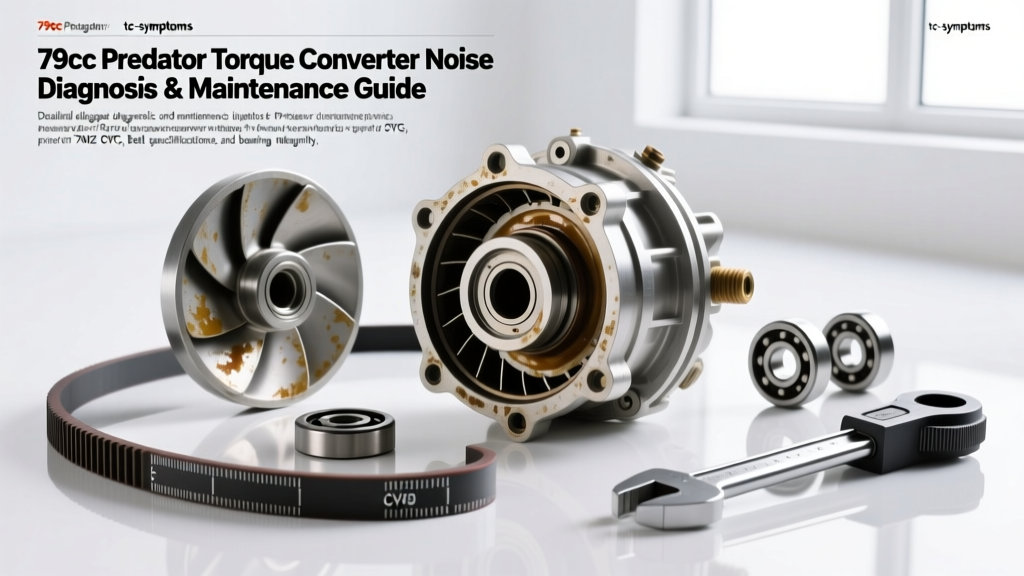
When automotive enthusiasts and DIY builders discuss torque converters, the mind typically jumps to hydrokinetic fluid couplings found in traditional automatic transmissions like the GM 4L60E, the Ford 6R80, or the ZF 8HP. However, the wildly popular Harbor Freight Predator 79cc engine—a staple in mini bikes, motorized bicycles, and custom go-karts—utilizes a completely different architecture. In the small-engine community, the Continuously Variable Transmission (CVT) attached to the Predator’s crankshaft is colloquially referred to as a "torque converter." Specifically, these setups rely on centrifugal mechanical CVTs, most notably the Comet TAV2 series or its aftermarket clones.
Unlike a hydrokinetic torque converter that uses transmission fluid and a stator to multiply torque, the 79cc Predator’s CVT uses a system of variable-pitch sheaves, centrifugal weights, and an asymmetrical drive belt. Because this system operates entirely in the dry, exposed to the elements, and subject to high-RPM mechanical friction, noise is often the first indicator of impending failure. Diagnosing these acoustic anomalies requires a shift from fluid-dynamics thinking to mechanical-friction analysis. As we move through the 2026 riding season, understanding the specific acoustic signatures of a failing TAV2 system is critical for preventive maintenance and avoiding catastrophic drivetrain lockups.
Acoustic Diagnostics: Decoding CVT and Torque Converter Noises
Noise diagnosis in a dry centrifugal CVT is highly dependent on engine RPM and load conditions. The Predator 79cc typically idles around 1,400 RPM and engages the CVT between 2,000 and 2,500 RPM. Below is a diagnostic matrix correlating specific acoustic symptoms to their mechanical root causes.
| Acoustic Symptom | RPM / Load Condition | Probable Mechanical Cause | Preventive / Corrective Action |
|---|---|---|---|
| High-Pitch Squealing | Engagement (2,000-2,500 RPM) | Belt glazing, sheave contamination, or misalignment | Clean sheaves with brake cleaner; verify parallel alignment |
| Metallic Grinding | Mid-to-High RPM (Cruising) | Driven pulley sealed bearing failure or water ingress | Replace driven pulley bearing; inspect seals |
| Clattering / Rattle | Idle (1,400 RPM) | Worn ramp buttons, dry weights, or weak return spring | Rebuild driver pulley with OEM Comet kit |
| Slapping / Thumping | Deceleration / Idle | Belt cord separation or excessive belt stretch | Replace asymmetrical belt; check tensioner |
High-Pitch Squealing: Belt Glazing and Sheave Contamination
A sharp squeal during initial throttle application is the most common complaint among 79cc Predator owners. This occurs when the drive belt slips against the aluminum sheaves of the driver pulley instead of gripping them. The primary culprit is belt glazing—a condition where the rubber compound overheats and forms a hard, shiny surface. According to technical bulletins from Comet Industries, glazing is frequently caused by improper CVT alignment or oil contamination from the Predator engine’s crankshaft seal.
From a preventive maintenance standpoint, the sheave faces must remain completely dry and free of lubricants. Never apply belt dressing to a CVT belt; these chemicals are designed for serpentine accessory drives and will cause the asymmetrical CVT belt to slip, generating immense heat and ultimately snapping the tensile cords. If glazing is present, scuff the belt sides lightly with 120-grit sandpaper and wipe the aluminum sheaves with a non-chlorinated brake cleaner to restore the necessary coefficient of friction.
Metallic Grinding: Driven Pulley Bearing Degradation
If your 79cc Predator build emits a harsh, metallic grinding or growling noise that scales linearly with vehicle speed (rather than engine RPM), the fault lies in the driven pulley on the jackshaft. The driven pulley relies on a sealed ball bearing (typically a 5/8" ID bearing, such as the 1062 or equivalent depending on the exact jackshaft diameter) to allow the movable sheave to slide and rotate simultaneously.
Because mini bikes and karts operate close to the ground, the driven pulley is highly susceptible to water and silt ingress. Once the internal grease is washed out, the bearing races pit and spall, creating the grinding noise. Preventive maintenance dictates avoiding high-pressure power washers near the CVT cover. If grinding is detected, the bearing must be pressed out and replaced immediately; continuing to ride will score the jackshaft, turning a $12 bearing replacement into a $60 jackshaft and pulley replacement.
Clattering at Idle: Driver Pulley Weight and Ramp Wear
At idle, the driver pulley (mounted to the Predator’s crankshaft) should remain stationary, held open by the internal spring tension. A distinct metallic clatter or rattle at 1,400 RPM indicates internal wear within the movable sheave assembly. Inside the driver pulley, centrifugal weights slide against plastic or nylon ramp buttons. Over hundreds of heat cycles, these buttons wear down, creating excess clearance. When the engine vibrates at idle, the metal weights hammer against the aluminum ramps.
While some clone CVTs require full replacement when this occurs, genuine Comet TAV2 driver pulleys can be serviced. Disassembling the driver pulley requires care, as the main spring is under significant compression. Replacing the worn ramp buttons and applying a high-temperature synthetic grease (like Mobil 1 Synthetic Grease) to the weight channels will eliminate the rattle and restore smooth engagement.
Preventive Maintenance Protocol for Comet TAV2 Systems
To maximize the lifespan of your 79cc Predator torque converter, implement a strict preventive maintenance schedule. Unlike the sealed, fluid-bathed environments of a ZF 8HP or a Toyota U660E, the TAV2 CVT requires regular physical inspection.
Phase 1: Precision Alignment Verification
Misalignment is the silent killer of CVT belts. The centerline of the engine crankshaft and the jackshaft must be perfectly parallel, and the sheave grooves must align within 1/32 of an inch. Use a precision aluminum straight-edge resting against the outer faces of both the driver and driven pulleys. If the straight-edge gaps on one side, the engine mounts or jackshaft bearings must be shimmed. Running a 79cc Predator out of alignment will cause the belt to ride unevenly, wearing the 28-degree side of the belt faster than the 24-degree side, leading to premature failure and erratic shifting.
Phase 2: Belt Inspection and Asymmetrical Dynamics
The standard belt for a 3/4" crankshaft Predator setup using the Comet TAV2 is part number 203589A. This belt features an asymmetrical profile and measures approximately 27 inches in outer circumference with a 3/4" top width. Inspect the belt every 10 operating hours. Look for cord separation (visible as bumps on the belt's top surface), missing cogs, or excessive fraying on the edges. Major drivetrain component suppliers like BMI Karts recommend replacing the drive belt annually for competitive karts, or every 50-100 hours for recreational mini bikes, regardless of visible wear, as the internal Kevlar or polyester tensile cords stretch and lose their ability to transfer torque efficiently.
Rebuild vs. Replace: 2026 Cost and Part Number Breakdown
When diagnosis confirms internal failure, builders must decide between rebuilding the OEM Comet components or replacing them with aftermarket clones. While clone kits are cheaper upfront, they often utilize inferior metallurgy in the driver pulley weights and softer aluminum in the sheaves, leading to faster wear and increased noise.
| Component | OEM Comet Part # | Clone / Aftermarket | Est. Cost (2026) |
|---|---|---|---|
| Complete TAV2 Kit (3/4" Crank) | N/A (Assembled) | Various Import Brands | $85 - $120 |
| Driver Pulley Assembly | 218353A | Clone Equivalent | $45 - $65 |
| Driven Pulley Assembly | 219456A | Clone Equivalent | $35 - $50 |
| Asymmetrical Drive Belt | 203589A | Gates / Dayco Equiv. | $18 - $28 |
| Driver Rebuild Kit (Weights/Springs) | 219289A | N/A | $25 - $35 |
Final Assembly Torque Specs and Best Practices
Proper installation is just as critical as diagnosis. When mounting the driver pulley to the Predator 79cc crankshaft, the retaining bolt (typically an M10 x 1.25 or 3/8"-24 depending on the exact crankshaft threading of your specific Predator generation) must be torqued to 18-22 ft-lbs. Crucially, always apply a medium-strength threadlocker (such as Loctite 243) to the bolt threads. The cyclic loading and harmonic vibrations of a single-cylinder 79cc engine will back out a dry bolt, leading to the driver pulley walking off the crankshaft and destroying the engine casing.
Furthermore, ensure the keyway is perfectly seated. A sheared woodruff key will cause the pulley to spin on the crankshaft, generating immense heat and welding the pulley to the crank. By adhering to these acoustic diagnostic protocols and preventive maintenance intervals, you can ensure your 79cc Predator torque converter operates quietly, efficiently, and reliably, bridging the gap between small-engine utility and professional-grade drivetrain performance.