The Hidden Cost of Transmission Sensor Location
When a diagnostic scan tool throws a P0717 (Input Speed Sensor) or P0720 (Output Speed Sensor) code, most vehicle owners immediately search for the price of the replacement part. However, the part cost is only a fraction of the financial equation. The true determinant of your repair bill is the transmission sensor location. In modern automotive engineering, a $30 sensor can easily trigger a $1,500 repair invoice simply because of where the manufacturer chose to mount it.
As we navigate the 2026 repair landscape, labor rates have surged past $150-$220 per hour at most specialized transmission shops. Consequently, understanding whether your speed sensor is externally mounted on the tailhousing or buried deep inside an integrated mechatronics valve body is critical for accurate budgeting. This guide breaks down the exact costs, labor multipliers, and mechanical realities of sensor locations across the most common transmissions on the road today.
External vs. Internal: The Accessibility Divide
Transmission speed sensors generally fall into two architectural categories: external and internal. The location dictates not only the labor time but also the secondary consumables required to complete the job.
- External Sensors: Typically threaded into the transmission case, bellhousing, or tailshaft extension. These can usually be replaced from underneath the vehicle without draining the transmission fluid. Labor times range from 0.3 to 0.8 hours.
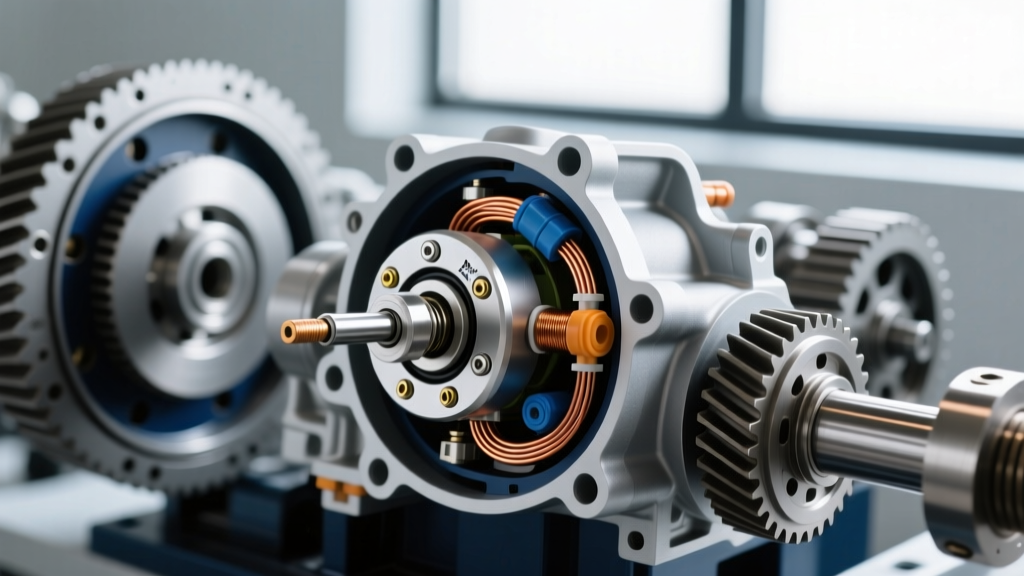
- Internal Sensors: Mounted directly to the valve body, integrated into the internal wiring harness, or embedded within the Transmission Control Module (TCM/TEHCM). Accessing these requires dropping the transmission pan, draining the fluid, replacing the filter, and often removing the valve body assembly. Labor times range from 2.5 to 6.0+ hours.
2026 Cost & Location Comparison Matrix
| Transmission Model | Sensor Type | Location Profile | Est. Part Cost | Labor Hours | Total Shop Estimate |
|---|---|---|---|---|---|
| GM 4L60E / 4L80E | Output Speed (OSS) | External (Tailshaft) | $25 - $45 | 0.5 | $110 - $160 |
| GM 6L80 / 6L90 | Input / Output | Internal (TEHCM/Pan) | $80 - $350 | 2.5 - 4.0 | $450 - $1,100 |
| ZF 8HP (8HP45/70) | ISS / OSS / Turbine | Internal (Mechatronics) | $900 - $1,600 | 4.5 - 6.0 | $1,800 - $2,800 |
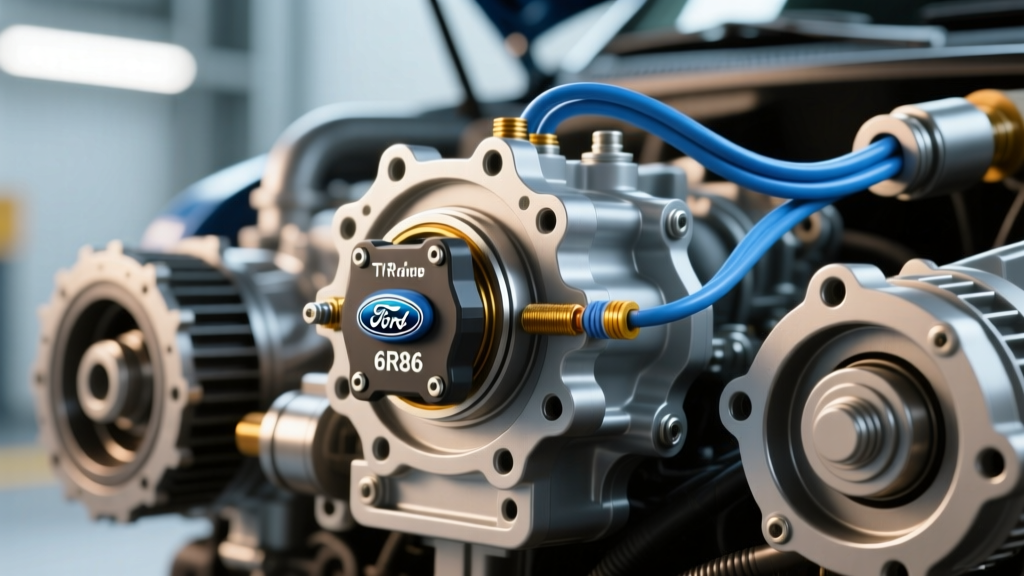
| Ford 6R80 | TSS / OSS | Internal (Valve Body) | $60 - $120 | 3.0 | $500 - $750 |
*Note: Estimates include fluid, gaskets, and shop supplies based on national average labor rates of $165/hr for 2026.
Deep Dive: Popular Transmission Location Profiles
1. GM 4L60E & 4L80E: The Budget-Friendly External Mount
The legendary GM 4L60E and its heavy-duty sibling, the 4L80E, feature a highly serviceable transmission sensor location for the Vehicle Speed Sensor (VSS) and Output Speed Sensor (OSS). The sensor is located on the passenger side of the tailshaft housing (extension housing).
The Repair Reality: You simply unplug the two-pin connector, remove the 10mm mounting bolt, and twist the sensor out of the case. The O-ring seals the sensor to the transmission fluid.
Part Specifics: The ACDelco OE part number is typically 213-3680 or 213-3243, costing around $30 on RockAuto.
Torque Spec: The retaining bolt must be torqued to exactly 13 lb-ft (18 Nm). Over-torquing can crack the cast aluminum tailhousing, turning a $30 repair into a $400 case-replacement nightmare.
Total DIY Cost: Under $40. Shop Cost: ~$130.
2. GM 6L80 & 6L90: The TEHCM Complication
Moving to GM's 6-speed rear-wheel-drive lineup, the architecture changes drastically. The Input Speed Sensor (ISS) and Output Speed Sensor (OSS) are located internally. More importantly, they are often routed through or integrated near the Transmission Electro-Hydraulic Control Module (TEHCM), which sits inside the transmission pan.
The Repair Reality: To access this location, the vehicle must be lifted, and the transmission pan must be removed. The 6L80 does not have a traditional drain plug; you must drain the fluid by breaking the pan seal. Furthermore, the filter is integrated into the pan assembly, meaning a new pan/filter unit is mandatory.
Consumable Multipliers: You will need 6 to 8.5 quarts of Dexron VI ATF, plus a new pan gasket and filter kit (ACDelco part # 24239935), adding roughly $90-$130 in parts alone.
Total Shop Cost: If the sensor is a standalone harness component, expect $500-$700. If the TEHCM itself has failed (common on early 6L80s), the module costs $400-$800 and requires GM SPS programming, pushing the bill past $1,200.
3. ZF 8HP Series: The Mechatronics Cost Trap
The ZF 8-speed (8HP45, 8HP70, 8HP90) is a masterpiece of engineering, found in everything from the Dodge Charger to the BMW 5-Series and Ford F-150 (as the 10R80 derivative). However, its transmission sensor location is the ultimate financial trap for out-of-warranty owners. The speed sensors are not standalone components; they are permanently embedded into the Mechatronics unit (the combined valve body and TCM).
The Repair Reality: You cannot buy a standalone $40 speed sensor for a ZF 8HP. If the turbine speed sensor fails, ZF's official protocol requires replacing the entire Mechatronics assembly.
Fluid Penalty: Dropping the ZF 8HP pan requires replacing the plastic pan/filter assembly (which holds the fluid level check valve). The ZF 8HP requires 8 to 10 liters of ZF Lifeguard 8 fluid. At $25 to $40 per liter from the dealer or ZF Aftermarket distributors, the fluid alone costs $250-$400.
Total Shop Cost: A new OEM Mechatronics unit ranges from $1,200 to $2,200. Combined with 5+ hours of labor, fluid, and adaptation resets via a specialized bi-directional scan tool, the total invoice routinely lands between $2,200 and $3,500. (Note: Independent shops specializing in ZF units now offer rebuilt Mechatronics sleeves and valve bodies for $800-$1,200, which is the recommended route for older vehicles).
Labor Multipliers: Fluid, Gaskets, and Programming
When evaluating a repair quote based on sensor location, always ask the service advisor for the "consumables breakdown." Internal sensor locations trigger a cascade of mandatory secondary costs:
- Fluid Replacement: Modern synthetic ATFs (like Toyota WS, Honda DW-1, or Mercedes 134.15) are expensive. An internal repair that drops the pan will waste 40% to 60% of the transmission's total fluid capacity.
- One-Time-Use Gaskets: Many modern transmissions use RTV silicone or specialized rubber-coated steel gaskets that cannot be reused.
- TCM Relearns: On vehicles where the sensor is tied to the internal TCM (like the Chrysler 8-speed or GM 9-speed), the repair requires a dealership-level software subscription to perform "Fast Learn" or "Adaptation" procedures. Independent shops may charge an extra $150-$250 just to tow the vehicle to a dealer for programming.
OEM vs. Aftermarket: Sourcing by Location
The physical location of the sensor should dictate your parts sourcing strategy. The golden rule of transmission repair is: Never install a cheap aftermarket part in a high-labor location.
- External Locations (Low Labor Penalty): If you are replacing an external tailshaft sensor on a Honda, Toyota, or older GM, it is perfectly acceptable to use a $15 aftermarket sensor from brands like Standard Motor Products (SMP) or WVE. If it fails in a year, replacing it takes 15 minutes.
- Internal Locations (High Labor Penalty): If you are dropping the valve body on a Ford 6R80 or pulling the side cover on a Nissan CVT to access the speed sensors, only use OEM or Tier-1 OE parts (Bosch, Hitachi, ACDelco, Motorcraft). Paying a mechanic $600 in labor to install a $20 eBay sensor that suffers from heat-induced signal drop-out three months later is a catastrophic financial error.
Summary: Budgeting for Your Sensor Replacement
Ultimately, your transmission sensor location is the primary variable in your repair cost. Before authorizing any work, identify your exact transmission model (check the RPO code in the glovebox for GM, or the door jamb sticker for Ford/Chrysler). Cross-reference the sensor location to determine if fluid loss and pan removal are required. By understanding the mechanical architecture of your specific drivetrain, you can accurately audit shop quotes, decide whether a DIY approach is viable, and avoid the severe financial pitfalls of modern integrated transmission electronics.