When a customer asks, "How long will my transmission rebuild take?", the answer is rarely a simple number. It is a complex matrix of Remove and Replace (R&R) labor, bench teardown time, sublet machining, and modern software calibration. In 2026, with shop labor rates averaging $165 to $245 per hour, understanding accurate transmission rebuild time estimates is critical for both shop profitability and customer transparency. Whether you are a DIYer planning a weekend garage build or a shop owner quoting a fleet account, relying on outdated flat-rate manuals can lead to massive financial losses.
In this expert guide, we deconstruct the clock. We will break down real-world labor hours for today's most common automatic transmissions, highlight hidden time sinks, and provide best practices to streamline the transmission rebuilding process.
The Anatomy of a Rebuild Clock: R&R vs. Bench Time
To accurately estimate a transmission rebuild, you must separate the vehicle labor (R&R) from the unit labor (Bench Time). Flat-rate guides like Mitchell1 or Alldata often book these together, but real-world variables drastically alter the timeline.
Remove and Replace (R&R) Variables
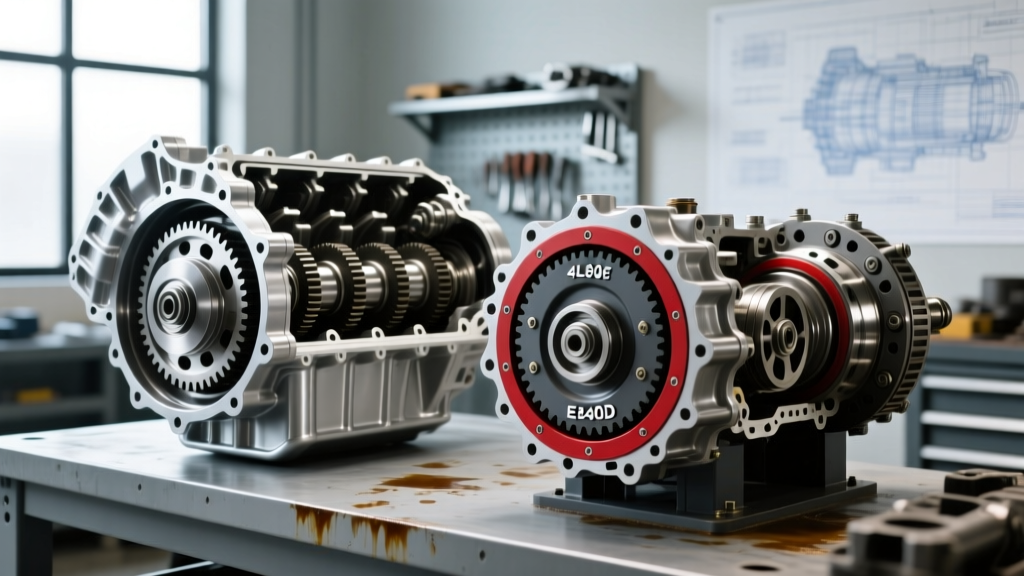
R&R time is dictated by drivetrain layout, rust belt corrosion, and modern electronics. A classic longitudinal RWD setup (like a GM 4L60E) might book out at 3.5 hours. However, modern FWD and AWD transverse layouts (like the Honda 9-speed or GM 9T50) require subframe drops, steering rack manipulation, and axle extraction, pushing R&R times to 6.5–8.5 hours.
The 2026 ADAS Factor: On modern vehicles like the Ford F-150 (10R80) or BMW X5 (ZF 8HP), dropping the transmission requires a hard battery disconnect. This triggers steering angle sensor resets, transmission adaptation clears, and sometimes ADAS recalibration, adding 1.0 to 1.5 hours of post-installation diagnostic time that older flat-rate manuals fail to capture.
Bench and Teardown Realities
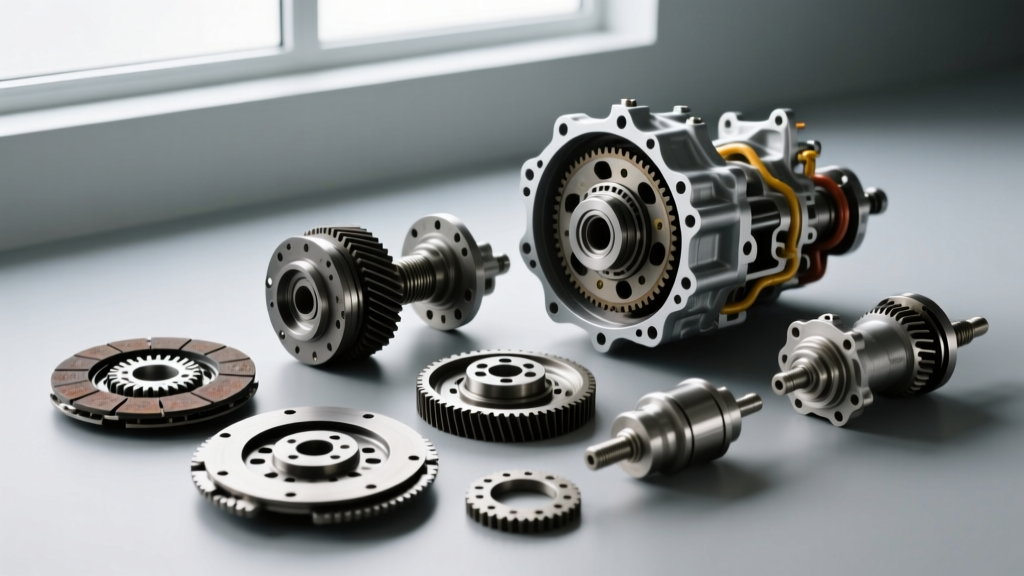
Bench time encompasses exterior cleaning, teardown, part inspection, hot-tanking/ultrasonic cleaning, assembly, and dynamometer testing. A standard 4-speed or 6-speed rebuild averages 6 to 8 hours on the bench. Modern 8-speed and 10-speed units, with their complex clutch pack sequences and delicate mechatronic units, routinely demand 9 to 12 hours of meticulous bench work.
Model-Specific Transmission Rebuild Time Estimates
Below is a real-world breakdown of transmission rebuilding time estimates for the most prevalent units on the road today. These estimates assume a seasoned rebuilder with proper tooling and a clean assembly environment.
| Transmission Model | Typical Application | Est. R&R Hours | Est. Bench Hours | Total Est. Hours | Primary Time Sinks |
|---|---|---|---|---|---|
| GM 6L80 / 6L90 | Silverado, Sierra, Escalade | 4.5 | 7.5 | 12.0 | TEHCM reprogramming, pump slide wear inspection, rusted crossmembers. |
| Ford 10R80 | Mustang, F-150, Expedition | 5.5 | 9.5 | 15.0 | 10-speed clutch pack clearances, fragile aluminum valve body, ADAS resets. |
| ZF 8HP70 / 8HP90 | Chrysler V8, BMW, Audi | 4.5 | 8.5 | 13.0 | Mechatronic sleeve replacement, proprietary ZF fluid fill procedures. |
| Honda 6-Speed FWD | Accord, Odyssey, Pilot | 7.0 | 6.5 | 13.5 | Subframe removal, tight engine bay packaging, external cooler flushing. |
| Allison 1000 | GM Duramax HD Trucks | 8.0 | 10.0 | 18.0 | Extreme weight (requires specialized jacks), transfer case R&R, PTO prep. |
Deep Dive: Ford 10R80 (10-Speed)
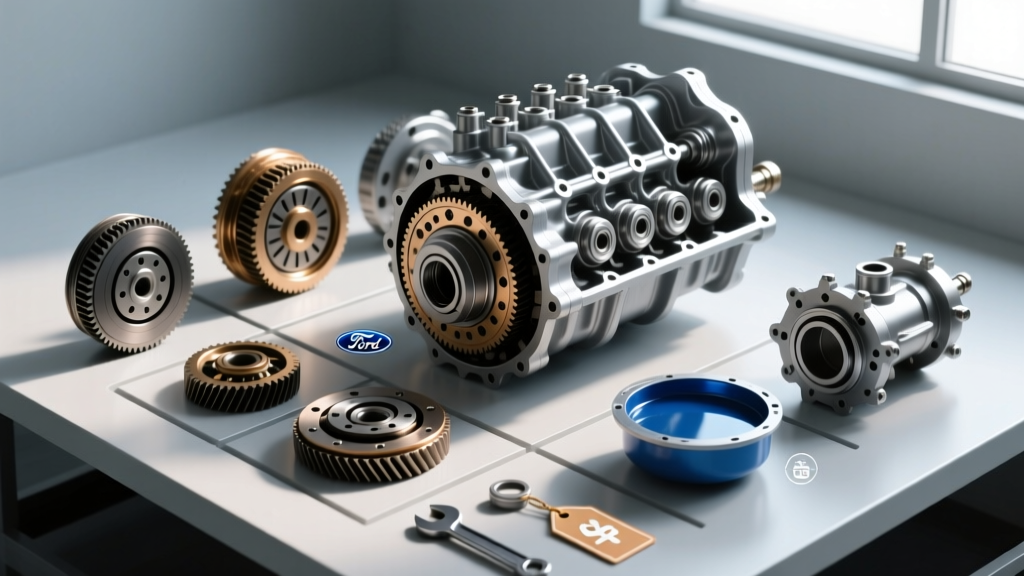
The Ford 10R80 is a marvel of engineering but a time-consuming rebuild. Bench time is heavily inflated by the clutch pack assembly. Unlike older units where you drop in a pre-assembled drum, the 10R80 requires stacking individual steels and frictions directly into the case. Rebuilders must meticulously check clearances using feeler gauges (targeting 0.040" to 0.060" depending on the specific clutch pack) for all six clutch packs. Furthermore, the aluminum valve body is prone to cross-leaking; inspecting and potentially replacing the separator plate and check balls adds up to 2 hours to the bench ticket.
Deep Dive: ZF 8HP Series
The ZF 8HP requires specialized tooling that eats up time if you aren't prepared. Removing the mechatronic unit requires a specific ZF adapter plate to support the valve body, and the snap rings require specialized pliers. According to technical bulletins from Sonnax, wear in the mechatronic adapter sleeve is a primary cause of low line pressure and delayed engagements. Machining the valve body to install an oversized sleeve kit (like the Sonnax 15474A-01K) is almost mandatory on high-mileage units, adding 1.5 hours of sublet or in-house machining time.
The Hidden Time Sinks: Sublets and Hybrids
When calculating your transmission rebuild time estimates, do not forget the calendar days lost to sublet work and modern hybrid safety protocols.
- Torque Converter Cutting: You should never reuse a torque converter on a modern 8+ speed transmission. Sending the converter to a local rebuilder for cutting, cleaning, and rebalancing typically adds 1 to 2 calendar days to the job, even if it only represents 2 hours of actual labor.
- Hybrid/EV Depowering: Rebuilding a hybrid transmission (like the Toyota P310 or Ford HF35) requires strict high-voltage safety protocols. Depowering the high-voltage battery, verifying zero voltage with a CAT III multimeter, and insulating the terminals adds a mandatory 1.0 to 1.5 hours of safety prep time before a single wrench is turned.
- Valve Body Solenoid Calibration: Many modern units (especially the GM 8L90 and ZF 8HP) require solenoid characterization. Using a scan tool to write the new solenoid flow rates to the Transmission Control Module (TCM) is a 30-minute software process that stalls the vehicle on the lift if the shop's Wi-Fi or J2534 pass-thru device is acting up.
Expert Best Practices to Shrink Bench Time
Efficiency on the bench is where the profit margin lives. Industry data from the Automatic Transmission Rebuilders Association (ATRA) consistently shows that shops with organized bench workflows reduce comebacks by 40% and shave 2-3 hours off assembly time.
Pro Tip: Never use compressed air to dry clutch frictions after cleaning them in solvent. Compressed air systems often contain microscopic moisture and oil droplets that can cause the friction material to delaminate or slip under heavy load. Always let them air dry or use a dedicated, oil-free drying cabinet.
- Pre-Wash Before R&R: Spend 20 minutes power-washing the exterior of the transmission and engine block while it is still in the vehicle. Removing road grime and grease before extraction prevents debris from falling into the bellhousing or valve body during teardown, saving an hour of cleaning later.
- Use Magnetic Trays and Shadow Boards: The ZF 8HP uses over 40 bolts of varying lengths and torque specs. For example, the mechatronic-to-valve-body bolts are torqued to a delicate 8 Nm (71 lb-in), while the bellhousing bolts require 50 Nm (37 lb-ft). Mixing these up will strip the soft aluminum case. Organize fasteners by assembly step, not just by size.
- Dyno Test Before Installation: A transmission dynamometer test takes 45 minutes but saves 6 hours of R&R labor if a seal is leaking or a clutch pack is slipping. Always verify line pressures and shift adaptions on the dyno before bolting the unit back into the vehicle.
Calculating the True Cost: 2026 Labor Rates vs. Flat Rate
To translate these transmission rebuild time estimates into actual costs, we must apply current 2026 labor rates. The national average for independent transmission specialists now sits between $165 and $195 per hour, while dealership rates in major metros frequently exceed $225 per hour.
Let us look at a real-world scenario: Rebuilding a GM 6L80 in a 2015 Chevrolet Silverado 1500.
- Total Estimated Time: 12.0 Hours (4.5 R&R + 7.5 Bench)
- Independent Shop Labor ($175/hr): $2,100
- Dealership Labor ($235/hr): $2,820
- Parts & Fluids (Master Kit, TEHCM, Fluid): $850 - $1,200
- Torque Converter Sublet: $350
As highlighted in recent market analyses by Transmission Digest, consumers are increasingly opting for independent specialists who can offer a blended rate and transparent bench-time billing, rather than paying dealership markups on flat-rate R&R tickets that often fail to account for rust-belt corrosion or seized exhaust hardware.
Final Thoughts on Rebuild Timelines
Accurate transmission rebuild time estimates require looking beyond the flat-rate manual. By accounting for modern ADAS calibrations, the intricacies of 10-speed clutch pack assembly, and the necessity of sublet machining, you can set realistic expectations. Whether you are turning wrenches in your home garage or managing a multi-bay transmission shop, respecting the clock and preparing for the hidden time sinks is the ultimate key to a successful, profitable, and reliable transmission rebuild.