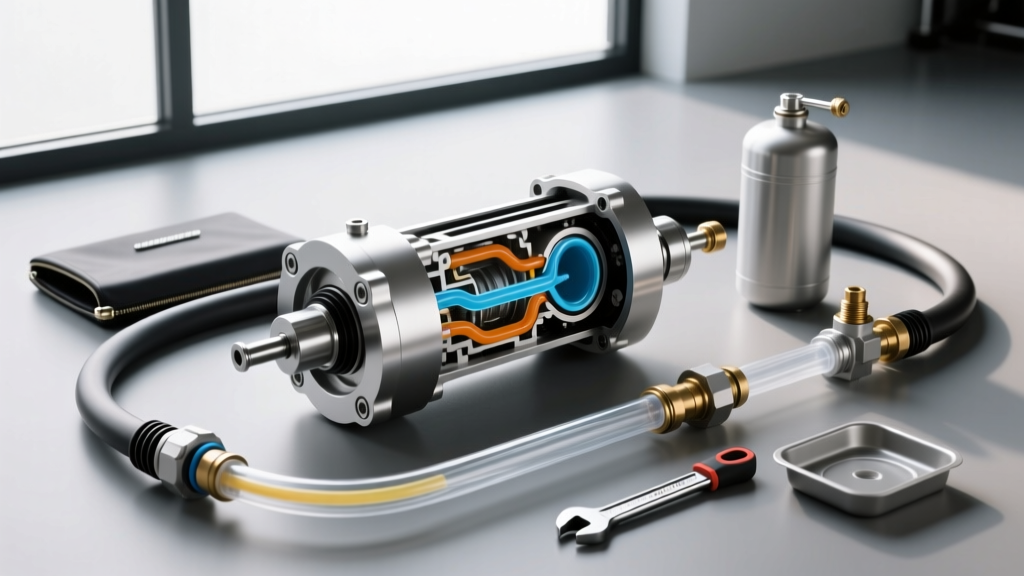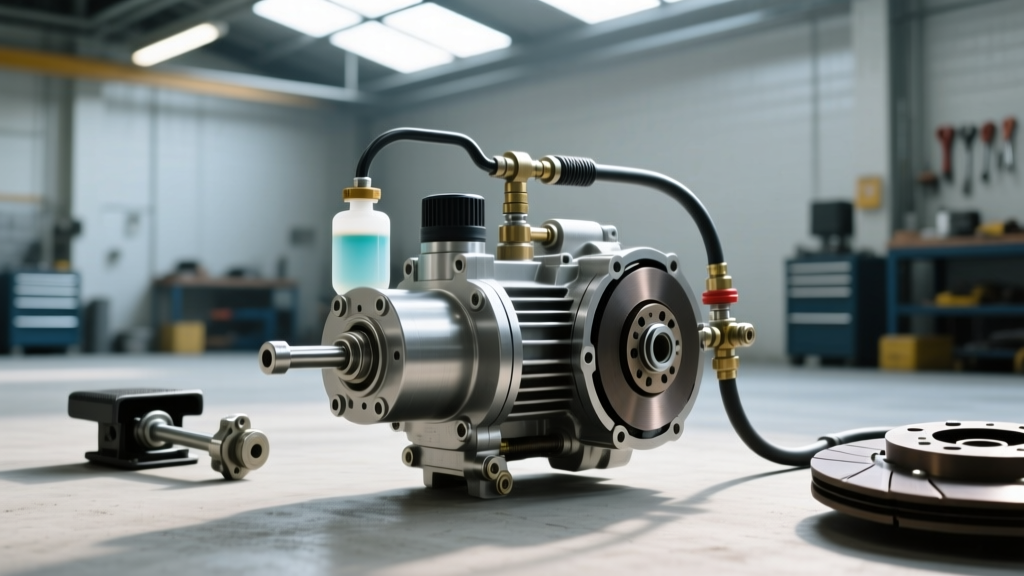
When building a dedicated track car or upgrading a high-horsepower street machine, the drivetrain is only as reliable as its weakest link. While many enthusiasts spend thousands on forged internals and upgraded transmissions, the hydraulic system that actuates the clutch is often overlooked. If you are stepping into the world of performance drivetrains, you have likely found yourself searching for the right clutch master cylinder oil or wondering why your heavy-duty clutch feels like a leg-press machine. In this beginner-friendly explainer, we will demystify performance clutch hydraulics, break down the mathematics of bore sizing, and provide a 2026 perspective on fluid selection and bleeding techniques for high-torque applications.
The 'Oil' Misconception: What Actually Goes Inside?
Let us address the most common beginner misconception right away: the search for 'clutch master cylinder oil.' In the automotive world, the term 'oil' is frequently misused by newcomers when referring to hydraulic fluids. The vast majority of modern performance vehicles—from modified Porsche 911s to tube-chassis cars running Tremec T56 Magnum transmissions—do not use petroleum-based oil in their clutch hydraulics. Instead, they rely on glycol-based brake fluids (DOT 3, DOT 4, or DOT 5.1) or, in specific European and classic applications, specialized mineral oils like LHM.
Using actual motor oil or gear oil in a standard clutch master cylinder will rapidly destroy the internal EPDM rubber seals, leading to catastrophic fluid leaks, a spongy pedal, and ultimately, a stranded vehicle. The only time you will find a true 'oil' in a clutch hydraulic system is in specific Citroen applications or specialized aerospace-derived hydraulic bearings that mandate MIL-SPEC mineral fluids. For 99% of performance track builds, you are looking for high-temperature glycol brake fluid.
Hydraulic Mathematics: Sizing Master and Slave Cylinders
Upgrading to a twin-disc or triple-disc clutch for a 700+ horsepower build drastically increases the pressure plate clamp load. A standard factory clutch might require 1,200 lbs of clamp force, while a performance unit like an McLeod RXT or Tilton OT-II can demand upwards of 2,400 lbs. If you retain the factory master cylinder, your left leg will be exhausted after three laps. To fix this, you must understand hydraulic ratios.
Calculating Pedal Effort and Travel
The hydraulic system acts as a force multiplier. The formula for the hydraulic ratio is the area of the slave cylinder piston divided by the area of the master cylinder piston. Furthermore, your mechanical pedal ratio (the distance from the pivot point to the pedal pad, divided by the distance to the master cylinder pushrod) multiplies this force.
- Master Cylinder Bore: A smaller bore (e.g., 5/8-inch) requires less pedal effort but pushes less fluid volume per stroke, meaning the slave cylinder travels less distance.
- Slave Cylinder Bore: A larger slave bore requires more fluid volume to move the same distance, increasing pedal effort.
For a Tremec T56 Magnum transmission, the clutch fork or hydraulic throwout bearing typically requires between 0.450 and 0.550 inches of precise travel to fully disengage the clutch. If you pair a Tilton 78-Series 5/8-inch master cylinder with a 7/8-inch external slave cylinder, you achieve a favorable hydraulic ratio that keeps pedal effort manageable (around 35-45 lbs of foot pressure) while providing adequate travel. Brands like Tilton Engineering and Wilwood offer modular master cylinders allowing you to swap internal cartridges to fine-tune this ratio without replacing the entire housing.
Fluid Selection for Track Abuse: Glycol vs. Mineral
Track environments generate immense heat. Brake calipers can easily exceed 400°F during heavy braking, and if your clutch and brake systems share a fluid reservoir (common in many factory setups), that heat transfers to the clutch master cylinder. If the fluid boils, vapor lock occurs, and your clutch pedal drops to the floor. Below is a comparison of top-tier fluids used in 2026 performance builds.
| Fluid Type | Classification | Dry Boiling Point | Best Application | Approx. Cost |
|---|---|---|---|---|
| Castrol SRF | DOT 4 (Silicone Ester) | 590°F (310°C) | Endurance racing, shared reservoirs | $65 / pint |
| Motul RBF 660 | DOT 4 | 617°F (325°C) | Time attack, sprint racing | $35 / pint |
| Liqui Moly LHM Plus | Mineral Oil | 482°F (250°C) | Specific classic/Euro hydraulic bearings | $25 / liter |
| Wilwood Hi-Temp 5.1 | DOT 5.1 | 527°F (275°C) | Street/Track dual-purpose builds | $18 / 12oz |
Note: Never mix DOT 5 (silicone-based) with DOT 3, 4, or 5.1 (glycol-based). DOT 5 is compressible and will result in a spongy, unpredictable clutch pedal, making it entirely unsuitable for performance manual transmissions.
Upgrading Lines and Fittings for High-Pressure Use
Factory clutch lines are often made of reinforced rubber or plastic. Under the high-pressure spikes generated by rapid clutch dumps on a drag strip or road course, rubber lines expand, absorbing hydraulic volume and causing delayed engagement. Furthermore, engine bay heat degrades rubber over time.
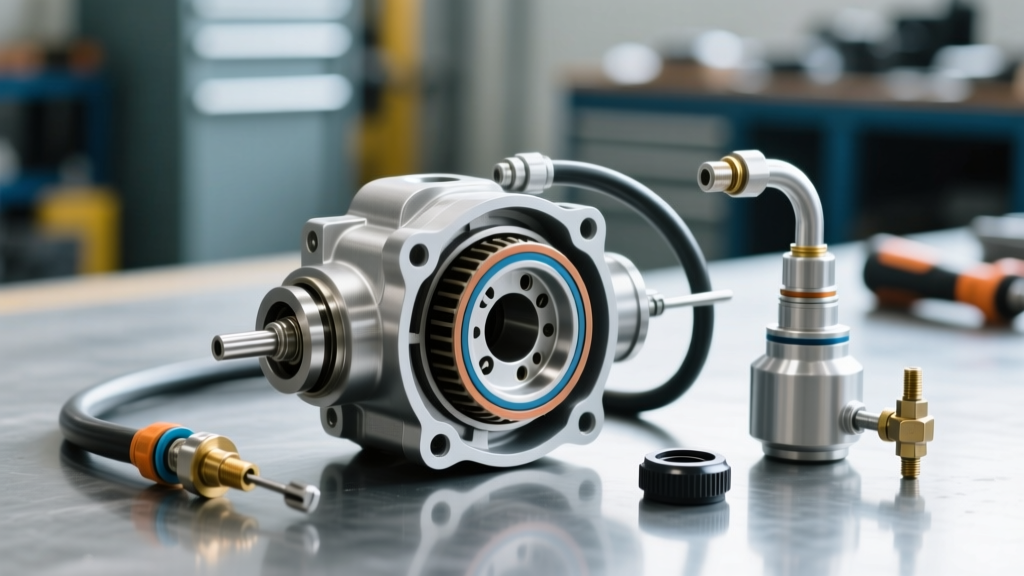
The industry standard upgrade is an AN-3 stainless steel braided line with PTFE (Teflon) inner cores. When installing AN fittings on your master cylinder and firewall bulkheads, precision is critical. Use an aluminum AN wrench to prevent marring the hard-anodized aluminum fittings. The torque specification for standard aluminum AN-3 flare fittings is typically 10 to 12 lb-ft. Over-torquing can easily crack the master cylinder's aluminum output port, ruining a $160 component instantly.
Concentric Slave Cylinders (CSC) vs. External Slaves
When planning your hydraulic upgrade, the physical layout of your transmission dictates your hardware. Modern performance transmissions often utilize a Concentric Slave Cylinder (CSC), which wraps around the transmission input shaft and acts directly on the pressure plate diaphragm. While space-efficient, CSCs are notorious for being difficult to bleed because the bleeder screw is often buried inside the bell housing, and air naturally rises to the highest point—trapping bubbles inside the cylinder.
For dedicated track cars, many builders convert to an external slave cylinder setup using a custom bell housing and a traditional clutch fork. External slaves, like those offered by Tremec for their aftermarket Magnum series, allow for easy access to the bleeder screw, simpler replacement in the pits, and better heat isolation from the exhaust and engine block.
Bleeding Performance Systems: Why Gravity Fails
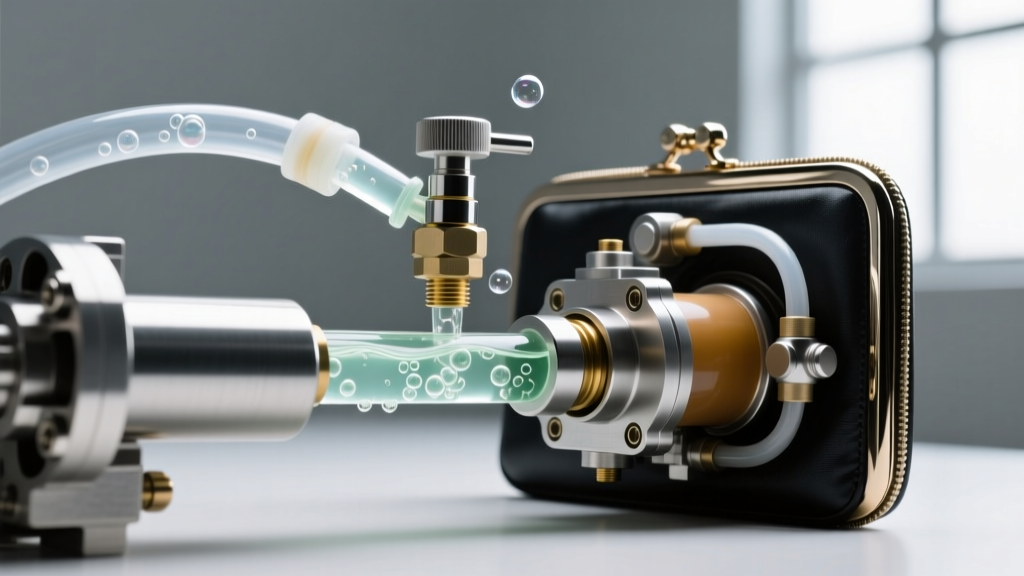
If you have ever cracked a bleeder screw and waited for gravity to do the work, you are using a technique that is entirely inadequate for performance clutch systems. Gravity bleeding relies on fluid slowly pushing air upward. However, in complex hydraulic layouts with inverted loops, rubber isolation dampeners, or CSCs, air bubbles easily become trapped in dead zones.
The Pressure Bleeding Protocol
To achieve a rock-solid pedal, you must use a pressure bleeder (such as a Motive Products bleeder) to force fluid through the system under controlled pressure. Follow this protocol for a flawless bleed:
- Pressurize the Master: Attach the pressure bleeder to the master cylinder reservoir and pump it to exactly 15 to 20 PSI. Do not exceed 25 PSI, or you risk blowing out the slave cylinder seals or rupturing the reservoir diaphragm.
- Open the Bleeder: Attach a clear vinyl hose to the slave cylinder bleeder screw, routing it into a catch bottle. Crack the screw open exactly one full turn.
- Monitor the Flow: Watch the clear hose. You will see aerated, bubbly fluid rush out. Keep the pressure bleeder topped off with fresh fluid to ensure you never suck air back into the master.
- The 'Pedal Pump' Trick: While the system is under 15 PSI of pressure, have an assistant slowly pump the clutch pedal through its full range of motion three times. This mechanical agitation helps dislodge microscopic air bubbles trapped in the master cylinder's compensation port.
- Seal and Verify: Once the fluid in the clear hose is completely free of micro-bubbles, tighten the bleeder screw to 10-15 Nm (7-11 lb-ft), release the reservoir pressure, and verify pedal firmness.
Final Thoughts for the Track Builder
Understanding the reality behind clutch master cylinder oil and fluid dynamics is the first step toward building a reliable, race-ready drivetrain. By selecting the correct glycol-based fluid, mathematically matching your master and slave cylinder bores to your clutch clamp load, and utilizing high-pressure bleeding techniques, you ensure that every single gear shift is crisp, immediate, and predictable. Whether you are navigating the tight chicanes of a road course or launching on a drag strip, a properly engineered hydraulic system is the unsung hero of your vehicle's performance.